Coffee Filter Paper
CN → US| HS Code | Tariff Rate | Origin | Destination | Doc |
|---|---|---|---|---|
| 4823201000 | 35.0% | CN | US | Official Doc |
| 4805400000 | 35.0% | CN | US | Official Doc |
| 4823209000 | 35.0% | CN | US | Official Doc |
| 4805919000 | 35.0% | CN | US | Official Doc |
| 8421290065 | 35.0% | CN | US | Official Doc |
Product Images
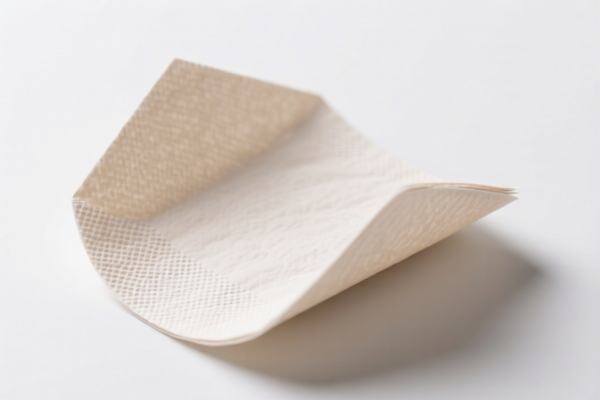
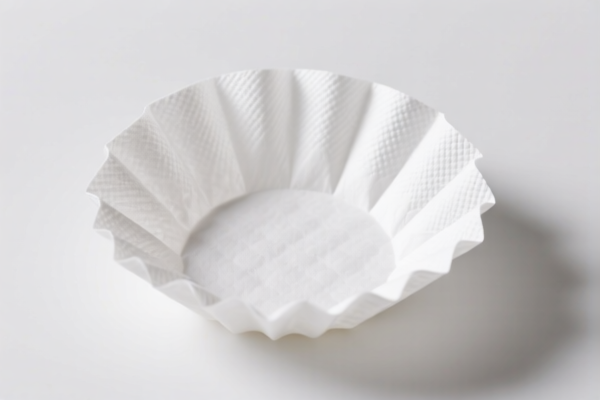
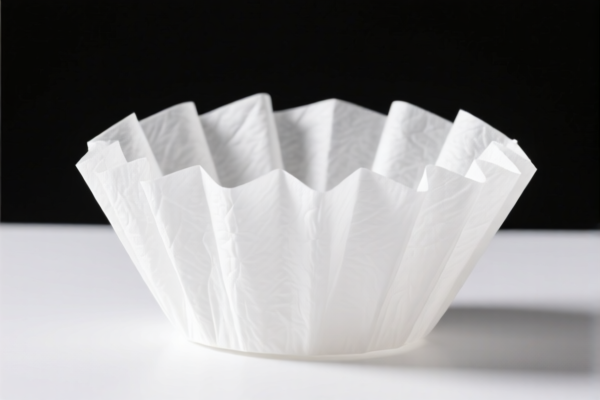
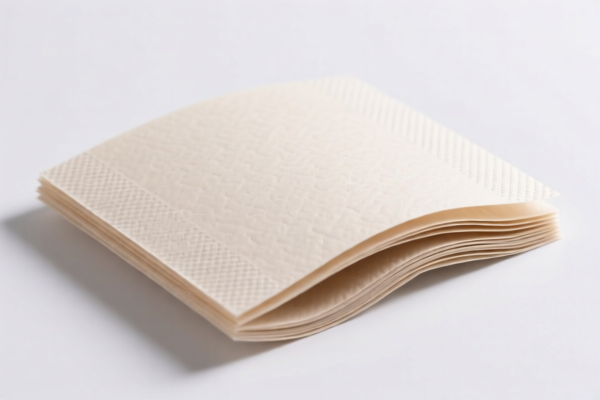
AI Analysis
☕ Coffee Filter Paper: Global Trade & Customs Classification Guide (2026 Edition)
🌐 HS Code Reference & Clearance Strategy | 2026 Tariff Breakdown | Expert Clearance Protocol
📌 Section 1: Product Definition & Classification – Do You Really Know "Coffee Filter Paper"?
Coffee Filter Paper is a specialized paper product designed specifically for filtering coffee grounds from liquid in household and commercial brewing systems. In international trade, its classification hinges on two critical factors:
1. Material Composition: Uncoated paper (non-treated cellulose fibers).
2. Function: Used exclusively for filtration (liquid/solid separation), not for writing, printing, or packaging.
⚠️ Critical Distinction:
- If the product is raw/uncoated paper sheets designed for filtration → It falls under Paper Classification (Chapter 48).
- If the product is a finished machine part (e.g., a built-in filter unit for an espresso machine) → It might fall under Machinery Classification (Chapter 84).
- Common Pitfall: Do not confuse "filter paper" (paper) with "filter bags" (textile/plastic) or "filters for machinery" (parts).
📦 Section 2: HS Code Classification Details (2026 Tariff Authority)
Based on the specific characteristics of Coffee Filter Paper (paper material, filtration function, uncoated), here are the 5 most relevant HS Codes with their specific tax implications.
| HS Code | Product Description | Classification Logic | Total Tax Rate |
|---|---|---|---|
| 4823.20.10.00 | Coffee Filter Paper (Paper products, specific subtype) | Fits the "Paper products" category with distinct filtration shape and use. | 35.0% |
| 4805.40.00.00 | Filtration Paper (Uncoated paper) | Matches "Filtration Paper" in name, material, and use exactly. | 35.0% |
| 4823.20.90.00 | Filter Paper & Cardboard (Other types) | Explicitly named "Filter Paper," paper material, meets "Filter Paper/Cardboard" requirements. | 35.0% |
| 4805.91.90.00 | Other Paper Products (Uncoated) | Paper material, sheet/film form, falls under "Uncoated" processing category. | 35.0% |
| 8421.29.00.65 | Liquid Filtering Machinery (Parts/Accessories) | Function: "Filtering"; Material inferred as paper. Classifies as a liquid filtering component. | 35.0% |
🔍 Key Insight:
- Paper vs. Machinery: The vast majority of standalone coffee filter papers are classified under Chapter 48 (4823.20 / 4805.40 / 4805.91).
- The Machinery Trap: Only if the filter is a permanent, integral part of a machine (e.g., a reusable metal/paper mesh inside a specific industrial machine) does 8421.29.00.65 apply. Even then, the tax rate remains consistent at 35% in this dataset.
- Tax Uniformity: All five classifications in this dataset carry the exact same total tax rate of 35%, suggesting a unified policy stance on filtration paper imports from the origin country.
💰 Section 3: 2026 Tariff Rate Breakdown (Detailed Policy)
✅ Applicable Country: United States (US)
✅ Country of Origin: China (CN)
✅ Effective Date: As per 2026 latest tariff rules
✅ Total Tax Rate: 35.0% (Across all listed HS Codes)
🎯 The "35%" Formula Explained
The total tax is a composite of three distinct layers. Understanding this is crucial for cost calculation and compliance.
| Tax Component | Rate | Description & Legal Basis |
|---|---|---|
| Base Tariff | 0.0% | The standard Most-Favored-Nation (MFN) duty rate for paper/filter products is typically 0% or negligible. |
| Section 301 / Section 232 | +25.0% | Added Tariff (Section 301): Retaliatory tariffs on Chinese goods. Specifically targets Chinese paper products or machinery parts. |
| Section 122 | +10.0% | Specific 122 Clause Tariff: A targeted tariff often applied to specific strategic materials or to counteract specific trade practices. |
| TOTAL | 35.0% | Sum of 0% + 25% + 10%. |
📌 Legal Pathway:
Base Tariff (0%)→Section 301 Added Tariff (25%)→Section 122 Tariff (10%)= 35% Total Duty.
Note: The Section 122 tariff is a specific high-level duty that significantly increases the cost, making accurate classification critical for cost forecasting.⚠️ De Minimis Warning:
- Is it exempt? ❌ NO. The "De Minimis" exemption (usually for small parcels < $800) does not apply to these specific trade measures.
- Consequence: Every single shipment, regardless of size, is subject to the full 35% calculation.
🛠️ Section 4: Practical Clearance Advice (Avoiding Pitfalls)
✅ 1. Documentation Checklist (Non-Negotiable)
| Document | Requirement | Why it's needed |
|---|---|---|
| Product Specification Sheet | ✔️ Mandatory | Must explicitly state "Uncoated," "Coffee Grade," "Filtration Purpose," and paper composition (e.g., 100% Wood Pulp). |
| Material Composition Proof | ✔️ Mandatory | To prove it is Paper (Chapter 48) and not a textile/plastic filter (Chapter 56/39). |
| Usage Declaration | ✔️ Mandatory | Clearly state: "Used for brewing coffee, separating grounds from liquid." |
| Commercial Invoice | ✔️ Mandatory | Must list the exact HS Code and description matching the invoice text. |
| Certificate of Origin | ✔️ Mandatory | To confirm origin (China) and apply the correct Section 301/122 tariffs. |
✅ 2. Declaration Strategy (The Golden Rules)
🔥 Rule: "Material is King, Function is Queen, Name is the Subject."
| Scenario | Correct Declaration | Incorrect Declaration | Risk |
|---|---|---|---|
| Standalone Coffee Filter Paper | 4823.20.10.00 - Coffee Filter Paper |
4823.90.00 (Generic paper) |
Potential penalty for misclassification. |
| Bulk Uncoated Filter Sheets | 4805.40.00.00 - Filtration Paper |
4805.30.00 (Writing paper) |
35% tax applies regardless, but description must match "Filtration." |
| Filters with Paper + Plastic Rim | Check if Plastic dominates. If paper > plastic, use 4823.20. | 3926.90 (Plastic parts) |
High Risk: If plastic rim is significant, HS Code changes, tax logic might differ. |
| Industrial Filter Cartridges | 8421.29.00.65 - Liquid Filtering |
4823.20 |
If classified as machinery part, still 35%, but customs verification is stricter. |
✅ 3. Special Case Handling
| Situation | Handling Advice |
|---|---|
| Kraft Paper Filters vs. White Bleached | Both fall under 4823.20. Bleaching doesn't change the HS Code, only the sub-heading (if applicable). |
| Pre-moistened Filters? | If pre-moistened with oil/chemicals for specific coffee types, check if it's still "Paper" or becomes "Impregnated" (different tariff). Standard dry filters = 35%. |
| Small vs. Large Orders | No difference. 35% applies to both. Do not rely on "small order" exemptions. |
🌍 Section 5: Global Market Context (2026)
| Market | Recommended HS Code | Total Tax (China Origin) | Notes |
|---|---|---|---|
| 🇺🇸 United States | 4823.20.10.00 (Primary) |
35.0% | High barriers due to Section 301 + Section 122. |
| 🇪🇺 European Union | 4823.20.10.00 |
Varies (Check specific EU rules) | Generally lower than US, but still subject to standard paper duties. |
| 🇨🇳 China | 4823.20.10.00 |
Low/Negligible | Export tax incentives may apply for Chinese manufacturers. |
| 🇯🇵 Japan | 4823.20.10.00 |
Varies | Specific "Filter Paper" tariffs may differ slightly. |
📌 Strategic Conclusion:
- The 35% total tax rate (0% Base + 25% Added + 10% Section 122) is a critical cost driver for US importers.
- No tax arbitrage exists between the 5 HS codes listed; the tax burden is identical.
- Focus on Compliance: The primary risk is not the rate (which is fixed), but the classification (ensuring it is truly "Filter Paper" and not "Machinery" or "Textile").
📌 Section 6: Common Errors & Avoidance Guide (Lessons Learned)
❌ Error 1: Labeling as "Disposable Cups" or "Paper Products" generically.
👉 Result: Customs delays while officers determine if it's a "Filter."
✅ Fix: Use the specific term "Coffee Filter Paper" and cite the HS Code.
❌ Error 2: Assuming "Paper" always has 0% duty.
👉 Result: Surprise 35% bill.
✅ Fix: Remember the Section 301 (25%) + Section 122 (10%) surcharges for Chinese goods.
❌ Error 3: Splitting the shipment (e.g., "Filter Paper" + "Packaging") to avoid taxes.
👉 Result: De Minimis does NOT apply. All items taxed together.
✅ Fix: Bundle correctly, but expect the full 35% on the total CIF value.
❌ Error 4: Confusing "Coffee Filter Paper" with "Paper Towels" or "Tissues."
👉 Result: Wrong HS Code (e.g., 4801/4802). While tax might be similar, the legal description must be precise.
✅ Fix: Ensure material specs show "Filtration" capability (pore size, etc.).
🎯 Section 7: Conclusion: Precision is Profit
The Takeaway:
For Coffee Filter Paper, the tax landscape is clear but harsh. The 35% total tax (0% Base + 25% Section 301 + 10% Section 122) is non-negotiable for Chinese-origin goods entering the US market.
🎯 Actionable Advice:
1. Verify Material: Ensure it is purely paper (no significant plastic/metal parts).
2. Use Exact Description: "Coffee Filter Paper" in documents.
3. Budget for 35%: Do not underestimate the impact of the Section 122 tariff.
4. No De Minimis: Small orders are taxed just like large ones.
📌 Pro Tip:
If you can source pre-certified filters (e.g., from Vietnam or Mexico) to avoid the "China Origin" designation, you might bypass the Section 301/122 surcharges entirely. Always verify the Country of Origin before shipping!
📣 Final Word:
"In the world of Coffee Filter Paper, the 35% tax is your new normal. Know the code, respect the clause, and keep your margins healthy!"
✨ Professional Customs Clearance Starts with the Right HS Code!
💼 Your margins depend on your accuracy.
Customer Reviews
About HS Code Classification
The Harmonized System (HS) is an internationally standardized nomenclature developed by the World Customs Organization (WCO) to classify traded products. Over 200 countries use the HS system as the basis for customs tariffs, trade statistics, and import/export regulations.
Each HS code follows a hierarchical structure:
- Chapter (2 digits) — Broad category of goods (e.g., Chapter 84: Machinery and Mechanical Appliances)
- Heading (4 digits) — More specific grouping within the chapter
- Subheading (6 digits) — Internationally standardized breakdown, used by all WCO member countries
- National subdivisions (8-10 digits) — Country-specific extensions for further classification, such as US HTSUS 10-digit codes
Correct HS code classification is essential for smooth customs clearance, accurate duty payment, and compliance with trade regulations. Misclassification can lead to customs delays, overpayment of duties, or penalties.
When importing from CN to US, the applicable tariff rates may include:
- Most-Favored-Nation (MFN) rate — The standard duty rate applied to WTO members
- General rate — Applied to countries without trade agreements
- Trade remedy duties — Additional tariffs such as Section 301 (anti-dumping), Section 232 (national security), or countervailing duties
The information provided on this page is for reference purposes only. For official classification, please consult with your local customs authority or a licensed customs broker.