Coffee Handle Filter
CN → US| HS Code | Tariff Rate | Origin | Destination | Doc |
|---|---|---|---|---|
| 4823201000 | 35.0% | CN | US | Official Doc |
| 4823209000 | 35.0% | CN | US | Official Doc |
| 7323930045 | 62.0% | CN | US | Official Doc |
| 7323999080 | 88.4% | CN | US | Official Doc |
| 3924104000 | 13.4% | CN | US | Official Doc |
| 3924101000 | 13.4% | CN | US | Official Doc |
Product Images
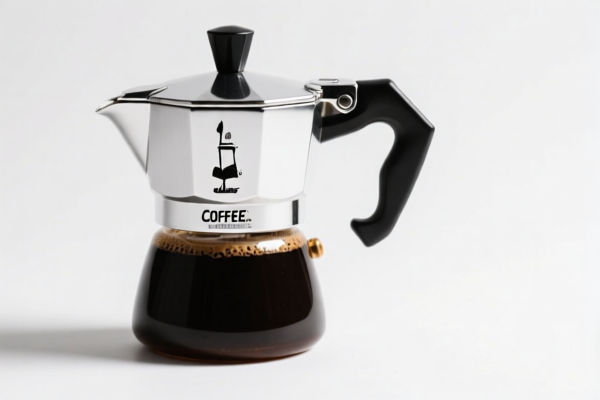
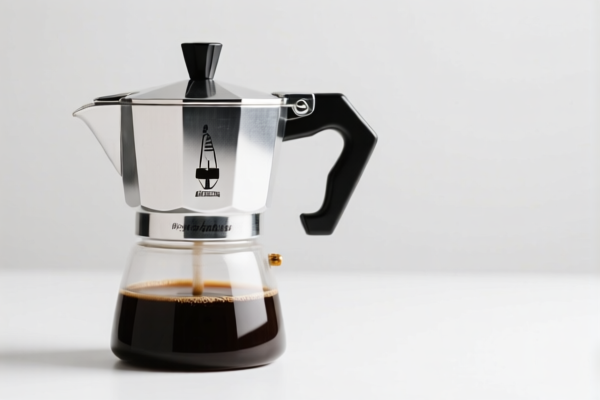
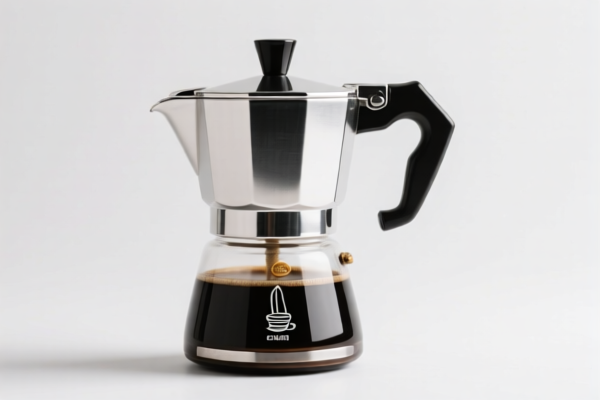
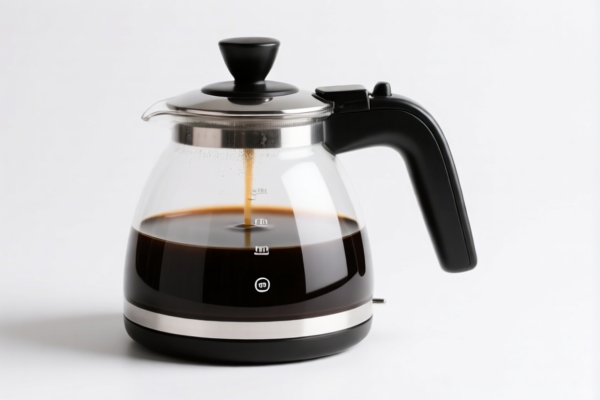
AI Analysis
☕ Coffee Handle Filter (Paper & Household Filters)
🌐 HS Code Reference & Clearance Guide | 2026 Latest Tariff Breakdown | Professional Customs Strategy
📌 I. Product Definition & Classification: What Exactly is a "Coffee Handle Filter"?
In international trade, "Coffee Handle Filter" is not a standard technical term. It generally refers to paper filters used in coffee makers, often characterized by their specific shape (cone, flat bottom, basket) or design, rather than a mechanical "handle" component itself. The core material is paper or paperboard.
Key Distinction for Classification:
1. Paint Filters and Strainers: If the filter is specifically designed for industrial paint filtration or has a rigid frame/handle structure distinct from standard coffee use, it may fall under 4823.20.10.
2. Other Filter Paper: If it is a standard disposable paper filter for home or commercial coffee brewing (even with a cardboard or plastic rim/handle-like structure), it falls under "Other" in the filter paper category, 4823.20.90.
⚠️ Critical Classification Point:
- Most consumer-grade coffee filters (paper cones, baskets) are NOT "Paint Filters." They are general-purpose filter paper.
- Therefore, they typically fall under4823.20.90.00(Other).
- Misclassifying as "Paint Filters" (4823.20.10) is a common error that may trigger scrutiny if the product description does not match industrial use.
📦 II. HS Code Classification Details (2026 Latest Tariff Reference)
Based strictly on the provided <DATA>, here are the relevant HS Codes for paper filter products:
| HS Code | Product Description | Applicable Scenario | Classification Logic |
|---|---|---|---|
4823.20.10.00 |
Paint filters and strainers | Industrial paint filtration, specialized strainers with rigid frames | ✅ Unlikely for standard coffee filters unless explicitly marketed/structured for paint. |
4823.20.90.00 |
Other filter paper and paperboard | Standard coffee filters (paper cones, baskets, drip filters), tea bags, household paper filters | ✅ Highly Likely for most "Coffee Handle Filters." |
🔍 重点提醒 (Key Reminder):
- Coffee Filters are "Other" Filter Paper: They do not meet the specific definition of "Paint Filters and Strainers" under HTSUS Chapter 48 unless they have specific industrial design features.
- Material Matters: If the filter is made of plastic (e.g., reusable plastic mesh with a handle), it would NOT fall under these HS codes. It would likely fall under Chapter 39 (Plastics). However, based on the provided data, we are analyzing paper-based filters.
- Do Not Mix with Kitchenware: Do not confuse paper filters with plastic kitchen tools (see3924.10.xxxx).
💰 III. 2026 Latest Tariff Rate Breakdown (Detailed)
✅ Applicable Country: United States (US)
✅ Origin: China (CN) (Based on the "Additional Tariff" context in the data)
✅ Effective Time: Current policies apply (Section 301 & IEEPA)
🎯 1. 4823.20.10.00 —— Paint Filters and Strainers
| Item | Content |
|---|---|
| Base Tariff Rate | 0.0% |
| Additional Tariff (Section 301) | +25.0% |
| Total Tax Rate | 25.0% |
| Tax Calculation | CIF Value × 25% |
| De Minimis Exemption | ❌ Not Applicable (Section 301 tariffs generally apply regardless of value for most goods, but check specific de minimis rules for low-value shipments; however, standard commercial import is taxed.) |
| Legal Basis | HTSUS 4823.20.10.00 + USITC Footnotes |
📌 Explanation:
- If your product is misclassified as "Paint Filters," the total tax is 25%.
- This is a high-cost category if the product is actually a simple paper coffee filter, as it attracts the full Section 301 additional duty.
🎯 2. 4823.20.90.00 —— Other Filter Paper and Paperboard
| Item | Content |
|---|---|
| Base Tariff Rate | 0.0% |
| Additional Tariff (Section 301) | +25.0% |
| Total Tax Rate | 25.0% |
| Tax Calculation | CIF Value × 25% |
| De Minimis Exemption | ❌ Not Applicable |
| Legal Basis | HTSUS 4823.20.90.00 + USITC Footnotes |
📌 Explanation:
- This is the correct classification for most paper coffee filters.
- Despite being "Other," it still carries a 25% additional tariff under Section 301.
- Base rate is 0%, so the total burden is 25%.⚠️ Critical Insight:
- Both possible HS Codes for paper coffee filters result in a 25% total tariff.
- There is no tariff advantage between4823.20.10.00and4823.20.90.00for Chinese-origin paper filters in terms of duty rate.
- Compliance is key: Misclassifying "Other" as "Paint Filters" may lead to customs audits or penalties for incorrect declaration, even if the rate is the same.
🛠️ IV. Customs Clearance Practical Advice (Pitfall Avoidance Guide)
✅ 1. Documentation Checklist (Must-Have)
| Document | Required | Explanation |
|---|---|---|
| ✅ Product Specification Sheet | ✔️ | Must clearly state: Material (Paper/Cellulose), Use (Coffee Filter), Shape (Cone/Basket), Size. |
| ✅ Commercial Invoice | ✔️ | Description must be precise: "Paper Coffee Filters, for Household Use" or "Disposable Paper Drip Filters". Avoid vague terms like "Handle Filter" without context. |
| ✅ Packing List | ✔️ | Detail quantities and net/gross weights. |
| ✅ Origin Certificate | ✔️ | To confirm Chinese origin and apply correct additional duties. |
| ✅ Photo of Product | ✔️ | Show the filter, packaging, and any labels. Prove it is not an industrial paint strainer. |
✅ 2. Declaration Tips (Key Mnemonics)
🔥 "Material is Key, Use is Clear, Don't Guess the Code!"
| Scenario | Correct Declaration | Wrong Declaration | Consequence |
|---|---|---|---|
| Paper Coffee Filter | 4823.20.90.00 |
4823.20.10.00 (Paint Filter) |
Risk of customs audit for misclassification. |
| Plastic Reusable Filter | Not in Data (Likely Ch. 39) | 4823.20.90.00 |
Severe Error: Wrong Chapter, high penalty risk. |
| Paper Filter with Plastic Rim | 4823.20.90.00 |
3924.10.40.00 (Plastic Tableware) |
Severe Error: Main material is paper, not plastic. |
| "Coffee Handle" as Part | Describe as "Filter with Cardboard Reinforcement" | "Handle" (implies metal/plastic tool) | Misleading description leads to delays. |
✅ 3. Special Cases
| Case | Handling Advice |
|---|---|
| Filter with Plastic Handle | If the main body is plastic mesh, do NOT use HS Code 4823.20.90.00. It likely belongs to Chapter 39 (e.g., 3924.10.40.00). Check the provided data: 3924.10.40.00 has a 3.4% total tax. This is much lower than 25%. ⚡ Pro Tip: If your "Coffee Handle Filter" is primarily plastic, ensure it is classified under Chapter 39, not Chapter 48, to save 21.6% in taxes! |
| Composite Material (Paper + Plastic) | Generally, the material giving the essential character determines classification. For disposable filters, paper is usually essential. For reusable ones with plastic frames, plastic may dominate. |
| Industrial vs. Household | Clearly state "Household Use" or "Catering Use" to avoid being classified as "Paint Filters." |
🌍 V. Market Comparison (2026 Latest)
| Market | Recommended HS Code (Paper Filter) | Total Tax (China Origin) | Notes |
|---|---|---|---|
| 🇺🇸 USA | 4823.20.90.00 |
25.0% | High tariff due to Section 301. |
| 🇨🇳 China | 4823.20.90.00 |
0% - 5% | Low import duty, no additional tariffs. |
| 🇪🇺 EU | 4823.20.90.00 |
6.5% | No Section 301 equivalent, standard MFN rate. |
| 🇯🇵 Japan | 4823.20.90.00 |
4.0% | Lower tariff than US. |
📌 Conclusion:
- USA Tariff Burden is Heaviest: 25% additional duty significantly impacts cost.
- Plastic Alternative Savings: If your product is 100% plastic (reusable), check3924.10.40.00(3.4% total tax). This is a major cost-saving opportunity if the product design allows it.
📌 VI. Common Errors & Pitfalls (Blood & Tears Lessons)
❌ Error 1: Calling it "Handle Filter" without specifying material.
👉 Result: Customs asks for clarification, delays clearance.
👉 Fix: Specify "Paper Coffee Filter" or "Plastic Reusable Filter."
❌ Error 2: Misclassifying Plastic Reusable Filters as Paper Filters (4823.20.90.00).
👉 Result: Pay 25% tax instead of 3.4%.
👉 Fix: If it's plastic, use 3924.10.40.00 (from provided data).
❌ Error 3: Misclassifying Paper Filters as "Paint Filters" (4823.20.10.00).
👉 Result: Risk of penalties for false declaration, even if tax is same (25%).
👉 Fix: Use 4823.20.90.00 for "Other" filter paper.
❌ Error 4: Ignoring the "Plastic Rim/Handle" component.
👉 Result: If the product is mostly plastic (e.g., plastic mesh with plastic handle), it is not paper.
👉 Fix: Determine essential character. Plastic → Chapter 39. Paper → Chapter 48.
✅ Correct Practice:
"Disposable Paper Coffee Filters, Cone Shape, 1-2 Cup Size, for Household Use" →
4823.20.90.00(25% Tax)
"Reusable Plastic Coffee Filter with Handle, Mesh Type, for Espresso" →3924.10.40.00(3.4% Tax)
🎯 VII. Conclusion: Precise Classification Saves Money!
🎯 Remember the Mnemonic:
🔹 "Paper Filter = 25% Tax (US)"
🔹 "Plastic Filter = 3.4% Tax (US)"
🔹 "Don't Guess: Check Material First!"
📌 Actionable Advice:
1. Identify Material: Is it Paper, Plastic, or Metal?
2. Check Provided Data:
- Paper → 4823.20.90.00 (25% Total)
- Plastic Tableware → 3924.10.40.00 (3.4% Total)
- Stainless Steel Kitchenware → 7323.93.00.45 (52% Total)
- Other Steel → 7323.99.90.80 (78.4% Total)
3. Choose Wisely: If your "Coffee Handle Filter" can be designed as plastic, you save 21.6% in US tariffs!
📣 Immediate Action:
📞 Confirm Material Composition
📦 Match to Correct HS Code from Data
🚀 Optimize Supply Chain Cost!
✨ Professional Clearance Starts with Accurate Classification!
💼 Every Percent of Tax Matters!
Customer Reviews
About HS Code Classification
The Harmonized System (HS) is an internationally standardized nomenclature developed by the World Customs Organization (WCO) to classify traded products. Over 200 countries use the HS system as the basis for customs tariffs, trade statistics, and import/export regulations.
Each HS code follows a hierarchical structure:
- Chapter (2 digits) — Broad category of goods (e.g., Chapter 84: Machinery and Mechanical Appliances)
- Heading (4 digits) — More specific grouping within the chapter
- Subheading (6 digits) — Internationally standardized breakdown, used by all WCO member countries
- National subdivisions (8-10 digits) — Country-specific extensions for further classification, such as US HTSUS 10-digit codes
Correct HS code classification is essential for smooth customs clearance, accurate duty payment, and compliance with trade regulations. Misclassification can lead to customs delays, overpayment of duties, or penalties.
When importing from CN to US, the applicable tariff rates may include:
- Most-Favored-Nation (MFN) rate — The standard duty rate applied to WTO members
- General rate — Applied to countries without trade agreements
- Trade remedy duties — Additional tariffs such as Section 301 (anti-dumping), Section 232 (national security), or countervailing duties
The information provided on this page is for reference purposes only. For official classification, please consult with your local customs authority or a licensed customs broker.