Coffee Machine
CN → US| HS Code | Tariff Rate | Origin | Destination | Doc |
|---|---|---|---|---|
| 8516710060 | 21.2% | CN | US | Official Doc |
| 8419815080 | 17.5% | CN | US | Official Doc |
| 8419819040 | 17.5% | CN | US | Official Doc |
| 7323930015 | 62.0% | CN | US | Official Doc |
| 7323930045 | 62.0% | CN | US | Official Doc |
Product Images
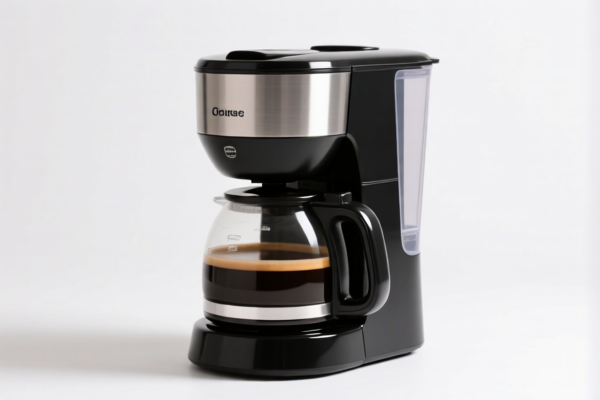


AI Analysis
☕ Coffee Machines: The Ultimate 2026 HS Code & Tariff Decoded Guide
🌐 HS Code Classification & Clearing Strategy | 2026 Tariff Breakdown | Expert Customs Solutions
📌 Product Definition & Classification: Do You Really Know What Your "Coffee Machine" Is?
A Coffee Machine is not just one product—it's a category with three distinct HS Code paths, each carrying a dramatically different tariff burden (from 17.5% to 62.0%). The difference? Intended use, mechanical function, and material composition.
⚠️ Critical Classification Rules:
- Heating Function (Thermal Processing) → 归入 8419 series (17.5% total)
- Kitchen Appliance (Specific Category) → 归入 8516.71.00.60 (21.2% total)
- Metal Kitchenware (Stainless/Steel) → 归入 7323 series (62.0% total!)
📦 I. HS Code Classification Details (2026 Authority Reference)
| HS Code | Product Description | Application Scope | Key Classification Criteria |
|---|---|---|---|
8516.71.00.60 |
Coffee Machine (Electric Heating Appliance) | Matched for coffee/tea machine use, fallback classification | Electric heating function, kitchen appliance |
8419.81.50.80 |
Coffee Machine (Thermal Processing Equipment) | For making hot drinks, heating food machinery | Primary function: Heating/processing food/drinks |
8419.81.90.40 |
Coffee Machine (Processing Equipment) | For hot drink preparation, no restaurant conflict | General processing equipment, no specific venue restriction |
7323.93.00.15 |
Coffee Machine (Inferred Metal Kitchenware) | Stainless/steel kitchen utensil classification | Material-driven: Stainless steel/iron/steel |
7323.93.00.45 |
Coffee Pot (Metal Kitchenware) | Cooking/kitchenware, metal material (stainless/iron/steel) | Material-focused: Metal kitchen utensil |
🔍 Critical Classification Insight:
-8419.81.50.80and8419.81.90.40are optimal for most coffee machines (17.5% total tax).
-8516.71.00.60is a fallback category with slightly higher tax (21.2%).
-7323.93.00.15and7323.93.00.45are high-risk for coffee machines classified as metal kitchenware (62.0% total!).
💰 II. 2026 Tariff Rate Breakdown (Detailed Tax Structure)
✅ Applicable Country: United States (US)
✅ Country of Origin: China (CN)
✅ Effective Date: November 10, 2025 onwards (including subsequent imports)
🎯 1. 8516.71.00.60 – Coffee Machine (Electric Heating Appliance)
| Item | Content |
|---|---|
| Base Tariff | 3.7% (ad valorem) |
| Additional Tariff (Section 301) | +7.5% (USITC Footnote 9903.01.24) |
| Section 122 Tariff | +10% (Special 122条款 for China) |
| Total Tariff | 21.2% |
| Tax Calculation | CIF Value × 21.2% |
| De Minimis Exemption | ❌ No (deny_de_minimis) |
| Legal Path | IEEPA:9903.01.25 → Section 301:9903.01.24 → 8516.71.00.60 |
📌 Explanation:
- 3.7% Base: Standard duty for electric heating appliances;
- 7.5% Additional: US Section 301 tariff on China;
- 10% Section 122: Special China-specific tariff;
- Total 21.2%: Moderate-High tariff for coffee machines.
🎯 2. 8419.81.50.80 – Coffee Machine (Thermal Processing Equipment)
| Item | Content |
|---|---|
| Base Tariff | 0.0% (ad valorem) |
| Additional Tariff (Section 301) | +7.5% |
| Section 122 Tariff | +10% |
| Total Tariff | 17.5% |
| Tax Calculation | CIF Value × 17.5% |
| De Minimis Exemption | ❌ No |
| Legal Path | IEEPA:9903.01.25 → Section 301:9903.01.24 → 8419.81.50.80 |
📌 Explanation:
- 0% Base: No standard duty for thermal processing equipment;
- 7.5% + 10%: Same additional tariffs as above;
- Total 17.5%: Lowest tariff for coffee machines (Optimal HS Code!).
🎯 3. 8419.81.90.40 – Coffee Machine (Processing Equipment)
| Item | Content |
|---|---|
| Base Tariff | 0.0% |
| Additional Tariff (Section 301) | +7.5% |
| Section 122 Tariff | +10% |
| Total Tariff | 17.5% |
| Tax Calculation | CIF Value × 17.5% |
| De Minimis Exemption | ❌ No |
| Legal Path | IEEPA:9903.01.25 → Section 301:9903.01.24 → 8419.81.90.40 |
📌 Note:
- Identical tariff structure to8419.81.50.80;
- Suitable for general-purpose coffee machines without restaurant-specific restrictions.
🚨 4. 7323.93.00.15 – Coffee Machine (Metal Kitchenware)
| Item | Content |
|---|---|
| Base Tariff | 2.0% |
| Additional Tariff (Section 301) | 0.0% |
| Section 122 Tariff | +10% |
| Steel/Aluminum/Copper Additional Tariff | +50% |
| Total Tariff | 62.0% |
| Tax Calculation | CIF Value × 62.0% |
| De Minimis Exemption | ❌ No |
| Legal Path | IEEPA:9903.01.25 → Section 301:9903.01.24 → 7323.93.00.15 → Steel/Aluminum/Copper Tariff |
📌 Critical Warning:
- 62.0% Total Tariff is extremely high and should be avoided for coffee machines;
- Only applies if classified as metal kitchenware (not as a functional appliance);
- DO NOT declare coffee machines as "stainless steel kitchen utensils".
🚨 5. 7323.93.00.45 – Coffee Pot (Metal Kitchenware)
| Item | Content |
|---|---|
| Base Tariff | 2.0% |
| Additional Tariff (Section 301) | 0.0% |
| Section 122 Tariff | +10% |
| Steel/Aluminum/Copper Additional Tariff | +50% |
| Total Tariff | 62.0% |
| Tax Calculation | CIF Value × 62.0% |
| De Minimis Exemption | ❌ No |
| Legal Path | IEEPA:9903.01.25 → Section 301:9903.01.24 → 7323.93.00.45 → Steel/Aluminum/Copper Tariff |
📌 Note:
- Identical high-risk tariff to7323.93.00.15;
- Only for coffee pots classified as metal kitchenware, not functional coffee machines.
🛠️ III. Clearing Operation Guide (Practical Pitfall Avoidance)
✅ 1. Documentation Checklist (Mandatory)
| Document | Required | Purpose |
|---|---|---|
| ✅ Product Specification Sheet | ✔️ | Includes heating method, capacity, material, voltage, power |
| ✅ Functional Diagram/Structure | ✔️ | Proves thermal processing function (critical for 8419 classification) |
| ✅ Product Photos (with Nameplate) | ✔️ | Clear images showing model, brand, input/output parameters |
| ✅ Third-Party Test Reports | ✔️ | FCC, CE, RoHS, UL (if applicable) |
| ✅ Commercial Invoice | ✔️ | Clearly state "Coffee Machine for Hot Drink Preparation" |
| ✅ Certificate of Origin (CO) | ✔️ | For non-China products to claim preferential rates |
| ✅ Packing List | ✔️ | Clarify整机 vs. components relationship |
✅ 2. Declaration Strategy (Key Mnemonic)
🔥 "Function First, Material Second, Name Precise, Tax Halved!"
| Scenario | Correct Declaration | Wrong Practice |
|---|---|---|
| Functional Coffee Machine (heating function) | 8419.81.50.80 or 8419.81.90.40 |
Misdeclare as "Kitchen Utensil" → 62% |
| Coffee Pot (non-functional, metal) | 7323.93.00.45 |
Misdeclare as "Machine" → 17.5% |
| Electric Heating Appliance | 8516.71.00.60 |
Misdeclare as "Metal Utensil" → 62% |
| Restaurant-Specific Coffee Machine | 8419.81.50.80 |
Misdeclare as "Kitchenware" → 62% |
✅ 3. Special Case Handling
| Scenario | Handling Advice |
|---|---|
| OEM Custom Coffee Machines | Provide client order + design drawings to avoid "non-standard" classification |
| Coffee Machines with Touchscreens | Still classify under 8419 series, not 9013 (sensors) |
| Coffee Machines for Medical Use | If specialized, apply "non-commercial use" exemption with proof |
| Coffee Machines for Military/Special Use | Apply "special purpose" declaration, may reduce tariff with prior沟通 |
🌍 IV. Global Market Comparison (2026 Latest)
| Country/Region | Recommended HS Code | Tariff | Certification Requirements | Notes |
|---|---|---|---|---|
| 🇺🇸 USA | 8419.81.50.80 / 8419.81.90.40 |
17.5% (China) | FCC + RoHS | 62% for metal kitchenware |
| 🇨🇳 China | 8419.81.50.80 |
0% (China) | CCC + RoHS | No additional tariffs |
| 🇪🇺 EU | 8419.81.50.80 |
0% (if CE compliant) | CE + ErP | No additional tariffs |
| 🇦🇺 Australia | 8419.81.50.80 |
5% | RCM | No additional tariffs |
| 🇯🇵 Japan | 8419.81.50.80 |
0% | PSE | No additional tariffs |
📌 Conclusion:
- USA is the only market with high additional tariffs on coffee machines;
- China-origin coffee machines face high US costs, consider supply chain adjustment;
- Avoid metal kitchenware classification at all costs (62% tariff).
📌 V. Common Mistakes & Pitfall Avoidance (Hard-Won Lessons)
❌ Mistake 1: Declaring a functional coffee machine as "Stainless Steel Coffee Pot"
👉 Consequence: Tariff jumps from 17.5% to 62% → Massive cost increase!
❌ Mistake 2: Not providing functional diagrams for coffee machines
👉 Consequence: Customs cannot verify heating function → Delays or return.
❌ Mistake 3: Using "Kitchen Utensil" or "Metal Pot" as declaration name
👉 Consequence: If actual product is a machine → Misclassification + penalties.
❌ Mistake 4: Splitting "Machine + Parts" for tax avoidance
👉 Consequence: Each part taxed separately → Total tax > 100%.
✅ Correct Approach:
"Electric Coffee Machine, 10-Cup, Thermal Processing Function, Stainless Steel Housing, 120V/60Hz, Model XYZ, FCC & RoHS Certified"
🎯 VI. Final Summary: Professional Declaration = Cost Savings!
🎯 Key Mnemonics:
🔹 "Function First: Heating = 17.5%, Metal = 62%"
🔹 "HS Code Saves Lives: 44.5% tariff difference = Huge profit loss!"
🔹 "Never declare coffee machine as kitchenware!"
📌 Pro Tips:
- If your coffee machine is originating from Vietnam, Mexico, Thailand, Malaysia, apply for IEEPA exemptions → Tariff drops to 0%~5%;
- Apply for Advance Ruling (Pre-classification) to avoid clearance risks;
- Always provide functional diagrams to prove thermal processing capability.
📣 Immediate Action Required:
📞 Contact professional customs broker + Provide product photos + Apply for HS Code pre-ruling
🚀 Let your coffee machines clear customs smoothly, maximize profits, and scale globally!
✨ Professional Clearance Starts with Accurate Classification!
💼 Every penny of your cost deserves precise calculation!
Customer Reviews
About HS Code Classification
The Harmonized System (HS) is an internationally standardized nomenclature developed by the World Customs Organization (WCO) to classify traded products. Over 200 countries use the HS system as the basis for customs tariffs, trade statistics, and import/export regulations.
Each HS code follows a hierarchical structure:
- Chapter (2 digits) — Broad category of goods (e.g., Chapter 84: Machinery and Mechanical Appliances)
- Heading (4 digits) — More specific grouping within the chapter
- Subheading (6 digits) — Internationally standardized breakdown, used by all WCO member countries
- National subdivisions (8-10 digits) — Country-specific extensions for further classification, such as US HTSUS 10-digit codes
Correct HS code classification is essential for smooth customs clearance, accurate duty payment, and compliance with trade regulations. Misclassification can lead to customs delays, overpayment of duties, or penalties.
When importing from CN to US, the applicable tariff rates may include:
- Most-Favored-Nation (MFN) rate — The standard duty rate applied to WTO members
- General rate — Applied to countries without trade agreements
- Trade remedy duties — Additional tariffs such as Section 301 (anti-dumping), Section 232 (national security), or countervailing duties
The information provided on this page is for reference purposes only. For official classification, please consult with your local customs authority or a licensed customs broker.