Coffee Machine Handle
CN → US| HS Code | Tariff Rate | Origin | Destination | Doc |
|---|---|---|---|---|
| 8419819040 | 17.5% | CN | US | Official Doc |
| 8467990190 | 35.0% | CN | US | Official Doc |
| 8419909520 | 39.0% | CN | US | Official Doc |
| 8467990130 | 35.0% | CN | US | Official Doc |
Product Images
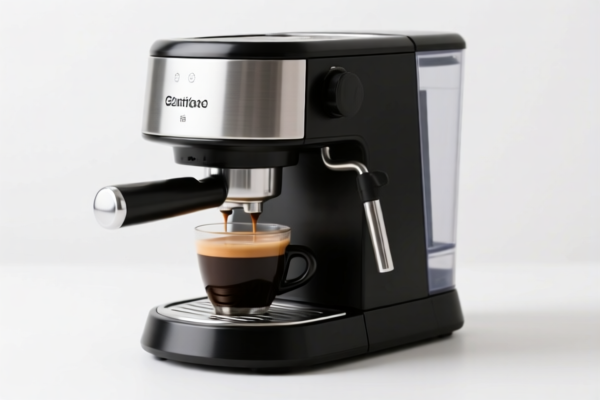
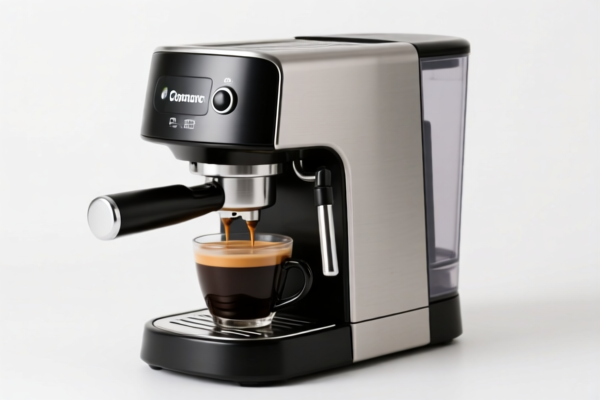
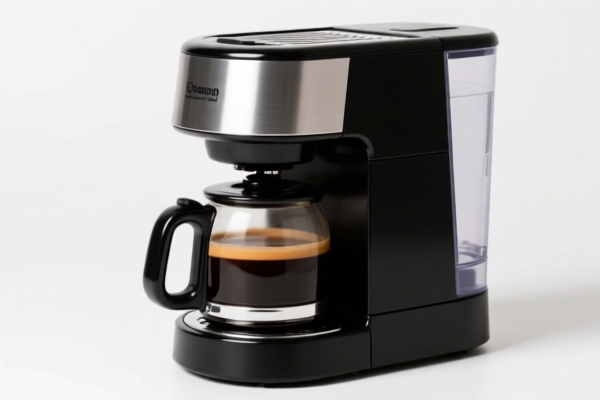
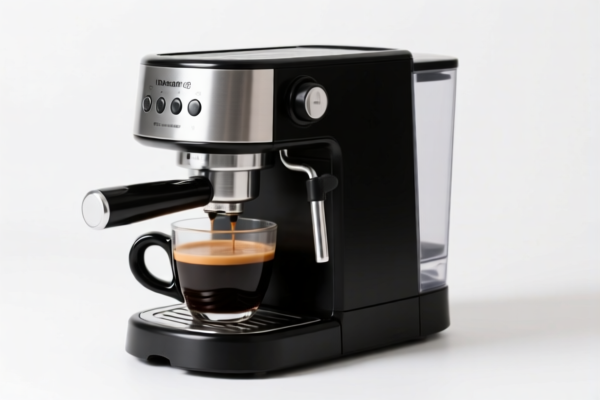
AI Analysis
☕ Coffee Machine Handle (Portafilter / Handle Component)
🌐 HS Code Reference & Customs Clearance Guide | 2026 Latest Tariff Analysis | Professional Strategy for US Imports
📌 I. Product Definition & Classification: What Exactly Is a "Coffee Machine Handle"?
The "Coffee Machine Handle" (often referred to as a Portafilter or its specific handle component) is a critical mechanical part used in espresso machines. In international trade, its classification depends heavily on its primary function, integration level, and end-use. It is not a standalone machine but a component that interacts with heating elements or handheld tool mechanisms.
⚠️ Key Distinction Point:
- If it is a mechanical part of a heating apparatus (like an espresso boiler assembly) → It may fall under Heating Apparatus Parts (8419).
- If it is considered a part of a handheld power tool or general machinery → It may fall under Tool Parts (8467).
- If it is strictly a spare part for a coffee brewing apparatus intended for commercial/hotel use → It may fall under Coffee Machine Parts (8419.90).
📦 II. HS Code Classification Details (2026 Latest Tariff Authority Comparison)
Based on the provided data, here are the four potential classifications for the "Coffee Machine Handle" and the corresponding tax implications for imports into the United States (originating from China).
| HS Code | Product Description & Logic | Total Tax Rate | Tax Breakdown Details |
|---|---|---|---|
8419.81.90.40 |
Heating Apparatus Part: Classified as a spare part for heating equipment machinery. Fits the logic of mechanical components for heating devices. | 17.5% | - Base Duty: 0.0% - Section 301 Add-on: 7.5% - Section 122 Duty: 10% |
8467.99.01.90 |
Tool Part (General): Classified as a component of handheld tools. Fits the "catch-all" attribute for miscellaneous tool parts. | 35.0% | - Base Duty: 0.0% - Section 301 Add-on: 25.0% - Section 122 Duty: 10% |
8419.90.95.20 |
Coffee Machine Part: Explicitly classified as a spare part for coffee machines, suitable for use in restaurants, hotels, or similar establishments. | 39.0% | - Base Duty: 4.0% - Section 301 Add-on: 25.0% - Section 122 Duty: 10% |
8467.99.01.30 |
Tool Part (Specific): Classified as a part of器具 (utensils/tools). Fits the logic of parts within the tool classification category. | 35.0% | - Base Duty: 0.0% - Section 301 Add-on: 25.0% - Section 122 Duty: 10% |
🔍 Key Observation:
The tax rate varies significantly from 17.5% to 39.0% depending on the exact functional definition applied by customs. The Section 122 Duty (10%) is a consistent constant across all options, while the Section 301 Add-on ranges from 7.5% to 25%, and the Base Duty is either 0% or 4%.
💰 III. Detailed Tariff Rate Analysis (Including Surcharges & Policy Add-ons)
✅ Applicable Country: United States (US)
✅ Origin: China (CN)
✅ Effective Time: Current regulations (2026 Context)
🎯 1. 8419.81.90.40 —— Heating Apparatus Mechanical Parts (Lowest Cost Option)
| Item | Content |
|---|---|
| Base Duty | 0% (ad valorem) |
| Section 301 Add-on | +7.5% |
| Section 122 Duty | +10% |
| Total Tax Rate | 17.5% |
| Calculation | CIF Value × 17.5% |
| De Minimis Exemption | ❌ Not Eligible (High tariff rate disqualifies from $800 de minimis) |
| Legal Basis | Classification logic: Part of heating machinery (8419.81). |
📌 Explanation:
This classification assumes the handle is a functional component of the heating mechanism itself. It benefits from the lowest Section 301 rate (7.5%) among the options, resulting in the most favorable total duty of 17.5%.
🎯 2. 8467.99.01.90 & 8467.99.01.30 —— Handheld Tool Parts (Medium Cost)
| Item | Content |
|---|---|
| Base Duty | 0% |
| Section 301 Add-on | +25% |
| Section 122 Duty | +10% |
| Total Tax Rate | 35.0% |
| Calculation | CIF Value × 35.0% |
| De Minimis Exemption | ❌ Not Eligible |
| Legal Basis | Classification logic: Part of tools/weapons/drills (8467). |
📌 Explanation:
If customs views the handle as a "part of a tool" rather than a "part of a heater," the Section 301 rate jumps to 25%. There is no difference in total tax between sub-item.90and.30in the provided data (both 35%), so.30might be preferred if it better matches the specific technical description of the utensil part.
🎯 3. 8419.90.95.20 —— Specific Coffee Machine Part (Highest Cost)
| Item | Content |
|---|---|
| Base Duty | 4.0% |
| Section 301 Add-on | +25% |
| Section 122 Duty | +10% |
| Total Tax Rate | 39.0% |
| Calculation | CIF Value × 39.0% |
| De Minimis Exemption | ❌ Not Eligible |
| Legal Basis | Classification logic: Specific part for coffee apparatus (8419.90). |
📌 Explanation:
This is the most expensive option. It incurs a 4% base duty plus the maximum 25% Section 301 surcharge. It should only be used if the product is unequivocally defined as a dedicated coffee machine accessory rather than a generic mechanical part.
🛠️ IV. Customs Clearance Practical Advice (Risk Avoidance Guide)
✅ 1. Documentation Checklist (Mandatory)
| Document | Required? | Description |
|---|---|---|
| ✅ Product Specification Sheet | ✔️ | Must detail material (stainless steel, plastic), weight, dimensions, and specific machine compatibility. |
| ✅ Commercial Invoice | ✔️ | Must clearly describe the item as "Coffee Machine Handle" or "Portafilter Handle" and state the HS Code. |
| ✅ Packing List | ✔️ | Show net/gross weight, number of pieces, and packaging type. |
| ✅ Photo of Product | ✔️ | Clear images showing the handle, any branding, and connection points (e.g., group head interface). |
| ✅ Origin Certificate | ✔️ | Proof of Origin from China is required to confirm Section 301/122 applicability. |
✅ 2. Declaration Strategy (Crucial Tips)
🔥 "Function Defines Duty, Description Defines Accuracy!"
| Scenario | Recommended Declaration | Risk if Incorrect |
|---|---|---|
| Generic Handle | Use 8419.81.90.40 (17.5%) |
Misclassifying as 8419.90 leads to 39% tax. |
| Part of Tool | Use 8467.99.01.30 (35%) |
If it's actually for a heater, this is a misclassification. |
| Specific Coffee Part | Use 8419.90.95.20 (39%) |
Only use if you have no other choice; highest cost. |
Pro Tip:
Try to argue for8419.81.90.40if the handle is integral to the heating function (e.g., it transfers heat or is part of the group head assembly). This saves you 21.5% compared to the most expensive classification.
✅ 3. Special Considerations
| Situation | Advice |
|---|---|
| Section 122 Duty | Note that the 10% Section 122 duty applies to all these codes for Chinese origin. This is a recent policy addition that cannot be avoided by reclassification within this dataset. |
| De Minimis | Since all total rates are >20%, these items cannot enter the US under the $800 de minimis rule (Section 321). Full entry is required. |
| Anti-Dumping | Verify if there are any specific anti-dumping orders on stainless steel parts, though the provided data does not mention AD/CVD. |
🌍 V. Summary & Recommendation
| HS Code | Tax Rate | Best For... | Risk Level |
|---|---|---|---|
8419.81.90.40 |
17.5% | Handles viewed as heating equipment parts. | ✅ Lowest Cost |
8467.99.01.90 |
35.0% | Handles viewed as general tool parts. | ⚠️ Medium Cost |
8467.99.01.30 |
35.0% | Handles viewed as utensil parts. | ⚠️ Medium Cost |
8419.90.95.20 |
39.0% | Handles viewed as dedicated coffee machine parts. | ❌ Highest Cost |
📌 Conclusion:
To minimize tax liability, aim to classify the coffee machine handle under8419.81.90.40by emphasizing its role as a mechanical component of the heating apparatus. This reduces the total tax burden from 39% to 17.5%. Ensure your technical documentation supports this functional interpretation.
📌 VI. Common Mistakes & Pitfalls
❌ Mistake 1: Assuming all coffee parts get the same tax rate.
👉 Result: Paying 39% when 17.5% was possible.
❌ Mistake 2: Ignoring the 10% Section 122 Duty.
👉 Result: Budgeting errors because the base + 301 rate (e.g., 4% + 25% = 29%) looks lower than the actual 39%.
❌ Mistake 3: Using vague descriptions like "Plastic Handle."
👉 Result: Customs may reclassify to the highest duty bracket (39%) due to ambiguity.
✅ Correct Approach:
"Stainless Steel Portafilter Handle for Espresso Machine Heating Group, Model XYZ, Compatible with Brand ABC."
🎯 VII. Final Advice for Clearing Customs
🎯 Remember:
🔹 "Heating Part = 17.5%, Tool Part = 35%, Coffee Part = 39%."
🔹 "Always account for the 10% Section 122 Duty!"
🔹 "De Minimis is not an option; full entry required."
📌 Action Item:
📞 Consult with a Customs Broker: Submit product photos and specifications to determine if
8419.81.90.40is defensible.
🚀 Prepare for Full Entry: Since de minimis is excluded, ensure you have an importer of record and bond set up.
✨ Precision in Classification Saves Money!
💼 Every percentage point counts in international trade!
Customer Reviews
About HS Code Classification
The Harmonized System (HS) is an internationally standardized nomenclature developed by the World Customs Organization (WCO) to classify traded products. Over 200 countries use the HS system as the basis for customs tariffs, trade statistics, and import/export regulations.
Each HS code follows a hierarchical structure:
- Chapter (2 digits) — Broad category of goods (e.g., Chapter 84: Machinery and Mechanical Appliances)
- Heading (4 digits) — More specific grouping within the chapter
- Subheading (6 digits) — Internationally standardized breakdown, used by all WCO member countries
- National subdivisions (8-10 digits) — Country-specific extensions for further classification, such as US HTSUS 10-digit codes
Correct HS code classification is essential for smooth customs clearance, accurate duty payment, and compliance with trade regulations. Misclassification can lead to customs delays, overpayment of duties, or penalties.
When importing from CN to US, the applicable tariff rates may include:
- Most-Favored-Nation (MFN) rate — The standard duty rate applied to WTO members
- General rate — Applied to countries without trade agreements
- Trade remedy duties — Additional tariffs such as Section 301 (anti-dumping), Section 232 (national security), or countervailing duties
The information provided on this page is for reference purposes only. For official classification, please consult with your local customs authority or a licensed customs broker.