Coffee Set
CN → US| HS Code | Tariff Rate | Origin | Destination | Doc |
|---|---|---|---|---|
| 6911103710 | 25.5% | CN | US | Official Doc |
| 9503000090 | 10.0% | CN | US | Official Doc |
| 7323999030 | 88.4% | CN | US | Official Doc |
| 6911103510 | 43.5% | CN | US | Official Doc |
| 7323930060 | 62.0% | CN | US | Official Doc |
Product Images

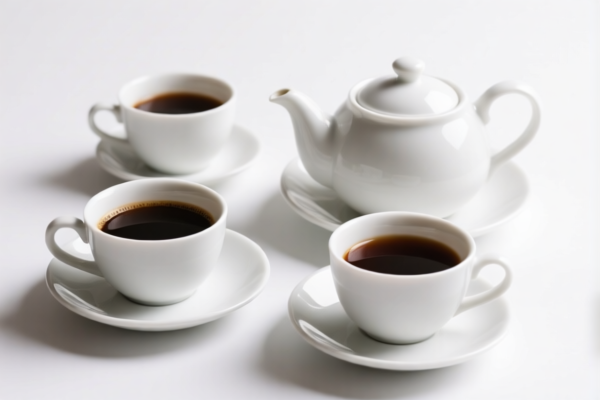
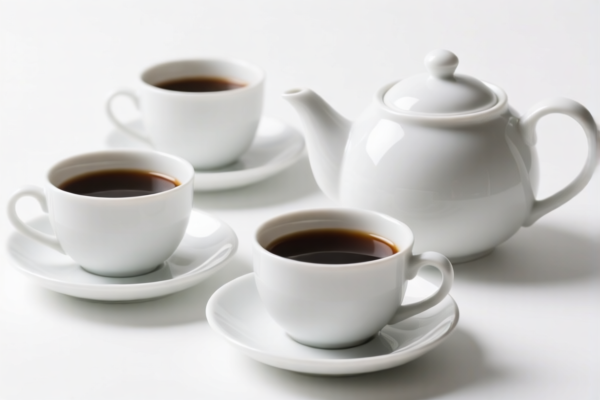

AI Analysis
☕ Coffee Set (Kitchen/Tableware Articles)
🌐 HS Code Reference & Customs Clearance Guide | 2026 Latest Tariff Analysis | Professional Strategy for US Imports
📌 I. Product Definition & Classification: What Exactly is a "Coffee Set"?
A "Coffee Set" is a general trade term referring to a collection of items used for preparing, serving, or drinking coffee. In international trade, its classification is highly ambiguous because it depends entirely on the material and specific composition of the set.
There is no single "Coffee Set" HS Code. Instead, customs officials dissect the set based on its primary constituent material: * Ceramic/Porcelain Cups & Saucers? → Likely falls under Chapter 69. * Stainless Steel Filters, Tumblers, or Utensils? → Likely falls under Chapter 73. * Mixed Materials? → The item with the essential character determines the classification, or it may fall into residual categories.
⚠️ Key Distinction Point:
- If the set is primarily porcelain cups/saucers, even if it includes a small steel spoon → 6911.10.
- If the set is primarily stainless steel items (e.g., French press, travel mug, spoon) → 7323.93 or 7323.99.
- If the set is mixed/undefined or considered a "toy" or "general utility" → 7323.99 or 9503.00.
📦 II. HS Code Classification Details (2026 Latest Tariff Matrix)
Based on the provided data analysis, here are the four most likely HS Code classifications for a "Coffee Set," along with their tax implications.
| HS Code | Product Description | Material Basis | Why It Fits |
|---|---|---|---|
6911.10.35.10 |
Tableware, kitchenware, other household articles and toilet articles of porcelain; Porcelain coffee sets | Porcelain/Ceramic | Matches "set" format; coffee sets typically include cups/saucers made of porcelain. No material conflict. |
6911.10.37.10 |
Tableware... of porcelain; Porcelain coffee sets (other) | Porcelain/Ceramic | Similar to above; fits "set" morphology and tableware usage. Lower base tariff than .35. |
7323.93.00.60 |
Tableware... of stainless steel; Stainless steel coffee accessories | Stainless Steel | If the set is defined by steel items (filters, mugs, stirring rods). Fits kitchen/household use. |
7323.99.90.30 |
Tableware... of iron or steel (other); Steel/Aluminum/Copper articles | Steel/Aluminum | If the set contains non-porcelain, non-stainless steel items (e.g., coated steel, aluminum mugs). High additional tariffs apply. |
9503.00.00.90 |
Toys, models, puzzles; Other | Mixed/General | If the set is considered a novelty item, toy, or lacks specific material definition. "Catch-all" category. |
🔍 Critical Insight:
- Porcelain Sets generally attract lower base tariffs but still face heavy US sanctions. - Steel Sets often face the highest combined tariffs due to Section 232 (Section 122) penalties on steel/aluminum. - Misclassification Risk: Declaring a steel coffee set as porcelain (6911) to avoid steel tariffs is customs fraud if the primary material is steel.
💰 III. 2026 Tariff Rate Breakdown (USA Imports from China)
✅ Applicable Country: United States (US)
✅ Origin: China (CN)
✅ Effective Date: 2025-11-10 onwards (including subsequent imports)
🎯 1. 6911.10.37.10 – LOWEST COST OPTION (Porcelain Coffee Set)
| Item | Content |
|---|---|
| Base Tariff | 8.0% (ad valorem) |
| USITC Section 301 Surcharge | +7.5% |
| IEEPA Section 122 Surcharge | +10% (针对中国/香港产品) |
| Total Tariff Rate | 25.5% |
| Tax Calculation | CIF Value × 25.5% |
| De Minimis Exemption | ❌ Not Eligible (deny_de_minimis) |
| Legal Path | IEEPA:9903.01.24 → USITC:6911.10.37.10 |
📌 Explanation:
- This is the most tax-efficient classification for a standard ceramic coffee set. - Base rate is low (8%), but the 7.5% + 10% surcharges make it significant. - Recommendation: If your set is >70% porcelain by value/weight, use this code.
🎯 2. 7323.93.00.60 – Stainless Steel Coffee Set
| Item | Content |
|---|---|
| Base Tariff | 2.0% (ad valorem) |
| USITC Section 301 Surcharge | +0.0% (Note: Some steel items may have 0% 301, but check specific footnote) |
| IEEPA Section 232 Surcharge | +50% (Section 122: Steel/Aluminum/Copper Surcharge) |
| Total Tariff Rate | 62.0% |
| Tax Calculation | CIF Value × 62.0% |
| De Minimis Exemption | ❌ Not Eligible |
| Legal Path | USITC:7323.93.00.60 → IEEPA:232 Steel Surcharge |
📌 Warning:
- 62% is extremely high. Even with a low base rate (2%), the 50% steel/aluminum surcharge destroys margins. - This applies to stainless steel coffee mugs, French presses, or filters. - Do NOT use this code unless absolutely necessary; try to restructure the product to include more ceramic/plastic components.
🎯 3. 7323.99.90.30 – Other Steel/Aluminum/Copper Tableware
| Item | Content |
|---|---|
| Base Tariff | 3.4% (ad valorem) |
| USITC Section 301 Surcharge | +25.0% |
| IEEPA Section 232 Surcharge | +50% (Steel/Aluminum/Copper Surcharge) |
| Total Tariff Rate | 88.4% |
| Tax Calculation | CIF Value × 88.4% |
| De Minimis Exemption | ❌ Not Eligible |
| Legal Path | IEEPA:232 Steel Surcharge → USITC:7323.99.90.30 |
📌 Critical Alert:
- 88.4% is nearly prohibitive. This is the worst-case scenario for metal tableware. - Applies if the item is not "stainless steel" (e.g., plated iron, aluminum alloy) or if it doesn't meet the7323.93specific subheading. - Avoid this classification at all costs.
🎯 4. 9503.00.00.90 – General/Mixed/Novelty Set
| Item | Content |
|---|---|
| Base Tariff | 0.0% (ad valorem) |
| USITC Section 301 Surcharge | +0.0% |
| IEEPA Surcharge | +0.0% |
| Total Tariff Rate | 10.0% |
| Tax Calculation | CIF Value × 10.0% |
| De Minimis Exemption | ❌ Not Eligible (Note: Data says 10% total, likely IEEPA only) |
| Legal Path | IEEPA:9903.01.24 (General) |
📌 Strategic Note:
- 10% is very low, but this code is for "Other" toys/items. - Risk: Customs may reject this if the item is clearly tableware. It is only viable if the "Coffee Set" is a toy set, novelty gift, or mixed material item that doesn't fit neatly into Chapter 69 or 73. - Audit Risk: High. You must prove it is not primarily ceramic or steel tableware.
🛠️ IV. Customs Clearance Practical Advice (Risk Mitigation)
✅ 1. Documentation Checklist (Mandatory)
| Document | Required? | Purpose |
|---|---|---|
| ✅ Product Composition Sheet | ✔️ | Must list % by weight of porcelain vs. steel vs. plastic. |
| ✅ Detailed Photo (Disassembled) | ✔️ | Show cups, saucers, spoons separately. Prove material differences. |
| ✅ Material Certificates | ✔️ | Mill certificates for steel; ceramic composition reports. |
| ✅ Commercial Invoice | ✔️ | Clearly state "Coffee Set" and list components (e.g., "4x Porcelain Cups, 1x Steel Spoon"). |
| ✅ Packing List | ✔️ | Separate line items if possible to justify "set" value. |
✅ 2. Classification Strategy (The "Essential Character" Test)
🔥 Golden Rule: "Material Dominance Determines the Code."
| Scenario | Recommended HS Code | Reasoning |
|---|---|---|
| Set is 90% Porcelain Cups | 6911.10.37.10 (25.5%) |
The essential character is porcelain. The steel spoon is incidental. |
| Set is 100% Stainless Steel | 7323.93.00.60 (62.0%) |
Avoid if possible. Consider switching materials. |
| Set is Mixed (Porcelain + Steel) | 6911.10.37.10 (25.5%) |
If porcelain >50% by value/weight, classify as porcelain. |
| Set is a "Toy" or "Novelty" | 9503.00.00.90 (10.0%) |
Only if marketed as a gift/toy, not for functional use. |
✅ 3. Pitfalls to Avoid (Blood & Tears Lessons)
❌ Mistake 1: Declaring a Steel Coffee Set as 6911.10 (Porcelain) to save tax.
👉 Consequence: Customs audit → Rejection → Backdated taxes (88.4% - 25.5% = 62.9% penalty) + Fines.
❌ Mistake 2: Declaring a Mixed Set under 9503 without proof.
👉 Consequence: If customs determines it’s primarily tableware, they will reclassify to 6911 or 7323, adding 15-60% in taxes.
❌ Mistake 3: Ignoring the Section 232 Steel Surcharge.
👉 Consequence: If you miss the 50% steel surcharge, you owe 88.4% instead of 25.5%. That’s a 62.9% surprise cost.
✅ Correct Approach:
"Porcelain Coffee Set (4 Cups, 4 Saucers, 4 Spoons). Main Material: Porcelain (70%). Accessories: Stainless Steel (30%). HS Code: 6911.10.37.10."
🌍 V. Global Market Comparison (2026)
| Country/Region | Recommended HS Code | Total Tariff (China Origin) | Notes |
|---|---|---|---|
| 🇺🇸 USA | 6911.10.37.10 |
25.5% | Best option. Avoid 7323 (62-88%). |
| 🇨🇳 China | 6911.10.37.10 |
8.0% | Low base tariff. No US surcharges. |
| 🇪🇺 EU | 6911.10.10 |
~5-7% | No Section 301/232. CE Marking required. |
| 🇦🇺 Australia | 6911.10.10 |
5% | Standard MFN rate. |
📌 Conclusion:
- USA is the most expensive market due to layered surcharges (301 + 232 + IEEPA). - Porcelain (6911) is the safest route for coffee sets entering the US. - Steel (7323) is a trap with up to 88.4% effective duty.
📌 VI. Common Errors & Avoidance Guide
❌ Error 1: Using "Coffee Set" as the only description.
👉 Fix: Use "Porcelain Coffee Set with Stainless Steel Spoon."
❌ Error 2: Ignoring the "Set" definition in 6911.
👉 Fix: Ensure items are marketed and sold as a single retail unit. If sold separately, each item is classified individually.
❌ Error 3: Assuming all steel items are 7323.93.
👉 Fix: Verify if it’s "stainless steel" (7323.93) or "other steel" (7323.99). The latter has higher surcharges.
✅ Pro Tip:
If your coffee set includes plastic handles or wooden components, and they exceed 50% by value, consider Chapter 39 or Chapter 44, which may have lower US tariffs than Chapter 73.
🎯 VII. Conclusion: Smart Classification, Higher Margins
🎯 Key Takeaways:
🔹 Porcelain (
6911) = 25.5% ✅ Recommended
🔹 Steel (7323) = 62-88% ❌ Avoid
🔹 Toy/Mixed (9503) = 10% ⚠️ High Audit Risk📞 Action Item:
1. Verify Material Composition of your specific product.
2. If >50% Porcelain, file under6911.10.37.10.
3. If >50% Steel, repackage or add ceramic components to shift classification.
4. Apply for Advance Ruling if unsure.
✨ Professional Clearance Starts with Accurate Classification!
💼 Every 1% of duty saved is pure profit!
Customer Reviews
About HS Code Classification
The Harmonized System (HS) is an internationally standardized nomenclature developed by the World Customs Organization (WCO) to classify traded products. Over 200 countries use the HS system as the basis for customs tariffs, trade statistics, and import/export regulations.
Each HS code follows a hierarchical structure:
- Chapter (2 digits) — Broad category of goods (e.g., Chapter 84: Machinery and Mechanical Appliances)
- Heading (4 digits) — More specific grouping within the chapter
- Subheading (6 digits) — Internationally standardized breakdown, used by all WCO member countries
- National subdivisions (8-10 digits) — Country-specific extensions for further classification, such as US HTSUS 10-digit codes
Correct HS code classification is essential for smooth customs clearance, accurate duty payment, and compliance with trade regulations. Misclassification can lead to customs delays, overpayment of duties, or penalties.
When importing from CN to US, the applicable tariff rates may include:
- Most-Favored-Nation (MFN) rate — The standard duty rate applied to WTO members
- General rate — Applied to countries without trade agreements
- Trade remedy duties — Additional tariffs such as Section 301 (anti-dumping), Section 232 (national security), or countervailing duties
The information provided on this page is for reference purposes only. For official classification, please consult with your local customs authority or a licensed customs broker.