Coiled PVC Plastic Pipe
CN → US| HS Code | Tariff Rate | Origin | Destination | Doc |
|---|---|---|---|---|
| 3917230000 | 38.1% | CN | US | Official Doc |
| 3917320010 | 38.1% | CN | US | Official Doc |
| 3926909987 | 22.8% | CN | US | Official Doc |
| 3926909989 | 22.8% | CN | US | Official Doc |
Product Images

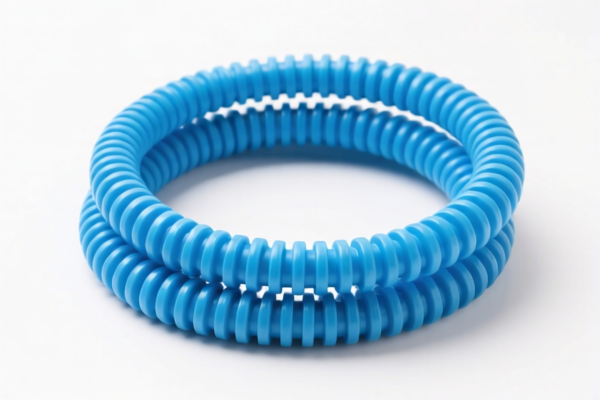


AI Analysis
🔩 Coiled PVC Plastic Pipe (Vinyl Tubing)
🌐 HS Code Reference & Customs Clearance Guide | 2026 Latest Tariff Analysis | Professional Clearance Strategy
📌 I. Product Definition & Classification: Do You Truly Understand "Coiled PVC"?
Coiled PVC pipes (commonly known as vinyl tubing or flexible conduit) are essential components in fluid transport, electrical wiring protection, and industrial applications. In international trade, the classification hinges on two critical factors:
1. Material Composition: Is it specifically "chlorine-containing polymers" (Vinyl Chloride) or general "plastics"?
2. Form Factor: Is it rigid pipes or flexible tubing?
⚠️ Key Distinction Point:
- If the material is strictly Vinyl Chloride Polymer and classified as pipes/tubes → It often falls under Chapter 3917 (Tubes, Pipes, and Hoses).
- If the product is considered a generic plastic fitting or doesn't meet specific pipe criteria → It may fall under Chapter 3926 (Other articles of plastics).
- The "Coiled" aspect does not change the HS code; it is the material specificity and function that determine the classification.
📦 II. HS Code Classification Matrix (Based on Provided Data)
| HS Code | Product Description | Material Specification | Tax Rate (Total) | Tax Breakdown |
|---|---|---|---|---|
3917.23.00.00 |
PVC Pipes, Vinyl Chloride Polymers, Pipes/Hoses | Vinyl Chloride Polymer (Specific) | 38.1% | Base: 3.1% + Section 301: 25.0% + Section 122: 10.0% |
3917.32.00.10 |
PVC Pipes, Polyvinyl Chloride, Pipe Form | Polyvinyl Chloride (Specific) | 38.1% | Base: 3.1% + Section 301: 25.0% + Section 122: 10.0% |
3926.90.99.87 |
PVC Pipes, Plastic, Hard/Tube Requirement | Generic Plastic (Meets Hard Pipe Req.) | 22.8% | Base: 5.3% + Section 301: 7.5% + Section 122: 10.0% |
3926.90.99.89 |
PVC Pipes, Plastic, Other Plastic Articles | Generic Plastic (Other Definition) | 22.8% | Base: 5.3% + Section 301: 7.5% + Section 122: 10.0% |
🔍 Critical Analysis:
- High Tax Bracket (38.1%): Applies when the pipe is specifically identified as Vinyl Chloride/Polyvinyl Chloride under Heading 3917. This is the most common classification for dedicated PVC piping.
- Lower Tax Bracket (22.8%): Applies when the product is classified under Heading 3926 (Other plastic articles). This might occur if the product is considered a "fitting," "accessory," or if the customs authority interprets the "coiled" nature or specific application as falling under "other plastic articles" rather than standard pipes.
- ⚠️ Warning: Misclassification between 3917 and 3926 can lead to a 15.3% difference in total duties.
💰 III. 2026 Latest Tariff Rate Details (Detailed Breakdown)
✅ Applicable Country: United States (US)
✅ Origin: China (CN)
✅ Effective Date: 2025-11-10 (Includes subsequent imports)
🎯 1. 3917.23.00.00 & 3917.32.00.10 —— PVC Pipes (Vinyl Chloride Based)
| Item | Details |
|---|---|
| Base Duty Rate | 3.1% (General Ad Valorem) |
| Section 301 Tariff | +25.0% (Trump/US Trade Policy) |
| Section 122 Tariff | +10.0% (Specific Trade Enforcement) |
| Total Effective Rate | 38.1% |
| Calculation Basis | CIF Value × 38.1% |
| De Minimis Eligibility | ❌ NO (Denied for Section 301/122 goods) |
| Legal Path | USITC:3917.23.00.00 → Section 301: 8518.10.00 → Section 122 |
📌 Explanation:
- These codes are classified under Chapter 3917 (Plastics tubing, pipes, and hoses).
- The 25% Section 301 tariff is the dominant cost driver, applicable to most Chinese-made PVC products.
- The 10% Section 122 tariff is an additional enforcement tariff.
- Total Cost Impact: High. Must be factored into landed cost calculations.
🎯 2. 3926.90.99.87 & 3926.90.99.89 —— Plastic Pipes (Other Plastic Articles)
| Item | Details |
|---|---|
| Base Duty Rate | 5.3% (General Ad Valorem) |
| Section 301 Tariff | +7.5% (Reduced Section 301 applicability or different subheading) |
| Section 122 Tariff | +10.0% |
| Total Effective Rate | 22.8% |
| Calculation Basis | CIF Value × 22.8% |
| De Minimis Eligibility | ❌ NO (Denied) |
| Legal Path | USITC:3926.90.99.87 → Section 301: 8518.10.00 → Section 122 |
📌 Explanation:
- These codes fall under Chapter 3926 (Other articles of plastics).
- The Section 301 rate is lower (7.5% vs 25%), resulting in significant savings IF the product qualifies for this classification.
- Risk: Customs may challenge this classification if the product is clearly "PVC Pipe" (Chapter 3917), leading to penalties for misdeclaration.
🛠️ IV. Customs Clearance Practical Advice (Real-World Pitfall Avoidance)
✅ 1. Documentation Checklist (Mandatory)
| Document | Required | Notes |
|---|---|---|
| Product Specifications | ✔️ | Must specify "PVC," "Vinyl Chloride," diameter, wall thickness, and flexibility. |
| Material Safety Data Sheet (MSDS) | ✔️ | To confirm chemical composition (Polyvinyl Chloride). |
| Product Photos | ✔️ | Show cross-section, coiling, and any labels/marks. |
| Commercial Invoice | ✔️ | Clearly state "Coiled PVC Pipe" or "Vinyl Tubing." Avoid vague terms like "Plastic Item." |
| Packing List | ✔️ | Detail roll length, weight, and packaging type. |
| Origin Certificate | ✔️ | Proof of Chinese origin is critical for applying tariffs. |
✅ 2. Declaration Strategy (Key Tactics)
🔥 "Material First, Function Second: Define the Substance, Not Just the Shape."
| Scenario | Recommended HS Code | Reasoning |
|---|---|---|
| Standard PVC Pipe (Rigid or Coiled) | 3917.23.00.00 or 3917.32.00.10 |
Explicitly "Vinyl Chloride Polymer." Highest accuracy for dedicated pipes. |
| Generic Plastic Tubing (Non-PVC) | 3926.90.99.89 |
If material is PE, PP, or other plastic, not PVC. |
| PVC Pipe Fittings/Accessories | 3926.90.99.87 |
If the product is a connector or joint, not the pipe itself. |
| Coiled PVC for Electrical Conduit | 3917.23.00.00 |
Even if used for wiring, if it's PVC pipe, it goes to 3917. |
📌 Critical Warning:
- Do NOT use3926codes for PVC pipes unless you have a strong legal justification (e.g., product is deemed a "fitting" or "accessory").
- Do NOT omit "Vinyl Chloride" from the description. If the material is not specified, Customs may default to the highest duty or flag for inspection.
✅ 3. Special Cases
| Situation | Handling Advice |
|---|---|
| Mixed Shipment (PVC Pipes + Fittings) | Declare separately. Pipes → 3917; Fittings → 3926. Avoid combining into one generic line item. |
| Coiled vs. Straight | No impact on HS Code. Both are "pipes/tubes." |
| Flexible PVC Tubing | Still 3917 if made of PVC. Flexibility does not move it to 3926. |
| Colored PVC Pipe | Same classification. Color is irrelevant to HS code. |
🌍 V. Global Market Comparison (2026)
| Country/Region | Recommended HS Code | Duty Rate (China Origin) | Certification Required | Notes |
|---|---|---|---|---|
| 🇺🇸 USA | 3917.23.00.00 |
38.1% | None specific for PVC | High tariffs due to Sec 301 & 122. |
| 🇨🇳 China | 3917.23.00.00 |
5.0% | None | Lower export duties. |
| 🇪🇺 EU | 3917.21.00 |
4.5% | REACH (Chemicals) | No Section 301 equivalent. |
| 🇬🇧 UK | 3917.21.00 |
4.5% | UKCA | Post-Brexit rules apply. |
| 🇦🇺 Australia | 3917.21.00 |
5.0% | None | FTA may reduce to 0%. |
📌 Conclusion:
- USA is the most expensive market for PVC pipes due to叠加 tariffs.
- EU/UK have lower base duties but strict chemical regulations (REACH).
- Consider supply chain diversification if targeting the US market to avoid 38.1% duties.
📌 VI. Common Errors & Pitfalls (Lessons Learned)
❌ Error 1: Classifying PVC Pipe as "Plastic Hose" under 3926.90.99.89 without justification.
👉 Consequence: Customs audit → Back taxes + Penalties. The difference is 15.3%.
❌ Error 2: Omitting "Vinyl Chloride" in the product description.
👉 Consequence: Customs may assign a higher duty rate or delay clearance for material verification.
❌ Error 3: Declaring Coiled Pipe as "Plastic Accessories."
👉 Consequence: If it's primarily a pipe, it's misclassified. Must be declared as pipe.
❌ Error 4: Assuming "Coiled" means it's not a "Pipe."
👉 Consequence: Incorrect. Coiled pipes are still pipes under HS Code 3917.
✅ Correct Declaration Example:
"PVC Coiled Pipe, Material: Polyvinyl Chloride (Vinyl Chloride Polymer), Form: Flexible Tube/Hose, Diameter: 1/2 inch, Length: 100ft roll, For Fluid Transport."
🎯 VII. Conclusion: Precision in Classification Saves Money
🎯 Key Takeaways:
🔹 "PVC Pipe = 3917 (38.1%) vs. 3926 (22.8%)" – The difference is significant.
🔹 "Material is King" – Specify "Vinyl Chloride" clearly.
🔹 "No De Minimis" – All these items are subject to full duties.
📌 Pro Tip:
- If your product is generic plastic tubing (not PVC), use 3926.90.99.89 for lower duties.
- If it is PVC, expect 38.1% in the US.
- Request an Advance Ruling from US Customs if there is ambiguity about "PVC vs. Other Plastic."
📣 Immediate Action:
📞 Consult a licensed customs broker.
📄 Provide material MSDS and product specs.
🚀 Optimize supply chain to mitigate high US tariffs.
✨ Professional Clearance Starts with Accurate Classification!
💼 Every percentage point in duty affects your bottom line!
Customer Reviews
About HS Code Classification
The Harmonized System (HS) is an internationally standardized nomenclature developed by the World Customs Organization (WCO) to classify traded products. Over 200 countries use the HS system as the basis for customs tariffs, trade statistics, and import/export regulations.
Each HS code follows a hierarchical structure:
- Chapter (2 digits) — Broad category of goods (e.g., Chapter 84: Machinery and Mechanical Appliances)
- Heading (4 digits) — More specific grouping within the chapter
- Subheading (6 digits) — Internationally standardized breakdown, used by all WCO member countries
- National subdivisions (8-10 digits) — Country-specific extensions for further classification, such as US HTSUS 10-digit codes
Correct HS code classification is essential for smooth customs clearance, accurate duty payment, and compliance with trade regulations. Misclassification can lead to customs delays, overpayment of duties, or penalties.
When importing from CN to US, the applicable tariff rates may include:
- Most-Favored-Nation (MFN) rate — The standard duty rate applied to WTO members
- General rate — Applied to countries without trade agreements
- Trade remedy duties — Additional tariffs such as Section 301 (anti-dumping), Section 232 (national security), or countervailing duties
The information provided on this page is for reference purposes only. For official classification, please consult with your local customs authority or a licensed customs broker.