Coiled Plastic Tube
CN → US| HS Code | Tariff Rate | Origin | Destination | Doc |
|---|---|---|---|---|
| 3917290090 | 38.1% | CN | US | Official Doc |
| 3926909987 | 22.8% | CN | US | Official Doc |
| 3917210000 | 38.1% | CN | US | Official Doc |
| 3926909989 | 22.8% | CN | US | Official Doc |
| 3926305000 | 22.8% | CN | US | Official Doc |
Product Images


AI Analysis
🌀 Coiled Plastic Tube (Spring Hose / Flexible Plastic Pipe)
🌐 HS Code Reference & Customs Clearance Guide | 2026 Latest Tariff Analysis | Professional Strategy for Flexible Plastic Tubing
📌 1. Product Definition & Classification: Understanding "Coiled Plastic Tube"
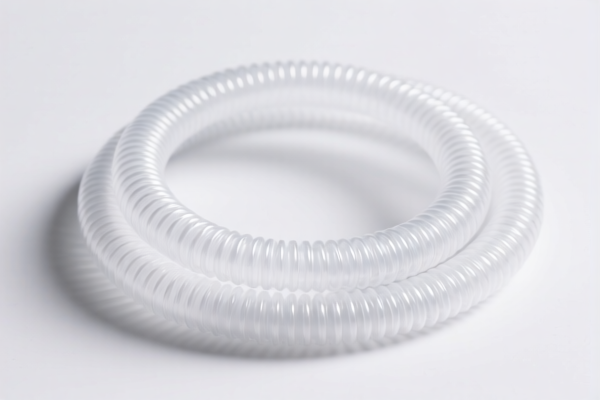
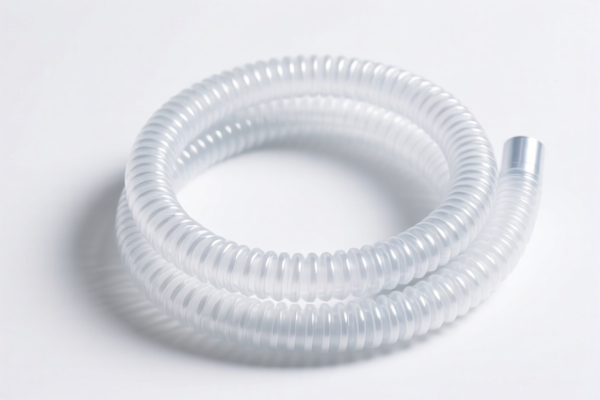
A Coiled Plastic Tube is a flexible, spring-like tubing made primarily from plastic materials. It is widely used in applications requiring flexibility, such as pneumatic systems, vacuum cleaning, aquarium ventilation, car detailing, and industrial fluid transfer.
In international trade, classification depends on two key factors: 1. Material: Primarily plastic (PVC, PU, PE, etc.). 2. Form/State: Tubular, flexible, often spiral-coiled for storage and retraction.
⚠️ Key Distinction:
- If it is a simple flexible tube (even if coiled for packaging) without rigid fittings or complex accessories → It is generally classified under Chapter 39 (Plastics and Articles Thereof), specifically Heading 3917 (Tubes, Pipes and Hoses, with or without their fittings).
- If it is considered a part of a machine (e.g., a specific vacuum cleaner hose) → It might fall under Chapter 84 or 85, but for general trade purposes, "Coiled Plastic Tube" as a standalone commodity is classified as Plastic Tube.
📦 2. HS Code Classification Details (Based on Provided Data)
The following HS Codes are derived from the provided data, matching the material (Plastic) and form (Tube).
| HS Code | Summary Description | Application Scenario | Tax Rate |
|---|---|---|---|
| 3917.29.00.90 | Plastic tubes, pipes, and hoses. Other (not rigid, not reinforced). | General flexible coiled tubes, PVC/PU spiral hoses, vacuum cleaner hoses. | 38.1% |
| 3926.90.99.87 | Other articles of plastics. Hard tubes or pipes (if rigid parts are included). | Plastic hard pipes or rigid connectors bundled with coils. | 22.8% |
| 3917.21.00.00 | Plastic tubes, pipes, and hoses. Of polymers of ethylene (PE). | Coiled tubes made specifically from Polyethylene (PE). | 38.1% |
| 3926.90.99.89 | Other articles of plastics. General plastic items. | If the tube is considered a generic plastic article rather than a standard "tube" under 3917. | 22.8% |
| 3926.30.50.00 | Other articles of plastics. Fittings and connectors. | If the product is primarily sold as plastic pipe fittings/connectors rather than the tube itself. | 22.8% |
🔍 Critical Note:
- Most common classification: 3917.29.00.90 or 3917.21.00.00 depending on the specific plastic type (PE vs. Other).
- 3917 is the standard heading for "Tubes, Pipes, and Hoses."
- 3926 is for "Other articles of plastics," which is less precise for tubes unless they lack specific tubular characteristics.
💰 3. Detailed Tariff Rate Explanation (2026 Latest)
✅ Applicable Country: United States (US)
✅ Origin: China (CN)
✅ Effective Date: November 10, 2025 onwards
🎯 Category A: High Tariff (38.1%)
HS Codes: 3917.29.00.90, 3917.21.00.00
| Item | Detail |
|---|---|
| Base Duty Rate | 3.1% |
| Section 301 Additional Duty | +25.0% |
| Section 122 Duty | +10.0% |
| Total Effective Rate | 38.1% |
| Calculation | CIF Value × 38.1% |
| De Minimis Exemption | ❌ Not Eligible |
| Legal Basis | USITC Section 301 + IEEPA Section 122 |
📌 Explanation:
- Base Duty (3.1%): Standard MFN duty for plastic tubes.
- Section 301 (25%): Additional tariff on Chinese goods under Trade Act Section 301.
- Section 122 (10%): Additional tariff under Section 122 of the Trade Act of 1974 (for national security/essential imports).
- Total 38.1% is significant and must be factored into pricing.
🎯 Category B: Moderate Tariff (22.8%)
HS Codes: 3926.90.99.87, 3926.90.99.89, 3926.30.50.00
| Item | Detail |
|---|---|
| Base Duty Rate | 5.3% |
| Section 301 Additional Duty | +7.5% |
| Section 122 Duty | +10.0% |
| Total Effective Rate | 22.8% |
| Calculation | CIF Value × 22.8% |
| De Minimis Exemption | ❌ Not Eligible |
| Legal Basis | USITC Section 301 + IEEPA Section 122 |
📌 Explanation:
- These codes fall under "Other Articles of Plastics" or "Fittings," which often have slightly lower base rates or different 301 classifications.
- 22.8% is still high but significantly lower than the 38.1% for standard tubes.
- ⚠️ Risk: Misclassifying a tube as a "fitting" or "other article" to reduce tax may lead to customs audits and penalties if the product does not meet the strict definition.
🛠️ 4. Customs Clearance Practical Advice
✅ 1. Documentation Checklist
| Document | Required | Notes |
|---|---|---|
| Commercial Invoice | ✅ | Must clearly state "Plastic Coiled Tube" or "Flexible Plastic Pipe." |
| Product Description | ✅ | Specify material (e.g., PVC, PU, PE), diameter, length, and wall thickness. |
| Material Safety Data Sheet (MSDS) | ✅ | Required for plastic products to confirm chemical composition. |
| Bill of Lading/Air Waybill | ✅ | Ensure HS Codes match the invoice. |
| Certificate of Origin | ✅ | To confirm Chinese origin for 301/122 duty assessment. |
| Photos of Product | ✅ | Show the coiled structure and any fittings to justify HS Code. |
✅ 2. Declaration Tips
🔥 Golden Rule: "Accurate Description, Correct HS Code, Avoid Misclassification!"
| Scenario | Recommended HS Code | Reason |
|---|---|---|
| Standard Coiled Hose (PVC/PU) | 3917.29.00.90 |
Most accurate for flexible plastic tubes. |
| Polyethylene (PE) Coiled Tube | 3917.21.00.00 |
Specific to PE material. |
| Plastic Connectors/Fittings | 3926.30.50.00 |
If the main value is in the connectors, not the tube. |
| Mixed Shipment (Tube + Rigid Pipes) | 3917.29.00.90 + 3926.90.99.87 |
Declare separately if distinct items. |
✅ 3. Common Pitfalls & Solutions
❌ Pitfall 1: Calling the product "Hose" without specifying material.
👉 Solution: Always specify "Plastic Hose" or "Plastic Tube." Natural rubber hoses fall under Chapter 40.
❌ Pitfall 2: Misclassifying as "Fittings" to save tax.
👉 Solution: If the tube is the primary item, use 3917. Misclassification can lead to back taxes + penalties.
❌ Pitfall 3: Ignoring Section 122 Duty.
👉 Solution: Remember that 10% Section 122 duty is added on top of 301 and base duties for many Chinese plastic goods.
🌍 5. Global Market Comparison (2026)
| Country/Region | Recommended HS Code | Total Tariff (China Origin) | Notes |
|---|---|---|---|
| 🇺🇸 USA | 3917.29.00.90 |
38.1% | Includes 301 (25%) + 122 (10%) + Base (3.1%) |
| 🇺🇸 USA | 3926.90.99.87 |
22.8% | Lower if classified as "other plastic article" |
| 🇨🇳 China | 3917.29.00.00 |
~5-10% | Import duty lower; no 301/122 |
| 🇪🇺 EU | 3917.29.00 |
~6-9% | No 301/122 equivalent; standard MFN rate |
| 🇬🇧 UK | 3917.29.00 |
~6-9% | Post-Brexit tariff structure similar to EU |
📌 Conclusion:
- US Market: Highly taxed due to 301 and 122 duties.
- EU/UK/China: Significantly lower tariffs.
- Strategy: If exporting to the US, consider supply chain diversification (e.g., sourcing from Vietnam or Mexico) to avoid high US tariffs.
📌 6. Final Recommendations
- Pre-Ruling: Apply for an Advance Ruling from US Customs if unsure about the classification between
3917and3926. - Product Packaging: Clearly label the product as "Plastic Coiled Tube" to avoid ambiguity.
- Cost Calculation: Factor in 38.1% for standard tubes or 22.8% for alternative classifications in your pricing model.
- Alternative Markets: If US tariffs are prohibitive, explore markets in Europe, Asia, or South America where tariffs are lower.
🎯 Pro Tip:
"Coiled is not a HS Code!
Material + Form = Correct Classification.
Don’t guess – verify – to avoid costly penalties!"
✨ Professional Customs Clearance Starts with Precise Classification!
💼 Every Percentage Point Counts!
Customer Reviews
About HS Code Classification
The Harmonized System (HS) is an internationally standardized nomenclature developed by the World Customs Organization (WCO) to classify traded products. Over 200 countries use the HS system as the basis for customs tariffs, trade statistics, and import/export regulations.
Each HS code follows a hierarchical structure:
- Chapter (2 digits) — Broad category of goods (e.g., Chapter 84: Machinery and Mechanical Appliances)
- Heading (4 digits) — More specific grouping within the chapter
- Subheading (6 digits) — Internationally standardized breakdown, used by all WCO member countries
- National subdivisions (8-10 digits) — Country-specific extensions for further classification, such as US HTSUS 10-digit codes
Correct HS code classification is essential for smooth customs clearance, accurate duty payment, and compliance with trade regulations. Misclassification can lead to customs delays, overpayment of duties, or penalties.
When importing from CN to US, the applicable tariff rates may include:
- Most-Favored-Nation (MFN) rate — The standard duty rate applied to WTO members
- General rate — Applied to countries without trade agreements
- Trade remedy duties — Additional tariffs such as Section 301 (anti-dumping), Section 232 (national security), or countervailing duties
The information provided on this page is for reference purposes only. For official classification, please consult with your local customs authority or a licensed customs broker.