Coin Exchange Machine
CN → US| HS Code | Tariff Rate | Origin | Destination | Doc |
|---|---|---|---|---|
| 8476900000 | 35.0% | CN | US | Official Doc |
| 8479899599 | 87.5% | CN | US | Official Doc |
| 8479896500 | 20.3% | CN | US | Official Doc |
| 8476290000 | 35.0% | CN | US | Official Doc |
| 8438800000 | 35.0% | CN | US | Official Doc |
Product Images
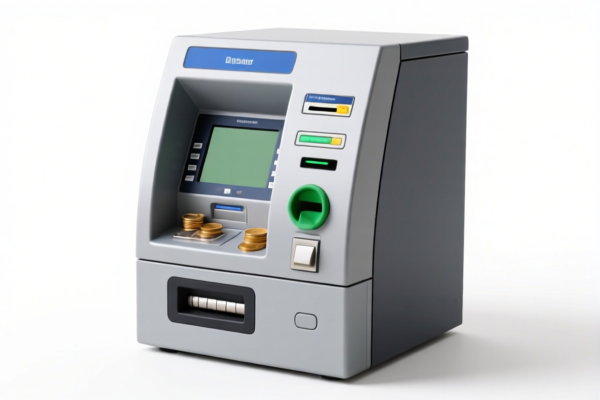
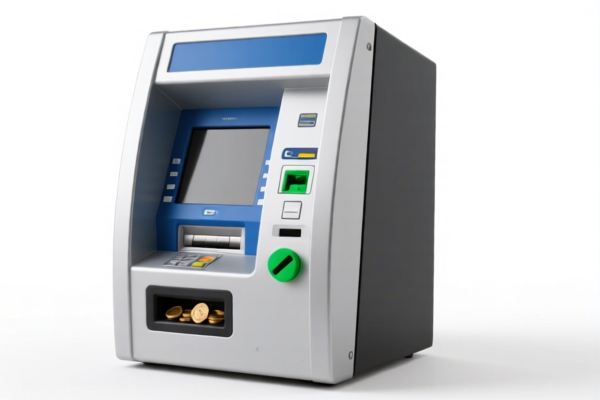
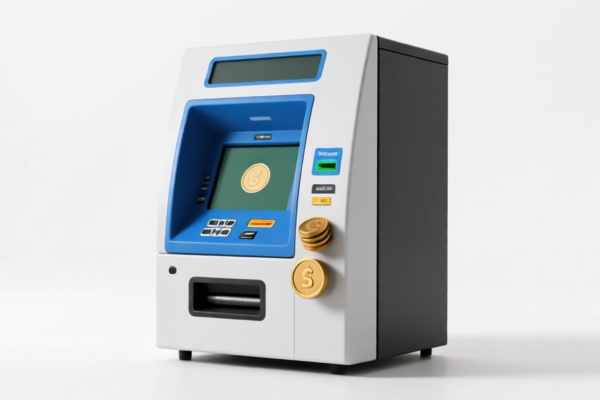
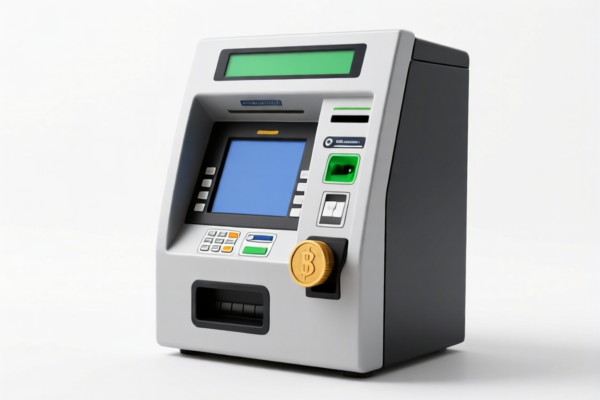
AI Analysis
🪙 Coin Exchange Machine (Coin Exchange Unit)
🌐 HS Code Reference & Customs Clearance Guide | 2026 Latest Tariff Analysis | Professional Clearance Strategy
📌 I. Product Definition & Classification: What is a "Coin Exchange Unit"?
A Coin Exchange Machine (often referred to as a "Coin Exchange Unit" or "Module") is a mechanical or electromechanical device designed to sort, identify, and exchange coins. In international trade, its classification depends heavily on whether it is a standalone functional machine or a component/part of a larger system (such as an automatic vending machine).
⚠️ Key Distinction:
- If it is a complete, self-contained unit with its own function (sorting/exchanging) → Often falls under 8479 (Other Machines) or 8476 (Vending Machines).
- If it is a part/assembly designed specifically for use in a vending machine → Falls under 8476.90 (Parts of Vending Machines).
- Material composition (steel, aluminum, copper) can trigger additional "122 Clause" tariffs if classified as metal products.
📦 II. HS Code Classification Details (2026 Latest Tariff Authority Comparison)
Based on the provided data, here are the four most relevant HS Codes for a Coin Exchange Machine/Unit:
| HS Code | Product Description | Application Scenario | Key Logic for Classification |
|---|---|---|---|
8476.90.00.00 |
Parts of Automatic Vending Machines (including coin changers) | Module/Part used within a vending machine; high functional match with "coin changers". | ✅ Parts/Components: High functional consistency with HS 8476.90 ("Automatic Vending Machines (including coin changers)"); no material conflict. |
8479.89.95.99 |
Other machines and mechanical appliances (n.e.s.) | General Mechanical Unit: If not specifically a vending machine part, it’s a "other machine" with specific function. | ⚠️ Metal Risk: Classified as "other machine". If made of steel/aluminum/copper, subject to 50% additional tariff (122 Clause). |
8479.89.65.00 |
Other machines with individual functions (electromechanical) | Electromechanical Module: E.g., coin recognition/exchange module. Fits "other machines with individual functions". | ✅ Functional Match: No material or form conflict; assumes electromechanical nature. |
8476.29.00.00 |
Other automatic vending machines (not for food/drink) | Standalone Vending Device: If the unit itself acts as a "coin exchange machine" (a type of vending/exchange device). | ✅ Functional Match: Use case matches "exchanger" under automatic vending machines; no material conflict. |
8438.80.00.00 |
Other machinery (n.e.s. in Chapter 84) | Sorting Machinery: If primarily a "coin sorter" not directly linked to vending/exchange. | ⚠️ Broad Category: Fits "other machinery" outside food/drink processing; no material conflict. |
🔍 Critical Reminder:
- 8476.90.00.00 is often the most accurate if the unit is clearly a part of a vending machine system (especially for coin changing).
- 8479.89.xxxx codes are "catch-all" categories. If the device is made of steel, aluminum, or copper, it may trigger the 50% additional tariff under the "122 Clause" for metal products.
- Always verify if the product is a standalone machine or a component.
💰 III. 2026 Latest Tariff Rate Breakdown (Including Surcharges & Policy Add-ons)
✅ Applicable Country: United States (US)
✅ Origin: China (CN)
✅ Effective Time: Post-2025 (includes subsequent imports)
🎯 1. 8476.90.00.00 — Parts of Automatic Vending Machines (Coin Changer Parts)
| Item | Content |
|---|---|
| Base Tariff | 0% (ad valorem) |
| Section 301 Tariff | +25% |
| 122-Clause Tariff | +10% |
| Total Tariff | 35.0% |
| Tax Calculation | CIF Value × 35% |
| De Minimis Exemption | ❌ Not Eligible |
| Legal Basis Path | Base: 0% → 301: 25% → 122-Clause: 10% |
📌 Explanation:
- This is the most common classification for coin exchange units used in vending machines.
- Total Tariff: 35%.
- No additional metal surcharges apply if classified as a "part" rather than a raw metal product.
🎯 2. 8479.89.95.99 — Other Machines (Catch-All)
| Item | Content |
|---|---|
| Base Tariff | 2.5% |
| Section 301 Tariff | +25% |
| 122-Clause Tariff | +10% |
| Metal Products Surcharge | +50% (if made of steel, aluminum, copper) |
| Total Tariff (Standard) | 37.5% (if non-metal) |
| Total Tariff (Metal) | 87.5% (if steel/aluminum/copper) |
| Tax Calculation | CIF × 87.5% (for metal products) |
| De Minimis Exemption | ❌ Not Eligible |
| Legal Basis Path | Base: 2.5% → 301: 25% → 122: 10% → Metal: 50% |
📌 Warning:
- If your coin exchange unit is made of steel, aluminum, or copper, the tariff jumps to 87.5%.
- This is the highest risk category due to the metal surcharge.
🎯 3. 8479.89.65.00 — Other Machines with Individual Functions
| Item | Content |
|---|---|
| Base Tariff | 2.8% |
| Section 301 Tariff | +7.5% |
| 122-Clause Tariff | +10% |
| Total Tariff | 20.3% |
| Tax Calculation | CIF Value × 20.3% |
| De Minimis Exemption | ❌ Not Eligible |
| Legal Basis Path | Base: 2.8% → 301: 7.5% → 122: 10% |
📌 Optimization Tip:
- This classification offers the lowest total tariff (20.3%) if the product can be justified as an "electromechanical module" rather than a metal-heavy machine.
- Requires strong technical documentation proving it’s a functional module, not just a metal assembly.
🎯 4. 8476.29.00.00 — Other Automatic Vending Machines
| Item | Content |
|---|---|
| Base Tariff | 0.0% |
| Section 301 Tariff | +25% |
| 122-Clause Tariff | +10% |
| Total Tariff | 35.0% |
| Tax Calculation | CIF Value × 35.0% |
| De Minimis Exemption | ❌ Not Eligible |
| Legal Basis Path | Base: 0% → 301: 25% → 122: 10% |
📌 Scenario:
- Use this if the "Coin Exchange Unit" is sold as a standalone machine that performs exchange functions similar to a vending machine.
🎯 5. 8438.80.00.00 — Other Machinery
| Item | Content |
|---|---|
| Base Tariff | 0.0% |
| Section 301 Tariff | +25% |
| 122-Clause Tariff | +10% |
| Total Tariff | 35.0% |
| Tax Calculation | CIF Value × 35.0% |
| De Minimis Exemption | ❌ Not Eligible |
| Legal Basis Path | Base: 0% → 301: 25% → 122: 10% |
📌 Scenario:
- Use if the primary function is sorting rather than exchanging, and it doesn’t fit neatly into vending machine categories.
🛠️ IV. Customs Clearance Practical Advice (Avoid Pitfalls)
✅ 1. Required Documentation Checklist
| Document | Mandatory? | Description |
|---|---|---|
| ✅ Product Specifications | ✔️ | Detailed specs: dimensions, weight, power supply, input/output, function (exchange/sort). |
| ✅ Circuit/Structure Diagrams | ✔️ | To prove if it’s a component (8476.90) or standalone machine (8479/8476). |
| ✅ Product Photos | ✔️ | Clear photos of the unit, labeling, and any attached modules. |
| ✅ Material Composition Report | ✔️ | CRITICAL: Declare materials (plastic, steel, copper, etc.) to avoid 50% metal surcharge under 8479.89.95.99. |
| ✅ Commercial Invoice | ✔️ | Describe as "Coin Exchange Unit/Module" with clear function. |
| ✅ Packing List | ✔️ | List all parts if it’s a kit. |
✅ 2. Declaration Strategy (Key Tips)
🔥 “Function First, Material Second! Avoid Metal Trap!”
| Scenario | Correct Declaration | Wrong Approach |
|---|---|---|
| Part of Vending Machine | 8476.90.00.00 (35%) |
Declare as "Machine" → 35-87.5% |
| Standalone Exchange Machine | 8476.29.00.00 (35%) |
Declare as "Part" → Risk of rejection |
| Electromechanical Module | 8479.89.65.00 (20.3%) |
Declare as "Metal Product" → 87.5% |
| Metal-Rich Unit | 8479.89.95.99 (87.5%) |
❌ Avoid if possible due to high tariff |
✅ 3. Special Handling
| Situation | Recommendation |
|---|---|
| OEM/Custom Modules | Provide design drawings to justify classification as "functional module" (8479.89.65.00). |
| Mixed Materials | Declare non-metal components primarily to avoid metal surcharge. |
| Pre-Ruling | Apply for Advance Ruling from US Customs (CBP) to confirm HS Code before shipment. |
| Supply Chain Diversification | If origin is not China, check for tariff exemptions (e.g., Vietnam, Mexico). |
🌍 V. Global Market Comparison (2026)
| Country/Region | Recommended HS Code | Tariff (CN Origin) | Certifications | Notes |
|---|---|---|---|---|
| 🇺🇸 USA | 8476.90.00.00 or 8479.89.65.00 |
35% or 20.3% | FCC, RoHS | Avoid 8479.89.95.99 if metal → 87.5% |
| 🇨🇳 China | 8476.90.00.00 |
~10-14% | CCC | No 301/122 tariffs |
| 🇪🇺 EU | 8476.90.00.00 |
0-2.7% | CE, RoHS | No additional surcharges |
| 🇬🇧 UK | 8476.90.00.00 |
0-2.7% | UKCA | Post-Brexit rules apply |
| 🇦🇺 Australia | 8476.90.00.00 |
5% | RCM | No major surcharges |
📌 Conclusion:
- USA is the most complex market due to 301 & 122 Clause tariffs.
- EU/UK/Australia are more favorable with lower or zero base tariffs.
- China has moderate tariffs but no US-style surcharges.
📌 VI. Common Mistakes & Pitfalls
❌ Mistake 1: Classifying a metal coin exchange unit as 8479.89.95.99 without declaring material
👉 Consequence: 87.5% tariff instead of 20.3% or 35%.
❌ Mistake 2: Declaring a standalone machine as a "part" (8476.90.00.00)
👉 Consequence: Customs may reject the declaration, delay clearance, or reclassify.
❌ Mistake 3: Not providing circuit diagrams for electromechanical modules
👉 Consequence: Unable to justify 8479.89.65.00 (20.3%) → forced into higher tax brackets.
❌ Mistake 4: Ignoring 122 Clause on metal products
👉 Consequence: Surprise 50% surcharge on top of 301 tariffs.
✅ Correct Practice:
“Coin Exchange Module, Electromechanical, for Vending Machine Use, Model XYZ, FCC Certified, Plastic & Metal Components”
🎯 VII. Conclusion: Precision Saves Money!
🎯 Remember:
🔹 “Function dictates HS Code, Material dictates Surcharge!”
🔹 “35% for Vending Parts, 20.3% for Modules, 87.5% for Metal Machines!”
📌 Pro Tip:
If your coin exchange unit is not made of steel/aluminum/copper, or can be classified as a functional module (8479.89.65.00), you can save up to 67.2% in tariffs.
Always apply for an Advance Ruling from US Customs to confirm your HS Code before shipping.
📣 Immediate Action:
📞 Contact a professional customs broker + Provide product specs + Apply for HS Code Advance Ruling
🚀 Clear customs smoothly, reduce costs, maximize profits!
✨ Professional Customs Clearance Starts with Accurate Classification!
💼 Every cent saved counts!
Customer Reviews
About HS Code Classification
The Harmonized System (HS) is an internationally standardized nomenclature developed by the World Customs Organization (WCO) to classify traded products. Over 200 countries use the HS system as the basis for customs tariffs, trade statistics, and import/export regulations.
Each HS code follows a hierarchical structure:
- Chapter (2 digits) — Broad category of goods (e.g., Chapter 84: Machinery and Mechanical Appliances)
- Heading (4 digits) — More specific grouping within the chapter
- Subheading (6 digits) — Internationally standardized breakdown, used by all WCO member countries
- National subdivisions (8-10 digits) — Country-specific extensions for further classification, such as US HTSUS 10-digit codes
Correct HS code classification is essential for smooth customs clearance, accurate duty payment, and compliance with trade regulations. Misclassification can lead to customs delays, overpayment of duties, or penalties.
When importing from CN to US, the applicable tariff rates may include:
- Most-Favored-Nation (MFN) rate — The standard duty rate applied to WTO members
- General rate — Applied to countries without trade agreements
- Trade remedy duties — Additional tariffs such as Section 301 (anti-dumping), Section 232 (national security), or countervailing duties
The information provided on this page is for reference purposes only. For official classification, please consult with your local customs authority or a licensed customs broker.