Cold Pack
CN → US| HS Code | Tariff Rate | Origin | Destination | Doc |
|---|---|---|---|---|
| 3926902100 | 21.7% | CN | US | Official Doc |
| 3926907500 | 14.2% | CN | US | Official Doc |
Product Images
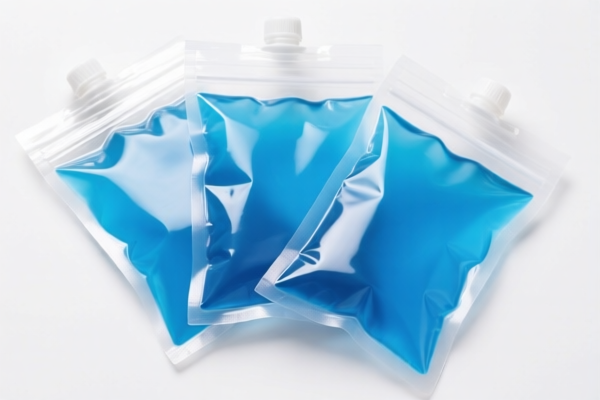
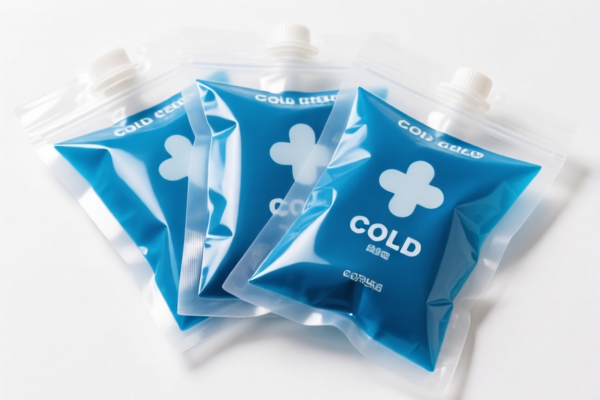
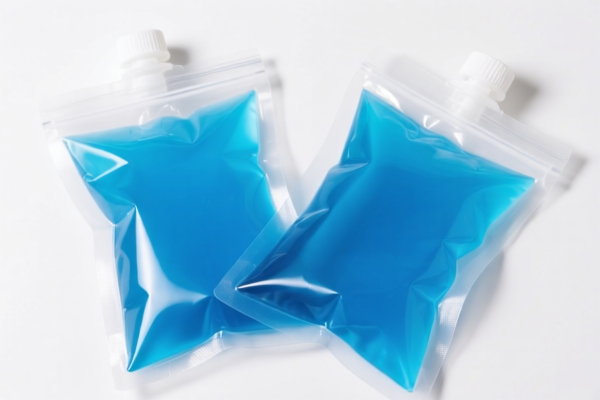
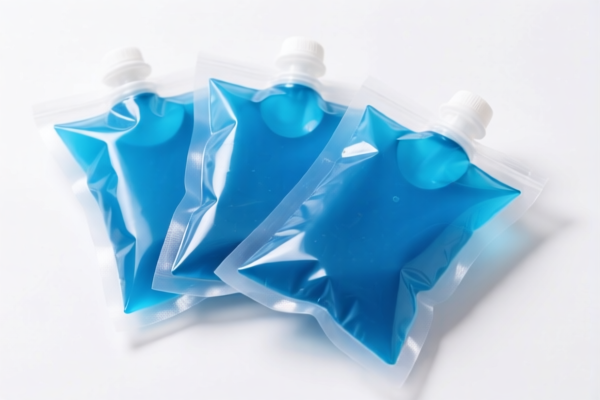
AI Analysis
❄️ Cold Pack (Medical/Industrial Reusable Cooling Packs)
🌐 HS Code Reference & Clearance Guide | 2026 Latest Tariff Analysis | Professional-Level Customs Strategy
📌 I. Product Definition & Classification: Do You Really Know What a "Cold Pack" Is?
In international trade, "Cold Packs" are primarily classified under Heading 3926 ("Other articles of plastics and articles of other materials of headings 3901 to 3914"), provided they are made of plastic. They are generally NOT classified as medical instruments (Chapter 90) because they are reusable, non-electronic, plastic containers.
There are two main types commonly encountered: 1. Thermal Insulation Bags (Ice Bags): Designed to keep ice frozen, often double-walled. 2. Flexible Reservoir Bags (Douche/Enema/Shower Bags): Flexible, filled with cold/hot water for therapeutic or cleaning purposes.
⚠️ Key Distinction Point:
- If it is a rigid or semi-rigid insulated bag for holding ice cubes → Classified as "Ice bags"
- If it is a flexible rubber/plastic bag for water therapy (douche, enema, or general hot/cold therapy) → Classified as "Douche bags; enema bags"
- CRITICAL NOTE: Do NOT classify inflatable air pillows or air mattresses here unless specified. If it is an inflatable air-filled product not elsewhere specified, it may fall under3926.90.75.00.
📦 II. HS Code Classification Details (2026 Latest Tariff Authority Comparison)
Based on the provided data, here are the relevant HS Codes for Cold Packs made of plastic:
| HS Code | Product Description | Applicable Scenario | Material Structure |
|---|---|---|---|
3926.90.21.00 |
Ice bags; douche bags, enema bags, hot water bottles, and fittings therefor | Reusable plastic ice packs, therapeutic cold/hot water bags, douche enema bags | ✅ Plastic/Resin body |
3926.90.75.00 |
Pneumatic mattresses and other inflatable articles, not elsewhere specified or included | Inflatable plastic cold packs (filled with air/foam), air cushions, air pillows | ✅ Inflatable/Air-filled |
🔍 Important Clarification:
- Most standard reusable "Blue Gel" cold packs or plastic ice bags used for food preservation or first aid fall under3926.90.21.00(Ice bags).
- If the product is specifically an inflatable air-based cooling cushion (not water/gel filled), it falls under3926.90.75.00.
- Medical Use: Even if marketed for medical therapy, if it is a simple plastic/water bag without electronic components or precision mechanics, it remains under Chapter 39 (Plastics), not Chapter 90 (Medical Instruments).
💰 III. 2026 Latest Tariff Rate Breakdown (Including Surtaxes & Policy Add-ons)
✅ Applicable Country: United States (US)
✅ Country of Origin: China (CN)
✅ Effective Time: Current rates applicable for imports from China
🎯 1. 3926.90.21.00 —— Ice Bags; Douche Bags; Enema Bags; Hot Water Bottles
| Item | Content |
|---|---|
| Base Tariff | 4.2% (Ad Valorem) |
| Section 301 Surtax (Trump Era/Biden Retention) | +7.5% (List 4B Products) |
| Total Tariff Rate | 11.7% |
| Tax Calculation | CIF Value × 11.7% |
| De Minimis Exemption Eligible? | ❌ No (Section 301 tariffs apply even to de minimis shipments under recent enforcement trends, though small packages < $800 may still face scrutiny. Best practice: Assume full tax.) |
| Legal Basis Path | HTSUS:3926.90.21.00 → USITC:Footnote 3 to Subchapter III → 301 Surtax List 4B |
📌 Explanation:
- The 4.2% is the standard Most Favored Nation (MFN) rate for plastic articles under Heading 3926.
- The 7.5% is the additional duty imposed under Section 301 of the Trade Act of 1974 on Chinese goods listed in List 4B.
- Total 11.7% is the landed cost addition for tariff purposes.
🎯 2. 3926.90.75.00 —— Other Inflatable Plastic Articles (Not Elsewhere Specified)
| Item | Content |
|---|---|
| Base Tariff | 4.2% (Ad Valorem) |
| Section 301 Surtax | +0.0% (Not on List 4B or subject to exemption) |
| Total Tariff Rate | 4.2% |
| Tax Calculation | CIF Value × 4.2% |
| De Minimis Exemption Eligible? | ✅ Likely Yes (Subject to CBP discretion, but base rate is low) |
| Legal Basis Path | HTSUS:3926.90.75.00 → USITC:General Rate |
📌 Note:
- This code is for inflatable plastic articles. If your "Cold Pack" is an air-filled cushion, this lower tariff (4.2%) may apply.
- If it is a water/gel-filled plastic bag, it DOES NOT belong here; it belongs in3926.90.21.00.
- Strategic Tip: If you can design the product as an inflatable air cushion with integrated gel packs (where the primary function is inflation), you might argue for this lower rate, but CBP often looks at the primary function. Water-filled thermal packs are almost always3926.90.21.00.
🛠️ IV. Customs Clearance Practical Advice (Real-World Pitfall Avoidance)
✅ 1. Preparation Checklist (Essential Documents)
| Document | Required? | Notes |
|---|---|---|
| ✅ Product Description | ✔️ | Must specify: "Reusable Plastic Ice Pack" or "Plastic Douche Bag". Avoid vague terms like "Cooling Device". |
| ✅ Material Composition | ✔️ | Specify: "100% Polyethylene (PE) Shell, Inner Gel/Water Filling". |
| ✅ Photos | ✔️ | Show the bag empty and filled to prove it is not inflatable (unless declaring under 75.00). |
| ✅ Commercial Invoice | ✔️ | Clearly state country of origin: China. |
| ✅ Certifications | ✔️ | FDA compliance (if claiming medical/food contact safety), RoHS (if electronic components exist). |
✅ 2. Declaration Strategy (Key Mantra)
🔥 "Plastic Body, Water Fill = 3926.21 (11.7%) | Inflatable Air = 3926.75 (4.2%)"
| Scenario | Correct HS Code | Risk of Misclassification |
|---|---|---|
| Reusable gel/water ice pack | 3926.90.21.00 |
❌ Don't declare as "Medical Instrument" (wrong chapter) or "Inflatable" (wrong structure). |
| Inflatable air cooling cushion | 3926.90.75.00 |
❌ Don't declare as "Ice Bag" if it contains no water/gel. |
| Disposable single-use cold pack | Check other chapters | ⚠️ Not in provided data. Disposable packs with chemicals may fall under Chapter 38 or 39.94. |
✅ 3. Special Case Handling
| Situation | Handling Advice |
|---|---|
| Labeled "Medical Use" | Still classify under 3926.90.21.00 if it's just a plastic bag. Medical labeling does not move it to Chapter 90 unless it has electronic sensors or precise mechanical dosing. |
| Combined Shipments | If shipping both inflatable cushions and ice bags in one container, separate the HS Codes on the invoice. Mixing them can delay clearance. |
| Origin Marking | Ensure the product itself or its packaging is marked "Made in China" to avoid Section 301 disputes. |
🌍 V. Global Market Comparison (2026 Outlook)
| Country/Region | Recommended HS Code | Tariff Rate (China Origin) | Notes |
|---|---|---|---|
| 🇺🇸 USA | 3926.90.21.00 |
11.7% (4.2% Base + 7.5% Surtax) | High tariff due to Section 301. |
| 🇺🇸 USA | 3926.90.75.00 |
4.2% (Base Only) | Lower rate for inflatable versions. |
| 🇨🇳 China | 3926.90.21.00 |
~6-7% (Import Duty) | Varies by specific plastic type. |
| 🇪🇺 EU | 3926.90.97 |
4.0% + VAT | No Section 301 equivalent. |
| 🇬🇧 UK | 3926.90.97 |
4.0% + VAT | Post-Brexit rules apply. |
📌 Conclusion:
- The USA is the most expensive market for Chinese plastic cold packs due to the 7.5% Section 301 surtax.
- EU/UK offer more favorable rates for similar plastic goods.
- Consider supply chain diversification if targeting the US market heavily.
📌 VI. Common Errors & Pitfalls (Lessons Learned)
❌ Error 1: Classifying "Reusable Ice Pack" under Medical Devices (Ch. 90).
👉 Consequence: Incorrect classification, potential penalties, and delayed clearance.
✅ Fix: It is a plastic article, not a diagnostic device. Use 3926.
❌ Error 2: Using "Inflatable" description for water-filled packs.
👉 Consequence: Misdeclaration. CBP may reject the 0% surtax claim for 3926.90.75.00.
✅ Fix: Clearly state "Non-inflatable, Water/Gel Filled" for 3926.90.21.00.
❌ Error 3: Ignoring the 7.5% Surtax in cost calculations.
👉 Consequence: Profit margin erosion.
✅ Fix: Always add 7.5% to base duty for Chinese-origin plastic goods under List 4B.
🎯 VII. Conclusion: Precise Classification Saves Costs!
🎯 Remember the Mantra:
🔹 "Plastic Bag + Water/Gel = 3926.21 (11.7%)"
🔹 "Plastic Bag + Air/Inflatable = 3926.75 (4.2%)"
🔹 "Never forget the 7.5% China Surtax in the US!"
📌 Pro Tip:
If your product is OEM customized, ensure the description matches the physical structure (inflatable vs. non-inflatable).
For high-volume US imports, consider applying for an Exclusion under Section 301 if available for specific plastic articles, though exclusions are rare for consumer cold packs.
📣 Immediate Action:
📞 Verify if your cold pack is inflatable or water/gel-filled.
📄 Mark products "Made in China".
📊 Calculate landed cost using 11.7% for standard ice packs.
✨ Professional Clearance Starts with Accurate Classification!
💼 Every percent of tariff counts!
Customer Reviews
About HS Code Classification
The Harmonized System (HS) is an internationally standardized nomenclature developed by the World Customs Organization (WCO) to classify traded products. Over 200 countries use the HS system as the basis for customs tariffs, trade statistics, and import/export regulations.
Each HS code follows a hierarchical structure:
- Chapter (2 digits) — Broad category of goods (e.g., Chapter 84: Machinery and Mechanical Appliances)
- Heading (4 digits) — More specific grouping within the chapter
- Subheading (6 digits) — Internationally standardized breakdown, used by all WCO member countries
- National subdivisions (8-10 digits) — Country-specific extensions for further classification, such as US HTSUS 10-digit codes
Correct HS code classification is essential for smooth customs clearance, accurate duty payment, and compliance with trade regulations. Misclassification can lead to customs delays, overpayment of duties, or penalties.
When importing from CN to US, the applicable tariff rates may include:
- Most-Favored-Nation (MFN) rate — The standard duty rate applied to WTO members
- General rate — Applied to countries without trade agreements
- Trade remedy duties — Additional tariffs such as Section 301 (anti-dumping), Section 232 (national security), or countervailing duties
The information provided on this page is for reference purposes only. For official classification, please consult with your local customs authority or a licensed customs broker.