Cold resistant Film
CN → US| HS Code | Tariff Rate | Origin | Destination | Doc |
|---|---|---|---|---|
| 3919102055 | 40.8% | CN | US | Official Doc |
| 7607193000 | 23.2% | CN | US | Official Doc |
| 7607196000 | 13.0% | CN | US | Official Doc |
| 3920992000 | 39.2% | CN | US | Official Doc |
| 3920995000 | 40.8% | CN | US | Official Doc |
Product Images
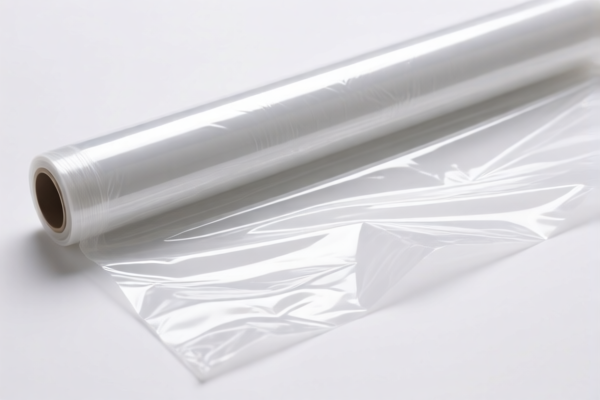

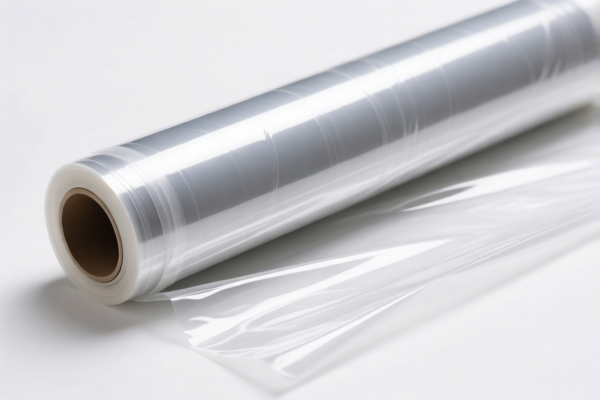
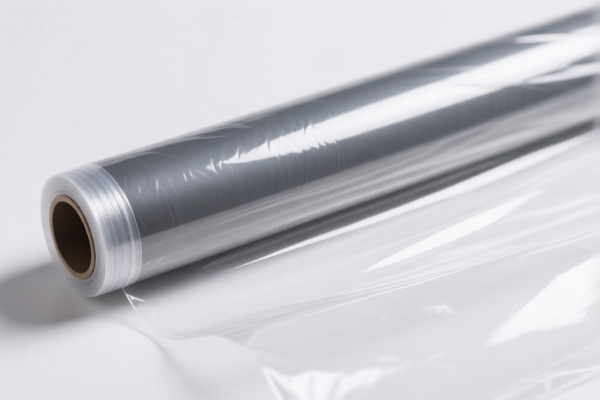
AI Analysis
❄️ Cold Resistant Film (Plastics)
🌐 HS Code Reference & Clearance Guide | 2026 Latest Tariff Analysis | Professional Clearance Strategy
📌 I. Product Definition & Classification: What is "Cold Resistant Film"?
"Cold Resistant Film" refers to plastic sheets, films, strips, or self-adhesive materials engineered to maintain flexibility and integrity at low temperatures. In international trade, these products do not have a single dedicated HS code based solely on "cold resistance." Instead, classification depends on form (roll vs. cut), structure (self-adhesive vs. non-adhesive), and base material (specific plastic type).
Key distinctions include: * Self-Adhesive Films: Tape-like formats with an adhesive backing, often used for labeling or protection. * Non-Cellular/Non-Reinforced Sheets: Standard plastic films or strips without cellular structures (like foam) or reinforcements. * Width Constraint: For self-adhesive products, width (< 20 cm vs. > 20 cm) is a critical classification delimiter.
⚠️ Critical Distinction Point:
- If the product is self-adhesive and in rolls ≤ 20 cm wide → Generally falls under 3919.
- If the product is a general plastic film/strip (non-cellular, non-reinforced) → Generally falls under 3920.
- "Cold Resistance" is a performance characteristic, not a classification basis. You must classify based on physical attributes first.
📦 II. HS Code Classification Details (2026 Latest Tariff Authority Mapping)
Based on the provided <DATA>, here are the applicable HS Codes and their corresponding tax implications. Note that some codes carry significant additional tariffs (Section 301/IEEPA), while others are duty-free.
| HS Code | Product Description | Applicable Scenario | Tax Rate (Base + Additional) |
|---|---|---|---|
3919.90.50.60 |
Self-adhesive plates, sheets, film, foil, tape, strip... of plastics: In rolls ≤ 20 cm: Other | Self-adhesive plastic tape/film in narrow rolls (<20cm), not further specified | 30.8% (5.8% Base + 25% Additional) |
7607.19.30.00 |
Aluminum foil (≤0.2mm thick): Not backed: Other: Cut to shape, thickness ≤0.15 mm | Cold-resistant Aluminum foil, cut to specific shapes, very thin | 0.0% (0% Base + 0% Additional) |
7607.19.60.00 |
Aluminum foil (≤0.2mm thick): Not backed: Other: Other | Cold-resistant Aluminum foil, not backed, other formats | 0.0% (0% Base + 0% Additional) |
3920.99.20.00 |
Other plastic plates, sheets, film, foil, strip: Non-cellular, non-reinforced: Of other plastics: Film, strip, sheets (flexible): Other | General Plastic film/strips (e.g., PET, PE, PP) for cold storage, not self-adhesive, not cellular | 29.2% (4.2% Base + 25% Additional) |
3920.99.50.00 |
Other plastic plates, sheets, film, foil, strip: Non-cellular, non-reinforced: Of other plastics: Other | General Plastic sheets/films, not fitting other subheadings, non-cellular | 0.0% (0% Base + 0% Additional) |
🔍 Key Reminder:
- Aluminum Foil (7607.19): Enjoy 0% total tax. If your "cold resistant film" is actually aluminum foil (often used in cold chain packaging), this is the optimal code.
- Self-Adhesive Plastic (3919.90.50.60): High tariff (30.8%) due to additional duties.
- General Plastic Film (3920.99):
- If classified as "Flexible film/strips" → 29.2%.
- If classified as "Other" → 0.0%.
- Strategy: Ensure your product documentation clearly supports the "Other" classification under 3920.99.50.00 if it doesn't fit the specific "flexible film/strips" definition, to save 29.2%.
💰 III. 2026 Latest Tariff Rate Breakdown (Including Additional Taxes)
✅ Applicable Country: USA (US)
✅ Country of Origin: China (CN) (Assumed based on typical 25% addition context; adjust if origin differs)
✅ Effective Time: 2025/2026 Rules Apply
🎯 1. 3919.90.50.60 —— Self-Adhesive Plastic Film (Narrow Rolls)
| Item | Details |
|---|---|
| Base Tariff | 5.8% |
| Section 301 Additional Tariff | +25.0% |
| Total Tariff | 30.8% |
| Calculation Base | CIF Value × 30.8% |
| De Minimis Exemption | ❌ Not Applicable (High value threshold items usually excluded) |
📌 Explanation:
- Self-adhesive plastics of width ≤ 20 cm are subject to Section 301 additional tariffs.
- Even if the base duty is low, the 25% add-on makes this category expensive.
🎯 2. 3920.99.20.00 —— General Plastic Film/Strip (Flexible)
| Item | Details |
|---|---|
| Base Tariff | 4.2% |
| Section 301 Additional Tariff | +25.0% |
| Total Tariff | 29.2% |
| Calculation Base | CIF Value × 29.2% |
| De Minimis Exemption | ❌ Not Applicable |
📌 Explanation:
- This code covers many industrial plastic films. The 25% add-on applies, resulting in a nearly 30% total tax burden.
🎯 3. 7607.19.30.00 & 7607.19.60.00 —— Aluminum Foil (Cold Resistant)
| Item | Details |
|---|---|
| Base Tariff | 0.0% |
| Section 301 Additional Tariff | 0.0% |
| Total Tariff | 0.0% |
| Calculation Base | No Duty |
📌 Explanation:
- This is the most tax-efficient path if your product is aluminum-based.
- "Cold resistance" is inherent in aluminum, so you must prove it is Aluminum and Not Backed (or backed with paper/plastic but still within the 0.2mm foil definition).
- Crucial: Do not misdeclare aluminum foil as plastic to avoid scrutiny. If it is 100% aluminum, use 7607.
🎯 4. 3920.99.50.00 —— General Plastic "Other"
| Item | Details |
|---|---|
| Base Tariff | 0.0% |
| Section 301 Additional Tariff | 0.0% |
| Total Tariff | 0.0% |
| Calculation Base | No Duty |
📌 Explanation:
- This code is a "catch-all" for plastics that don't fit other specific subheadings.
- Strategy: If your film is not strictly a "flexible film/strip" as defined in 3920.99.20.00, argue for 3920.99.50.00 to achieve 0% tax.
- Risk: Customs may challenge this if the product is clearly a standard plastic film. Justification must be strong.
🛠️ IV. Clearance Practical Advice (Avoid Pitfalls)
✅ 1. Required Documentation Checklist
| Document | Mandatory? | Notes |
|---|---|---|
| Product Specification Sheet | ✔️ | Must detail material composition (Plastic vs. Aluminum), thickness, and temperature resistance range (e.g., -40°C to +80°C). |
| Material Composition Proof | ✔️ | For 7607.19, prove it is Aluminum. For 3920, prove it is Plastic (e.g., PET, PE). |
| Photos of Product | ✔️ | Show cross-section if multi-layer. Clearly show "Self-Adhesive" nature if applicable. |
| Commercial Invoice | ✔️ | Must clearly state: "Cold Resistant [Aluminum/Plastic] Film, Thickness X mm, Width Y mm." |
| Packing List | ✔️ | Specify roll lengths and widths. |
✅ 2. Classification Strategy Tips
🔥 "Material First, Form Second, Tax Third!"
| Scenario | Recommended HS Code | Tax Rate | Why? |
|---|---|---|---|
| Aluminum Foil (≤0.2mm) | 7607.19.30.00 or 7607.19.60.00 |
0% | Lowest tax. Aluminum is naturally cold-resistant. |
| Self-Adhesive Tape (≤20cm) | 3919.90.50.60 |
30.8% | Hard to avoid due to Section 301. |
| Standard Plastic Film | 3920.99.20.00 |
29.2% | If clearly a flexible film/strip. |
| Specialty Plastic Sheet/Film | 3920.99.50.00 |
0% | Attempt to classify as "Other" if it doesn't fit "flexible film" definition. |
✅ 3. Special Case Handling
| Situation | Advice |
|---|---|
| Is it Plastic or Aluminum? | If it's a composite (e.g., plastic film coated with aluminum), classification becomes complex. Pure aluminum favors 7607. Plastic-aluminum laminate may fall under 3920 or 7607 depending on essential character. Consult customs broker. |
| "Cold Resistant" Marketing Term | Do not rely on "Cold Resistant" for HS coding. Customs looks at material and form. Use it in description for clarity but not for classification. |
| Width > 20 cm (Self-Adhesive) | If self-adhesive film width is > 20 cm, it may fall under 3919.90.90 or 3920, which have different tax rates. Ensure your rolls are accurately measured. |
| Backed vs. Unbacked (Aluminum) | 7607.19 covers both backed and unbacked foil ≤0.2mm. However, 7607.19.30 is for "Cut to shape ≤0.15mm," and 7607.19.60 is for "Other." Choose the one that matches your product's shape and thickness precisely. |
🌍 V. Global Market Clearance Comparison (2026)
| Market | Recommended HS Code | Estimated Duty | Key Requirement |
|---|---|---|---|
| 🇺🇸 USA | 7607.19.xxxx or 3920.99.50.00 |
0% | Accurate material declaration. Avoid 3919 or 3920.99.20 if possible due to 301 tariffs. |
| 🇪🇺 EU | 3920 or 7607 |
0-6.5% | No additional Section 301 tariffs. CE marking may be needed for end-use. |
| 🇨🇳 China | 3920 or 7607 |
0-7% | Standard import duties. No US-style additional tariffs. |
| 🇨🇦 Canada | 3920 or 7607 |
0-5% | USMCA may apply if originating in North America. |
📌 Conclusion:
- The USA is the only market with significant additional tariffs on certain plastic/aluminum goods from China.
- Optimal Strategy for USA: Aim for Aluminum Foil (7607) or Plastic "Other" (3920.99.50.00) to achieve 0% duty.
- Avoid Self-Adhesive (3919) and Flexible Plastic Film (3920.99.20) unless necessary, due to ~30% tax.
📌 VI. Common Mistakes & Pitfalls (Blood Lessons)
❌ Mistake 1: Declaring "Cold Resistant Film" generically without specifying material.
👉 Consequence: Customs assigns a default high-duty code or requests extensive clarification, causing delays.
❌ Mistake 2: Misclassifying Aluminum Foil as Plastic Film.
👉 Consequence: If caught, may face penalties for undervaluation or misclassification. However, if Aluminum is 0% and Plastic is 29%, customs may audit for truthfulness.
❌ Mistake 3: Ignoring Width for Self-Adhesive Products.
👉 Consequence: If width is >20 cm but declared as ≤20 cm, it’s a major misdeclaration.
❌ Mistake 4: Claiming 3920.99.50.00 (0%) for a standard plastic sheet film.
👉 Consequence: If the product is clearly a "flexible film/strip," customs may reclassify it to 3920.99.20.00 (29.2%) and demand back taxes.
✅ Correct Action:
"Aluminum Foil, 0.1mm, Cold Resistant, Unbacked, 2026"
"Plastic Film, PET, Cold Resistant, Non-Adhesive, 0.2mm, Other Plastic"
🎯 VII. Conclusion: Precision Classification Saves Money!
🎯 Remember:
🔹 "Aluminum = 0% (Best)"
🔹 "Plastic 'Other' = 0% (Good, if justified)"
🔹 "Plastic 'Flexible' = 29.2% (Expensive)"
🔹 "Self-Adhesive ≤20cm = 30.8% (Most Expensive)"
📌 Pro Tip:
If your product is plastic-based, work with your supplier to ensure the product specifications allow for classification under 3920.99.50.00 ("Other") rather than "Flexible Film." Provide detailed technical data that distinguishes it from standard flexible films.
For Aluminum, ensure the thickness and backing details are precise to fit 7607.19.30.00 or 7607.19.60.00.
📣 Immediate Action:
📞 Contact a licensed customs broker.
📄 Provide Material Safety Data Sheets (MSDS) and Product Spec Sheets.
🚀 Apply for a Binding Ruling if the classification is uncertain to avoid post-entry audits.
✨ Professional Clearance, Start with Precise Classification!
💼 Your Bottom Line Depends on the First 4 Digits of HS Code!
Customer Reviews
About HS Code Classification
The Harmonized System (HS) is an internationally standardized nomenclature developed by the World Customs Organization (WCO) to classify traded products. Over 200 countries use the HS system as the basis for customs tariffs, trade statistics, and import/export regulations.
Each HS code follows a hierarchical structure:
- Chapter (2 digits) — Broad category of goods (e.g., Chapter 84: Machinery and Mechanical Appliances)
- Heading (4 digits) — More specific grouping within the chapter
- Subheading (6 digits) — Internationally standardized breakdown, used by all WCO member countries
- National subdivisions (8-10 digits) — Country-specific extensions for further classification, such as US HTSUS 10-digit codes
Correct HS code classification is essential for smooth customs clearance, accurate duty payment, and compliance with trade regulations. Misclassification can lead to customs delays, overpayment of duties, or penalties.
When importing from CN to US, the applicable tariff rates may include:
- Most-Favored-Nation (MFN) rate — The standard duty rate applied to WTO members
- General rate — Applied to countries without trade agreements
- Trade remedy duties — Additional tariffs such as Section 301 (anti-dumping), Section 232 (national security), or countervailing duties
The information provided on this page is for reference purposes only. For official classification, please consult with your local customs authority or a licensed customs broker.