Collar Interfacing
CN → US| HS Code | Tariff Rate | Origin | Destination | Doc |
|---|---|---|---|---|
| 6117909030 | 32.1% | CN | US | Official Doc |
| 6217909003 | 32.1% | CN | US | Official Doc |
| 6217901010 | 19.8% | CN | US | Official Doc |
| 6117901020 | 19.8% | CN | US | Official Doc |
Product Images
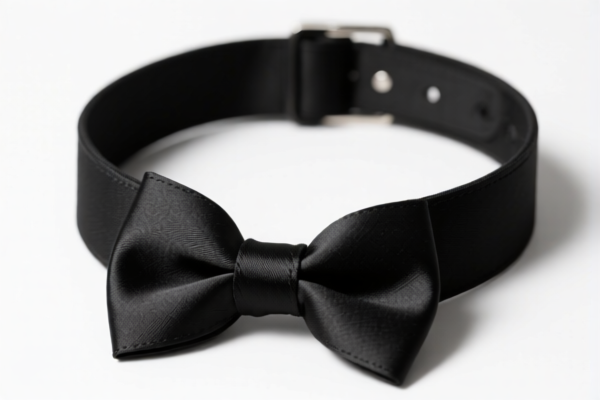
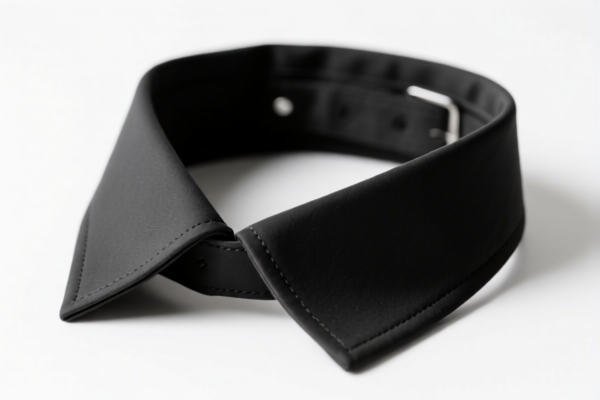


AI Analysis
👔 Shirt Collar Interfacing (衬衫领衬/领面衬)
🌐 HS Code Reference & Customs Clearance Guide | 2026 Latest Tariff Analysis | Professional Clearance Strategy
📌 Part 1: Product Definition & Classification: What Exactly is "Collar Interfacing"?
Shirt Collar Interfacing is a crucial textile component used in garment manufacturing to provide structure, stiffness, and shape retention to shirt collars. It is not a finished garment but a garment accessory/component.
In international trade, it is categorized based on its material composition and state of completion:
- Fiber/Textile-Based Interfacing: Made from cotton, polyester, or blended fibers. It is often non-woven or woven fabric treated with resin.
- Silk-Based Interfacing: Made from silk or silk waste, typically used for high-end luxury shirts to maintain a natural drape and luster.
⚠️ Key Distinction Point:
- If it is a loose piece of fabric used for reinforcing collars (not yet sewn into a shirt), it is classified as a part/attachment of clothing (Chapter 61 or 62).
- It is NOT classified as a finished collar (which would be part of the shirt).
- The HS Code depends strictly on the material fiber content (Cotton/Poly vs. Silk).
📦 Part 2: HS Code Classification Details (2026 Latest Tariff Authority Cross-Reference)
Based on the input data, there are four distinct HS Codes for Collar Interfacing, split into two main chapters based on the type of clothing they are intended for (Knitted vs. Woven) and their material.
| HS Code | Product Description | Applicable Scenario | Material Inference | Total Tax Rate |
|---|---|---|---|---|
6117.90.90.30 |
Shirt Collar Interfacing (Knitted/Apparel Accessory) | Interfacing for knitted shirts or general fiber-based accessories | Fiber Material (Likely Cotton/Polyester blend) | 32.1% |
6217.90.90.03 |
Shirt Collar Interfacing (Woven/Apparel Accessory) | Interfacing for woven (dress) shirts | Cotton or Other Fibers | 32.1% |
6217.90.10.10 |
Shirt Collar Interfacing (Luxury/Woven) | Interfacing for woven shirts, high-end | Silk or Silk Waste | 19.8% |
6117.90.10.20 |
Shirt Collar Interfacing (Luxury/Knitted) | Interfacing for knitted shirts, high-end | Silk Content (Possibly Silk-blend) | 19.8% |
🔍 Critical Note:
- Chapter 61 (6117.xx.xx) typically applies to knitted or crocheted articles. If your interfacing is a knitted web or intended for knit shirts, use6117.
- Chapter 62 (6217.xx.xx) applies to non-knitted (woven) articles. Traditional dress shirt collars are woven, so6217is common.
- Material Matters: Silk content significantly lowers the base tariff (from 14.6% to 2.3%). Cotton/Poly blends face higher base tariffs.
💰 Part 3: 2026 Latest Tariff Rate Breakdown (Including Surtaxes & Policy Add-ons)
✅ Applicable Country: United States (US)
✅ Country of Origin: China (CN)
✅ Effective Date: Post-November 10, 2025 (including subsequent imports)
🎯 1. High-Tariff Group: Fiber/Cotton-Based Interfacing (6117.90.90.30 & 6217.90.90.03)
| Item | Content |
|---|---|
| Base Tariff | 14.6% (ad valorem) |
| Section 301 Surcharge | +7.5% (USITC Footnote, 122 Terms) |
| IEEPA Surcharge | +10% (Specific to China/Origin under 122 Terms) |
| Total Tax Rate | 32.1% |
| Tax Calculation | CIF Value × 32.1% |
| De Minimis Eligibility | ❌ Not Eligible (deny_de_minimis) |
| Legal Basis Path | 122 Terms: 10% → Section 301: 7.5% → Base: 14.6% |
📌 Explanation:
- These products are considered standard textile accessories with no special trade benefits.
- The 32.1% rate is a composite of standard duties and punitive tariffs.
- Warning: This is a high-cost category. Margins must account for this significant duty burden.
🎯 2. Low-Tariff Group: Silk-Based Interfacing (6217.90.10.10 & 6117.90.10.20)
| Item | Content |
|---|---|
| Base Tariff | 2.3% (ad valorem) |
| Section 301 Surcharge | +7.5% (USITC Footnote, 122 Terms) |
| IEEPA Surcharge | +10% (Specific to China/Origin under 122 Terms) |
| Total Tax Rate | 19.8% |
| Tax Calculation | CIF Value × 19.8% |
| De Minimis Eligibility | ❌ Not Eligible (deny_de_minimis) |
| Legal Basis Path | 122 Terms: 10% → Section 301: 7.5% → Base: 2.3% |
📌 Note:
- Silk-based interfacing enjoys a much lower base tariff (2.3%) due to luxury textile classifications.
- However, the add-on tariffs (17.5%) remain fixed, resulting in a total of 19.8%.
- Savings: Compared to the fiber-based group (32.1%), using silk-based interfacing saves 12.3% in total duties. This is significant for high-volume shipments.
🛠️ Part 4: Customs Clearance Practical Advice (Battle-Tested Pitfall Guide)
✅ 1. Document Preparation Checklist (No Shortcuts)
| Document | Required | Explanation |
|---|---|---|
| ✅ Product Specification Sheet | ✔️ | Must clearly state: "Interfacing for Shirt Collars", Material (e.g., "100% Polyester Non-Woven" or "Silk Waste"), Weight/GSM. |
| ✅ Material Composition Declaration | ✔️ | Crucial! Must specify if it is Silk, Cotton, or Synthetic. Misdeclaring Cotton as Silk to lower taxes is fraud. |
| ✅ Commercial Invoice | ✔️ | Description must match HS Code logic. Use terms like "Garment Accessory: Collar Interfacing" rather than just "Fabric". |
| ✅ Packing List | ✔️ | Show net weight vs. gross weight. Interfacing is lightweight; ensure volumetric weight doesn't trigger extra fees if shipping by air. |
| ✅ Origin Certificate (if applicable) | ✔️ | For non-China origins, prove origin to avoid China-specific surcharges. |
✅ 2. Declaration Tips (Key Mantras)
🔥 "Material is King, Chapter 61/62 is Queen, Don't Split, Don't Lie!"
| Scenario | Correct Declaration | Wrong Practice |
|---|---|---|
| Polyester/Cotton Interfacing | 6217.90.90.03 (Woven) or 6117.90.90.30 (Knitted) |
Declaring as "Raw Fabric" (5208/5407) → Higher scrutiny & potential penalty |
| Silk Interfacing | 6217.90.10.10 (Woven) or 6117.90.10.20 (Knitted) |
Declaring as "Other Textiles" (6307.90) → Higher Base Tariff (potentially >14.6%) |
| Mixed Bundles (Collar + Interfacing) | Declare Separately | Bundling finished collars with interfacing → Complexity in valuation & duty calculation |
| OEM Custom Interfacing | Provide Client Spec Sheet | Generic description "Textile Accessory" → Risk of audit for misclassification |
✅ 3. Special Cases Handling
| Scenario | Handling Advice |
|---|---|
| Non-Woven Interfacing | Ensure it is declared as "Interfacing" and not "Raw Material." Non-woven is a manufacturing process, not a fiber type. The fiber (Poly/Cotton) dictates the HS Code. |
| Silk Waste vs. Pure Silk | 6217.90.10.10 allows for "Silk or Silk Waste." If using recycled silk fibers, confirm the % content meets the "Silk" threshold for the lower 2.3% base rate. |
| Knitted vs. Woven | If the interfacing is a knitted mesh (common for lightweight shirts), use 6117. If it is a woven canvas or non-woven bonded fabric, use 6217. |
| Small Samples | Even for samples, De Minimis ($800) does NOT apply due to the 122 Terms and Section 301 exclusions for textiles. Declare properly. |
🌍 Part 5: Global Market Comparison (2026 Latest)
| Country/Region | Recommended HS Code | Base Tariff | Surtaxes | Notes |
|---|---|---|---|---|
| 🇺🇸 USA | 6217.90.90.03 / 6217.90.10.10 |
14.6% / 2.3% | +17.5% (Total 32.1% / 19.8%) | High Cost. Strict material verification. |
| 🇨🇳 China | 6217.90.90.03 / 6217.90.10.10 |
10.5% / 5% | None | Lower base rates. No punitive surcharges. |
| 🇪🇺 EU | 6217.90.90 / 6217.90.10 |
8% - 10% | None | Standard Most Favored Nation (MFN) rates apply. |
| 🇬🇧 UK | 6217.90.90 / 6217.90.10 |
8% - 10% | None | Post-Brexit tariff schedules similar to EU. |
| 🇯🇵 Japan | 6217.90.90 / 6217.90.10 |
12% - 8% | None | CPTPP benefits may apply for some origins. |
📌 Conclusion:
- The USA is the most expensive market due to the 17.5% add-on tariffs (Section 301 + 122 Terms).
- For US exports, maximizing Silk content can save ~12% in total duties.
- For other markets, base tariffs are lower, but material accuracy remains critical for customs valuation.
📌 Part 6: Common Errors & Pitfall Guide (Lessons Learned)
❌ Error 1: Declaring all interfacing as "Textile Fabric" (Chapter 50-55)
👉 Consequence: Customs may reclassify to Chapter 62/61 as "Parts of Clothing," leading to duty underpayment and penalties if base rates differ.
❌ Error 2: Ignoring the Knitted vs. Woven distinction
👉 Consequence: 6117 vs. 6217. While rates are similar, structural classification errors can lead to seizures or delays for inspection.
❌ Error 3: Failing to declare Origin correctly for 122 Terms
👉 Consequence: Missing the 10% IEEPA surcharge on paperwork doesn't exempt you; US Customs can audit and demand payment + interest years later.
✅ Correct Practice:
"Shirt Collar Interfacing, Non-Woven, 100% Polyester, 50gsm, For Dress Shirts, Model: INF-POL-01"
🎯 Part 7: Conclusion: Precision in Classification Saves Money!
🎯 Remember the Mantra:
🔹 "Silk is Gold (19.8%), Fiber is Cost (32.1%)."
🔹 "Knitted (6117) vs. Woven (6217) – Check the Structure!"
🔹 "No De Minimis for Textiles – Declare Everything!"
📌 Pro Tip:
If you are manufacturing shirt collars in Vietnam, Bangladesh, or India, you may qualify for different tariff treatments or lower surcharges depending on current trade agreements.
For US-bound shipments, consider Advance Rulings with CBP to lock in the HS Code and duty rate before shipping.
📣 Immediate Action:
📞 Contact a Licensed Customs Broker + Provide Material Composition Certificate + Verify Knitted/Woven Structure
🚀 Optimize Your Supply Chain: Choose the right interfacing material to balance cost and duty efficiency!
✨ Professional Clearance Starts with Accurate Classification!
💼 Every Cent Saved in Duty is Pure Profit!
Customer Reviews
About HS Code Classification
The Harmonized System (HS) is an internationally standardized nomenclature developed by the World Customs Organization (WCO) to classify traded products. Over 200 countries use the HS system as the basis for customs tariffs, trade statistics, and import/export regulations.
Each HS code follows a hierarchical structure:
- Chapter (2 digits) — Broad category of goods (e.g., Chapter 84: Machinery and Mechanical Appliances)
- Heading (4 digits) — More specific grouping within the chapter
- Subheading (6 digits) — Internationally standardized breakdown, used by all WCO member countries
- National subdivisions (8-10 digits) — Country-specific extensions for further classification, such as US HTSUS 10-digit codes
Correct HS code classification is essential for smooth customs clearance, accurate duty payment, and compliance with trade regulations. Misclassification can lead to customs delays, overpayment of duties, or penalties.
When importing from CN to US, the applicable tariff rates may include:
- Most-Favored-Nation (MFN) rate — The standard duty rate applied to WTO members
- General rate — Applied to countries without trade agreements
- Trade remedy duties — Additional tariffs such as Section 301 (anti-dumping), Section 232 (national security), or countervailing duties
The information provided on this page is for reference purposes only. For official classification, please consult with your local customs authority or a licensed customs broker.