Color 35mm Slide Film
CN → US| HS Code | Tariff Rate | Origin | Destination | Doc |
|---|---|---|---|---|
| 3703103030 | 38.7% | CN | US | Official Doc |
| 3703203030 | 38.7% | CN | US | Official Doc |
| 3701910060 | 38.7% | CN | US | Official Doc |
| 3701910030 | 38.7% | CN | US | Official Doc |
| 3702530030 | 38.7% | CN | US | Official Doc |
Product Images
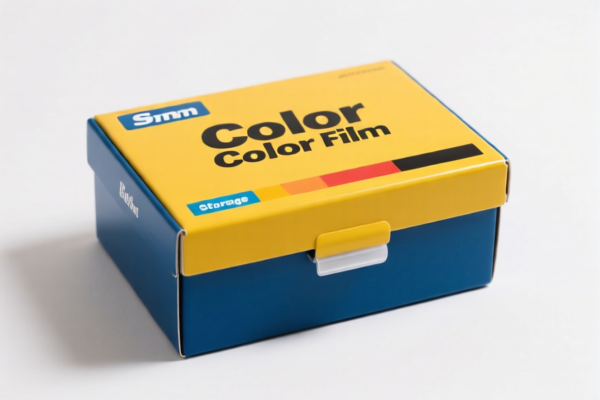
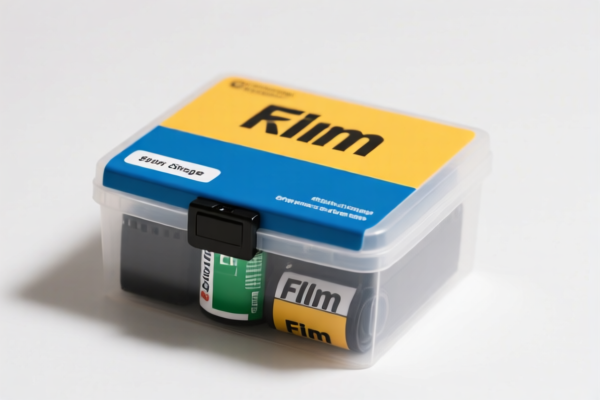
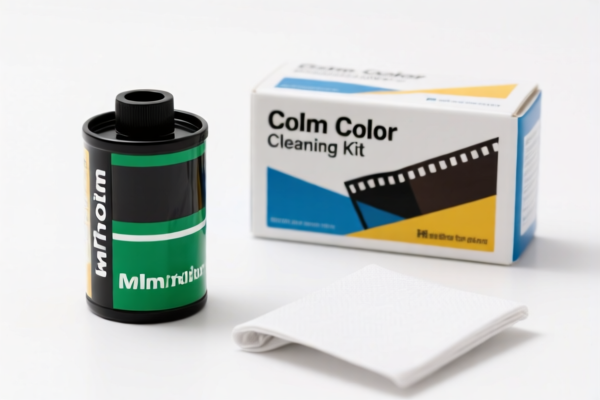
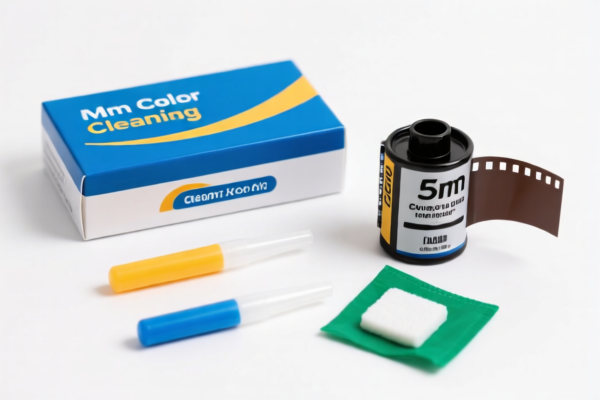
AI Analysis
📸 Color 35mm Slide Film: The Ultimate Guide to US Customs Classification & Tariffs (2026)
🌐 HS Code Reference & Clearance Guide | 2026 Latest Tariff Analysis | Professional Clearance Strategy for Photographic Film
📌 Part 1: Product Definition & Classification: Do You Really Know "Slide Film"?
Color 35mm Slide Film is a high-precision negative-type photographic film designed primarily for projection, printing, or archival purposes. Unlike standard negative film (which has an orange mask), slide film produces positive images with vibrant colors and high contrast.
In international trade, "Slide Film" and "Photographic Film" are often grouped under Chapter 37 (Photographic or Cinematographic Goods). However, precise classification depends on the format and intended use.
⚠️ Critical Distinction:
- If the film is in cartridges (standard 35mm rolls) or disks intended for photography, it falls under 3701/3702.
- If it is specifically marketed as "Slide Film" (for projection), customs may look closer at the description, but it still generally falls under photographic film unless it's a specific "slide" accessory (which is rare for the film itself).
- Key Determinant: Is it raw film material (3701/3702) or a finished photographic good? For import clearance, it is almost always classified as Photographic Film.
📦 Part 2: HS Code Classification Details (2026 Authorized Reference)
Based on the provided data, here are the exact HS Codes applicable to Color 35mm Slide Film and related color photographic materials. Note that "Slide Film" is technically a use case for Color Photographic Film.
| HS Code | Product Description | Application Scenario | Key Characteristics |
|---|---|---|---|
3703.10.30.30 |
Color Sensitized Film in Roll Form (Color Photographic Use) | General color slide film, standard 35mm rolls, professional slide film | 🎯 Primary Match for "Slide Film" |
3703.20.30.30 |
Color Photographic Sensitized Material (Color Slide Use) | Specifically designated for color slide projection | 🎯 Explicit "Slide" Designation |
3701.91.00.60 |
Other Color Photographic Films, 35mm Non-Disk Form | 35mm film strips, not in disk/cartridge form | 🔄 Alternative if not standard roll |
3701.91.00.30 |
Color Photographic Disk Film, Material: Sensitized Film | If the "slide" is stored in a specific disk format (rare for 35mm, more common for digital/instax) | 📀 Less common for traditional 35mm slides |
3702.53.00.30 |
Color Slide Film Rolls, 35mm Spec, Sensitized Film Characteristic | 35mm rolls explicitly described as "Slide Film Rolls" | 🎞️ Direct Match for "35mm Slide Roll" |
🔍 Key Insight:
-3703.10.30.30and3702.53.00.30are the most likely codes for traditional 35mm Color Slide Film.
-3703.20.30.30is also highly relevant if the documentation explicitly states "for color slide projection."
- Do NOT confuse with Negative Film: While both are 35mm, slide film has higher contrast and no orange mask. Customs may ask for sample or spec sheet to distinguish if duties differ (in this case, tax is identical).
💰 Part 3: 2026 US Tariff Rate Breakdown (Including Surcharges)
✅ Applicable Country: United States (US)
✅ Origin: China (CN)
✅ Effective Date: From November 10, 2025 (includes subsequent imports)
🎯 Universal Tax Structure for All Listed HS Codes
All the HS Codes listed above (3703.10.30.30, 3703.20.30.30, 3701.91.00.60, 3701.91.00.30, 3702.53.00.30) share the exact same tariff structure.
| Item | Content |
|---|---|
| Base Tariff | 3.7% (Ad Valorem) |
| Section 301 Tariff | +25.0% (Additional Tariff under US Trade Act) |
| Section 122 Tariff | +10.0% (Additional Tariff per Section 122 Regulations) |
| Total Tax Rate | 38.7% |
| Tax Calculation | CIF Value × 38.7% |
| De Minimis Eligibility | ❌ Not Applicable (High tax rate exceeds typical de minimis thresholds, and specific goods from China are excluded) |
| Legal Basis Path | Base: 37xx → Section 301: 9903.01.25 → Section 122: 9903.01.24 → Total: 38.7% |
📌 Explanation:
- Base Tariff (3.7%): Standard Most Favored Nation (MFN) rate for photographic film.
- Section 301 Tariff (25%): Imposed on Chinese-origin goods under Trade Act Section 301. This is the biggest cost driver.
- Section 122 Tariff (10%): Additional surcharge applied to Chinese goods under specific trade provisions.
- Total 38.7%: This is a high-cost item for importers. Profit margins must account for this significant tax burden.
🛠️ Part 4: Clearance Practical Advice (Real-World Pitfall Guide)
✅ 1. Required Documentation Checklist (Non-Negotiable)
| Document | Mandatory? | Description |
|---|---|---|
| ✅ Product Specification Sheet | ✔️ | Must state "Color Photographic Film," "35mm," "Slide Type," ISO speed, etc. |
| ✅ Commercial Invoice | ✔️ | Must explicitly list HS Code and country of origin (China). |
| ✅ Bill of Lading/Air Waybill | ✔️ | Standard shipping docs. |
| ✅ Certificate of Origin (CO) | ✔️ | Must confirm origin is China to apply correct tariffs. |
| ✅ Photo of Product Packaging | ✔️ | Show label clearly indicating "Slide Film" vs. "Negative Film" if asked. |
| ✅ FDA/CDRH Registration (If applicable) | ⚠️ Check | Most film is exempt, but if it contains hazardous chemicals, verify. |
✅ 2. Declaration Tips (Key Mantra)
🔥 "Specify 'Color Film,' Declare 'China Origin,' Pay 38.7%!"
| Scenario | Correct Declaration | Incorrect Practice |
|---|---|---|
| 35mm Color Slide Film | HS 3703.10.30.30 or 3702.53.00.30 |
Mislabeling as "Camera Accessories" (HS 9006) → Audit Risk! |
| Roll Film vs. Sheets | Clearly state "Roll" or "Sheet" | Vague description "Photographic Goods" → Delay |
| Origin Declaration | Must state "Made in China" | Hiding origin → Penalty & Seizure |
| Value Declaration | CIF Value (Cost + Insurance + Freight) | Declaring only FOB → Underpayment Penalty |
✅ 3. Special Situations
| Situation | Handling Advice |
|---|---|
| Sample Imports | Even samples are subject to 38.7% if over de minimis threshold ($800 for personal, but commercial samples may still be taxed if not properly declared as samples). |
| Mixed Containers | If mixed with other goods (e.g., cameras), separate line items are required. Do not lump film with cameras. |
| Brand New vs. Bulk | Both are subject to the same tariff. No difference for "bulk rolls." |
| Alternative Origins | If sourced from Vietnam, Japan, or USA, tariffs may be 0% or much lower. Consider supply chain diversification. |
🌍 Part 5: Global Market Clearance Comparison (2026)
| Country/Region | Recommended HS Code | Tariff (China Origin) | Certifications Required | Notes |
|---|---|---|---|---|
| 🇺🇸 USA | 3703.10.30.30 etc. |
38.7% (High!) | None typically | Highest Tax Burden |
| 🇨🇳 China | 3703.10.30 |
3.7% (Import) | None | Low tax, but export controls may apply |
| 🇪🇺 EU | 3702.53 |
0% (Most cases) | CE (if packaging claims) | Lowest Tax |
| 🇬🇧 UK | 3702.53 |
0% | UKCA (if applicable) | Post-Brexit alignment |
| 🇯🇵 Japan | 3702.53 |
0% | PSE (if electronic) | No tariff |
📌 Conclusion:
- USA is the most expensive market for Chinese-made color film due to the 38.7% combined tariff.
- EU, UK, Japan, and Australia offer duty-free or low-duty alternatives.
- Strategy: If targeting the US market, consider origin substitution (produce in Vietnam/Mexico) or price absorption. If targeting other markets, the cost advantage is significant.
📌 Part 6: Common Errors & Pitfalls (Lessons Learned)
❌ Mistake 1: Misclassifying "Slide Film" as "Camera Parts" (HS 9006)
👉 Consequence: Customs detects discrepancy → 100% penalty + seizure of goods. Film is Chapter 37, not Chapter 90.
❌ Mistake 2: Not declaring "China Origin"
👉 Consequence: If origin is hidden, customs may apply MFN rate (3.7%) initially, but later audit → Back taxes + Interest + Fraud Penalties.
❌ Mistake 3: Using "Photographic Material" without specifying "Color 35mm"
👉 Consequence: Ambiguity → Customs Request for Information (RFI) → Delivery Delay (7-14 days).
❌ Mistake 4: Ignoring Section 301 & 122 Tariffs
👉 Consequence: Underpayment → Payment Demand Notice → Warehouse Storage Fees.
✅ Correct Action:
"Color 35mm Slide Film, Sensitized Photographic Material in Roll Form, 35mm, High Speed, Model XYZ, Made in China."
🎯 Part 7: Conclusion: Professional Declaration, Save Time & Money!
🎯 Remember the Mantra:
🔹 "Slide Film is Chapter 37, Not 90."
🔹 "China Origin = 38.7% Total Tax in US."
🔹 "Specify 'Roll' and '35mm' to avoid delays."
📌 Pro Tip:
If you are importing large volumes, consider Advance Ruling (Pre-Ruling) from US Customs and Border Protection (CBP) to lock in the HS Code and tariff rate. This provides legal certainty and avoids post-entry audits.
📣 Immediate Action:
📞 Consult a licensed US Customs Broker.
📄 Provide product specs + origin proof.
🚀 Plan for 38.7% tax cost in your pricing model.
🌍 Explore alternative origins (e.g., Japan, South Korea, Vietnam) for duty-free US entry if possible.
✨ Professional Clearance Starts with Accurate Classification!
💼 Your Bottom Line Depends on Every Percent!
Customer Reviews
About HS Code Classification
The Harmonized System (HS) is an internationally standardized nomenclature developed by the World Customs Organization (WCO) to classify traded products. Over 200 countries use the HS system as the basis for customs tariffs, trade statistics, and import/export regulations.
Each HS code follows a hierarchical structure:
- Chapter (2 digits) — Broad category of goods (e.g., Chapter 84: Machinery and Mechanical Appliances)
- Heading (4 digits) — More specific grouping within the chapter
- Subheading (6 digits) — Internationally standardized breakdown, used by all WCO member countries
- National subdivisions (8-10 digits) — Country-specific extensions for further classification, such as US HTSUS 10-digit codes
Correct HS code classification is essential for smooth customs clearance, accurate duty payment, and compliance with trade regulations. Misclassification can lead to customs delays, overpayment of duties, or penalties.
When importing from CN to US, the applicable tariff rates may include:
- Most-Favored-Nation (MFN) rate — The standard duty rate applied to WTO members
- General rate — Applied to countries without trade agreements
- Trade remedy duties — Additional tariffs such as Section 301 (anti-dumping), Section 232 (national security), or countervailing duties
The information provided on this page is for reference purposes only. For official classification, please consult with your local customs authority or a licensed customs broker.