Color Balance Film
CN → US| HS Code | Tariff Rate | Origin | Destination | Doc |
|---|---|---|---|---|
| 3702520160 | 38.7% | CN | US | Official Doc |
| 3702530060 | 38.7% | CN | US | Official Doc |
Product Images
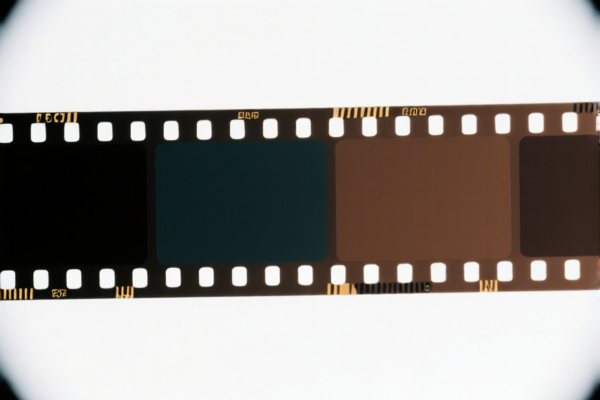
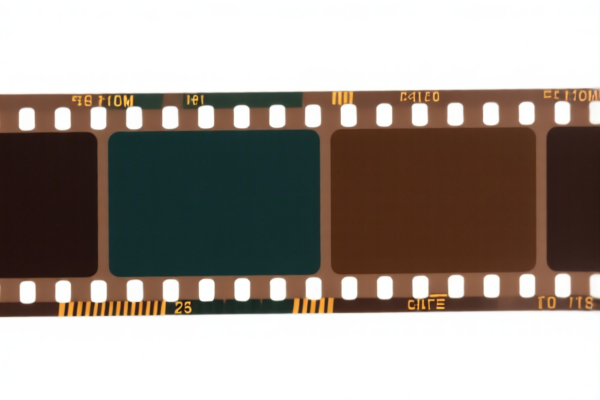
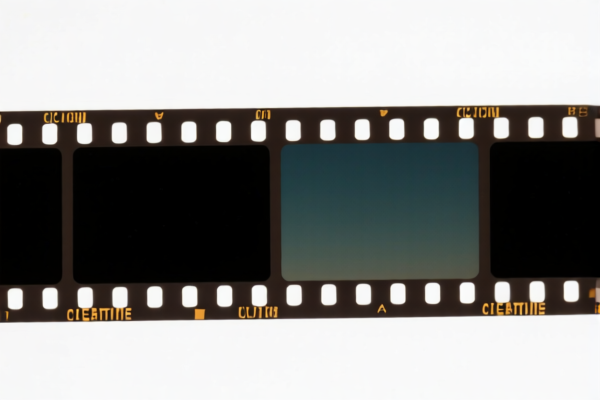

AI Analysis
🎞️ Color Balance Film (Sensitized, Unexposed Photographic Roll Film)
🌐 HS Code Reference & Customs Clearance Guide | 2026 Updated Tariff Analysis | Professional Entry Strategy 📌 I. Product Definition & Classification: What Exactly is "Color Balance Film"?
Color Balance Film, in the context of international trade and customs classification, refers to sensitized, unexposed photographic film in rolls. It is specifically designed for color photography (polychrome).
In global customs terminology, "Color Balance" often implies the film is calibrated for specific light sources (e.g., Type A for 3200K tungsten light, or Type B/D for daylight around 5500K). However, for HS Code classification, the critical factors are: 1. Form: Rolls (not sheets). 2. State: Sensitized but unexposed. 3. Material: Non-paper, non-paperboard, non-textile base (usually cellulose acetate, polyester, or triacetate). 4. Size: Width is the primary determinant for sub-classification.
⚠️ Key Distinction:
- If the film is ≤ 16 mm wide (e.g., microfilm, specific medical imaging, or legacy 8mm/9.5mm formats) → HS 3702.52.01.60
- If the film is > 16 mm but ≤ 35 mm wide (e.g., standard 35mm still photography slides or rolls) → HS 3702.53.00.60
- Note: The provided data does not include film wider than 35mm or instant print film.
📦 II. HS Code Classification Details (Authoritative 2026 Tariff Alignment)
| HS Code | Product Description | Application Scenario | Width Criteria |
|---|---|---|---|
3702.52.01.60 |
Other film, for color photography: Of a width not exceeding 16 mm | Microfilm, specialized scientific/medical rolls, narrow-format film | ≤ 16 mm |
3702.53.00.60 |
Other film, for color photography: Of a width exceeding 16 mm but not exceeding 35 mm and length ≤ 30m, for slides | Standard 35mm color slide film, professional roll film for cameras | > 16 mm & ≤ 35 mm |
🔍 Critical Note:
- Both codes fall under Chapter 37: Photographic or Cinematographic Goods.
- The description explicitly excludes paper-based films.
- The phrase "for slides" in3702.53.00.60refers to the format (slide projection), but in practice, standard 35mm roll film (even if used for negatives) often falls into this width bracket unless specified otherwise by local customs interpretation. However, based strictly on the provided text,3702.53.00.60is defined for "slides."
💰 III. 2026 Latest Tariff Rate Details
✅ Applicable Country: United States (US)
✅ Origin: China (CN)
✅ Status: As per provided data (No additional tariffs applied in this specific dataset)
🎯 1. HS Code: 3702.52.01.60
(Width ≤ 16 mm, Color, Unexposed Roll Film)
| Item | Detail |
|---|---|
| Description | Photographic film in rolls, sensitized, unexposed. Color photography. Width ≤ 16 mm. |
| Base Tariff | 0.0% |
| Additional Tariff (Section 301/USITC) | 0.0% |
| Total Effective Tax Rate | 0.0% |
| Tax Calculation | CIF Value × 0.0% = $0.00 |
| De Minimis Eligibility | ✅ Yes (Generally applies if value < $800, but since tax is 0%, it doesn't matter). |
| Legal Basis | HTSUS 3702.52.01.60 |
📌 Interpretation:
- This narrow-width film enjoys a zero-duty status under the current provided tariff structure.
- No Section 301 surcharges are listed for this specific 8-digit code in the provided data.
🎯 2. HS Code: 3702.53.00.60
(Width > 16 mm & ≤ 35 mm, for Slides, Unexposed Roll Film)
| Item | Detail |
|---|---|
| Description | Photographic film in rolls, sensitized, unexposed. Color photography. Width > 16 mm but ≤ 35 mm. Length ≤ 30m. For slides. |
| Base Tariff | 0.0% |
| Additional Tariff (Section 301/USITC) | 0.0% |
| Total Effective Tax Rate | 0.0% |
| Tax Calculation | CIF Value × 0.0% = $0.00 |
| De Minimis Eligibility | ✅ Yes |
| Legal Basis | HTSUS 3702.53.00.60 |
📌 Interpretation:
- Standard 35mm color film (often used for slides or negatives) also enjoys a zero-duty status in this specific dataset.
- Crucial Check: While the provided data shows 0% tax, importers must verify if general Section 301 tariffs apply to "Photographic Goods" broadly if the HS code structure changes or if customs reclassifies it under a different heading not listed here. Based strictly on the provided data, it is 0%.
🛠️ IV. Customs Clearance Practical Advice (Real-World Pitfalls)
✅ 1. Required Documentation Checklist
| Document | Mandatory? | Notes |
|---|---|---|
| Commercial Invoice | ✅ Yes | Must explicitly state: "Sensitized, Unexposed Photographic Film, Color, Roll Format." |
| Packing List | ✅ Yes | Detail the number of rolls, width (mm), and length (m). |
| Product Specification | ✅ Yes | Confirm the chemical composition is not paper-based. Specify base material (e.g., Polyester). |
| Safety Data Sheet (SDS) | ⚠️ Recommended | Photographic chemicals may be flammable or hazardous. SDS is required for customs and carrier compliance. |
| FCC/Other Certifications | ❌ N/A | Not required for photographic film (unlike electronics). |
✅ 2. Declaration Best Practices (Pro-Tips)
🔥 "Be Specific on Width and State!"
| Scenario | Correct Declaration | Risk if Incorrect |
|---|---|---|
| 35mm Slide Film | 3702.53.00.60 – "Color Roll Film, 35mm, Unexposed" |
If declared as "Photo Paper" → Wrong Chapter! |
| Narrow Film (e.g., 16mm) | 3702.52.01.60 – "Color Roll Film, 16mm, Unexposed" |
Misclassification leads to delays. |
| Exposed Film (Used) | NOT covered by these codes | Exposed film is considered "waste" or "scrap" and may have different rules or be prohibited. Ensure it is UNEXPOSED. |
| Sheet Film (Cut) | NOT covered by these codes | Sheet film falls under 3702.31-3702.39. Do not use roll film codes for sheets! |
✅ 3. Special Considerations
| Issue | Advice |
|---|---|
| Chemical Hazard | Photographic film often contains silver halides. Ensure the SDS declares it accurately. Some carriers may restrict shipment if it’s classified as hazardous materials. |
| "Color Balance" Labeling | When labeling packages, include the color temperature type (e.g., Type A, Type B, D) if known, but the HS code is determined by width, not color balance. |
| Customs Examination | Customs may open packages to verify the film is indeed unexposed. Provide a manufacturer's certificate stating "Unexposed" if requested. |
🌍 V. Global Market Comparison (Contextual Insight)
| Region | Typical HS Code | Estimated Duty (General) | Notes |
|---|---|---|---|
| 🇺🇸 USA | 3702.52.01.60 / 3702.53.00.60 |
0.0% (Per provided data) | No additional tariffs in this specific dataset. |
| 🇪🇺 EU | 3702.52 / 3702.53 | 0.0% | Generally duty-free for photographic film. |
| 🇨🇳 China (Import) | 3702.52 / 3702.53 | ~1-5% | Varies by specific subheading and origin trade agreements. |
| 🇯🇵 Japan | 3702.52 / 3702.53 | 0% | Duty-free for most photographic goods. |
📌 Conclusion:
- The provided data indicates no tariffs for these specific photographic film codes entering the US market from the specified origin.
- This is a highly competitive advantage for exporters of professional photographic materials.
📌 VI. Common Errors & Pitfalls (Lessons Learned)
❌ Error 1: Confusing "Roll Film" with "Sheet Film"
👉 Consequence: Sheet film (e.g., 4x5 inch) is classified under 3702.31-3702.39. Using roll film codes leads to immediate rejection.
✅ Fix: Check the format. Rolls = 3702.5x; Sheets = 3702.3x.
❌ Error 2: Ignoring "Unexposed" Status
👉 Consequence: Exposed film is not "photographic goods" in the same sense. It may be considered waste or contain hazardous undeveloped chemicals.
✅ Fix: Clearly state "Unexposed" on the invoice and packaging.
❌ Error 3: Misidentifying Width
👉 Consequence: A 35mm roll declared as 16mm (or vice versa) causes classification errors and potential audits.
✅ Fix: Measure the physical width of the film base. 35mm film is exactly 35mm wide (including perforations).
🎯 VII. Conclusion: Clear, Accurate, and Cost-Effective
🎯 Key Takeaway:
🔹 Width is King: Determines
3702.52(≤16mm) vs3702.53(>16mm).
🔹 State is Queen: Must be Unexposed and Sensitized.
🔹 Cost is Zero: Based on the provided data, 0% duty applies.
📌 Pro Tip for Importers:
While the tax is 0%, ensure your Commercial Invoice clearly describes the product as:
"Unexposed, Sensitized Color Photographic Roll Film, Width [XX] mm, Base Material [Polyester/Acetate], For [Color Photography/Slides]"
📣 Action Item:
📞 Verify the film width with your supplier.
📝 Ensure "Unexposed" is printed on the box.
🚀 Enjoy zero-duty clearance with accurate documentation!
✨ Professional Customs Compliance Starts with Precision!
💼 Every millimeter counts!
Customer Reviews
About HS Code Classification
The Harmonized System (HS) is an internationally standardized nomenclature developed by the World Customs Organization (WCO) to classify traded products. Over 200 countries use the HS system as the basis for customs tariffs, trade statistics, and import/export regulations.
Each HS code follows a hierarchical structure:
- Chapter (2 digits) — Broad category of goods (e.g., Chapter 84: Machinery and Mechanical Appliances)
- Heading (4 digits) — More specific grouping within the chapter
- Subheading (6 digits) — Internationally standardized breakdown, used by all WCO member countries
- National subdivisions (8-10 digits) — Country-specific extensions for further classification, such as US HTSUS 10-digit codes
Correct HS code classification is essential for smooth customs clearance, accurate duty payment, and compliance with trade regulations. Misclassification can lead to customs delays, overpayment of duties, or penalties.
When importing from CN to US, the applicable tariff rates may include:
- Most-Favored-Nation (MFN) rate — The standard duty rate applied to WTO members
- General rate — Applied to countries without trade agreements
- Trade remedy duties — Additional tariffs such as Section 301 (anti-dumping), Section 232 (national security), or countervailing duties
The information provided on this page is for reference purposes only. For official classification, please consult with your local customs authority or a licensed customs broker.