Color Block Handbags
CN → US| HS Code | Tariff Rate | Origin | Destination | Doc |
|---|---|---|---|---|
| 4202221500 | 51.0% | CN | US | Official Doc |
| 4202224030 | 42.4% | CN | US | Official Doc |
| 3926903300 | 16.5% | CN | US | Official Doc |
| 4205008000 | 35.0% | CN | US | Official Doc |
| 4205006000 | 39.9% | CN | US | Official Doc |
Product Images
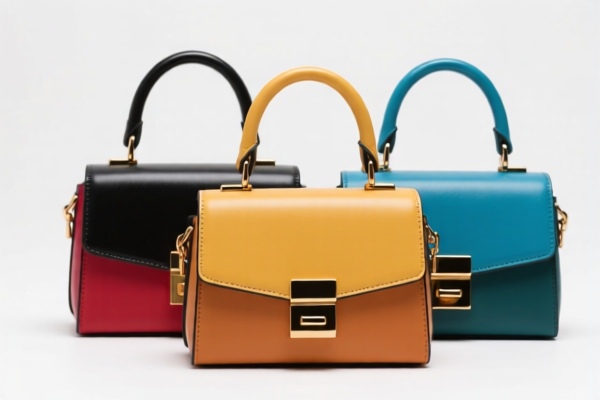
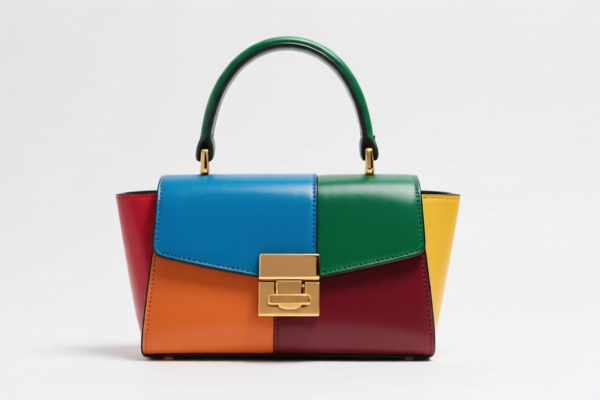
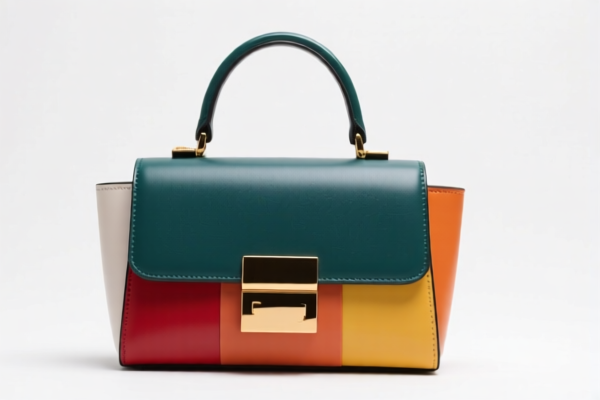
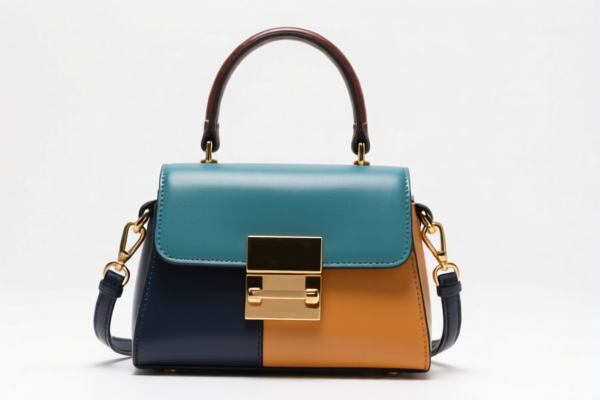
AI Analysis
👜 Color Block Handbags (Style-Article Leather Goods)
🌐 HS Code Reference & Customs Clearance Guide | 2026 Latest Tariff Analysis | Strategic Compliance Strategy
📌 I. Product Definition & Classification: What Exactly is a "Color Block Handbag"?
A Color Block Handbag is not a standalone HS Code category but rather a design style applied to various types of bags. In international trade, the classification depends entirely on the material composition and structural description.
The term "Color Block" refers to the visual use of contrasting colors or panels. Customs authorities classify the bag based on: 1. Primary Material: Is it Leather? Plastics? Textiles? Reptile Leather? 2. Function: Is it a Handbag? A Wallet? A Cosmetic Bag? 3. Construction: Is it stitched? Molded? Strung beads?
⚠️ Critical Distinction:
- If the bag is made of leather/composition leather → It falls under Chapter 42.
- If the bag is made of plastics (sheeting of plastics) → It falls under Chapter 39.
- If it is simply "beads" not strung → It falls under a different subheading.
📦 II. HS Code Classification Details (2026 Latest Tariff Authority Comparison)
Based on the provided data, here are the specific HS Codes applicable to "Color Block Handbags" depending on their material and construction:
| HS Code | Product Description | Material Type | Key Features |
|---|---|---|---|
4205.00.80.00 |
Other articles of leather or of composition leather | Leather / Composition Leather | General leather goods not specified elsewhere (e.g., accessories, non-handbag items). |
4205.00.60.00 |
Other articles of leather or of composition leather | Reptile Leather | Bags made from snakes, crocodiles, lizards, etc. |
3926.90.33.00 |
Other articles of plastics...: Handbags | Plastics | Handbags made entirely or mainly of plastic sheeting, not strung. |
4202.22.15.00 |
Handbags, with outer surface of sheeting of plastics or textile materials | Sheeting of Plastics | Handbags with plastic outer surface (e.g., vinyl, PVC coated fabric). |
4202.22.40.30 |
Handbags... wholly or in part of braid: Of man-made fibers | Textile / Braid | Handbags made of woven/braided man-made fibers (polyester, nylon). |
🔍 Key Insight:
- "Color Block" does not change the HS Code. A color-block leather bag is still4202.22.xxxxor4205.00.xxxx.
- A color-block plastic bag is3926.90.33.00or4202.22.15.00.
- Reptile leather is a high-risk category for compliance due to CITES regulations, hence the separate code4205.00.60.00.
💰 III. 2026 Latest Tariff Rate Breakdown (Detailed Tax Analysis)
✅ Applicable Region: United States (US)
✅ Origin: China (CN)
✅ Effective Date: Current rates include Section 301 additional tariffs where applicable.
🎯 1. 4205.00.80.00 —— Other Leather Articles (Non-Handbag Specific)
| Item | Content |
|---|---|
| Base Tariff | 0.0% (ad valorem) |
| Section 301 Additional Tariff | +25.0% |
| Total Tax Rate | 25.0% |
| Tax Calculation | CIF Value × 25% |
| De Minimis Exemption? | ❌ No (Generally excluded for China-origin leather goods) |
📌 Explanation:
- This code is for "Other" leather articles. If your handbag doesn't fit the specific "Handbag" definition in Chapter 42 (e.g., it's a leather pouch or accessory), it may fall here.
- 25% is the standard punitive tariff for many Chinese leather goods under Section 301.
🎯 2. 4205.00.60.00 —— Reptile Leather Articles
| Item | Content |
|---|---|
| Base Tariff | 4.9% |
| Section 301 Additional Tariff | +25.0% |
| Total Tax Rate | 29.9% |
| Tax Calculation | CIF Value × 29.9% |
| De Minimis Exemption? | ❌ No |
📌 Warning:
- Reptile leather (snake, crocodile, alligator) commands a higher base duty (4.9%) due to its luxury status and trade restrictions.
- Combined with the 25% punitive tariff, the total cost impact is 29.9%.
- Compliance Note: Must provide CITES permits if applicable.
🎯 3. 3926.90.33.00 —— Plastic Handbags (Not Strung)
| Item | Content |
|---|---|
| Base Tariff | 6.5% |
| Section 301 Additional Tariff | 0.0% |
| Total Tax Rate | 6.5% |
| Tax Calculation | CIF Value × 6.5% |
| De Minimis Exemption? | ❓ Check Section 321 (De Minimis) limits |
📌 Advantage:
- This code has NO additional 25% Section 301 tariff.
- This is a cost-saving classification if the handbag is primarily made of plastic sheeting (e.g., PVC tote bags, clear plastic clutches).
- Key Condition: Must NOT be strung beads (beaded bags fall under different codes).
🎯 4. 4202.22.15.00 —— Handbags with Outer Surface of Plastic Sheeting
| Item | Content |
|---|---|
| Base Tariff | 0.0% |
| Section 301 Additional Tariff | 0.0% |
| Total Tax Rate | 0.0% |
| Tax Calculation | $0 |
| De Minimis Exemption? | N/A (0% tax) |
📌 Huge Benefit:
- Zero Duty!
- This applies to handbags where the outer surface is made of plastic sheeting (e.g., PVC, vinyl, synthetic leather that is technically plastic sheeting).
- Crucial: The bag must be described as "Handbags" under Heading 4202.
- Color Block Design: If the bag is made of layered plastic sheets of different colors, this is the ideal code.
🎯 5. 4202.22.40.30 —— Handbags of Man-Made Fiber Braid
| Item | Content |
|---|---|
| Base Tariff | 0.0% |
| Section 301 Additional Tariff | 0.0% |
| Total Tax Rate | 0.0% |
| Tax Calculation | $0 |
| De Minimis Exemption? | N/A (0% tax) |
📌 Huge Benefit:
- Zero Duty!
- Applies to handbags made of braided man-made fibers (e.g., plastic straw bags, woven polyester tote bags).
- Many "Color Block" summer bags are made of braided synthetic materials. If your bag is woven/braided, this is the best code.
🛠️ IV. Customs Clearance Practical Advice (Battle-Tested Pitfall Guide)
✅ 1. Documentation Checklist (Non-Negotiable)
| Document | Required? | Description |
|---|---|---|
| ✅ Product Specification Sheet | ✔️ | Must detail: Outer material (Plastic? Textile? Leather?), Inner lining, Hardware type. |
| ✅ High-Resolution Photos | ✔️ | Show seams, zippers, handles, and interior. Prove it is a "Handbag" (4202/3926) and not a generic "article". |
| ✅ Commercial Invoice | ✔️ | Explicitly state: "Color Block Handbag, Model XYZ, Material: [Specific Material]". |
| ✅ Material Declaration | ✔️ | For 3926 or 4202.22.15: Confirm if outer layer is "Plastic Sheeting" (PVC/Vinyl). |
| ✅ CITES Permits (If Applicable) | ✔️ | For 4205.00.60.00 (Reptile Leather), provide valid CITES export/import permits. |
| ✅ Origin Certificate | ✔️ | To claim preferential rates if shipped from non-China countries (e.g., Vietnam, Mexico). |
✅ 2. Classification Strategy (Key Mantra)
🔥 "Material Dictates Code, Design is Decorative, Zero Duty is Gold!"
| Scenario | Correct HS Code | Tax Rate | Why? |
|---|---|---|---|
| Plastic Tote Bag (PVC, Vinyl, Clear) | 3926.90.33.00 |
6.5% | Made of plastic, not leather, not textile. |
| Plastic Sheet Handbag (PVC Coated, Synthetic Leather) | 4202.22.15.00 |
0.0% | Outer surface is "sheeting of plastics". Best for cost. |
| Braided/Woven Tote (Synthetic Straws, Polyester Webbing) | 4202.22.40.30 |
0.0% | Made of "braid" of "man-made fibers". Best for cost. |
| Leather Handbag (Genuine or Synthetic Leather NOT classified as plastic sheeting) | 4205.00.80.00 |
25.0% | High tariff. Avoid if possible. |
| Reptile Skin Bag (Snake, Croc) | 4205.00.60.00 |
29.9% | Luxury material + high base duty. |
✅ 3. Special Situations
| Situation | Handling Advice |
|---|---|
| "Leather-Look" Plastic | If the bag is PVC/Vinyl but stamped to look like leather, declare as Plastic Sheeting (4202.22.15.00). Do NOT declare as Leather. |
| Mixed Materials | If a bag has leather handles but plastic body, the outer surface determines the code. If outer is plastic → 4202.22.15.00. |
| Beaded Bags | If the bag is made of strung beads, it is NOT a handbag under 3926. It may fall under 6703/6704 (Artificial Flowers/Feathers). Ensure it's not "temporarily strung". |
| Color Block Design | No special declaration needed. "Color Block" is a style, not a material. Focus on material composition in the description. |
🌍 V. Global Market Comparison (2026 Latest)
| Country/Region | Recommended HS Code | Tariff (China Origin) | Certification | Remarks |
|---|---|---|---|---|
| 🇺🇸 USA | 4202.22.15.00 or 4202.22.40.30 |
0.0% | None specific | Best for Plastic/Braided. Avoid Leather (25%). |
| 🇪🇺 EU | 4202.22.15.00 |
0% - 12% | CE (if electronics) | Generally lower tariffs for fashion accessories. |
| 🇨🇳 China | 4202.22.15.00 |
10% - 13% | N/A | Import duties apply, but no Section 301. |
| 🇬🇧 UK | 4202.22.15.00 |
12% | UKCA | Post-Brexit tariffs. |
📌 Conclusion:
- USA is the critical market for tariff optimization.
- Plastic Sheeting (4202.22.15.00) and Braided Textile (4202.22.40.30) are ZERO DUTY in the US.
- Genuine Leather and Reptile Skin are heavily taxed.
- Strategy: If your "Color Block Handbag" can be made of PVC, Vinyl, or Braided Synthetic fibers, classify it under the 0% codes to save 25-30% in customs duties.
📌 VI. Common Mistakes & Pitfall Guide (Lessons Learned)
❌ Mistake 1: Calling a PVC bag "Synthetic Leather" to match consumer marketing.
👉 Consequence: Customs may classify it as 4205.00.80.00 (25% tariff) instead of 4202.22.15.00 (0%).
✅ Fix: Declare as "Plastic Sheeting" if it meets the definition of plastic sheeting.
❌ Mistake 2: Misclassifying Braided Bags as "Leather" because they look rustic.
👉 Consequence: 25% tariff vs 0% tariff.
✅ Fix: Provide photos showing the weave/braid structure.
❌ Mistake 3: Ignoring CITES for Reptile Leather.
👉 Consequence: Seizure of goods, heavy fines, and blacklisting.
✅ Fix: For 4205.00.60.00, always have CITES documentation ready.
❌ Mistake 4: Using "Handbag" for a beaded clutch that is technically "Artificial Flowers/Ornaments".
👉 Consequence: Misclassification, delay, and potential duty adjustment.
✅ Fix: Ensure the bag has handles/shoulder straps and is primarily a container, not just decorative beads.
🎯 VII. Conclusion: Professional Classification, Save Money, Smooth Customs!
🎯 Remember the Mantra:
🔹 "Plastic Sheeting = 0% Duty."
🔹 "Braided Fiber = 0% Duty."
🔹 "Genuine Leather = 25% Duty."
🔹 "Reptile Skin = 29.9% Duty."🚀 Your Action Plan:
1. Analyze Material: Is it Plastic Sheeting, Braided Fiber, or Leather?
2. Select Code:
- Plastic/Sheathing →4202.22.15.00(0%)
- Braided Textile →4202.22.40.30(0%)
- Plastic Handbag (non-sheathing) →3926.90.33.00(6.5%)
- Leather →4205.00.80.00(25%)
3. Document: Prove material with photos and specs.
4. Clear: Enjoy zero or low duties!
📌 Pro Tip:
If you are designing a new "Color Block Handbag", choose PVC, Vinyl, or Braided Synthetic materials to qualify for 0% US Duty. Avoid genuine leather if cost is the primary driver.
📣 Act Now:
📞 Consult a Customs Broker for Pre-Ruling on material classification.
📸 Provide clear photos of the outer surface material to support your HS Code.
💰 Save 25% today by classifying correctly tomorrow!
✨ Smart Classification, Maximum Profit!
💼 Every Duty Saved is Pure Margin!
Customer Reviews
About HS Code Classification
The Harmonized System (HS) is an internationally standardized nomenclature developed by the World Customs Organization (WCO) to classify traded products. Over 200 countries use the HS system as the basis for customs tariffs, trade statistics, and import/export regulations.
Each HS code follows a hierarchical structure:
- Chapter (2 digits) — Broad category of goods (e.g., Chapter 84: Machinery and Mechanical Appliances)
- Heading (4 digits) — More specific grouping within the chapter
- Subheading (6 digits) — Internationally standardized breakdown, used by all WCO member countries
- National subdivisions (8-10 digits) — Country-specific extensions for further classification, such as US HTSUS 10-digit codes
Correct HS code classification is essential for smooth customs clearance, accurate duty payment, and compliance with trade regulations. Misclassification can lead to customs delays, overpayment of duties, or penalties.
When importing from CN to US, the applicable tariff rates may include:
- Most-Favored-Nation (MFN) rate — The standard duty rate applied to WTO members
- General rate — Applied to countries without trade agreements
- Trade remedy duties — Additional tariffs such as Section 301 (anti-dumping), Section 232 (national security), or countervailing duties
The information provided on this page is for reference purposes only. For official classification, please consult with your local customs authority or a licensed customs broker.