Color Copy Film (Low Contrast)
CN → US| HS Code | Tariff Rate | Origin | Destination | Doc |
|---|---|---|---|---|
| 3920991000 | 41.0% | CN | US | Official Doc |
| 3919905040 | 40.8% | CN | US | Official Doc |
| 3920992000 | 39.2% | CN | US | Official Doc |
| 3919905060 | 40.8% | CN | US | Official Doc |
Product Images
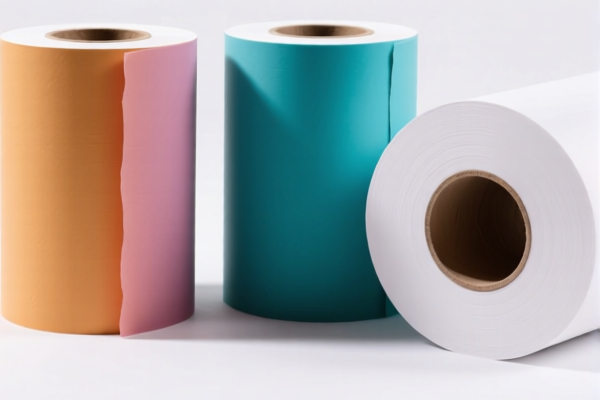
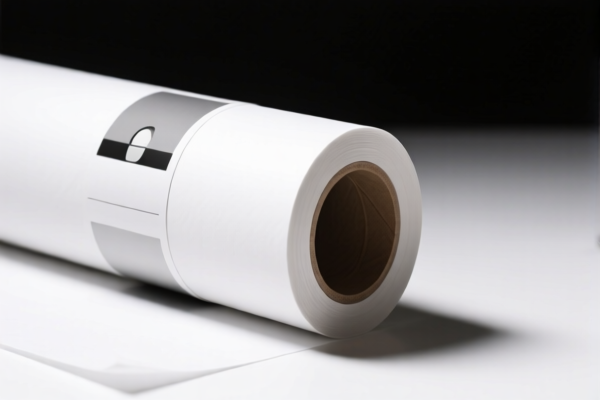
AI Analysis
🎨 Color Copy Film (Low Contrast)
🌐 HS Code Reference & Customs Clearance Guide | 2026 Latest Tariff Analysis | Professional Clearance Strategy
📌 I. Product Definition & Classification: What is "Color Copy Film"?
Color Copy Film, specifically in "Low Contrast" variants, is a specialized optical media used in large-format printing, engineering reproduction, and high-quality document copying. In international trade, its classification hinges on two critical factors: 1. Form Factor: It is a Film/Sheet (not a roll or coil, though often supplied on reels, the final form is cut or defined as sheet/film). 2. Material Composition: Based on industry常识 (common sense), these films are substrate-based, typically made from PET (Polyester), PP (Polypropylene), or other plastic polymers, coated with light-sensitive or printable layers.
⚠️ Key Distinction:
- If the film is self-adhesive (has a sticky backing) → Likely falls under Chapter 3919 (Self-adhesive plates/sheets/film).
- If the film is non-adhesive (plain plastic base, coated for copying) → Falls under Chapter 3920 (Other plates/sheets/film).
📦 II. HS Code Classification Details (2026 Latest Tariff Authority Comparison)
Based on the provided data, four potential HS Codes are identified. The differences lie in the specific "Other" sub-categories of plastic films.
| HS Code | Product Description | Application Scenario | Adhesive Property | Total Tax Rate |
|---|---|---|---|---|
3920.99.10.00 |
Other plastic plates, sheets, film, foil (not self-adhesive) | General purpose copy film, non-sticky plastic base | ❌ No | 41.0% |
3919.90.50.40 |
Other self-adhesive plastic film | Adhesive copy film, label-like copy media | ✅ Yes | 40.8% |
3920.99.20.00 |
Other plastic plates, sheets, film (specific other category) | Polyester (PET) based copy film, non-adhesive | ❌ No | 39.2% |
3919.90.50.60 |
Other self-adhesive plastic film (Other) | Adhesive copy film, general adhesive category | ✅ Yes | 40.8% |
🔍 Critical Note:
- 3920 vs. 3919: The primary split is Adhesive vs. Non-Adhesive.
- 3920.99.10 vs. 3920.99.20: Both are non-adhesive.3920.99.10is a broader "Other" category, while3920.99.20may refer to specific material types (like PET/Polyester) with a slightly lower base tariff.
- 3919.90.50.40 vs. 3919.90.50.60: Both are adhesive. The difference lies in specific "Other" sub-allocations, both carrying the same 40.8% total rate.
💰 III. 2026 Latest Tariff Rate Breakdown (Including Surcharges & Policy Add-ons)
✅ Applicable Country: United States (US)
✅ Country of Origin: China (CN)
✅ Effective Time: From November 10, 2025 (and subsequent imports)
🎯 1. 3920.99.10.00 —— Non-Adhesive Plastic Film (General)
| Item | Content |
|---|---|
| Base Tariff | 6.0% (ad valorem) |
| Section 301 Surcharge | +25.0% (USITC Footnote related to Section 301) |
| Section 122 Tariff | +10.0% (Specific Chinese import provision) |
| Total Tax Rate | 41.0% |
| Tax Calculation | CIF Value × 41.0% |
| De Minimis Eligibility | ❌ Not Eligible (deny_de_minimis) |
| Legal Basis Path | Base: 6% → Section 301: 25% → Section 122: 10% |
📌 Explanation:
- Base 6%: Standard MFN rate for other plastic sheets.
- Section 301 (25%): Major tariff imposed on Chinese goods under Trade Act Section 301.
- Section 122 (10%): Additional surcharge on specific Chinese imports.
- Total 41.0%: A very high effective rate. Cost must be factored into pricing.
🎯 2. 3919.90.50.40 —— Self-Adhesive Plastic Film (Specific)
| Item | Content |
|---|---|
| Base Tariff | 5.8% (ad valorem) |
| Section 301 Surcharge | +25.0% |
| Section 122 Tariff | +10.0% |
| Total Tax Rate | 40.8% |
| Tax Calculation | CIF Value × 40.8% |
| De Minimis Eligibility | ❌ Not Eligible |
| Legal Basis Path | Base: 5.8% → Section 301: 25% → Section 122: 10% |
📌 Note:
- Slightly lower base rate (5.8% vs 6.0%) due to being "self-adhesive" under a different subheading, but still subject to full surcharges.
- Total rate is 40.8%.
🎯 3. 3920.99.20.00 —— Non-Adhesive Plastic Film (Specific/PET)
| Item | Content |
|---|---|
| Base Tariff | 4.2% (ad valorem) |
| Section 301 Surcharge | +25.0% |
| Section 122 Tariff | +10.0% |
| Total Tax Rate | 39.2% |
| Tax Calculation | CIF Value × 39.2% |
| De Minimis Eligibility | ❌ Not Eligible |
| Legal Basis Path | Base: 4.2% → Section 301: 25% → Section 122: 10% |
📌 Optimal Choice:
- If your film is non-adhesive and made of Polyester (PET), this is the lowest tax rate (39.2%).
- Ensure your commercial invoice clearly states "PET Copy Film" to support this classification.
🎯 4. 3919.90.50.60 —— Self-Adhesive Plastic Film (Other)
| Item | Content |
|---|---|
| Base Tariff | 5.8% (ad valorem) |
| Section 301 Surcharge | +25.0% |
| Section 122 Tariff | +10.0% |
| Total Tax Rate | 40.8% |
| Tax Calculation | CIF Value × 40.8% |
| De Minimis Eligibility | ❌ Not Eligible |
| Legal Basis Path | Base: 5.8% → Section 301: 25% → Section 122: 10% |
📌 Note:
- Same total rate as3919.90.50.40. The specific sub-code matters less for cost, but must match product documentation.
🛠️ IV. Customs Clearance Practical Advice (Battle-Tested Pitfall Guide)
✅ 1. Required Document Checklist (All Mandatory)
| Document | Must Provide | Explanation |
|---|---|---|
| ✅ Product Specification Sheet | ✔️ | Must state material (e.g., PET, PP), thickness, and "Non-Adhesive" or "Self-Adhesive". |
| ✅ Commercial Invoice | ✔️ | Must describe as "Color Copy Film, Low Contrast" and specify material. |
| ✅ Packing List | ✔️ | Itemize rolls/sheets clearly. |
| ✅ Material Test Report | ✔️ | Prove plastic composition (PET/PP) to support Chapter 39. |
| ✅ Photo of Product | ✔️ | Show label, edges, and any adhesive backing if applicable. |
| ✅ Certificate of Origin | ✔️ | Required for China-origin verification. |
✅ 2. Declaration Tips (Key Mnemonics)
🔥 "Material First, Adhesive Check, Code Match, Tax Save!"
| Scenario | Correct Declaration | Wrong Practice |
|---|---|---|
| Non-Adhesive PET Film | 3920.99.20.00 (39.2%) |
Misdeclaring as 3920.99.10.00 (41.0%) → Overpay 1.8% |
| Non-Adhesive PP Film | 3920.99.10.00 (41.0%) |
Misdeclaring as 3919 → Misclassification Risk |
| Self-Adhesive Film | 3919.90.50.40/60 (40.8%) |
Declaring as 3920 → 海关查验/补税 (Customs Audit) |
| Rolls vs. Sheets | Specify form | If cut to size, still "Film"; if on reel, clarify "On Reels" |
✅ 3. Special Situation Handling
| Situation | Handling Advice |
|---|---|
| OEM Custom Film | Provide design specs + material certificate. Avoid vague terms like "Plastic Sheet". |
| Low Contrast Variant | Emphasize "Optical Coating" or "Printing Film" to justify Chapter 39 over Chapter 37 (Photographic). |
| Mixed Shipments | If non-adhesive and adhesive films are mixed, separate HS codes. Do not consolidate under one code to avoid audit. |
| Small Samples | Still subject to 41.0% tax if shipped as commercial samples with value. No de minimis for China. |
🌍 V. Global Main Market Clearance Comparison (2026 Latest)
| Country/Region | Recommended HS Code | Tariff | Certification Req. | Notes |
|---|---|---|---|---|
| 🇺🇸 USA | 3920.99.20.00 |
39.2% (Best for Non-Adhesive) | None specific | High due to Section 301 + 122 |
| 🇺🇸 USA | 3919.90.50.40 |
40.8% (Adhesive) | None specific | Slightly higher base rate |
| 🇨🇳 China | 3920.99.10.00 |
~4.2% | None | No Section 301/122 |
| 🇪🇺 EU | 3920.99.90 |
~4-6% | REACH | No US-style surcharges |
| 🇬🇧 UK | 3920.99.90 |
~4-6% | UKCA/REACH | Post-Brexit rules apply |
📌 Conclusion:
- USA is the most costly market due to layered surcharges (301 + 122).
- Non-adhesive PET film (3920.99.20.00) is the most cost-effective option in the US, saving 1.8% vs. the general category.
- Adhesive films do not offer significant tax advantages in the US.
📌 VI. Common Mistakes & Pitfall Guide (Blood-Tested Lessons)
❌ Mistake 1: Calling it "Photographic Film"
👉 Consequence: May be misclassified under Chapter 37. If rejected, leads to delays + penalties. Copy film is plastic-based, not light-sensitive emulsion like traditional film.
❌ Mistake 2: Ignoring "Adhesive" status
👉 Consequence: If adhesive, declaring as 3920 (non-adhesive) is fraud/misclassification. Customs will reclassify to 3919, causing hold-ups and fines.
❌ Mistake 3: Not specifying Material
👉 Consequence: Customs may assign a higher default rate or require additional testing. Always state "PET" or "PP".
❌ Mistake 4: Assuming De Minimis Applies
👉 Consequence: Shipments under $800 still pay full tax if from China. Budget for 40%+ duty even for small batches.
✅ Correct Practice:
"Color Copy Film, Low Contrast, Non-Adhesive, PET Base, Cut Sheets, Model XYZ, for Large Format Printing"
🎯 VII. Conclusion: Precise Classification, Maximize Profit!
🎯 Remember the Mnemonics:
🔹 "Non-Adhesive PET? Code .20, 39.2%! Adhesive? Code .40, 40.8%! Base 6 or 5.8, add 35 for total!"
🔹 "No De Minimis for China! Plan for 40% Tax!"
📌 Pro Tip:
If your film is originally from Vietnam, Malaysia, or Thailand, you may qualify for IEEPA Exemptions or FTZ benefits, reducing rates to 0-5%.
Recommend Advance Ruling for high-volume imports to lock in classification.
📣 Immediate Action:
📞 Contact a Licensed Customs Broker + Provide Material MSDS + Request HS Code Advance Ruling
🚀 Let your Color Copy Film Clear Smoothly, Maximize Margin, and Scale Globally!
✨ Professional Clearance Starts with Accurate Classification!
💼 Every Percent Saved is Pure Profit!
Customer Reviews
About HS Code Classification
The Harmonized System (HS) is an internationally standardized nomenclature developed by the World Customs Organization (WCO) to classify traded products. Over 200 countries use the HS system as the basis for customs tariffs, trade statistics, and import/export regulations.
Each HS code follows a hierarchical structure:
- Chapter (2 digits) — Broad category of goods (e.g., Chapter 84: Machinery and Mechanical Appliances)
- Heading (4 digits) — More specific grouping within the chapter
- Subheading (6 digits) — Internationally standardized breakdown, used by all WCO member countries
- National subdivisions (8-10 digits) — Country-specific extensions for further classification, such as US HTSUS 10-digit codes
Correct HS code classification is essential for smooth customs clearance, accurate duty payment, and compliance with trade regulations. Misclassification can lead to customs delays, overpayment of duties, or penalties.
When importing from CN to US, the applicable tariff rates may include:
- Most-Favored-Nation (MFN) rate — The standard duty rate applied to WTO members
- General rate — Applied to countries without trade agreements
- Trade remedy duties — Additional tariffs such as Section 301 (anti-dumping), Section 232 (national security), or countervailing duties
The information provided on this page is for reference purposes only. For official classification, please consult with your local customs authority or a licensed customs broker.