Color Copy Film (Universal)
CN → US| HS Code | Tariff Rate | Origin | Destination | Doc |
|---|---|---|---|---|
| 3920992000 | 39.2% | CN | US | Official Doc |
| 3919905040 | 40.8% | CN | US | Official Doc |
| 3920991000 | 41.0% | CN | US | Official Doc |
| 3919905060 | 40.8% | CN | US | Official Doc |
Product Images
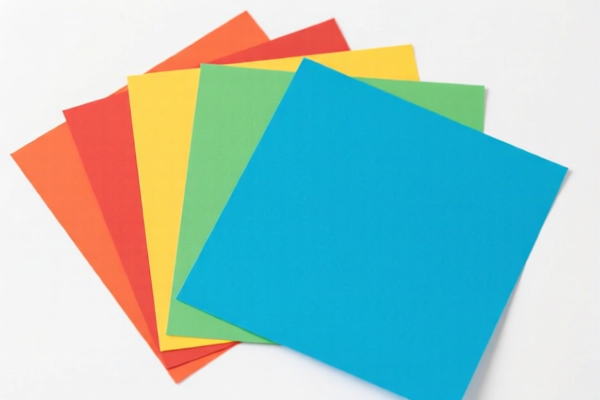

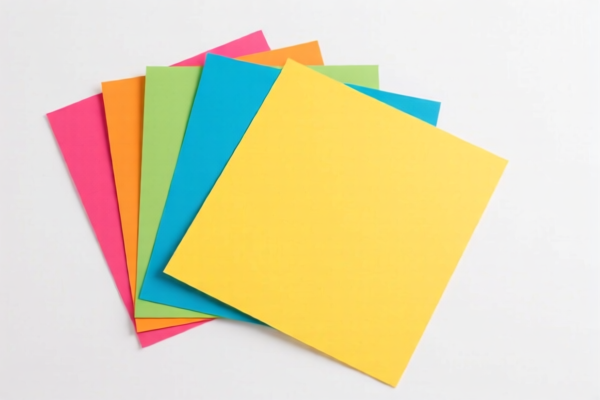

AI Analysis
🎞️ Color Copy Film (Universal)
🌐 HS Code Reference & Customs Clearance Guide | 2026 Latest Tariff Analysis | Professional Level Strategy
📌 I. Product Definition & Classification: What is "Universal Color Copy Film"?
Color Copy Film (Universal) generally refers to flexible plastic films, often self-adhesive or coated, used for color reproduction, overlay, or protective applications in industrial or commercial settings. In international trade, its classification hinges on two key factors: 1. Form: Is it a flat sheet/roll (plastic board/film) or a self-adhesive tape/film? 2. Composition: It is primarily made of plastic (polymer).
⚠️ Key Distinction Point:
- If the product is a self-adhesive plastic film (rolls or sheets that stick on their own) → It likely falls under 3919.90 (Self-adhesive plates, sheets, film, tape, etc.).
- If the product is a non-adhesive plastic film (plain plastic film, possibly laminated or coated but not self-adhesive) → It falls under 3920.99 (Other plates, sheets, film, flexible, of plastics).
📦 II. HS Code Classification Details (2026 Latest Tariff Authority Cross-Reference)
Based on the provided data, the product can be classified into four specific HS Codes depending on the exact physical form (adhesive vs. non-adhesive) and specific sub-category nuances.
| HS Code | Product Description & Logic | Tax Rate | Tax Breakdown |
|---|---|---|---|
3919.90.50.40 |
Self-Adhesive Plastic Film Form: Film. Material: Plastic. Logic: Fits "Self-adhesive plastic film" category. |
40.8% | Base: 5.8% Sec 301: 25.0% Section 122: 10% |
3919.90.50.60 |
Other Self-Adhesive Plastic Film Form: Thin Film. Material: Plastic. Logic: Reasonable match under "Other" categories for self-adhesive films. |
40.8% | Base: 5.8% Sec 301: 25.0% Section 122: 10% |
3920.99.10.00 |
Other Plastic Film (Non-Adhesive) Form: Film. Material: Plastic. Logic: Fits "Other plastic plates, sheets, film" (non-adhesive). |
41.0% | Base: 6.0% Sec 301: 25.0% Section 122: 10% |
3920.99.20.00 |
Other Plastic Film (Non-Adhesive) Form: Film. Material: Plastic. Logic: Fits "Other plastic plates, sheets, film" (non-adhesive). |
39.2% | Base: 4.2% Sec 301: 25.0% Section 122: 10% |
🔍 重点提醒 (Key Reminder):
- The core difference lies in whether the film has adhesive backing (自粘性).
- If Self-Adhesive: Use 3919 codes (40.8% total).
- If Non-Adhesive (Plain/Laminated): Use 3920 codes (39.2% or 41.0% total).
- "Universal" usually implies it doesn't fit a highly specific niche, so it defaults to "Other" (其余) subheadings.
💰 III. 2026 Latest Tariff Rate Details (Including Surcharges & Policy Add-ons)
✅ Applicable Country: United States (US)
✅ Country of Origin: China (CN)
✅ Effective Date: Rates apply to imports post-2025 policies (Section 122 & Section 301 active)
🎯 1. Self-Adhesive Plastic Film (3919.90.50.40 / 3919.90.50.60)
| Item | Content |
|---|---|
| Base Tariff | 5.8% (Ad Valorem) |
| Section 301 Tariff | +25.0% (USITC Footnote under HTSUS 3919) |
| Section 122 Tariff | +10.0% (Specific duty on certain plastic products from China) |
| Total Tariff Rate | 40.8% |
| Tax Calculation | CIF Value × 40.8% |
| De Minimis Exemption? | ❌ NO (High tariff rate disqualifies it from de minimis treatment) |
| Legal Basis Path | HTSUS:3919.90 → Section 301 (Footnote) → Section 122 (Executive Order) |
📌 Explanation:
- The 5.8% is the standard Most Favored Nation (MFN) rate.
- The 25% is the Section 301 tariff targeting Chinese manufactured goods.
- The 10% is the Section 122 tariff, which targets specific categories of plastic film and sheets from China.
- Total: 40.8%. This is a very high tariff burden.
🎯 2. Other Plastic Film (3920.99.10.00 / 3920.99.20.00)
| Item | Content |
|---|---|
| Base Tariff | 6.0% (3920.99.10) or 4.2% (3920.99.20) |
| Section 301 Tariff | +25.0% |
| Section 122 Tariff | +10.0% |
| Total Tariff Rate | 41.0% (3920.99.10) or 39.2% (3920.99.20) |
| Tax Calculation | CIF Value × Total Rate |
| De Minimis Exemption? | ❌ NO |
| Legal Basis Path | HTSUS:3920.99 → Section 301 (Footnote) → Section 122 (Executive Order) |
📌 Explanation:
- If you can prove the film is non-adhesive, you might qualify for the lower base rate of 4.2% (3920.99.20.00), resulting in a total of 39.2%.
- If classified under the "Other" subheading3920.99.10, the base is 6.0%, resulting in 41.0%.
- Strategy: If the product is non-adhesive, aim for3920.99.20.00to save 1.8% in total duties.
🛠️ IV. Customs Clearance Practical Advice (Real-World Pitfall Guide)
✅ 1. Required Documentation Checklist (Non-negotiable)
| Document | Required | Notes |
|---|---|---|
| ✅ Product Specification Sheet | ✔️ | Must clearly state: "Self-adhesive: Yes/No", Material Composition (e.g., PET, PE, PVC), Thickness. |
| ✅ Composition Statement | ✔️ | Detailed breakdown of plastic polymer type. |
| ✅ Product Photos | ✔️ | Clear images showing the roll, the backing (if adhesive), and any labels. |
| ✅ Commercial Invoice | ✔️ | Must use precise description: "Plastic Film, [Adhesive/Non-Adhesive], for Color Copying, Universal Type". |
| ✅ Packing List | ✔️ | Net weight and gross weight are critical for ad valorem tax calculation. |
| ✅ Section 122 Compliance Statement | ✔️ | Acknowledge origin is China to avoid penalties. |
✅ 2. Declaration Strategy (Key Mnemonic)
🔥 "Adhesive is 3919, Non-Adhesive is 3920. Specify clearly, avoid the 10% penalty trap!"
| Scenario | Correct Declaration | Wrong Practice |
|---|---|---|
| Self-Adhesive Film (Peel & Stick) | 3919.90.50.40 or 3919.90.50.60 |
Declare as 3920 → Risk of reclassification & penalties. |
| Non-Adhesive Plastic Film (Plain Roll) | 3920.99.20.00 (Best rate) |
Declare as 3919 → Unnecessary higher base rate. |
| Coated/Laminated Film | Check if coating is adhesive. If no, use 3920. |
Over-declare as "Adhesive" to simplify? → Risk of audit. |
✅ 3. Special Case Handling
| Situation | Handling Advice |
|---|---|
| "Universal" means multi-purpose | If it can be used for both adhesive and non-adhesive purposes, declare based on the actual physical state at the time of import. If it has a release liner and adhesive, it is 3919. |
| Sample vs. Bulk | Even for samples, if the total value + duty exceeds de minimis thresholds, full duties apply. Do not rely on de minimis for high-tariff plastic films. |
| Origin Marking | Ensure every roll/package is marked "Made in China". Section 122 applies specifically to Chinese-origin goods. |
🌍 V. Global Market Comparison (2026 Update)
| Country/Region | Recommended HS Code | Total Tariff (China Origin) | Key Certification | Notes |
|---|---|---|---|---|
| 🇺🇸 USA | 3919.90.50.40 / 3920.99.20.00 |
39.2% - 41.0% | None specific for film, but must comply with EPA/ASTM if applicable | High Tariff Zone: Section 301 + Section 122 applies. |
| 🇨🇳 China | 3919.90.50 / 3920.99.20 |
5% - 6% | CCC (if electrical components included, otherwise not needed for plain film) | Low tariff, but check anti-dumping if specific plastic types. |
| 🇪🇺 EU | 3920.99 / 3919.90 |
6.5% - 7.7% | REACH (Chemical compliance) | No Section 301/122 equivalent, but strict environmental regulations. |
| 🇬🇧 UK | 3920.99 / 3919.90 |
6.5% - 7.7% | UKCA (if applicable) | Post-Brexit rules align closely with EU but separate certification. |
📌 Conclusion:
- The USA is the most challenging market due to the 40%+ effective tariff rate.
- EU/UK/China have significantly lower tariffs, but Section 122 is a US-specific penalty that drastically increases costs.
📌 VI. Common Mistakes & Pitfall Guide (Lessons Learned)
❌ Mistake 1: Declaring "Color Copy Film" as "Paper" (4823)
👉 Consequence: If customs detects plastic, they will reclassify to 39xx, backdate duties, and fine. Plastic film is never paper.
❌ Mistake 2: Ignoring the "Adhesive" status
👉 Consequence: If you declare 3920 (Non-Adhesive) but the product is 3919 (Adhesive), you may face an audit. While the total rate is similar (40.8% vs 39.2%), accuracy prevents penalties.
❌ Mistake 3: Assuming De Minimis ($800) applies
👉 Consequence: Section 301 and Section 122 tariffs override de minimis exemptions for many categories, or the high rate makes it financially unviable even if exempt. Always calculate the full duty.
❌ Mistake 4: Vague Description "Plastic Film"
👉 Consequence: Customs cannot determine if it is 3919 or 3920. Delay in clearance.
✅ Correct Action: Use "Self-Adhesive Plastic Film, Universal, for Color Copying, Material: PET/PE, Thickness: X mm".
🎯 VII. Conclusion: Precise Classification Saves Cost!
🎯 Remember the Mnemonic:
🔹 "Adhesive = 3919 (40.8%), Non-Adhesive = 3920 (39.2% or 41.0%)."
🔹 "Section 122 is the silent killer: +10% on top of 301."
🔹 "Specs define the code. Vague specs invite audits."
📌 Pro Tip:
If you are importing large volumes, consider Section 301 Exclusions (if available for specific plastic films) or Third-Country Transshipment (with caution regarding rules of origin).
Always apply for a Binding Ruling (Pre-Ruling) from US CBP before shipping to lock in the HS Code and mitigate risk.
📣 Immediate Action:
📞 Contact your customs broker with the product datasheet.
📄 Verify if the film is self-adhesive by checking the packaging for "Removable" or "Adhesive backing".
🚀 Accurate declaration ensures smooth customs clearance and predictable landed costs.
✨ Professional Clearance, Starting with Accurate Classification!
💼 Every percentage point matters in the age of Section 301 & 122!
Customer Reviews
About HS Code Classification
The Harmonized System (HS) is an internationally standardized nomenclature developed by the World Customs Organization (WCO) to classify traded products. Over 200 countries use the HS system as the basis for customs tariffs, trade statistics, and import/export regulations.
Each HS code follows a hierarchical structure:
- Chapter (2 digits) — Broad category of goods (e.g., Chapter 84: Machinery and Mechanical Appliances)
- Heading (4 digits) — More specific grouping within the chapter
- Subheading (6 digits) — Internationally standardized breakdown, used by all WCO member countries
- National subdivisions (8-10 digits) — Country-specific extensions for further classification, such as US HTSUS 10-digit codes
Correct HS code classification is essential for smooth customs clearance, accurate duty payment, and compliance with trade regulations. Misclassification can lead to customs delays, overpayment of duties, or penalties.
When importing from CN to US, the applicable tariff rates may include:
- Most-Favored-Nation (MFN) rate — The standard duty rate applied to WTO members
- General rate — Applied to countries without trade agreements
- Trade remedy duties — Additional tariffs such as Section 301 (anti-dumping), Section 232 (national security), or countervailing duties
The information provided on this page is for reference purposes only. For official classification, please consult with your local customs authority or a licensed customs broker.