Color Developing Film (16mm)
CN → US| HS Code | Tariff Rate | Origin | Destination | Doc |
|---|---|---|---|---|
| 3704000000 | 35.0% | CN | US | Official Doc |
| 3702520130 | 38.7% | CN | US | Official Doc |
| 3702520160 | 38.7% | CN | US | Official Doc |
Product Images
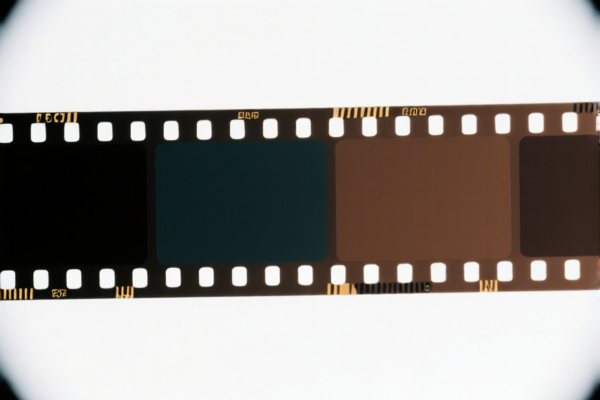
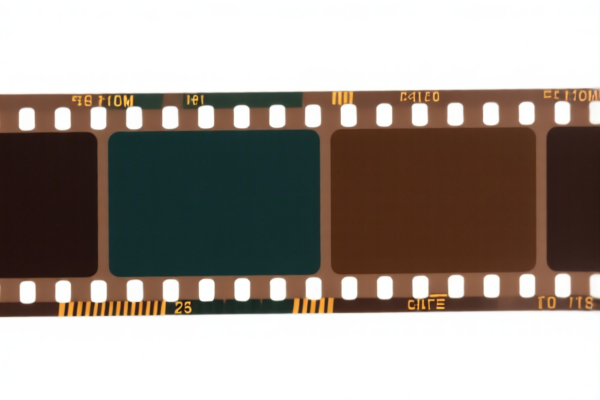
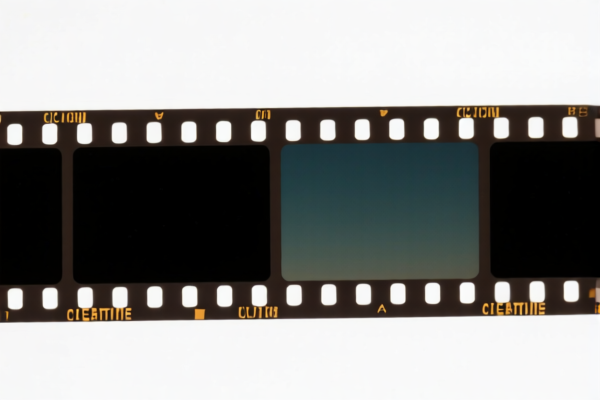

AI Analysis
🎞️ Color Developing Film (16mm)
🌐 HS Code Reference & Customs Clearance Guide | 2026 Latest Tariff Analysis | Professional Entry Strategy
📌 I. Product Definition & Classification: What Exactly is "Color Developing Film"?
Color Developing Film, specifically in 16mm format, is a critical medium in the analog photography and filmmaking industry. In international trade, it is strictly categorized based on its material composition (photographic emulsion on a film base) and its processing state (ready for developing or in the process of being developed).
The classification hinges on two main factors: 1. Format/Width: Is it ≤16mm or wider? 2. State: Is it "developed" (positive/negative image fixed) or "undeveloped"?
⚠️ Key Distinction:
- If the film is already processed (images fixed, ready for projection/viewing) and meets specific chemical state criteria → It may fall under 3704.00.00.00.
- If the film is color reversal (slide) film or color negative film with a width of ≤16mm, it falls under 3702.52.01.30 or 3702.52.01.60.
- Crucial Note: "Color Developing Film" often implies the process or the type of film designed for color development. If the product is 16mm Color Reversal (Slide) Film or Color Negative Film, it is classified under Chapter 3702. If it is a developed photographic plate (fixed image), it goes to 3704.
📦 II. HS Code Classification Details (2026 Latest Tariff Authority Comparison)
| HS Code | Product Description | Applicable Scenario | Tax Rate (Total) |
|---|---|---|---|
3704.00.00.00 |
Photographic plates, film, paper, paperboard and other support, exposed, developed | Developed film where the image is already fixed. Fits the description of "photographic film and related chemically treated articles." | 35.0% |
3702.52.01.30 |
Color reversal film (slide film), of a width ≤16mm | 16mm Color Slide Film. Matches characteristics of color reversal film, material inferred as film, width ≤16mm. | 38.7% |
3702.52.01.60 |
Other color film, of a width ≤16mm (excluding reversal) | 16mm Color Negative Film. Product name fits color roll use, width limits comply with code requirements, material inferred as non-paper/fabric film. | 38.7% |
🔍 Key Reminder:
- "Developed" vs. "Undeveloped": If the film has already been processed into an image (developed), it generally falls under 3704.
- "16mm" Specificity: If the film is undeveloped and specifically 16mm, it is strictly regulated under 3702.52. The sub-code distinguishes between Reversal (30) and Other/Negative (60).
- Material: All these codes infer the material as photographic film base (plastic/polyester), not paper or textile.
💰 III. 2026 Latest Tariff Rate Details (Including Surcharges & Policy Add-ons)
✅ Applicable Country: United States (US)
✅ Origin: China (CN)
✅ Effective Date: From November 10, 2025 (inclusive of subsequent imports)
🎯 1. 3704.00.00.00 — Photographic Film, Exposed & Developed
| Item | Details |
|---|---|
| Base Tariff | 0.0% (Ad valorem) |
| Section 301 Surcharge | +25.0% (From USITC Footnote 9903.88.01 equivalent for photographic goods) |
| IEEPA Surcharge | +10.0% (For China/HK products, effective Nov 10, 2025) |
| Total Rate | 35.0% |
| Tax Calculation | CIF Value × 35% |
| De Minimis Exemption? | ❌ No (deny_de_minimis) |
| Legal Basis Path | IEEPA:9903.01.25 → IEEPA:9903.01.24 → USITC:3704.00.00.00 → FOOTNOTE:301 |
📌 Explanation:
- "Base Tariff 0%": The standard Most Favored Nation (MFN) rate for developed photographic films is often low or zero.
- "301 Surcharge 25%": Reflects the additional duties imposed under Section 301 of the Trade Act.
- "IEEPA 10%": The additional emergency tariff under the International Emergency Economic Powers Act.
- Total 35%: This is a high-cost classification for imported developed film stocks.
🎯 2. 3702.52.01.30 — 16mm Color Reversal (Slide) Film
| Item | Details |
|---|---|
| Base Tariff | 3.7% |
| Section 301 Surcharge | +25.0% |
| IEEPA Surcharge | +10.0% |
| Total Rate | 38.7% |
| Tax Calculation | CIF Value × 38.7% |
| De Minimis Exemption? | ❌ No (deny_de_minimis) |
| Legal Basis Path | IEEPA:9903.01.25 → IEEPA:9903.01.24 → USITC:3702.52.01.30 → FOOTNOTE:301 |
📌 Note:
- "Base Tariff 3.7%": Slightly higher base rate for specific undeveloped color reversal films.
- "301 + IEEPA": Same surcharges as above, totaling 38.7%.
- Scope: Applies to 16mm color slide films, commonly used in amateur and professional still photography.
🎯 3. 3702.52.01.60 — 16mm Other Color Film (Negative)
| Item | Details |
|---|---|
| Base Tariff | 3.7% |
| Section 301 Surcharge | +25.0% |
| IEEPA Surcharge | +10.0% |
| Total Rate | 38.7% |
| Tax Calculation | CIF Value × 38.7% |
| De Minimis Exemption? | ❌ No (deny_de_minimis) |
| Legal Basis Path | IEEPA:9903.01.25 → IEEPA:9903.01.24 → USITC:3702.52.01.60 → FOOTNOTE:301 |
📌 Note:
- "Base Tariff 3.7%": Same base rate as reversal film.
- Scope: Applies to 16mm color negative films, commonly used in motion picture filmmaking.
- Identification: Clearly mark as "Color Negative Film, 16mm" to avoid confusion with reversal film (30).
🛠️ IV. Customs Clearance Practical Advice (Real-World Pitfall Avoidance Guide)
✅ 1. Required Documentation Checklist (Mandatory)
| Document | Must Provide | Explanation |
|---|---|---|
| ✅ Product Specification Sheet | ✔️ | Must specify: Film Type (Negative/Reversal), Width (16mm), Chemical Structure, ISO Speed. |
| ✅ Unexposed vs. Developed Status | ✔️ | Critical: Clearly state if film is exposed/developed (3704) or undeveloped (3702). Misdeclaration leads to severe penalties. |
| ✅ Commercial Invoice | ✔️ | Must explicitly state "Color Developing Film (16mm)" or "16mm Color Negative Film". Avoid vague terms like "Photo Paper". |
| ✅ Certificate of Origin (CO) | ✔️ | To verify Country of Origin (CN) for accurate tariff application. |
| ✅ Packing List | ✔️ | Detail weight and dimensions of film rolls. |
| ✅ Safety Data Sheet (SDS) | ✔️ | If the film contains hazardous chemicals or is shipped with developing agents. |
✅ 2. Declaration Tips (Key Mantra)
🔥 "State the Width, State the State, Avoid Vague Names!"
| Situation | Correct Declaration | Wrong Practice |
|---|---|---|
| 16mm Slide Film (Undeveloped) | 3702.52.01.30 - "16mm Color Reversal Film" |
Declaring as "Photographic Paper" → 0% base but wrong classification |
| 16mm Movie Film (Undeveloped) | 3702.52.01.60 - "16mm Color Negative Film" |
Declaring as "Plastic Rolls" → Incorrect classification |
| Pre-exposed & Developed Rolls | 3704.00.00.00 - "Exposed & Developed Photographic Film" |
Declaring as "Undeveloped Film" → 38.7% instead of 35%, or vice versa |
| 35mm Film | Different HS Code | Using 16mm code for 35mm → Rejection |
✅ 3. Special Cases Handling
| Scenario | Handling Advice |
|---|---|
| Mixed Shipments (16mm & 35mm) | Split the HS Codes. Do not lump them together. 16mm and 35mm have different sub-codes. |
| Film + Camera | If sold separately, declare film as 3702. If bundled as a kit, the entire kit may be classified as the camera (9006), but this is risky and requires prior ruling. Recommendation: Declare separately. |
| Digital Backs with Film-like Output | Not film. Declare as digital imaging components (8525 or 8543). |
| Vintage/Artisanal Film | Still classified by technical specifications (emulsion type, width). Provenance does not change HS Code. |
🌍 V. Global Market Clearance Comparison (2026 Latest)
| Country/Region | Recommended HS Code | Tariff (China Origin) | Certification Requirements | Notes |
|---|---|---|---|---|
| 🇺🇸 USA | 3702.52.01.30 / 60 |
38.7% (3.7% Base + 35% Surcharges) | No special FDA/CE, but correct chemical labeling | High tariffs due to Section 301 & IEEPA |
| 🇪🇺 EU | 3702.52 |
6.5% (Standard) | REACH Compliance (Chemical registration) | No Section 301 equivalents, but strict chemical laws |
| 🇨🇳 China | 3702.52 |
Variable (3-10%) | CCC (if applicable) | Import duties may vary; check latest customs bulletin |
| 🇬🇧 UK | 3702.52 |
6.5% (Standard) | UKCA Marking (if electronic components) | Post-Brexit rules may apply |
| 🇯🇵 Japan | 3702.52 |
6.0% (Standard) | PSE (if batteries included) | No major surcharges |
📌 Conclusion:
- USA imposes the highest effective tariff on Chinese-manufactured film due to the 35-38.7% combined rate.
- EU and UK are more favorable, with standard tariffs around 6-6.5%, but require strict REACH/UKCA chemical compliance.
📌 VI. Common Errors & Pitfall Guide (Lessons Learned)
❌ Mistake 1: Declaring "16mm Film" without specifying Negative or Reversal.
👉 Consequence: Customs may detain the shipment for clarification, causing delays and potential fines.
❌ Mistake 2: Confusing Developed (3704) with Undeveloped (3702).
👉 Consequence: If you ship undeveloped film but declare it as "developed," you pay 35% instead of 38.7%? No, the risk is misclassification penalty if caught. If you ship developed as undeveloped, you might try to evade duties, but the physical inspection will reveal the developed image, leading to seizure.
❌ Mistake 3: Using generic terms like "Photo Film" on the invoice.
👉 Consequence: Customs officers cannot determine the width or type. Shipment held.
❌ Mistake 4: Ignoring the 16mm Width Restriction.
👉 Consequence: If the film is actually 17.5mm or 35mm, the HS Code 3702.52.01 is incorrect. Use the correct code for the actual width.
✅ Correct Practice:
"16mm Color Negative Film, Unexposed, Polyester Base, ISO 50, Model XYZ, Made in China"
🎯 VII. Conclusion: Precision in Declaration Saves Money!
🎯 Remember the Mantra:
🔹 "Width Matters: 16mm is Special."
🔹 "State Matters: Developed vs. Undeveloped."
🔹 "Type Matters: Negative vs. Reversal."
🔹 "Tariff Impact: 35% - 38.7% in the US."
📌 Pro Tip:
If your film is not from China (e.g., from Japan or Germany), you may avoid the 25% Section 301 and 10% IEEPA surcharges, reducing the total tariff significantly.
- Japanese Film: ~6.5% in US (if no 301 applies).
- Chinese Film: ~38.7% in US.
Recommendation:
📞 Consult a Customs Broker to file an Advance Ruling (R912345 style) if you are unsure about the "Developed" status.
🚀 Accurate Declaration = Faster Clearance = Lower Costs.
✨ Professional Customs Clearance Starts with Accurate Classification!
💼 Every Dollar of Tariff Saved is Profit Gained!
Customer Reviews
About HS Code Classification
The Harmonized System (HS) is an internationally standardized nomenclature developed by the World Customs Organization (WCO) to classify traded products. Over 200 countries use the HS system as the basis for customs tariffs, trade statistics, and import/export regulations.
Each HS code follows a hierarchical structure:
- Chapter (2 digits) — Broad category of goods (e.g., Chapter 84: Machinery and Mechanical Appliances)
- Heading (4 digits) — More specific grouping within the chapter
- Subheading (6 digits) — Internationally standardized breakdown, used by all WCO member countries
- National subdivisions (8-10 digits) — Country-specific extensions for further classification, such as US HTSUS 10-digit codes
Correct HS code classification is essential for smooth customs clearance, accurate duty payment, and compliance with trade regulations. Misclassification can lead to customs delays, overpayment of duties, or penalties.
When importing from CN to US, the applicable tariff rates may include:
- Most-Favored-Nation (MFN) rate — The standard duty rate applied to WTO members
- General rate — Applied to countries without trade agreements
- Trade remedy duties — Additional tariffs such as Section 301 (anti-dumping), Section 232 (national security), or countervailing duties
The information provided on this page is for reference purposes only. For official classification, please consult with your local customs authority or a licensed customs broker.