Color Developing Film 16mm
CN → US| HS Code | Tariff Rate | Origin | Destination | Doc |
|---|---|---|---|---|
| 370210 | 0.0% | CN | US | Official Doc |
| 370290 | 0.0% | CN | US | Official Doc |
Product Images
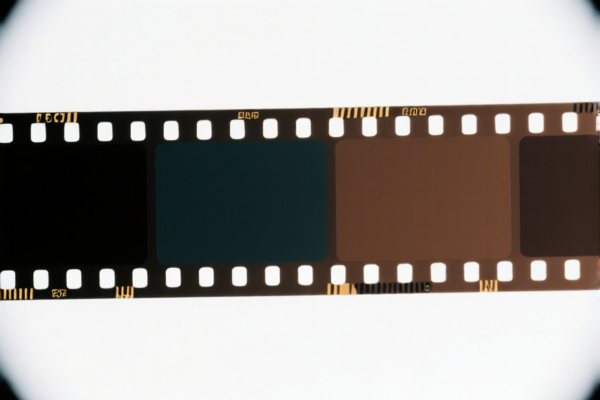
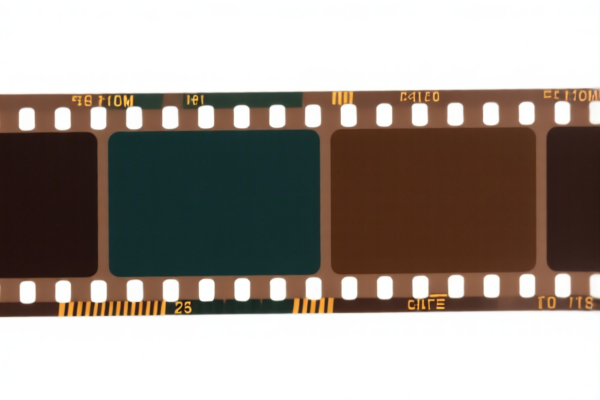
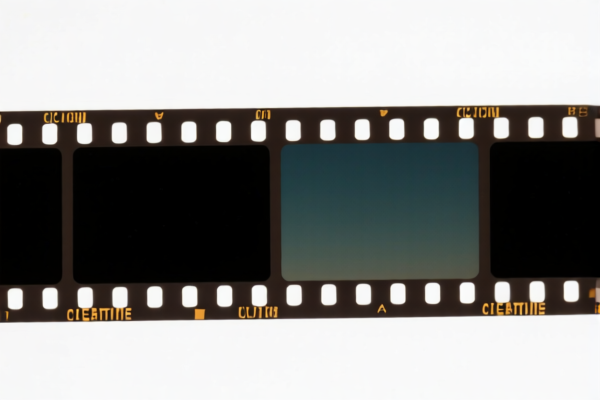

AI Analysis
🎞️ Color Developing Film 16mm (Photographic Film)
🌐 HS Code Reference & Customs Clearance Guide | 2026 Latest Tariff Analysis | Professional Clearance Strategy
📌 I. Product Definition & Classification: Do You Really Know "Color Developing Film"?
Color developing film, specifically in the 16mm format, is a specialized photographic medium used for motion picture production, educational films, or industrial inspection. In international trade, it is strictly categorized under Chapter 37 (Photographic or cinematographic goods).
The classification hinges on two critical factors: 1. Physical State: Is it raw, undeveloped, or processed/developed? 2. Format & Usage: Is it for still photography or cinematography (motion picture)?
⚠️ Key Distinction Point:
- If the film is undeveloped/raw (silver halide based, ready for processing) → Classified under 3702.
- If the film is already developed/processed (chemical treatment complete) → Classified under 3704.
- 16mm width is a specific identifier for cinematographic film, distinct from 35mm or 8mm.
📦 II. HS Code Classification Details (2026 Latest Tariff Authority Comparison)
Based on the provided data, here are the two potential classifications depending on the physical state of the film.
| HS Code | Product Description | Application Scenario | Physical State |
|---|---|---|---|
3704.00.00.00 |
Photographic paper, paperboard, textiles, prepared for the use of cameras | Developed/Processed Film | ✅ Yes (Chemical treatment complete) |
3702.52.01.30 |
Colour negative or reversal film for still photography, width ≤ 16mm | Undeveloped Color Film (Specific Match) | ❌ No (Raw, requires development) |
3702.52.01.60 |
Colour negative or reversal film for still photography, width ≤ 16mm | Undeveloped Color Film (General Match) | ❌ No (Raw, requires development) |
🔍 Critical Note:
-3704.00.00.00is selected when the film has already undergone chemical development (显影). The summary confirms: "Material is film, purpose is developing... matches description of photographic film and related chemical processing status."
-3702.52.01.30&3702.52.01.60are selected when the film is color reversal/negative film (彩色反转片/负片) with a width not exceeding 16mm. The summary confirms: "Width ≤ 16mm, purpose for color developing/reversal film, consistent with color reversal film characteristics."
💰 III. 2026 Latest Tariff Rate Breakdown (Including Surtaxes & Policy Add-ons)
✅ Applicable Country: United States (US)
✅ Country of Origin: China (CN)
✅ Effective Date: November 10, 2025 (Includes subsequent imports)
🎯 1. 3704.00.00.00 —— Developed/Processed Photographic Film
| Item | Content |
|---|---|
| Base Duty Rate | 0% (Ad valorem) |
| USITC Surtax (Section 301) | +25% |
| IEEPA Surtax (122 Clause) | +10% |
| Total Duty Rate | 35.0% |
| Tax Calculation | CIF Value × 35.0% |
| De Minimis Eligibility | ❌ Not Eligible (Deny De Minimis) |
| Legal Basis Path | IEEPA:9903.01.25 → IEEPA:9903.01.24 → USITC:3704.00.00.00 → FOOTNOTE:9903.88.01 |
📌 Explanation:
- Since the film is developed, it falls under Chapter 3704.
- The total tariff is 35% (0% base + 25% Sec 301 + 10% IEEPA).
- This is a high tariff scenario. Proper documentation proving the film is "processed" is essential.
🎯 2. 3702.52.01.30 & 3702.52.01.60 —— Undeveloped Color Film (≤16mm)
| Item | Content |
|---|---|
| Base Duty Rate | 3.7% (Ad valorem) |
| USITC Surtax (Section 301) | +25% |
| IEEPA Surtax (122 Clause) | +10% |
| Total Duty Rate | 38.7% |
| Tax Calculation | CIF Value × 38.7% |
| De Minimis Eligibility | ❌ Not Eligible (Deny De Minimis) |
| Legal Basis Path | IEEPA:9901.25 → IEEPA:9903.01.24 → USITC:3702.52.01.xx → FOOTNOTE:9903.88.01 |
📌 Explanation:
- Since the film is undeveloped and ≤16mm, it falls under Chapter 3702.
- The base duty is 3.7%, not 0%.
- Adding the 25% Sec 301 and 10% IEEPA surtaxes results in a total of 38.7%.
- Difference: Although the base rate is higher (3.7% vs 0%), the total rate is only marginally higher than the developed film (38.7% vs 35.0%). However, the customs scrutiny for undeveloped film is often stricter regarding width verification.
🛠️ IV. Customs Clearance Operational Suggestions (Practical Pitfall Avoidance)
✅ 1. Preparation Checklist (Non-negotiable)
| Document | Must Provide | Description |
|---|---|---|
| ✅ Product Specification Sheet | ✔️ | Must clearly state: Width (16mm), Color Type (Negative/Reversal), and Processing State (Developed/Undeveloped). |
| ✅ Product Photos (Label & Canister) | ✔️ | Clear image of the film canister showing the ISO, format (16mm), and brand. |
| ✅ Commercial Invoice | ✔️ | Must explicitly describe as "Color Photographic Film, 16mm" and specify if it is "Processed" or "Unprocessed". |
| ✅ Packing List | ✔️ | Details number of rolls/boxes. |
| ✅ Certificate of Origin (CO) | ✔️ | Required for origin verification (China). |
💡 Pro Tip: The distinction between
3702(Undeveloped) and3704(Developed) is critical. Misclassifying undeveloped film as developed (or vice versa) can lead to classification errors, delays, or penalties.
✅ 2. Declaration Tips (Key Mnemonic)
🔥 “Width Matters, State Determines Code, 16mm Needs Detail!”
| Scenario | Correct Declaration | Common Mistake |
|---|---|---|
| Undeveloped 16mm Color Film | 3702.52.01.30 or .60 |
Misclassifying as 35mm film → Wrong HS Code. |
| Developed/Processed 16mm Film | 3704.00.00.00 |
Claiming "Raw Film" for developed stock → Fraud risk. |
| Film Width > 16mm | Different HS Code (e.g., 3702.53...) | Ignoring width specification → Misclassification. |
| Still Photo Film vs. Cine Film | Specify "Motion Picture" or "Still" | Ambiguous description "Photographic Film" → Customs Request for Info. |
✅ 3. Special Cases Handling
| Situation | Handling Advice |
|---|---|
| Mixed Shipments | If the shipment contains both 16mm and 35mm film, separate the HS Codes. Do not mix them in one line item. |
| Sample Shipments | Even small samples are subject to 35%-38.7% duties. Do not assume low value avoids taxes. |
| OEM Private Label | Ensure the invoice lists the actual manufacturer or clearly states "OEM Product" to avoid origin disputes. |
🌍 V. Global Market Comparison (2026 Latest)
| Country/Region | Recommended HS Code | Duty Rate (China Origin) | Certification | Notes |
|---|---|---|---|---|
| 🇺🇸 USA | 3702.52.01.30 / 3704.00.00.00 |
35.0% - 38.7% | None Specific | High Surtax Apply |
| 🇨🇳 China | 3702.52.01.30 / 3704.00.00.00 |
~6% (Import Duty) | CCC (If applicable) | Lower base duty, no US-style surtaxes |
| 🇪🇺 EU | 3702.52 / 3704.00 |
0% - 4% | CE (If electronic devices involved) | Generally favorable for raw materials |
| 🇬🇧 UK | 3702.52 / 3704.00 |
0% - 4% | UKCA | Post-Brexit rules apply |
📌 Conclusion:
- The US is the most expensive market for this product due to the combination of base tariffs and the 35% IEEPA/Sec 301 surcharges.
- China-origin film entering the US faces no de minimis exemption. Every box is taxed.
📌 VI. Common Errors & Pitfall Guide (Lessons Learned)
❌ Error 1: Declaring "16mm Film" without specifying "Developed" vs. "Undeveloped".
👉 Consequence: Customs may assign the wrong HS code, leading to assessment discrepancies or audits.
❌ Error 2: Misidentifying the width as 35mm for 16mm film.
👉 Consequence: Wrong HS code, potential penalties for misdeclaration.
❌ Error 3: Ignoring the 122 Clause (IEEPA) and Section 301 surtaxes in cost calculation.
👉 Consequence: Unexpected costs of 35-38.7% on CIF value, eroding profit margins.
❌ Error 4: Using vague terms like "Camera Accessories" instead of "Photographic Film".
👉 Consequence: Delayed clearance, additional inspection requests.
✅ Correct Declaration Example:
"Color Reversal Photographic Film, 16mm Width, Undeveloped, Roll Format, Brand: Kodak, HS Code: 3702.52.01.30"
🎯 VII. Conclusion: Professional Declaration, Cost Control, Efficient Clearance
🎯 Remember the Mantra:
🔹 "State Determines Code: Developed=3704, Raw=3702"
🔹 "16mm is Narrow: Specify Width, Avoid Penalty"
🔹 "US Surtax is Real: 35-38.7%, Plan Ahead!"
📌 Pro Tip:
If your film is originating from Vietnam, Thailand, or Malaysia, you may apply for IEEPA Exemption (subject to current rules), significantly reducing the duty rate.
It is highly recommended to apply for an Advance Ruling (Pre-classification) from US Customs if this is a recurring import.
📣 Immediate Action:
📞 Contact a professional customs broker + Provide Product Photos + Confirm Processing State
🚀 Ensure your film, smoothly cleared, efficiently shipped, profit protected!
✨ Professional clearance starts with accurate classification!
💼 Every cent of duty is worth calculating precisely!
Customer Reviews
About HS Code Classification
The Harmonized System (HS) is an internationally standardized nomenclature developed by the World Customs Organization (WCO) to classify traded products. Over 200 countries use the HS system as the basis for customs tariffs, trade statistics, and import/export regulations.
Each HS code follows a hierarchical structure:
- Chapter (2 digits) — Broad category of goods (e.g., Chapter 84: Machinery and Mechanical Appliances)
- Heading (4 digits) — More specific grouping within the chapter
- Subheading (6 digits) — Internationally standardized breakdown, used by all WCO member countries
- National subdivisions (8-10 digits) — Country-specific extensions for further classification, such as US HTSUS 10-digit codes
Correct HS code classification is essential for smooth customs clearance, accurate duty payment, and compliance with trade regulations. Misclassification can lead to customs delays, overpayment of duties, or penalties.
When importing from CN to US, the applicable tariff rates may include:
- Most-Favored-Nation (MFN) rate — The standard duty rate applied to WTO members
- General rate — Applied to countries without trade agreements
- Trade remedy duties — Additional tariffs such as Section 301 (anti-dumping), Section 232 (national security), or countervailing duties
The information provided on this page is for reference purposes only. For official classification, please consult with your local customs authority or a licensed customs broker.