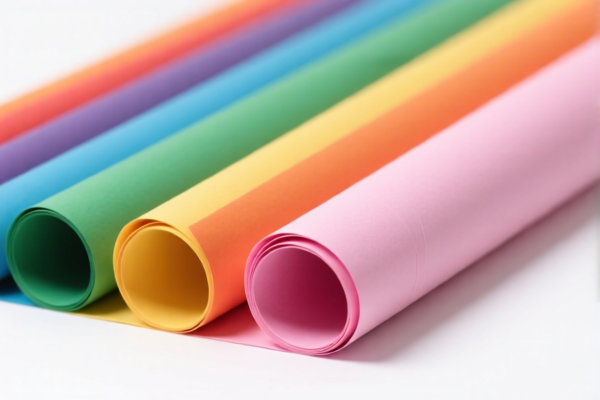
Color Developing Photo Paper Roll
CN → US| HS Code | Tariff Rate | Origin | Destination | Doc |
|---|---|---|---|---|
| 4823906700 | 35.0% | CN | US | Official Doc |
| 4823908680 | 35.0% | CN | US | Official Doc |
| 3701910060 | 38.7% | CN | US | Official Doc |
| 3701996060 | 35.0% | CN | US | Official Doc |
| 3703103030 | 38.7% | CN | US | Official Doc |
| 3703203030 | 38.7% | CN | US | Official Doc |
Product Images


AI Analysis
📸 Color Developing Photo Paper Roll: The Ultimate HS Code & Tax Breakdown (2026)
🌐 Global Trade Guide | 2026 Customs Clearance Strategy | Expert HS Classification Analysis
📌 One: What is "Color Developing Photo Paper Roll"?
Color Developing Photo Paper Roll refers to sensitized, unexposed photographic paper designed for producing color (polychrome) pictorial images with continuous tones. It is typically supplied in large industrial rolls (width > 610mm) and requires specific processing chemistry to develop images.
⚠️ Critical Classification Logic:
The HS Code depends entirely on Material and Format: 1. Is it on Paper? If yes, and width > 610mm → Chapter 3703.10 (Silver Halide) or 3703.20 (Other Color). 2. Is it on Paper but small/cut? → Chapter 48 (Paper products). 3. Is it on Plastic/Film? → Chapter 3701 (Plates/Film).
📦 Two: HS Code & Tax Breakdown (Data from your Input)
Based strictly on the provided data, here are the applicable classifications for Color Developing Photo Paper Rolls:
🟢 Scenario A: Large Rolls (> 610mm Width) - Silver Halide
Used for professional continuous tone color printing.
| HS Code | Product Description | Tax Status | Tax Rate |
|---|---|---|---|
| 3703.10.30.30 | Photographic paper... Sensitized, unexposed. In rolls > 610mm. Silver halide papers for pictorial use (continuous tone) - For color photography. | Base: 0.0% Add-on: 0.0% |
0.0% ✅ |
| 3703.20.30.30 | Photographic paper... Sensitized, unexposed. Other for color photography. Silver halide papers for pictorial use (continuous tone). | Base: 0.0% Add-on: 0.0% |
0.0% ✅ |
🔍 Why these codes?
These codes specifically cover "rolls of a width exceeding 610 mm" made of paper and intended for color photography. The tax rate is Zero, making this highly cost-effective for large-format color printing.
⚠️ Scenario B: Small/Custom Cut Rolls or Non-Specialized Paper
If the paper is cut to specific shapes or does not meet the strict "Silver Halide Pictorial" definition.
| HS Code | Product Description | Tax Status | Tax Rate |
|---|---|---|---|
| 4823.90.67.00 | Other paper... cut to size/shape; Of coated paper or paperboard: Other. | Base: 0.0% Add-on: 25.0% |
25.0% ❌ |
| 4823.90.86.80 | Other paper... cut to size/shape; Other articles: Other Other. | Base: 0.0% Add-on: 25.0% |
25.0% ❌ |
🔍 Why these codes?
If the roll is pre-cut (not in standard continuous rolls) or classified under generic "Other paper" (4823) rather than the specialized photographic chapter (3703), you face a 25% Additional Tax. This is a massive cost increase compared to Scenario A.
⚠️ Scenario C: Plastic/Film-Based (NOT Paper)
If your "Roll" is actually sensitized film on plastic or other materials (not paper/board/textiles).
| HS Code | Product Description | Tax Status | Tax Rate |
|---|---|---|---|
| 3701.91.00.60 | Photographic plates/film in flat, sensitized... of any material other than paper. For color photography. | Base: 0.0% Add-on: 0.0% |
0.0% ✅ |
| 3701.99.60.60 | Photographic plates/film... Other material, other than paper. | Base: 0.0% Add-on: 25.0% |
25.0% ❌ |
🔍 Why these codes?
The input data distinguishes between Paper (3703) and Other Materials (3701). If you claim it is "Photo Paper" but the substrate is actually polyester or acetate, it falls here. 3701.91 (Color) is tax-free; 3701.99 (Other) incurs 25%.
💰 Three: 2026 Tax Rate Deep Dive (Policy Analysis)
🎯 Tax Policy Summary for "Color Developing Photo Paper Roll"
| Category | HS Code Range | Base Tax | Add-on Tax | Total Tax | Strategy |
|---|---|---|---|---|---|
| Specialized Color Paper (Large Rolls) | 3703.10.30.30 / 3703.20.30.30 |
0% | 0% | 0% | Ideal. Keep rolls > 610mm, ensure "Silver Halide" & "Color" description. |
| Generic/Pre-cut Paper | 4823.90.67.00 / 4823.90.86.80 |
0% | 25% | 25% | Avoid. Do not pre-cut rolls if possible. |
| Non-Paper Film (Color) | 3701.91.00.60 |
0% | 0% | 0% | Valid. If material is not paper. |
| Non-Paper Film (Other) | 3701.99.60.60 |
0% | 25% | 25% | Avoid. Only for non-color or non-standard film. |
📌 Key Insight:
The 25% tax difference is the deciding factor. It comes from the "Add-on Tax" (加征关税) column in your data. This likely reflects a specific trade measure (e.g., Section 301 in US context or similar retaliatory measures) applied to "Other" paper products but exempted from specialized photographic materials.
🛠️ Four: Customs Clearance Survival Guide (Real-world Tips)
✅ 1. Documentation Checklist (Non-Negotiable)
To secure the 0% Tax rate, you must prove the item fits the strict definition of 3703.10.30.30:
* Technical Data Sheet: Must explicitly state "Width > 610mm", "Unexposed", "Sensitized", "Silver Halide", and "For Color Photography (Polychrome)".
* Material Specification: Must confirm the base material is Paper/Paperboard, not plastic film.
* Photos: Clear images showing the roll dimensions and the packaging label.
* End-Use Declaration: Explicitly state: "Intended for continuous tone color pictorial photography."
✅ 2. Classification Strategy (How to Avoid 25% Tax)
- Do NOT Pre-Cut: If you ship rolls cut to A4 or A3 sizes, you risk being reclassified under 4823 (Generic Paper) which carries a 25% penalty. Ship them as large rolls (>610mm).
- Exact Terminology: In the commercial invoice, DO NOT just write "Photo Paper." Use the exact phrase:
> "Photographic Paper, Silver Halide, Sensitized, Unexposed, Color, Continuous Tone, Roll Width 620mm" - Material Check: If your product is actually C-Print on polymer (plastic), it is NOT "Paper." It must be declared as 3701 (Film/Plate). If it is "Color" film, it is 0%. If it is "Other" film, it is 25%.
✅ 3. Red Flags (Common Mistakes)
| ❌ Mistake | 🚨 Consequence | ✅ Correction |
|---|---|---|
| Labeling a cut-sheet as a "Roll" | Misclassification → 25% Tax | Ensure actual physical width > 610mm. |
| Calling "Plastic Film" "Photo Paper" | Rejected by Customs → Audit | Check material composition; use Chapter 3701 for plastic. |
| Vague Description "Photo Paper" | Customs assigns default code → 25% Tax | Use full 10-digit HS Code description in invoice. |
| Missing "Color/Polychrome" tag | Might be taxed as B&W (different rate) | Explicitly state "For Color Photography". |
🌍 Five: Global Market Comparison (Quick Reference)
| Market | Recommended HS Code | Tax Rate | Key Requirement |
|---|---|---|---|
| Target (Based on Data) | 3703.10.30.30 |
0% | Roll width > 610mm, Silver Halide, Color. |
| Alternative (Generic) | 4823.90.67.00 |
25% | Only if pre-cut or not specialized. |
| Alternative (Film) | 3701.91.00.60 |
0% | If material is Plastic, not Paper. |
🎯 Six: Conclusion & Action Plan
The Bottom Line:
To pay 0% Tax, your Color Developing Photo Paper Roll must be:
1. Made of Paper (not plastic).
2. Supplied in Rolls wider than 610mm (continuous roll, not cut sheets).
3. Specifically identified as Silver Halide for Color (Polychrome) photography.
If any of these conditions fail, you risk a 25% Additional Tax.
🚀 Action Step:
Before shipping, verify the physical roll width and material composition. Adjust your commercial invoice description to match3703.10.30.30exactly. If you must cut the rolls, prepare for the 25% tariff or look for alternatives in Chapter 48.
✨ Smart Customs, Smart Savings!
💡 Get the classification right once, and save 25% on every roll.
Customer Reviews
About HS Code Classification
The Harmonized System (HS) is an internationally standardized nomenclature developed by the World Customs Organization (WCO) to classify traded products. Over 200 countries use the HS system as the basis for customs tariffs, trade statistics, and import/export regulations.
Each HS code follows a hierarchical structure:
- Chapter (2 digits) — Broad category of goods (e.g., Chapter 84: Machinery and Mechanical Appliances)
- Heading (4 digits) — More specific grouping within the chapter
- Subheading (6 digits) — Internationally standardized breakdown, used by all WCO member countries
- National subdivisions (8-10 digits) — Country-specific extensions for further classification, such as US HTSUS 10-digit codes
Correct HS code classification is essential for smooth customs clearance, accurate duty payment, and compliance with trade regulations. Misclassification can lead to customs delays, overpayment of duties, or penalties.
When importing from CN to US, the applicable tariff rates may include:
- Most-Favored-Nation (MFN) rate — The standard duty rate applied to WTO members
- General rate — Applied to countries without trade agreements
- Trade remedy duties — Additional tariffs such as Section 301 (anti-dumping), Section 232 (national security), or countervailing duties
The information provided on this page is for reference purposes only. For official classification, please consult with your local customs authority or a licensed customs broker.