Color Developing Photographic Paper Roll
CN → US| HS Code | Tariff Rate | Origin | Destination | Doc |
|---|---|---|---|---|
| 3705000000 | 35.0% | CN | US | Official Doc |
| 3703103060 | 38.7% | CN | US | Official Doc |
| 3703103090 | 38.7% | CN | US | Official Doc |
| 4823400000 | 35.0% | CN | US | Official Doc |
| 4823908680 | 35.0% | CN | US | Official Doc |
Product Images

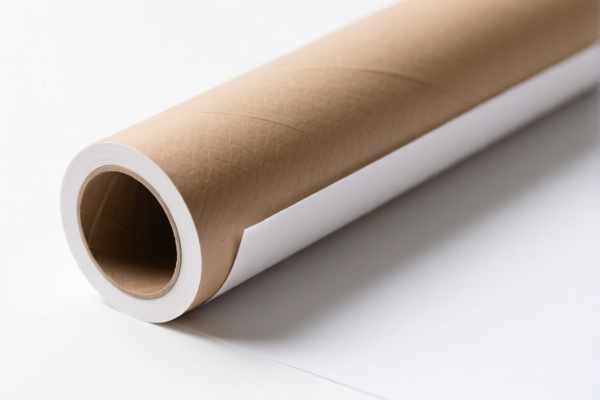
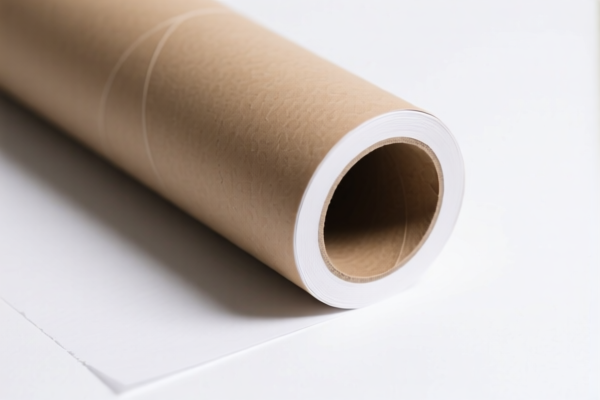
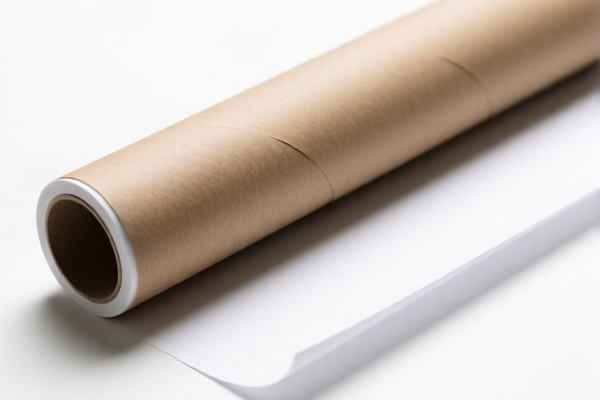
AI Analysis
📸 Color Developing Photographic Paper Roll (卷装显影照片纸)
🌐 HS Code Classification & Customs Clearance Guide | 2026 Tax Rule Analysis | Professional Compliance Strategy
📌 1. Product Definition & Core Characteristics: What is "Color Developing Photographic Paper Roll"?
Color Developing Photographic Paper Roll refers to a specialized imaging medium used in traditional color photography. Its key characteristics are:
- Material: It is a photographic paper base coated with light-sensitive silver halides and color couplers.
- State: It is unexposed (or pre-exposed but not developed) and requires chemical processing (color developing) to produce an image.
- Form: It is packaged in rolls, typically with a width exceeding 610 mm (though smaller rolls exist, the largest HS codes in the dataset refer to wider formats).
- Function: It is a core photographic consumable used in conjunction with film and processing equipment.
⚠️ Critical Distinction for Classification:
- If the product is specialized photographic paper (halide-based, for image creation), it falls under Chapter 37 (Photographic/ Cinematographic Goods).
- If it is considered a general paper product (non-photographic, or used for recording/printing without photographic intent), it falls under Chapter 48 (Paper & Paperboard).
📦 2. HS Code Classification Breakdown (2026 Latest Tariff Schedule)
Based on the provided data, there are five potential HS Codes. The classification depends on whether the product is deemed a "specialized photographic good" (Ch 37) or a "general paper product" (Ch 48).
| HS Code | Product Description | Key Classification Criteria | Tax Rate |
|---|---|---|---|
| 3705.00.00.00 | Photo Plates & Films (Rolls) | Best Fit for Photo Paper. Defines it as photographic consumables in roll form. Explicitly matches "photographic paper" and "rolling form." | 35.0% |
| 3703.10.30.60 | Other Sensitized Photographic Paper (Rolls, ≤610mm) | Fits if the roll width is not over 610 mm. Classified as "other" sensitized paper. | 38.7% |
| 3703.10.30.90 | Other Sensitized Photographic Paper (Rolls, >610mm) | Fits if the roll width is over 610 mm. This is the "catch-all" for wide-format photographic paper. | 38.7% |
| 4823.40.00.00 | Cut Paper or Paperboard | Alternative Classification. Classified as general paper products for recording/printing, ignoring the photographic sensitivity. | 35.0% |
| 4823.90.86.80 | Other Cut Paper/ Paperboard | Fallback Classification. General paper category if it doesn't fit specific paper codes. | 35.0% |
🔍 Key Insight:
- Chapters 37 vs. 48: The crucial decision is whether customs views the item as "Photographic Material" (Ch 37) or "Paper" (Ch 48).
- Ch 37 Codes (3705, 3703) are more specific to the function (photography).
- Ch 48 Codes (4823) are broader and treat it as a material (paper).
- Note on Rates: All codes carry significant additional tariffs for Chinese-origin goods imported into the US (see Section 3).
💰 3. Detailed Tax Rate Analysis (US Imports from China)
✅ Applicable Country: USA
✅ Origin: China
✅ Effective Date: November 10, 2025 (and onwards)
✅ All HS Codes Listed are subject to the following combined tariff structure:
🎯 A. For HS Codes 3705.00.00.00 & 4823.40.00.00 & 4823.90.86.80
| Item | Detail |
|---|---|
| Base Tariff | 0.0% |
| Section 301 Tariff (25%) | +25% (USITC Footnote related to Chinese goods) |
| Section 122 / IEEPA Tariff (10%) | +10% (Specific US regulation on Chinese goods) |
| Total Effective Rate | 35.0% |
| De Minimis Exemption? | ❌ No |
📌 Explanation:
- The base duty is 0%, but the additional 35% (25% + 10%) makes it expensive.
- The 10% is often referred to as the "Section 122" or specific IEEPA penalty, applied on top of the standard 301 tariff.
🎯 B. For HS Codes 3703.10.30.60 & 3703.10.30.90
| Item | Detail |
|---|---|
| Base Tariff | 3.7% |
| Section 301 Tariff (25%) | +25% (USITC Footnote related to Chinese goods) |
| Section 122 / IEEPA Tariff (10%) | +10% (Specific US regulation on Chinese goods) |
| Total Effective Rate | 38.7% |
| De Minimis Exemption? | ❌ No |
📌 Explanation:
- These codes have a small base duty of 3.7%, but the additional 35% pushes the total to 38.7%.
- This is higher than the 35% rate for codes with 0% base duty.
- Strategic Tip: If classification allows,3705.00.00.00or4823codes are slightly cheaper (35% vs 38.7%).
🛠️ 4. Customs Clearance Practical Advice (Risk Avoidance Guide)
✅ 1. Documentation Checklist (Must-Have)
| Document | Required? | Notes |
|---|---|---|
| Commercial Invoice | ✅ Yes | Must clearly state "Color Developing Photographic Paper" and not just "Paper." |
| Product Description | ✅ Yes | Specify: "Unexposed, Halide-Coated, Roll Format, Width [X] mm." |
| Material Composition | ✅ Yes | Explain it is "Paper Base + Silver Halide + Color Couplers." |
| Usage Statement | ✅ Yes | "Used for photographic image development." |
| Photos | ✅ Yes | Show the roll, packaging, and any branding. |
✅ 2. Classification Strategy
| Scenario | Recommended HS Code | Reason |
|---|---|---|
| Standard Photo Paper (Rolls) | 3705.00.00.00 | Most accurate for "photographic paper rolls." Lowest tax (35%). |
| Wide Format (>610mm) | 3703.10.30.90 | If width is critical, this is the precise code, but tax is higher (38.7%). |
| General Paper Use (Non-Photo) | 4823.40.00.00 | Only if the paper is not sensitized or used for non-photographic recording. |
⚠️ Warning: Do NOT misdeclare photographic paper as simple "copy paper" (4808/4809) to avoid taxes. Customs can easily detect the chemical coating via inspection.
✅ 3. Common Mistakes & Pitfalls
❌ Mistake 1: Calling it "Photo Film"
👉 Consequence: If it's paper, not film, customs may reject the code 3702 (Film) and reclassify to 3705 or 4823, causing delays.
❌ Mistake 2: Ignoring Width Specification
👉 Consequence: If width is >610mm but you declare 3703.10.30.60 (for ≤610mm), you will be fined for incorrect classification.
❌ Mistake 3: Missing "Unexposed" Label
👉 Consequence: If it looks like "exposed film," it may be classified differently. Must be clear it is raw material.
🌍 5. Global Market Comparison (2026)
| Region | Likely HS Code | Estimated Duty | Notes |
|---|---|---|---|
| 🇺🇸 USA | 3705.00.00.00 |
35.0% | High additional tariffs for Chinese goods. |
| 🇨🇳 China | 3705.00.00.00 |
~1% - 5% | Lower duties, no US-style Section 301/122 tariffs. |
| 🇪🇺 EU | 3703.20 |
~6.5% | Standard MFN rate. No additional punitive tariffs. |
| 🇯🇵 Japan | 3703.20 |
~6.0% | Standard rate. |
📌 Conclusion:
The US market is the most challenging due to the 35-38.7% total tax burden.
- For other markets, the tax is significantly lower.
- Ensure your supplier provides accurate Material Safety Data Sheets (MSDS) if the chemicals are considered hazardous.
📌 6. Final Recommendations
- Choose
3705.00.00.00if possible: It’s the most direct description of "Photographic Paper Rolls" and has a 35% tax rate, which is lower than the 38.7% for other photo-specific codes. - Provide Detailed Specs: Always include width, coating type (halide), and roll format in the invoice.
- Check Width Carefully: If width > 610mm, use
3703.10.30.90(38.7%). If ≤ 610mm, use3703.10.30.60(38.7%) or3705.00.00.00(35%). - Avoid Chapter 48 Unless Necessary: Only use
4823codes if the product is not truly photographic (e.g., plain paper). Using them for photo paper risks customs audits and penalties.
🎯 Summary: Key Takeaway
🔹 HS Code
3705.00.00.00is your best balance of accuracy and cost (35% total tax).
🔹 HS Code3703.10.30.xxis more specific but costs 38.7%.
🔹 HS Code4823is a fallback but risky if the product is clearly photographic.
🔹 All codes for Chinese origin face high additional tariffs in the US.
📞 Action Step:
Confirm the exact width of the roll and the chemical coating with your supplier. File the correct HS Code (3705.00.00.00 recommended) and prepare for a 35% duty cost.
✨ Precision in Classification Saves Money!
💼 Don’t let misclassification cost you extra dollars!
Customer Reviews
About HS Code Classification
The Harmonized System (HS) is an internationally standardized nomenclature developed by the World Customs Organization (WCO) to classify traded products. Over 200 countries use the HS system as the basis for customs tariffs, trade statistics, and import/export regulations.
Each HS code follows a hierarchical structure:
- Chapter (2 digits) — Broad category of goods (e.g., Chapter 84: Machinery and Mechanical Appliances)
- Heading (4 digits) — More specific grouping within the chapter
- Subheading (6 digits) — Internationally standardized breakdown, used by all WCO member countries
- National subdivisions (8-10 digits) — Country-specific extensions for further classification, such as US HTSUS 10-digit codes
Correct HS code classification is essential for smooth customs clearance, accurate duty payment, and compliance with trade regulations. Misclassification can lead to customs delays, overpayment of duties, or penalties.
When importing from CN to US, the applicable tariff rates may include:
- Most-Favored-Nation (MFN) rate — The standard duty rate applied to WTO members
- General rate — Applied to countries without trade agreements
- Trade remedy duties — Additional tariffs such as Section 301 (anti-dumping), Section 232 (national security), or countervailing duties
The information provided on this page is for reference purposes only. For official classification, please consult with your local customs authority or a licensed customs broker.