Color Dye Film (Waterproof)
CN → US| HS Code | Tariff Rate | Origin | Destination | Doc |
|---|---|---|---|---|
| 3703906000 | 37.8% | CN | US | Official Doc |
| 3919905060 | 40.8% | CN | US | Official Doc |
| 3920991000 | 41.0% | CN | US | Official Doc |
| 3920992000 | 39.2% | CN | US | Official Doc |
Product Images
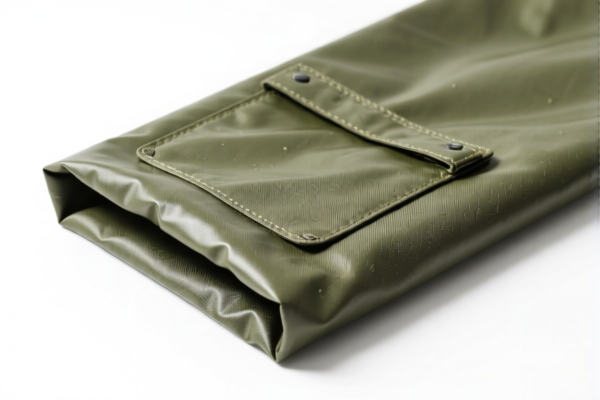
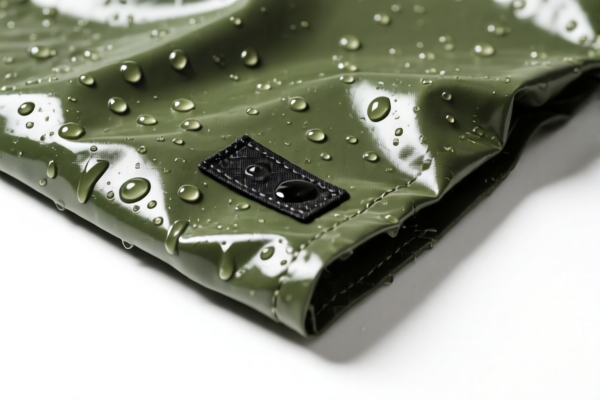
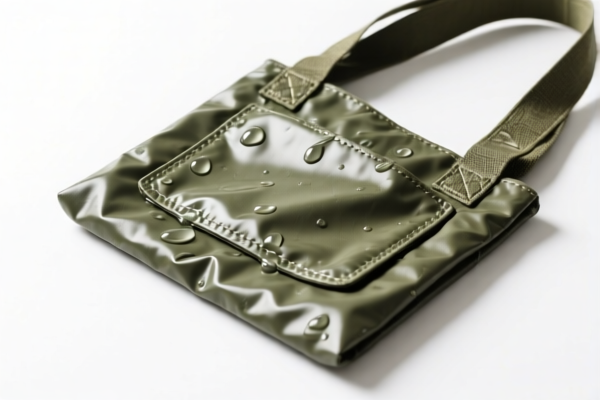
AI Analysis
🎨 Color Dye Film (Waterproof)
🌐 HS Code Reference & Clearance Guide | 2026 Latest Tariff Analysis | Professional Customs Strategy
📌 I. Product Definition & Classification: What is "Color Dye Film"?
"Color Dye Film" (often referred to as Dye Sublimation Film or Heat Transfer Film) is a specialized media used in thermal transfer printing. The key characteristics identified in your input are: 1. Form: Film (Flexible substrate). 2. Function: Duplicating/Transferring (Printing/Dyeing). 3. Feature: Waterproof (Implies a synthetic, plastic-based backing rather than paper).
In international trade, the classification hinges on the material composition of the film. Since it is "Waterproof," it is widely inferred to be made of plastic materials (such as Polyester/PET or Polyethylene) rather than paper. Therefore, it falls under Chapter 39 (Plastics) or potentially Chapter 37 (Photographic Goods) if treated as a specific photographic material, though Chapter 39 is the most common for industrial transfer films.
⚠️ Critical Distinction:
- If the film is Paper-based (even if coated) → Likely 3703 (Photographic) or 4911 (Printed matter).
- If the film is Plastic-based (Waterproof, PET, PE) → 3919 / 3920 (Plastic Plates, Sheets, Films).
- Note: The following analysis focuses on the Plastic-based interpretation as implied by "Waterproof" and the provided data.
📦 II. HS Code Classification Details (Based on Provided Data)
The provided data suggests four potential HS Codes. Here is the detailed breakdown of why each applies, its tax implications, and the logical match.
| HS Code | Product Description | Match Logic & Summary | Total Tax Rate |
|---|---|---|---|
3703.90.60.00 |
Photographic Film Other | Match Point: The term "Film" aligns with photographic materials. "Duplicating" matches the logical use of unexposed photosensitive materials. It is categorized under "Others" (兜底) due to material inference (photosensitive board/material). (Note: This applies if the film is strictly photosensitive, not just heat-transfer). |
37.8% |
3919.90.50.60 |
Self-adhesive Plastics Film | Match Point: Form is "Film" (Plastic/Waterproof). Although self-adhesion isn't explicitly stated, it falls under the "Other" category for plastic films/foils. Based on common sense, waterproof films are often plastic. (Note: This is typically for adhesive tapes or self-adhesive sheets). |
40.8% |
3920.99.10.00 |
Other Plastic Plates, Sheets, Film | Match Point: "Film" corresponds to plastic sheets/films. "Color Duplicating" describes its function. Inferred material is plastic (Polyester/Resin). No material conflict found. | 41.0% |
3920.99.20.00 |
Other Plastic Plates, Sheets, Film | Match Point: "Film" (Flexible). Material inferred as Polyester or Plastic film for transfer applications. Matches "Other plastic plates, sheets, films, foil and strips." | 39.2% |
🔍 Key Insight:
-3920.99.20.00offers the lowest total tax rate (39.2%) among the plastic-based options.
-3703.90.60.00is the lowest overall (37.8%) BUT only applies if the product is chemically "photosensitive" (like photographic paper/film). Standard heat-transfer dye films are usually not photosensitive; they are thermal-transfer media. Therefore, 3920.99.20.00 is likely the most accurate for standard waterproof dye sublimation films.
💰 III. 2026 Latest Tariff Rate Breakdown (Including Surcharges)
✅ Applicable Country: United States (US)
✅ Country of Origin: China (CN)
✅ Effective Time: 2025 Nov 10 onwards (Includes subsequent imports)
🎯 1. 3703.90.60.00 – Photographic Film (Other)
| Item | Content |
|---|---|
| Base Tariff | 2.8% |
| Section 301 Surcharge (USITC) | +25.0% |
| 122 Provision Surcharge | +10.0% |
| Total Tax Rate | 37.8% |
| Calculation | CIF Value × 37.8% |
| De Minimis Eligibility | ❌ No (High tariff rate disqualifies) |
| Legal Path | USITC:3703.90.60.00 → FOOTNOTE:301 → 122 Provision |
📌 Explanation:
- This code assumes the product is a "photographic good." If customs determines it is not photosensitive (i.e., it's just a plastic print medium), this classification is incorrect and risks penalties.
🎯 2. 3919.90.50.60 – Self-adhesive Plastic Film
| Item | Content |
|---|---|
| Base Tariff | 5.8% |
| Section 301 Surcharge (USITC) | +25.0% |
| 122 Provision Surcharge | +10.0% |
| Total Tax Rate | 40.8% |
| Calculation | CIF Value × 40.8% |
| De Minimis Eligibility | ❌ No |
| Legal Path | USITC:3919.90.50.60 → FOOTNOTE:301 → 122 Provision |
📌 Caution:
- Only use this if the film is self-adhesive (sticky backing). If it is a roll of film for feeding into a printer (no glue), this is a misclassification.
🎯 3. 3920.99.10.00 – Other Plastic Sheets/Films
| Item | Content |
|---|---|
| Base Tariff | 6.0% |
| Section 301 Surcharge (USITC) | +25.0% |
| 122 Provision Surcharge | +10.0% |
| Total Tax Rate | 41.0% |
| Calculation | CIF Value × 41.0% |
| De Minimis Eligibility | ❌ No |
| Legal Path | USITC:3920.99.10.00 → FOOTNOTE:301 → 122 Provision |
📌 Context:
- This is a broad "catch-all" for plastic films not elsewhere specified. It is safe but not the cheapest option if3920.99.20.00applies.
🎯 4. 3920.99.20.00 – Other Plastic Sheets/Films (Best Match for Transfer Film)
| Item | Content |
|---|---|
| Base Tariff | 4.2% |
| Section 301 Surcharge (USITC) | +25.0% |
| 122 Provision Surcharge | +10.0% |
| Total Tax Rate | 39.2% |
| Calculation | CIF Value × 39.2% |
| De Minimis Eligibility | ❌ No |
| Legal Path | USITC:3920.99.20.00 → FOOTNOTE:301 → 122 Provision |
📌 Recommendation:
- This is likely the most accurate and cost-effective classification for Waterproof Color Dye Film (PET/Plastic) used in heat transfer.
- Savings: $1.80 per $100 compared to3920.99.10.00.
🛠️ IV. Clearance Practical Advice (Pitfall Avoidance Guide)
✅ 1. Required Documentation Checklist
| Document | Mandatory? | Description |
|---|---|---|
| ✅ Product Specification Sheet | ✔️ | Must specify: Material (e.g., 100% Polyester/PET), Thickness, Width, Roll Length. |
| ✅ Material Composition Proof | ✔️ | Critical to prove it is Plastic (for 3920) vs. Paper (for 3703/4911). |
| ✅ Product Photos | ✔️ | Show the roll, packaging, and any printing on it. Highlight "Waterproof" feature. |
| ✅ Commercial Invoice | ✔️ | Description: "Plastic Color Dye Sublimation Film, Waterproof, Roll Format." |
| ✅ Origin Certificate | ✔️ | To confirm CN origin for 301/122 tax calculation. |
✅ 2. Declaration Strategy
🔥 Golden Rule:
"Material Defines the Code. Waterproof = Plastic = Chapter 39."
| Scenario | Correct HS Code | Incorrect HS Code | Consequence |
|---|---|---|---|
| Plastic Roll (No Adhesive) | 3920.99.20.00 |
3919.90.50.60 (Self-adhesive) |
Misclassification risk; potential penalty for claiming adhesive feature. |
| Photosensitive Film | 3703.90.60.00 |
3920.99.20.00 |
If not truly photosensitive, customs may reclassify and fine. |
| Paper-based Transfer Paper | Not in Data (Likely 4911 or 3703) | 3920.99.20.00 |
Major error! Paper ≠ Plastic. High risk of audit. |
✅ 3. Special Handling Tips
- "Waterproof" Proof: If customs questions the material, provide a water drop test video or a manufacturer's certificate stating the backing is PET/Plastic, not paper.
- Dye vs. Photo: Clearly state in the description that this is "Dye Sublimation" or "Heat Transfer" film, not "Photographic" film. This helps avoid unnecessary scrutiny under Chapter 37 unless it truly is photosensitive.
- 122 Provision: Be aware that the 10% surcharge applies specifically to certain Chinese goods under Section 122. Ensure your supplier confirms this duty liability.
🌍 V. Global Market Comparison (2026)
| Market | Recommended HS Code | Est. Total Tax (China Origin) | Key Requirement |
|---|---|---|---|
| 🇺🇸 USA | 3920.99.20.00 |
39.2% | Detailed material proof (Plastic vs. Paper). |
| 🇪🇺 EU | 3920.99.99 (Est.) |
~6.5% | CE Marking (if applicable), REACH compliance. |
| 🇨🇳 China | 3920.99.90 |
6-13% | Standard import procedures. |
| 🇯🇵 Japan | 3920.99.00 |
~8-10% | Japan Standards Association (JSA) if specialized. |
📌 Conclusion:
- The USA imposes the highest burden due to 301 Tariffs (25%) + IEEPA/122 Surcharges.
- Accurate material declaration is the #1 priority to avoid delays.
📌 VI. Common Errors & Pitfalls (Lessons Learned)
❌ Error 1: Classifying Waterproof Plastic Film as "Photographic Film" (3703)
👉 Result: If not photosensitive, customs rejects. Even if accepted, it's often more expensive or scrutinized.
👉 Fix: Use 3920 for non-photosensitive plastic films.
❌ Error 2: Classifying Non-Adhesive Film as "Self-Adhesive" (3919)
👉 Result: Customs may inspect and find no adhesive. Classification error.
👉 Fix: Only use 3919 if the back has glue/tape. Use 3920 for plain rolls.
❌ Error 3: Ignoring the "122 Provision" Surcharge
👉 Result: Underestimating landed cost by 10%.
👉 Fix: Always include the 122/IEEPA surcharge in your CIF calculation for Chinese goods.
✅ Correct Declaration Example:
"Plastic Dye Sublimation Film, Waterproof, Roll Format, Polyester Backing, for Heat Transfer Printing, Model XYZ, 100% PET"
🎯 VII. Conclusion: Precision Saves Money!
🎯 Remember:
🔹 "Waterproof = Plastic = 3920"
🔹 "Non-Adhesive = 3920, Not 3919"
🔹 "3920.99.20.00 is the Sweet Spot: 39.2% Total Tax"
📌 Pro Tip:
If your film is indeed Photosensitive (used for X-ray or photographic reproduction), stick with 3703.90.60.00 (37.8%). But for standard Textile/Transfer Printing, 3920.99.20.00 is your best friend.
📣 Take Action Now:
📞 Contact your broker with the product spec sheet.
🚀 Confirm Material: Is it PET/Plastic? If yes, declare under 3920.99.20.00.
💼 Optimize Costs: Save 1.8% vs. other plastic codes.
✨ Professional Clearance Starts with Accurate Classification!
💼 Every percent of tax matters in 2026!
Customer Reviews
About HS Code Classification
The Harmonized System (HS) is an internationally standardized nomenclature developed by the World Customs Organization (WCO) to classify traded products. Over 200 countries use the HS system as the basis for customs tariffs, trade statistics, and import/export regulations.
Each HS code follows a hierarchical structure:
- Chapter (2 digits) — Broad category of goods (e.g., Chapter 84: Machinery and Mechanical Appliances)
- Heading (4 digits) — More specific grouping within the chapter
- Subheading (6 digits) — Internationally standardized breakdown, used by all WCO member countries
- National subdivisions (8-10 digits) — Country-specific extensions for further classification, such as US HTSUS 10-digit codes
Correct HS code classification is essential for smooth customs clearance, accurate duty payment, and compliance with trade regulations. Misclassification can lead to customs delays, overpayment of duties, or penalties.
When importing from CN to US, the applicable tariff rates may include:
- Most-Favored-Nation (MFN) rate — The standard duty rate applied to WTO members
- General rate — Applied to countries without trade agreements
- Trade remedy duties — Additional tariffs such as Section 301 (anti-dumping), Section 232 (national security), or countervailing duties
The information provided on this page is for reference purposes only. For official classification, please consult with your local customs authority or a licensed customs broker.