Color Fast Photo Paper Roll
CN → US| HS Code | Tariff Rate | Origin | Destination | Doc |
|---|---|---|---|---|
| 4823400000 | 35.0% | CN | US | Official Doc |
| 4823906700 | 35.0% | CN | US | Official Doc |
| 4911914040 | 17.5% | CN | US | Official Doc |
| 4911996000 | 17.5% | CN | US | Official Doc |
Product Images


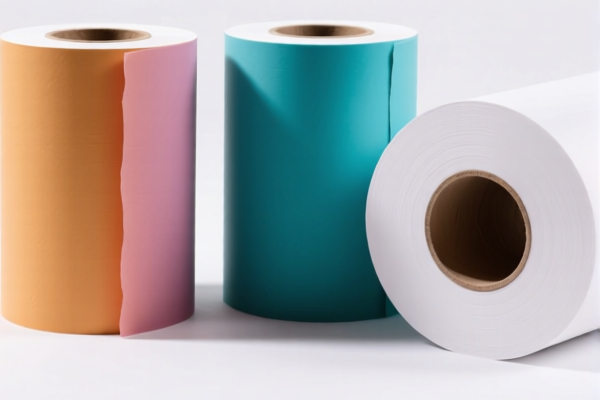
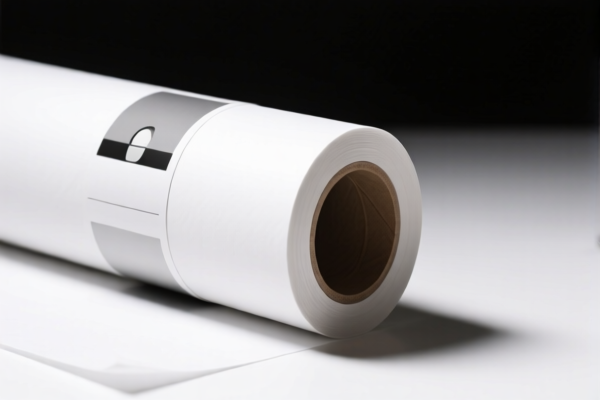
AI Analysis
📸 Color Fast Photo Paper Roll (High-Gloss Matte Inkjet Paper)
🌐 HS Code Reference & Clearance Guide | 2026 Latest Tariff Analysis | Professional Customs Strategy
📌 I. Product Definition & Classification: What Exactly Is "Color Fast Photo Paper"?)
"Color Fast Photo Paper Roll" is a specialized coated paper product used for high-quality photographic printing, advertising displays, and professional graphic arts. The term "Color Fast" implies that the paper surface has been treated to resist fading, ensuring that printed images retain their vibrancy over time.
In international trade, this product is generally classified based on its physical form (rolls) and manufacturing process (coated/lithographic). It is not considered a finished "picture" or "photograph" until it is printed with an image. Therefore, it falls under Chapter 48 (Paper and Paperboard) rather than Chapter 49 (Printed Matter).
⚠️ Key Distinction:
- Unprinted Coated Paper Rolls: Classified under 4823 (Other articles of paper).
- Printed Photos/Pictures: Classified under 4911 (Printed pictures, designs, and photographs).
- Crucial Rule: If the roll is blank or blank-coated (just white/white with coating), it is 4823. If it arrives already printed with a design/photo, it is 4911.
📦 II. HS Code Classification Details (2026 Latest Tariff Authority)
Based on the provided <DATA>, here are the relevant HS Codes and tax rates. Note that the specific code depends on whether the paper is printed or unprinted, and the coating process.
| HS Code | Product Description | Applicable Scenario | Tax Rate (Total) | Base Tariff | Add-on Tariff |
|---|---|---|---|---|---|
4823.40.00.00 |
Rolls, sheets, and dials, printed for self-recording apparatus | Specific Use Case: If the "photo paper" is technically a thermal or chart paper used in recording devices (e.g., weather charts, medical monitors). Note: Less common for standard inkjet photo paper. | 25.0% | 0.0% | 25.0% |
4823.90.67.00 |
Other articles of paper... Of coated paper or paperboard: Other | Most Likely for Unprinted Rolls: Blank color-fast photo paper rolls, cut to size or shape, not falling under self-recording apparatus. | 25.0% | 0.0% | 25.0% |
4911.91.40.40 |
Pictures, designs, and photographs: Printed not over 20 years at time of importation | For Printed Goods: If the roll is already printed with specific photographs/designs and is less than 20 years old at the time of import. | 7.5% | 0.0% | 7.5% |
4911.99.60.00 |
Other printed matter: Printed on paper in whole or in part by a lithographic process | For Printed Goods: If the paper is already printed via lithography (offset printing) and does not fit the "picture/photo" definition strictly (e.g., general graphic art prints). | 7.5% | 0.0% | 7.5% |
🔍 Critical Clarification:
- The majority of "Color Fast Photo Paper Rolls" sold to print shops are unprinted. Therefore, they typically fall under 4823.90.67.00 (Coated Paper Articles) with a 25% tax.
- If the product is a pre-printed decorative roll (e.g., wallpaper with photo images, or pre-printed gift wrap), it may fall under 4911 with a lower 7.5% tax.
- Misclassification Risk: Do not misclassify unprinted coated paper as 4911 to avoid taxes, as customs will inspect the physical goods.
💰 III. 2026 Latest Tariff Rate Details (Including Additional Taxes)
✅ Applicable Jurisdiction: United States (US)
✅ Origin: China (CN)
✅ Effective Date: Post-2025 Policies (Including Section 301 & IEEPA adjustments)
🎯 1. 4823.40.00.00 & 4823.90.67.00 —— Coated Paper Rolls (Unprinted/General)
| Item | Detail |
|---|---|
| Base Tariff | 0% (ad valorem) |
| Section 301 Additional Tariff | +25.0% |
| Total Tax Rate | 25.0% |
| Tax Calculation | CIF Value × 25% |
| De Minimis Eligibility | ❌ Not Eligible (Section 301 goods are excluded from de minimis exemption) |
| Legal Basis Path | USITC:4823.90.67.00 → FOOTNOTE:301_4823 → IEEPA:9903.01.25 |
📌 Explanation:
- Coated paper products are subject to the 25% Section 301 tariff due to their classification as "paper articles" under specific trade restrictions.
- There is no base tariff (0%), but the 25% add-on is mandatory for Chinese-origin goods.
- No IEEPA 10% overlap: The 25% rate already encompasses the punitive tariffs for this category.
🎯 2. 4911.91.40.40 & 4911.99.60.00 —— Printed Matter (Pre-Printed)
| Item | Detail |
|---|---|
| Base Tariff | 0% (ad valorem) |
| Section 301 Additional Tariff | +7.5% |
| Total Tax Rate | 7.5% |
| Tax Calculation | CIF Value × 7.75% (Note: Data shows 7.5% total) |
| De Minimis Eligibility | ⚠️ Check Specific Footnotes: Some printed matter may be exempt, but high-value items usually require full duty. |
| Legal Basis Path | USITC:4911.91.40.40 → FOOTNOTE:301_4911 |
📌 Explanation:
- Printed pictures and specific lithographic prints have a lower tariff rate (7.5%) compared to unprinted coated paper.
- This is a strategic advantage: If your product is pre-printed, the tax burden is significantly lower.
- However, customs scrutiny is higher: You must prove the item is "printed" and not "unprinted paper with blank templates."
🛠️ IV. Clearance Practical Advice (Battle-Tested Pitfall Guide)
✅ 1. Required Documentation Checklist (Non-Negotiable)
| Document | Mandatory? | Description |
|---|---|---|
| ✅ Product Specification Sheet | ✔️ | Must specify: Coating type (glossy/matte), weight (gsm), roll dimensions, and whether it is pre-printed or blank. |
| ✅ Commercial Invoice | ✔️ | Clearly state: "Unprinted Coated Photo Paper Roll" OR "Pre-Printed Decorative Paper Roll." Do not use vague terms like "Paper Goods." |
| ✅ HS Code Declaration Form | ✔️ | Include the 10-digit HS Code (e.g., 4823.90.67.00). |
| ✅ Material Safety Data Sheet (MSDS) | ✔️ | Required if the coating contains chemical solvents (check for VOC compliance). |
| ✅ Certificate of Origin (CO) | ✔️ | Essential for claiming any potential exemptions (if applicable) and proving Chinese origin. |
| ✅ Photos of Goods | ✔️ | Show the roll label, packaging, and a close-up of the paper surface (to prove coating/printing status). |
✅ 2. Declaration Tips (Key Mantra)
🔥 "Unprinted = 4823 (25%), Pre-Printed = 4911 (7.5%)! Define Clearly!"
| Scenario | Correct Declaration | Wrong Action |
|---|---|---|
| Blank Photo Paper Roll | 4823.90.67.00 - "Coated Paper, Unprinted" |
Declare as 4911 → Risk of Penalty for Misclassification |
| Pre-Printed Wallpaper/Photo Roll | 4911.91.40.40 - "Printed Photographs/Designs" |
Declare as 4823 → Overpaying Tax (25% vs 7.5%) |
| Rolls for Self-Recording Devices | 4823.40.00.00 - "Chart Paper for Recording" |
Use if applicable; otherwise, risk 25% under 4823.90 |
| Lithographic Print Rolls | 4911.99.60.00 - "Lithographic Prints" |
Use only if printing process is lithographic/offset |
✅ 3. Special Handling Cases
| Case | Handling Advice |
|---|---|
| Custom Coated Paper | Provide lab test results showing coating composition. If it contains magnetic particles or other special features, HS Code may change. |
| Partial Printing | If only edge borders are printed, it may still be classified as 4823 (paper article), not 4911 (picture). Consult customs broker. |
| Rolls vs. Sheets | Ensure "Roll" is specified. If cut into sheets, it falls under "Cut to Size," but HS Code remains similar. Packaging format affects duty calculation in some cases. |
| "Color Fast" Claim | Do not declare based on "Color Fast" alone. Customs looks at physical form and printing status, not marketing terms. |
🌍 V. Global Market Clearance Comparison (2026 Latest)
| Country/Region | Recommended HS Code | Tariff Rate | Certification | Notes |
|---|---|---|---|---|
| 🇺🇸 USA | 4823.90.67.00 (Unprinted) |
25% | FDA (if food contact) | High tariff due to Section 301 |
| 🇨🇳 China | 4823.90.67.00 |
5-10% | CCC (if applicable) | Lower base tariff |
| 🇪🇺 EU | 4823.40.00 or 4823.90 |
0-6.5% | CE (if chemical compliance) | No Section 301 equivalent |
| 🇬🇧 UK | 4823.90 |
0-6.5% | UKCA | Post-Brexit rules apply |
| 🇯🇵 Japan | 4823.90 |
0-3% | PSE (if electronic components included) | Generally low tariffs |
📌 Conclusion:
- USA is the most expensive market due to 25% additional tariff on unprinted coated paper.
- Pre-printed products (4911) benefit from a lower 7.5% rate in the US, making them more competitive despite stricter documentation.
- Europe and Asia have significantly lower tariffs, making them preferred markets for Chinese paper exports.
📌 VI. Common Errors & Pitfall Guide (Blood Lessons)
❌ Error 1: Declaring Unprinted Photo Paper as 4911 (Printed Matter) to avoid 25% tax.
👉 Consequence: Customs inspection reveals blank paper → Seizure, fines, and retroactive duty + 25% penalty.
❌ Error 2: Declaring Pre-Printed Paper as 4823 (Unprinted Paper).
👉 Consequence: Overpayment of 17.5% (25% - 7.5%). You can claim a refund, but it delays clearance.
❌ Error 3: Ignoring "Self-Recording Apparatus" classification for chart papers.
👉 Consequence: If your product is actually thermal chart paper for medical/industrial use, misclassification can lead to compliance audits.
❌ Error 4: Not specifying "Coated" in the description.
👉 Consequence: Customs may classify as plain paper (lower duty) but then reject due to misrepresentation of material, causing delays.
✅ Correct Practice:
"100gsm Glossy Coated Photo Paper Roll, Unprinted, Width 60cm, Core 3inch, Model XYZ, Non-CFC Coating"
🎯 VII. Conclusion: Precision Classification, Cost Optimization!
🎯 Remember the Mantra:
🔹 "Unprinted Paper = 4823 (25% Tax), Pre-Printed Picture = 4911 (7.5% Tax)!
🔹 "Define Coating, Define Printing, Avoid 25% Penalty!"
📌 Pro Tip:
If you are importing pre-printed photo paper rolls (e.g., for wedding albums, decorative prints), ensure you have samples and printing process certificates ready. This allows you to benefit from the 7.5% rate instead of 25%, saving 17.5% in customs costs.
For unprinted rolls, consider supply chain diversification or ** tariff engineering** (e.g., processing in a third country) if possible, though this is complex.
📣 Immediate Action:
📞 Contact a licensed customs broker + Provide Product Photos + Request Advance Ruling
🚀 Ensure your Commercial Invoice matches the HS Code exactly to avoid clearance delays.
✨ Professional Clearance Starts with Accurate Classification!
💼 Every 1% of Tariff Saved is Pure Profit!
Customer Reviews
About HS Code Classification
The Harmonized System (HS) is an internationally standardized nomenclature developed by the World Customs Organization (WCO) to classify traded products. Over 200 countries use the HS system as the basis for customs tariffs, trade statistics, and import/export regulations.
Each HS code follows a hierarchical structure:
- Chapter (2 digits) — Broad category of goods (e.g., Chapter 84: Machinery and Mechanical Appliances)
- Heading (4 digits) — More specific grouping within the chapter
- Subheading (6 digits) — Internationally standardized breakdown, used by all WCO member countries
- National subdivisions (8-10 digits) — Country-specific extensions for further classification, such as US HTSUS 10-digit codes
Correct HS code classification is essential for smooth customs clearance, accurate duty payment, and compliance with trade regulations. Misclassification can lead to customs delays, overpayment of duties, or penalties.
When importing from CN to US, the applicable tariff rates may include:
- Most-Favored-Nation (MFN) rate — The standard duty rate applied to WTO members
- General rate — Applied to countries without trade agreements
- Trade remedy duties — Additional tariffs such as Section 301 (anti-dumping), Section 232 (national security), or countervailing duties
The information provided on this page is for reference purposes only. For official classification, please consult with your local customs authority or a licensed customs broker.