Color Film (Customized Film Packaging)
CN → US| HS Code | Tariff Rate | Origin | Destination | Doc |
|---|---|---|---|---|
| 3702550030 | 35.0% | CN | US | Official Doc |
| 3702550060 | 35.0% | CN | US | Official Doc |
| 3702520160 | 38.7% | CN | US | Official Doc |
| 3702530060 | 38.7% | CN | US | Official Doc |
| 3701996060 | 35.0% | CN | US | Official Doc |
Product Images
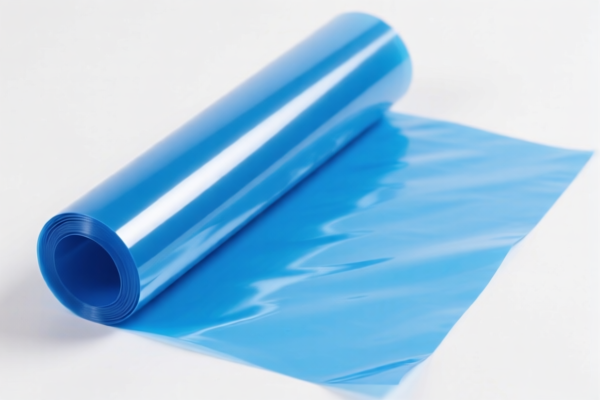
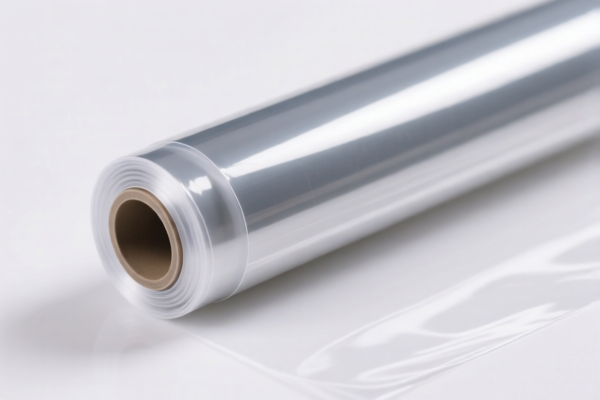


AI Analysis
🎞️ Color Film (Customized Film Packaging)
🌐 HS Code Reference & Customs Clearance Guide | 2026 Latest Tariff Analysis | Professional Level Clearance Strategy
📌 I. Product Definition & Classification: Do You Really Understand "Color Film"?
Color film is a critical photosensitive material used in photography, scientific imaging, and industrial inspection. In international trade, its classification depends heavily on width, sensitivity (ISO), physical format (roll/sheet), and specific chemical composition.
The input "Color Film (Customized Film Packaging)" implies a product where the packaging or customization is a key feature, but the core commodity remains photosensitive film.
⚠️ Key Distinction Point:
- Custom Length/Packaging: Does not change the fundamental nature of the film. It remains classified under the standard HS codes for color photographic film (e.g., 3702.55 or 3702.52).
- Customizable ISO: Changes the chemical sensitivity, potentially shifting the code from "Standard" to "Other" within Chapter 37.
- Polymer Imaging Film: If the base is polymer rather than gelatin/acetate, it may fall under "Non-paper-based sensitized film" (3701.99).
📦 II. HS Code Classification Details (2026 Latest Tariff Authoritative Comparison)
Based on the provided <DATA>, here are the specific HS Codes and their logical classifications:
| HS Code | Product Description | Applicable Scenario | Classification Logic |
|---|---|---|---|
3702.55.00.30 |
Color Film (Custom Length) | Standard color film, custom cut/roll length. | Logical Deduction: "Custom length" does not alter the core identity. Classified as Color Film. Base duty 0%, +25% USITC, +10% Section 122. |
3702.55.00.60 |
Color Film (Custom Length) | Other color photographic rolls, custom length fits the "catch-all" logic. | Catch-all Logic: If specific sub-headings don't fit, this generic "Other Color Film" code applies. Same tax structure as above. |
3702.52.01.60 |
Color Film (Customizable ISO) | Color film with variable/high sensitivity. | Width/Type Variance: Width and type differences are within reasonable ranges. Higher base duty (3.7%) due to specificity. Total 38.7%. |
3702.53.00.60 |
Color Film (Customizable ISO) | Other color photographic film, unspecified size. | Inference Logic: If size is not specified, it defaults to "Other." Fits the customizable ISO profile. Total 38.7%. |
3701.99.60.60 |
Color Polymer Imaging Film (Multi color) | Non-paper-based sensitized film, multi-color polymer base. | Catch-all Principle: Classified as Non-paper-based. Polymer base distinguishes it from traditional gelatin films. Total 35.0%. |
🔍 Key Reminder:
- Packaging Customization (e.g., custom boxes, bulk rolls) is a secondary attribute. It does NOT justify changing the HS code. The HS code is determined by the physical and chemical properties of the film itself (Chapter 37).
- Polymer Films are distinct from traditional Gelatin/Acetate Films. Misclassification here can lead to significant tax differences and compliance risks.
💰 III. 2026 Latest Tariff Rate Details (Including Additional Taxes, Policy Surcharges)
✅ Applicable Country: United States (US)
✅ Origin: China (CN)
✅ Effective Time: Post-2025 (Current Tariff Structure)
🎯 1. 3702.55.00.30 & 3702.55.00.60 —— Color Film (Standard/Custom Length)
| Item | Detail |
|---|---|
| Base Tariff | 0.0% (ad valorem) |
| USITC Additional Tariff | +25.0% (Section 301) |
| Section 122 Tariff | +10.0% (Specific to certain Chinese goods) |
| Total Tax Rate | 35.0% |
| Tax Calculation | CIF Value × 35.0% |
| De Minimis Exemption | ❌ Not Eligible (Section 301 and 122 tariffs generally negate de minimis benefits for direct imports) |
| Legal Basis Path | USITC:3702.55.00.30/60 → Section 301: Footnote 9903.88.01 → Section 122: 10% Surcharge |
📌 Explanation:
- These codes represent standard Color Photographic Film.
- Despite a 0% base duty, the 35% total effective rate is driven by Section 301 (25%) and Section 122 (10%).
- This is a high-cost classification for US importers from China.
🎯 2. 3702.52.01.60 & 3702.53.00.60 —— Color Film (Customizable ISO)
| Item | Detail |
|---|---|
| Base Tariff | 3.7% (ad valorem) |
| USITC Additional Tariff | +25.0% (Section 301) |
| Section 122 Tariff | +10.0% (Specific to certain Chinese goods) |
| Total Tax Rate | 38.7% |
| Tax Calculation | CIF Value × 38.7% |
| De Minimis Exemption | ❌ Not Eligible |
| Legal Basis Path | USITC:3702.52.01.60/3702.53.00.60 → Section 301 → Section 122 |
📌 Explanation:
- Customizable ISO film is often categorized under "Other" or more specific sub-headings that carry a higher base duty (3.7%).
- The 38.7% total rate makes this the most expensive category among the provided options.
- Caution: Ensure the "Customizable ISO" claim is technically accurate. If it’s standard ISO, misclassification here could lead to penalties.
🎯 3. 3701.99.60.60 —— Color Polymer Imaging Film (Multi-color)
| Item | Detail |
|---|---|
| Base Tariff | 0.0% (ad valorem) |
| USITC Additional Tariff | +25.0% (Section 301) |
| Section 122 Tariff | +10.0% (Specific to certain Chinese goods) |
| Total Tax Rate | 35.0% |
| Tax Calculation | CIF Value × 35.0% |
| De Minimis Exemption | ❌ Not Eligible |
| Legal Basis Path | USITC:3701.99.60.60 → Section 301 → Section 122 |
📌 Explanation:
- Polymer Imaging Film is a distinct category from traditional gelatin-based film.
- If your product uses a polymer base (e.g., polyester with light-sensitive coating), this is the correct code.
- Do NOT use standard 3702 codes for polymer films, as this is a common classification error.
🛠️ IV. Customs Clearance Practical Advice (Battle-Tested Pitfall Avoidance Guide)
✅ 1. Documentation Checklist (Non-Negotiable)
| Document | Required? | Notes |
|---|---|---|
| ✅ Product Specification Sheet | ✔️ | Must specify: Base material (Gelatin vs. Polymer), Width, Length, ISO, Color Type. |
| ✅ Chemical Composition Report | ✔️ | Critical for distinguishing Polymer (3701) from Gelatin (3702). |
| ✅ Commercial Invoice | ✔️ | Clearly state "Color Photographic Film" or "Polymer Imaging Film." Avoid vague terms like "Film Roll." |
| ✅ Packing List | ✔️ | Detail dimensions and weights. "Custom Length" should be specified as per roll/sheet. |
| ✅ Country of Origin Certificate | ✔️ | If not CN, may reduce/eliminate Section 301/122 duties. |
| ✅ Test Reports (RoHS/REACH) | ✔️ | Required for chemical safety compliance. |
✅ 2. Declaration Tips (Key Mantra)
🔥 “Base Material First, ISO Second, Length is Secondary!”
| Scenario | Correct Declaration | Wrong Practice |
|---|---|---|
| Standard Color Film | 3702.55.00.30/60 |
Misclassifying as 3701 (Polymer) → Audit Risk |
| Custom ISO Film | 3702.52.01.60/53.00.60 |
Under-declaring ISO → 38.7% vs 35% risk |
| Polymer Film | 3701.99.60.60 |
Misclassifying as 3702 → Major Compliance Error |
| Custom Packaging | No HS Change | Trying to create a new code for "Packaging" → Invalid |
✅ 3. Special Case Handling
| Scenario | Handling Advice |
|---|---|
| OEM Custom Film | Provide customer design files and chemical specs. Prove it’s still "Color Film" and not a "Digital Printer Consumable." |
| Polymer vs. Gelatin | Crucial: Provide a Certificate of Material Base. If the base is Polyester/PET, it’s 3701. If it’s Cellulose Acetate/Gelatin, it’s 3702. |
| Custom Length | Declare the nominal length (e.g., "100ft roll") but note "Custom Length Available" in remarks. Do not create a separate HS code for length. |
| Multi-Color Polymer | Ensure the description includes "Multi-Color" and "Polymer Base" to justify 3701.99.60.60. |
🌍 V. Global Market Comparison (2026 Latest)
| Country/Region | Recommended HS Code | Tariff (China Origin) | Certification | Notes |
|---|---|---|---|---|
| 🇺🇸 USA | 3702.55.00.30 / 3701.99.60.60 |
35% - 38.7% | RoHS, CPSIA | High due to Section 301 & 122. |
| 🇨🇳 China | 3702.55 / 3701.99 |
0% - 5% | CCC (if applicable) | Low tariff. No Section 301. |
| 🇪🇺 EU | 3702.55 / 3701.99 |
0% - 6.5% | REACH, RoHS | No additional surcharges. |
| 🇯🇵 Japan | 3702.55 / 3701.99 |
0% - 3% | PSE (if electronic) | Competitive market. |
📌 Conclusion:
- USA is the most expensive market due to Section 301 (25%) and Section 122 (10%).
- EU and Japan are significantly more cost-effective.
- Strategy: Consider supply chain diversification (e.g., Vietnam, Malaysia) to avoid US surcharges if targeting the US market.
📌 VI. Common Errors & Pitfall Guide (Lessons Learned)
❌ Error 1: Misclassifying Polymer Film as Gelatin Film
👉 Consequence: Incorrect HS Code → Potential 40%+ penalty + Retrospective Duties.
❌ Error 2: Claiming "Custom Packaging" changes the HS Code
👉 Consequence: CBP will reject the declaration. Packaging is not a basis for HS classification.
❌ Error 3: Ignoring ISO Sensitivity differences
👉 Consequence: Using 3702.55 (35%) for 3702.52 (38.7%) film might seem cheaper, but if audited, you owe the difference + interest.
❌ Error 4: Vague Description: "Color Film"
👉 Consequence: CBP may apply Highest Duty Rate or require detailed submission, causing delays.
✅ Correct Approach:
"Color Photographic Film, Gelatin Base, 35mm, 100ft Roll, Custom Length, ISO 400"
OR
"Polymer Imaging Film, Multi-Color, PET Base, Custom Packaging"
🎯 VII. Conclusion: Precision Classification Saves Money!
🎯 Remember the Mantra:
🔹 “Base Material Decides (3701 vs 3702), ISO Adds to Duty, Length is Irrelevant.”
🔹 “Section 301 + 122 = 35-38.7% Total Tax. Plan Ahead!”
📌 Pro Tip:
If your film is shipped from China to the US, budget for 35-38.7% total duty.
Consider Advance Ruling (Pre-Ruling) from CBP if your product has unique characteristics (e.g., hybrid polymer-gelatin).
For EU/JP/Other Markets, the same HS codes apply with much lower effective rates.
📣 Immediate Action:
📞 Verify Material Base (Polymer vs. Gelatin) → Select Correct HS Code → Calculate Total Duty (35-38.7% for US).
🚀 Optimize Supply Chain to mitigate US tariff impact!
✨ Professional Customs Clearance Starts with Accurate Classification!
💼 Your Cost, Precisely Calculated!
Customer Reviews
About HS Code Classification
The Harmonized System (HS) is an internationally standardized nomenclature developed by the World Customs Organization (WCO) to classify traded products. Over 200 countries use the HS system as the basis for customs tariffs, trade statistics, and import/export regulations.
Each HS code follows a hierarchical structure:
- Chapter (2 digits) — Broad category of goods (e.g., Chapter 84: Machinery and Mechanical Appliances)
- Heading (4 digits) — More specific grouping within the chapter
- Subheading (6 digits) — Internationally standardized breakdown, used by all WCO member countries
- National subdivisions (8-10 digits) — Country-specific extensions for further classification, such as US HTSUS 10-digit codes
Correct HS code classification is essential for smooth customs clearance, accurate duty payment, and compliance with trade regulations. Misclassification can lead to customs delays, overpayment of duties, or penalties.
When importing from CN to US, the applicable tariff rates may include:
- Most-Favored-Nation (MFN) rate — The standard duty rate applied to WTO members
- General rate — Applied to countries without trade agreements
- Trade remedy duties — Additional tariffs such as Section 301 (anti-dumping), Section 232 (national security), or countervailing duties
The information provided on this page is for reference purposes only. For official classification, please consult with your local customs authority or a licensed customs broker.