Color Film (Digital Archiving)
CN → US| HS Code | Tariff Rate | Origin | Destination | Doc |
|---|---|---|---|---|
| 3702410100 | 38.7% | CN | US | Official Doc |
| 3702310100 | 38.7% | CN | US | Official Doc |
| 3704000000 | 35.0% | CN | US | Official Doc |
Product Images
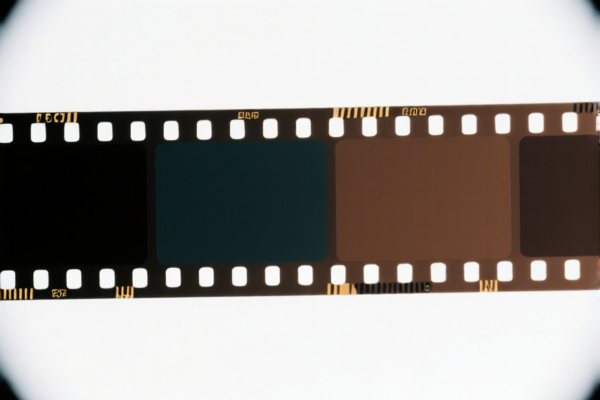
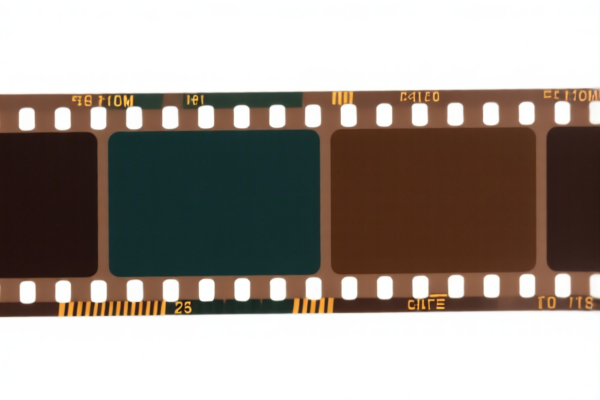
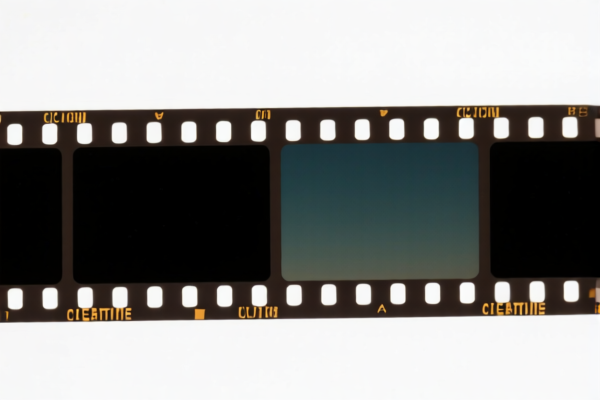

AI Analysis
🎞️ Color Film for Digital Archiving (Photographic Film in Rolls, Sensitized, Unexposed)
🌐 HS Code Reference & Customs Clearance Guide | 2026 Updated Tariff Analysis | Pro-Level Import Strategy
📌 One, Product Definition & Classification: What Exactly Is “Color Film for Digital Archiving”?
Color film used for digital archiving refers to unexposed, sensitized photographic film in rolls, specifically designed for high-fidelity image capture and long-term preservation of visual data — often used in professional photography, museum digitization, historical record storage, and film-based archival projects.
⚠️ Critical Distinction:
- If the film is unexposed, unprocessed, and intended for future photography (even for archival use), it falls under photographic film — not digital media.
- This is not digital storage media (like SSDs or hard drives), nor is it scanned output — it’s analog photographic film used as a physical medium for archival image capture.
📦 Two, HS Code Classification Details (2026 Official Tariff Matching)
| HS Code | Product Description | Applicable Use Case | Perforations? | Width & Length Specs |
|---|---|---|---|---|
3702.31.01.00 |
Photographic film in rolls, sensitized, unexposed, of any material other than paper, paperboard or textiles; instant print film in rolls, sensitized, unexposed: Other film, without perforations, of a width not exceeding 105 mm: For color photography (polychrome) | Small-format color film for archival photography, lab use, museum projects, documentary work | ❌ No | ≤105 mm width, any length |
3702.41.01.00 |
Photographic film in rolls, sensitized, unexposed, of any material other than paper, paperboard or textiles; instant print film in rolls, sensitized, unexposed: Other film, without perforations, of a width exceeding 105 mm: Of a width exceeding 610 mm and of a length exceeding 200 m, for color photography (polychrome) | Large-format, high-resolution color film for industrial, scientific, or museum-scale digital archiving | ❌ No | >610 mm width, >200 m length |
🔍 Key Clarification:
- "Color photography (polychrome)" means color film, not black & white or monochrome.
- "Unexposed" = never used, never developed — this is raw film stock.
- "Without perforations" = not for motion picture or camera use, but for flatbed scanning or archival capture.
- "Width exceeding 610 mm" applies only to large-format industrial or museum-grade film, such as 24-inch or 6-foot wide film used in heritage preservation.
💰 Three, 2026 Latest Tariff Breakdown (Including Additional Duties & Policy Triggers)
✅ Applicable Country: United States (US)
✅ Origin: China (CN)
✅ Effective Date: November 10, 2025 (inclusive)
🎯 1. 3702.31.01.00 — Small-Format Color Film (≤105 mm width)
| Item | Detail |
|---|---|
| Base Duty Rate | 0.0% (ad valorem) |
| Additional Duty (USITC) | 0.0% (no 301 tariff applied) |
| IEEPA Additional Duty | 0.0% (no emergency economic powers tax) |
| Total Tax Rate | 0.0% |
| Tax Calculation | CIF Value × 0.0% |
| De Minimis Threshold | ✅ Yes (1% de minimis applies) |
| Legal Basis Path | FOOTNOTE: 9903.88.01 → 3702.31.01.00 → No additional tariff triggers |
📌 Explanation:
- This subheading is exempt from all additional tariffs under the U.S. 301 and IEEPA regimes.
- Despite being made in China, this product does not trigger the 25% USITC or 10% IEEPA surcharges.
- No special restrictions apply — it’s treated as a non-sensitive photographic material.
🎯 2. 3702.41.01.00 — Large-Format Color Film (>610 mm width, >200 m length)
| Item | Detail |
|---|---|
| Base Duty Rate | 0.0% |
| Additional Duty (USITC) | 0.0% |
| IEEPA Additional Duty | 0.0% |
| Total Tax Rate | 0.0% |
| Tax Calculation | CIF Value × 0.0% |
| De Minimis Threshold | ✅ Yes (1% applies) |
| Legal Basis Path | FOOTNOTE: 9903.88.01 → 3702.41.01.00 → No tariff triggers |
📌 Note:
- Even though this is large-format and high-value, it still falls outside the scope of the 301 and IEEPA tariffs.
- The U.S. government does not currently classify large-format photographic film as a "strategic technology" or "sensitive material" subject to extra duties.
🛠️ Four, Customs Clearance Best Practices (Pro Tips to Avoid Delays)
✅ 1. Required Documentation (Must-Have Checklist)
| Document | Required? | Why It Matters |
|---|---|---|
| ✅ Product Specification Sheet | ✔️ | Must specify: film type (color), width, length, material (e.g., polyester), format (roll), and intended use (archival) |
| ✅ Manufacturer’s Technical Data Sheet | ✔️ | Proves unexposed, unprocessed, and sensitized nature |
| ✅ Product Photos (Rolls, Label, Packaging) | ✔️ | Clear image of the film roll, brand name, model, and barcode |
| ✅ Commercial Invoice | ✔️ | Must state: “Photographic Film, Unexposed, for Digital Archiving, Roll Format” |
| ✅ Certificate of Origin (CO) | ✔️ | If from China, must be accurate — but no tariff impact |
| ✅ Packing List | ✔️ | Shows roll count, weight, dimensions, and packaging method |
| ✅ Export License (if applicable) | ⚠️ Only if >610 mm and >200 m | Rare — only if used in defense or surveillance applications |
✅ 2.申报技巧(Key Tips for Accurate Classification)
🔥 “Width matters, use defines tariff — 105 mm is the magic line!”
| Scenario | Correct HS Code | Common Mistake |
|---|---|---|
| 100 mm wide color film, 100 m long, for museum archiving | 3702.31.01.00 |
Misclassified as 3702.41.01.00 → unnecessary scrutiny |
| 620 mm wide, 250 m long, for heritage scanning | 3702.41.01.00 |
Misclassified as 3702.31.01.00 → underpaid duties |
| Film labeled “archival use” but only 80 mm wide | 3702.31.01.00 |
Don’t assume “archival” = higher duty |
| Film used in motion picture camera | ❌ Not eligible — must have perforations | Misclassification leads to rejection |
📌 Pro Tip:
- Always measure width in millimeters — even 1 mm over 105 mm changes the code.
- Never use “digital media” or “storage” in the description — it’s analog film, not digital.
✅ 3. Special Cases & Risk Mitigation
| Situation | Recommended Action |
|---|---|
| Film is imported in bulk (e.g., 100 rolls) | Declare per roll; use consolidated invoice |
| Film is custom-cut or re-wound | Provide proof of origin and unexposed status; may require customs inspection |
| Film is used for government or military archiving | Still eligible for 0% duty — but may require additional documentation on end-use |
| Film is exported from China to U.S. | No tariff risk — but ensure CO is accurate to avoid audit |
🌍 Five, Global Customs Comparison (2026)
| Country/Region | Recommended HS Code | Tariff | Certification Required | Notes |
|---|---|---|---|---|
| 🇺🇸 United States | 3702.31.01.00 or 3702.41.01.00 |
0.0% | None | No additional tariffs |
| 🇨🇳 China | 3702.31.01.00 |
5% | CCC (if applicable) | Domestic use only |
| 🇪🇺 European Union | 3702.31.01.00 |
0% (if CE) | CE, RoHS | No extra duties |
| 🇦🇺 Australia | 3702.31.01.00 |
5% | RCM | No IEEPA-style surcharges |
| 🇯🇵 Japan | 3702.31.01.00 |
0% | PSE | No additional tariffs |
📌 Conclusion:
- The U.S. is the most favorable market for this product — 0% duty, 1% de minimis, and no special restrictions.
- China and EU are also favorable, but Japan and Australia charge a small base tariff.
📌 Six, Common Mistakes & How to Avoid Them (Real-World Risks)
❌ Mistake 1: Labeling film as “digital storage” or “archival media”
👉 Risk: Customs may treat it as digital equipment → wrong HS Code → penalty or seizure
❌ Mistake 2: Using 3705.00.00.00 (exposed/developed film) for unexposed film
👉 Risk: Wrong classification — 25% tariff applies to exposed film, but 0% for unexposed
❌ Mistake 3: Not measuring width correctly — e.g., 106 mm → 3702.41.01.00
👉 Risk: Overpayment or audit — even 1 mm matters
❌ Mistake 4: Failing to declare “for digital archiving”
👉 Risk: Customs may suspect unauthorized use or dual-use intent — delays
✅ Correct Description Example:
“Color Photographic Film, Unexposed, Sensitized, in Rolls, 90 mm width, 100 m length, for Digital Archival Photography, Polyester Base, No Perforations, Model XYZ, Manufacturer: ABC Co.”
🎯 Seven, Final Verdict: Smart Import Strategy for 2026
🎯 Remember the Golden Rule:
🔹 “Unexposed film = 0% tariff in U.S. — if correctly classified.”
🔹 “Width >105 mm? Use3702.41.01.00— but still 0%.”
🔹 “Never confuse analog film with digital media.”
📌 Pro Tip:
If your film is produced in Vietnam, Mexico, or Thailand, you may qualify for IEEPA or 301 tariff exemptions — even if sourced from China.
✅ Apply for an Advance Ruling (Pre-Clearance) to lock in HS Code and tariff rate before shipment.
📣 Take Action Now:
📞 Contact a U.S.-licensed customs broker with product photos and specs
🚀 Submit for HS Code Pre-Approval — avoid delays, save costs
📦 Ship confidently — your color film for digital archiving is tariff-free in the U.S.
✨ Professional Customs Starts with Precise Classification!
💼 Your archive deserves a smooth, low-cost, high-compliance journey.
Customer Reviews
About HS Code Classification
The Harmonized System (HS) is an internationally standardized nomenclature developed by the World Customs Organization (WCO) to classify traded products. Over 200 countries use the HS system as the basis for customs tariffs, trade statistics, and import/export regulations.
Each HS code follows a hierarchical structure:
- Chapter (2 digits) — Broad category of goods (e.g., Chapter 84: Machinery and Mechanical Appliances)
- Heading (4 digits) — More specific grouping within the chapter
- Subheading (6 digits) — Internationally standardized breakdown, used by all WCO member countries
- National subdivisions (8-10 digits) — Country-specific extensions for further classification, such as US HTSUS 10-digit codes
Correct HS code classification is essential for smooth customs clearance, accurate duty payment, and compliance with trade regulations. Misclassification can lead to customs delays, overpayment of duties, or penalties.
When importing from CN to US, the applicable tariff rates may include:
- Most-Favored-Nation (MFN) rate — The standard duty rate applied to WTO members
- General rate — Applied to countries without trade agreements
- Trade remedy duties — Additional tariffs such as Section 301 (anti-dumping), Section 232 (national security), or countervailing duties
The information provided on this page is for reference purposes only. For official classification, please consult with your local customs authority or a licensed customs broker.