Color Film (For Experimental Use)
CN → US| HS Code | Tariff Rate | Origin | Destination | Doc |
|---|---|---|---|---|
| 3701996060 | 35.0% | CN | US | Official Doc |
| 3701910060 | 38.7% | CN | US | Official Doc |
| 3702310100 | 38.7% | CN | US | Official Doc |
| 3702530060 | 38.7% | CN | US | Official Doc |
| 9027508060 | 35.0% | CN | US | Official Doc |
Product Images
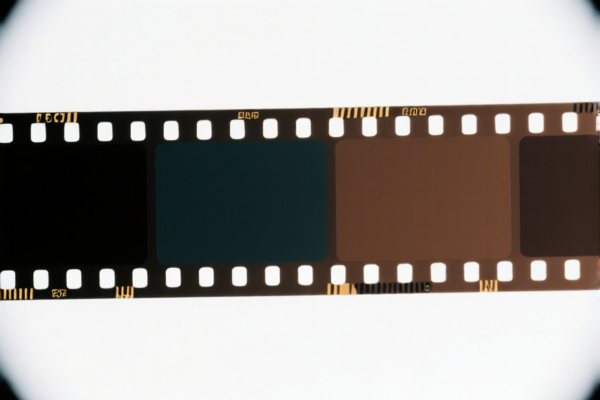
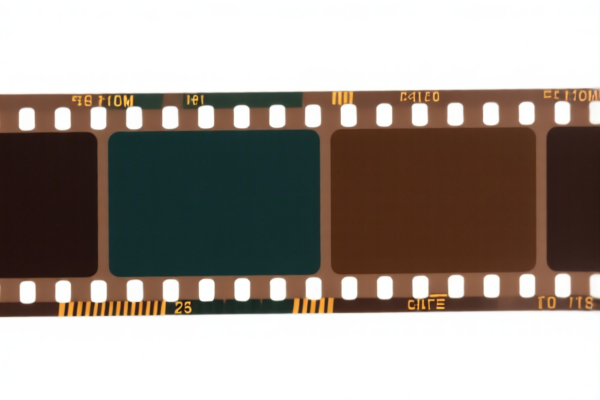
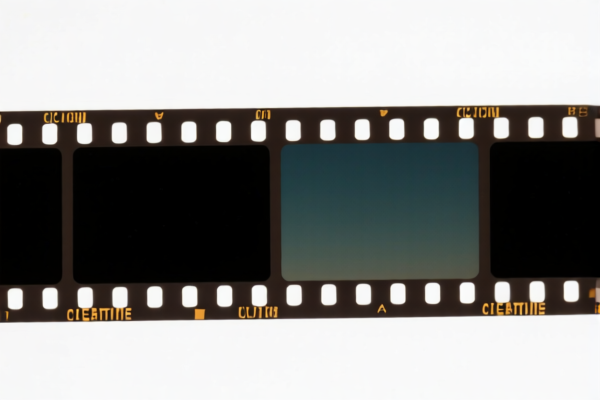

AI Analysis
🎞️ Color Film (For Experimental Use)
🌐 HS Code Reference & Customs Clearance Guide | 2026 Latest Tariff Analysis | Professional Clearance Strategy
📌 I. Product Definition & Classification: Do You Really Understand "Color Film"?
Color film, especially when designated for scientific or experimental use, is a critical medium in research, medical diagnostics, and industrial testing. In international trade, it is often misclassified due to confusion between photographic materials and scientific instruments.
Key Distinctions: * Photographic Film (Chapter 37): Chemical materials sensitive to light, used for recording images. Even if used for science, if it’s the medium itself, it belongs here. * Scientific Apparatus (Chapter 90): If the film is part of a larger machine (e.g., a spectrophotometer’s output medium), the machine might be classified separately, but the film stock itself usually remains under Chapter 37 or specific subheadings for scientific use.
⚠️ Critical Classification Point:
- If the film is a standalone product used for scientific documentation/testing → Chapter 37 (e.g., 3701, 3702).
- If the film is an integral component of a scientific instrument and not sold separately → Might fall under 9027 (if deemed part of the apparatus) or still 3702 depending on national interpretation.
- Format Matters: Plate/film vs. Roll vs. Sheet.
📦 II. HS Code Classification Details (2026 Latest Tariff Authority Comparison)
| HS Code | Product Description | Application Scenario | Tax Detail Breakdown | Total Tax Rate |
|---|---|---|---|---|
3701.99.60.60 |
Color Film for Scientific Use (Plate/Film form, non-paper/non-textile) | Lab reagents, scientific imaging media, non-disk formats | Base: 0.0%, Section 301: 25.0%, Section 122: 10% | 35.0% |
3701.91.00.60 |
Color Photographic Film (Scientific use, non-disk) | General scientific photography, research documentation | Base: 3.7%, Section 301: 25.0%, Section 122: 10% | 38.7% |
3702.31.01.00 |
Color Roll Film (Scientific use, standard format) | Standard scientific roll film, no specific size exclusions | Base: 3.7%, Section 301: 25.0%, Section 122: 10% | 38.7% |
3702.53.00.60 |
Color Photographic Roll Film (Scientific use, catch-all) | Scientific roll film not fitting other specific size/category | Base: 3.7%, Section 301: 25.0%, Section 122: 10% | 38.7% |
9027.50.80.60 |
Film for Scientific Detection (Optical radiation analysis medium) | Used as a medium in scientific detectors/instruments | Base: 0.0%, Section 301: 25.0%, Section 122: 10% | 35.0% |
🔍 Key Insight:
-3701.99.60.60&9027.50.80.60offer the lowest base tariff (0%) but are subject to 35% total tax (301 + 122). These are ideal for scientific-grade plates/films or films used specifically as analysis media.
-3701.91.00.60,3702.31.01.00,3702.53.00.60have a 3.7% base tariff, leading to a 38.7% total tax. These are better for standard photographic film formats used in science.
- Section 122 (10%) applies to all these Chinese-origin goods if imported into the US under specific recent trade actions.
💰 III. 2026 Latest Tariff Rate Details (Including Additional Duties & Policy Surcharges)
✅ Applicable Country: USA
✅ Origin: China (CN)
✅ Effective Time: From November 10, 2025 onwards
🎯 1. 3701.99.60.60 & 9027.50.80.60 —— Scientific Film / Analysis Media
| Item | Content |
|---|---|
| Base Tariff | 0% (ad valorem) |
| USITC Surcharge (Section 301) | +25% |
| IEEPA Surcharge (Section 122) | +10% |
| Total Tax Rate | 35.0% |
| Tax Calculation | CIF Value × 35% |
| De Minimis Eligibility | ❌ No (deny_de_minimis) |
| Legal Basis Path | IEEPA:9903.01.25 → USITC:3701.99.60.60 → FOOTNOTE:9903.88.01 |
📌 Explanation:
- These codes benefit from 0% base duty because they are classified as scientific materials or parts of scientific instruments.
- However, Section 301 (25%) and Section 122 (10%) still apply, totaling 35%.
- This is cheaper than the standard photographic film codes (38.7%).
🎯 2. 3701.91.00.60, 3702.31.01.00, 3702.53.00.60 —— Standard Color Photographic Film
| Item | Content |
|---|---|
| Base Tariff | 3.7% |
| USITC Surcharge (Section 301) | +25% |
| IEEPA Surcharge (Section 122) | +10% |
| Total Tax Rate | 38.7% |
| Tax Calculation | CIF Value × 38.7% |
| De Minimis Eligibility | ❌ No |
| Legal Basis Path | IEEPA:9901.25 → IEEPA:9903.01.24 → USITC:3702.31.01.00 → FOOTNOTE:9903.88.01 |
📌 Note:
- If the film is clearly identified as scientific-grade and fits the description of3701.99or9027.50, choose those codes to save 3.7% on the base.
- If the film is standard photographic film repurposed for science, use 38.7% codes.
- Do not misdeclare standard film as scientific film to get the 0% base; customs may audit and penalize.
🛠️ IV. Customs Clearance Practical Advice (Battle-Tested Pitfall Guide)
✅ 1. Required Documentation Checklist (Non-Negotiable)
| Document | Must Provide | Description |
|---|---|---|
| ✅ Product Specification Sheet | ✔️ | Must clearly state: "For Scientific/Experimental Use Only" |
| ✅ Technical Data Sheet | ✔️ | Include sensitivity, format, chemical composition |
| ✅ Product Photos | ✔️ | Show packaging, label, and physical form (roll/plate) |
| ✅ Commercial Invoice | ✔️ | Clearly state: "Color Film for Scientific Research" |
| ✅ Packing List | ✔️ | Detail quantity, weight, and unit type |
| ✅ Certificate of Origin | ✔️ | To verify Chinese origin and apply correct tariffs |
| ✅ Third-Party Test Report | ✔️ | If claiming scientific use, provide lab certification |
✅ 2. Declaration Tips (Key Mnemonics)
🔥 "Specify 'Scientific', Avoid 'Photographic' If Possible, Base Tariff 0% is the Goal!"
| Scenario | Correct Declaration | Wrong Declaration |
|---|---|---|
| Film used in lab experiments | 3701.99.60.60 or 9027.50.80.60 |
3702.31.01.00 → 38.7% |
| Standard color film for science | 3701.91.00.60 |
3702.53.00.60 → 38.7% |
| Film as part of a machine | 9027.50.80.60 |
3701.99.60.60 → Possible dispute |
| Generic "Color Film" | Avoid → High audit risk | Specify use: Scientific |
✅ 3. Special Cases Handling
| Scenario | Handling Advice |
|---|---|
| OEM Custom Film | Provide customer order + design specs to prove scientific intent |
| Mixed Shipments | Separate scientific film from commercial film in declaration |
| Scientific Instrument Integration | If film is only used with a specific detector, consider classifying the whole system under 9027 if allowed |
| Small Samples | Still subject to 35%/38.7% tax; no de minimis |
🌍 V. Global Market Clearance Comparison (2026 Latest)
| Country/Region | Recommended HS Code | Tariff | Certification | Notes |
|---|---|---|---|---|
| 🇺🇸 USA | 3701.99.60.60 / 9027.50.80.60 |
35.0% | FDA (if medical) | 38.7% for standard film |
| 🇨🇳 China | 3702.31.01.00 |
5% | CCC (if applicable) | No Section 301/122 |
| 🇪🇺 EU | 3702.31.01.00 |
0-6% | REACH | No US-style surcharges |
| 🇦🇺 Australia | 3702.31.01.00 |
5% | ACCC | No surcharges |
| 🇯🇵 Japan | 3702.31.01.00 |
3.2% | PSE | No surcharges |
📌 Conclusion:
- USA is the most expensive market due to Section 301 and 122 tariffs.
- Choose scientific classification (3701.99or9027.50) to save 3.7% on base duty.
- Non-US markets have significantly lower or no additional tariffs.
📌 VI. Common Errors & Pitfall Guide (Blood & Tears Lessons)
❌ Error 1: Declaring scientific film as "Photographic Film" (3702)
👉 Consequence: 38.7% vs 35.0% → Overpayment!
❌ Error 2: Failing to specify "Scientific Use" on Invoice
👉 Consequence: Customs defaults to 3702 (38.7%) or audits for misclassification
❌ Error 3: Misclassifying as "Scientific Instrument" (9027) without proof
👉 Consequence: Rejected by customs; penalties for false declaration
❌ Error 4: Assuming de minimis applies to film samples
👉 Consequence: All entries taxed; no $800 exemption
✅ Correct Approach:
"Color Film for Scientific Research, Format: Roll/Plate, Sensitivity: XXX, Intended Use: Experimental Data Collection, Model: XYZ"
🎯 VII. Conclusion: Precise Classification, Lower Costs, Faster Clearance!
🎯 Remember the Mantra:
🔹 "Scientific Use = 0% Base, 35% Total. Photographic Use = 3.7% Base, 38.7% Total."
🔹 "Specify 'Scientific' on Invoice, Avoid 'Photographic' to Save Money."
📌 Pro Tip:
If your film is used in medical diagnostics, consider FDA registration and ensure it meets ISO 13485 standards. For industrial testing, provide application letters from clients.
📣 Immediate Action:
📞 Contact a professional customs broker + Provide Product Specs + Apply for Advance Ruling if possible
🚀 Ensure your film clears efficiently, cost-effectively, and compliantly!
✨ Professional Clearance Starts with Precise Classification!
💼 Every Percentage Point Saved is Profit Gained!
Customer Reviews
About HS Code Classification
The Harmonized System (HS) is an internationally standardized nomenclature developed by the World Customs Organization (WCO) to classify traded products. Over 200 countries use the HS system as the basis for customs tariffs, trade statistics, and import/export regulations.
Each HS code follows a hierarchical structure:
- Chapter (2 digits) — Broad category of goods (e.g., Chapter 84: Machinery and Mechanical Appliances)
- Heading (4 digits) — More specific grouping within the chapter
- Subheading (6 digits) — Internationally standardized breakdown, used by all WCO member countries
- National subdivisions (8-10 digits) — Country-specific extensions for further classification, such as US HTSUS 10-digit codes
Correct HS code classification is essential for smooth customs clearance, accurate duty payment, and compliance with trade regulations. Misclassification can lead to customs delays, overpayment of duties, or penalties.
When importing from CN to US, the applicable tariff rates may include:
- Most-Favored-Nation (MFN) rate — The standard duty rate applied to WTO members
- General rate — Applied to countries without trade agreements
- Trade remedy duties — Additional tariffs such as Section 301 (anti-dumping), Section 232 (national security), or countervailing duties
The information provided on this page is for reference purposes only. For official classification, please consult with your local customs authority or a licensed customs broker.