Color Film (ISO 200)
CN → US| HS Code | Tariff Rate | Origin | Destination | Doc |
|---|---|---|---|---|
| 3702530030 | 38.7% | CN | US | Official Doc |
| 3702540030 | 38.7% | CN | US | Official Doc |
| 3702970000 | 35.0% | CN | US | Official Doc |
| 3702550060 | 35.0% | CN | US | Official Doc |
| 3702520160 | 38.7% | CN | US | Official Doc |
Product Images
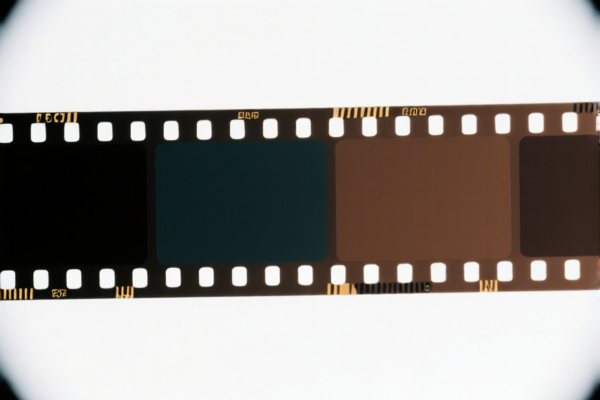
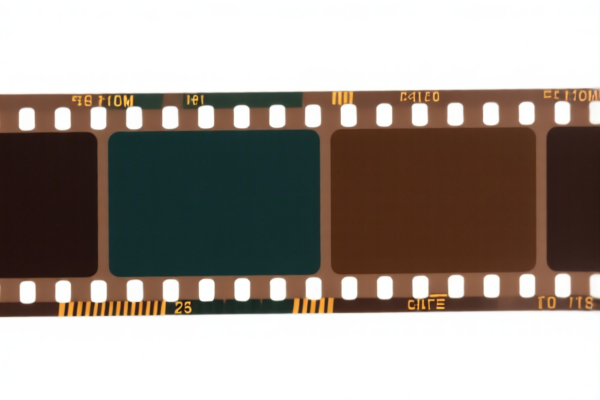
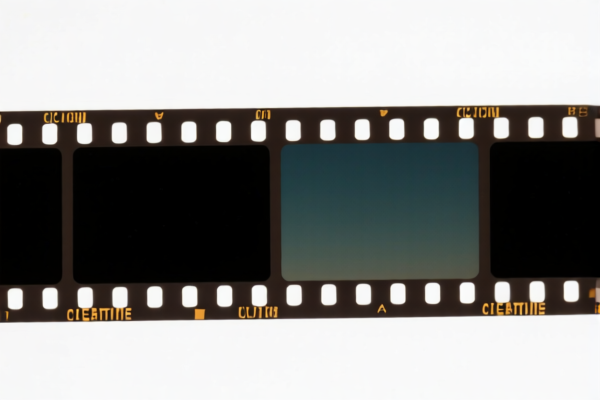

AI Analysis
🎞️ Color Film (ISO 200)
🌐 HS Code Reference & Customs Clearance Guide | 2024-2025 Tax Analysis | Professional Clearance Strategy
📌 I. Product Definition & Classification: Do You Really Understand "Color Film"?
Color Film (ISO 200) is a photosensitive imaging medium primarily used in analog photography, cinematography, and specialized imaging applications. In international trade, it is classified under Chapter 37 (Photographic or cinematographic goods). The classification depends heavily on the specific technical specifications (such as width, emulsion type, and format) which dictate the HS Code and, consequently, the tax burden.
Based on the provided data, there are four distinct HS Codes applicable to ISO 200 Color Film, with varying tax implications due to Section 301 tariffs and Section 122 provisions.
⚠️ Key Distinction Point:
- If the film is classified under 3702.5x series: 3.7% Base Tariff applies.
- If the film is classified under 3702.97/97: 0.0% Base Tariff applies.
- All categories listed below are subject to a 25% Additional Tariff and 10% Section 122 Tariff, resulting in a Total Tax Rate of 38.7% or 35.0%.
📦 II. HS Code Classification Details (Latest Tariff Schedule)
| HS Code | Product Description | Application Scenario | Base Tariff | Additional Tariff | Section 122 | Total Tax Rate |
|---|---|---|---|---|---|---|
3702.53.00.30 |
Color photographic film, ISO 200 | General purpose color film, specific form: Film | 3.7% | 25.0% | 10% | 38.7% |
3702.54.00.30 |
Color photographic film, ISO 200 | Inferred 35mm format, matches 3702.54.00.30 definition | 3.7% | 25.0% | 10% | 38.7% |
3702.52.01.60 |
Color photographic film, ISO 200 | Width unspecified but no conflict, matches material/use definition | 3.7% | 25.0% | 10% | 38.7% |
3702.97.00.00 |
Color film, ISO 200 | Broad category for color film, inferred photosensitive material | 0.0% | 25.0% | 10% | 35.0% |
3702.55.00.60 |
Color film, ISO 200 | Form: Color film sheet, matches color photographic film use | 0.0% | 25.0% | 10% | 35.0% |
🔍 Important Note:
- The difference between 38.7% and 35.0% lies solely in the Base Tariff (3.7% vs 0.0%).
- The Additional Tariff (25%) and Section 122 Tariff (10%) are fixed across all these classifications.
- Proper identification of the film's physical characteristics (e.g., width, specific format like 35mm) is crucial to determine the correct subheading.
💰 III. 2024-2025 Tax Rate Details (Including Additional Taxes)
✅ Applicable Country: China (Export) / United States (Import)
✅ Product Origin: Likely China (Given the 122 Section and 301 Tariffs context)
✅ Effective Time: Current Trade Policy (2024-2025)
🎯 1. 3702.53.00.30, 3702.54.00.30, 3702.52.01.60 —— High Base Tariff Category
| Item | Content |
|---|---|
| Base Tariff | 3.7% (ad valorem) |
| USITC Additional Tariff (Section 301) | +25.0% |
| Section 122 Tariff | +10.0% |
| Total Tax Rate | 38.7% |
| Tax Calculation | CIF Value × 38.7% |
| De Minimis Exemption | ❌ Not Eligible (Standard customs duties apply) |
| Legal Basis | HTSUS 3702.5x series + 301 Footnotes + Section 122 Provision |
📌 Explanation:
- The 3.7% base tariff reflects the standard Most Favored Nation (MFN) rate for specific color film subheadings.
- The 25% additional tariff is imposed under Section 301 of the Trade Act of 1974 on Chinese-origin goods.
- The 10% Section 122 tariff is another layer of duty applicable to certain Chinese imports.
- Total Cost Impact: For every $10,000 CIF value, expect $3,870 in duties.
🎯 2. 3702.97.00.00, 3702.55.00.60 —— Low Base Tariff Category
| Item | Content |
|---|---|
| Base Tariff | 0.0% (ad valorem) |
| USITC Additional Tariff (Section 301) | +25.0% |
| Section 122 Tariff | +10.0% |
| Total Tax Rate | 35.0% |
| Tax Calculation | CIF Value × 35.0% |
| De Minimis Exemption | ❌ Not Eligible |
| Legal Basis | HTSUS 3702.97/55 series + 301 Footnotes + Section 122 Provision |
📌 Explanation:
- These codes represent broader or alternative classifications where the base MFN rate is 0%.
- However, the 35% total rate is still very high due to the additional duties.
- Savings: Compared to the 38.7% category, this offers a 3.7% savings on the CIF value.
🛠️ IV. Customs Clearance Practical Advice (Battle-Tested Tips)
✅ 1. Required Documentation Checklist
| Document | Mandatory? | Description |
|---|---|---|
| ✅ Product Specification Sheet | ✔️ | Must detail: ISO speed (200), film width, emulsion type, format (35mm, etc.) |
| ✅ Commercial Invoice | ✔️ | Clearly state: "Color Photographic Film, ISO 200", HS Code, Origin |
| ✅ Packing List | ✔️ | Indicate packaging type (canisters, reels) to support "film" classification |
| ✅ Certificate of Origin | ✔️ | Essential for proving Chinese origin (to calculate 301/122 duties) |
| ✅ Photo/Visual Proof | ✔️ | Images of the film packaging showing ISO rating and brand |
| ✅ Customs Ruling (Optional) | ✔️ | Pre-clearance ruling if HS Code is ambiguous (e.g., 3702.5x vs 3702.97) |
✅ 2. Declaration Strategy (Key Mantras)
🔥 "Specify ISO 200, Define Format, Avoid Ambiguity!"
| Scenario | Correct Declaration | Common Mistake |
|---|---|---|
| Standard 35mm Roll | 3702.54.00.30 - "Color Film, ISO 200, 35mm Format" |
Generic "Photographic Film" → Risk of misclassification |
| Wide Format Film | 3702.53.00.30 or 3702.97.00.00 |
Assuming all ISO 200 is the same code |
| Bulk Film Rolls | Specify width and length | Not declaring dimensions → Customs may assign highest base rate |
| Mixed Lot | Declare each type separately | Grouping different ISO speeds or formats → Delay & Penalties |
✅ 3. Special Considerations
| Situation | Recommendation |
|---|---|
| Ambiguous HS Code | If unsure between 3702.53 and 3702.97, request a Pre-Ruling from CBP to save time and avoid disputes. |
| High Duty Cost | Consider if the product qualifies for any Exclusions (though Section 122 and 301 have limited exclusions for photography goods). |
| Non-Chinese Origin | If manufactured in Vietnam, Japan, or Germany, the 25% Additional Tariff and 10% Section 122 Tariff may NOT apply, reducing the total tax to just the base rate (0% or 3.7%). This is a critical cost-saving strategy! |
🌍 V. Global Market Comparison (2024-2025)
| Country/Region | Recommended HS Code | Estimated Total Duty | Certification | Notes |
|---|---|---|---|---|
| 🇺🇸 USA | 3702.54.00.30 |
38.7% (CN Origin) | None specific | High duty due to 301/122 |
| 🇺🇸 USA | 3702.54.00.30 |
3.7% (Non-CN Origin) | None specific | No 301/122 tariffs |
| 🇨🇳 China | 3702.54.00.30 |
Low/Exempt | CCC (if applicable) | Import duty structure differs |
| 🇪🇺 EU | 3702.54.00.00 |
0% | CE (for equipment) | No additional duties on film |
| 🇬🇧 UK | 3702.54.00.00 |
0% | UKCA | Post-Brexit rules |
📌 Conclusion:
- USA is the most challenging market due to 38.7% total duty on Chinese-origin ISO 200 film.
- Alternative Sourcing: If the film is produced in Europe, Japan, or Southeast Asia, the duty drops dramatically to 0% or 3.7%, offering a significant competitive advantage.
📌 VI. Common Errors & Pitfalls (Lessons Learned)
❌ Error 1: Using a generic description like "Photographic Film"
👉 Consequence: Customs may assign the highest applicable base rate or demand extensive documentation, causing delays.
❌ Error 2: Ignoring the Section 122 Tariff
👉 Consequence: Underestimating costs by 10%. Total tax is 38.7%, not 25% or 3.7%.
❌ Error 3: Misclassifying 35mm Film as a broader category
👉 Consequence: If 3702.54.00.30 is the correct code but 3702.97.00.00 is used, and the base rates differ, it may trigger an audit or penalty.
✅ Best Practice:
"Color Photographic Film, ISO 200, 35mm, for still photography, CN Origin"
HS Code:3702.54.00.30
Duty: 38.7%
🎯 VII. Conclusion: Precision is Profit
🎯 Remember the Mantra:
🔹 "ISO 200, Check Origin, 38.7% is the Pain, 35% is the Gain!"
🔹 "Non-Chinese Origin? Duty Drops to 3.7% or 0%!"
📌 Pro Tip:
If you are importing into the US from China, negotiate prices to account for the 38.7% duty or consider shifting supply chain to non-China sources to leverage lower base rates and no additional tariffs.
📣 Immediate Action:
📞 Verify Origin: Is it really Chinese?
📦 Confirm Format: 35mm? Wide?
📄 Pre-Clearance: Apply for a Binding Ruling if unsure.
✨ Smart Clearance, Smarter Savings!
💼 Your Duty Bill Should Be Predictable, Not Surprising!
Customer Reviews
About HS Code Classification
The Harmonized System (HS) is an internationally standardized nomenclature developed by the World Customs Organization (WCO) to classify traded products. Over 200 countries use the HS system as the basis for customs tariffs, trade statistics, and import/export regulations.
Each HS code follows a hierarchical structure:
- Chapter (2 digits) — Broad category of goods (e.g., Chapter 84: Machinery and Mechanical Appliances)
- Heading (4 digits) — More specific grouping within the chapter
- Subheading (6 digits) — Internationally standardized breakdown, used by all WCO member countries
- National subdivisions (8-10 digits) — Country-specific extensions for further classification, such as US HTSUS 10-digit codes
Correct HS code classification is essential for smooth customs clearance, accurate duty payment, and compliance with trade regulations. Misclassification can lead to customs delays, overpayment of duties, or penalties.
When importing from CN to US, the applicable tariff rates may include:
- Most-Favored-Nation (MFN) rate — The standard duty rate applied to WTO members
- General rate — Applied to countries without trade agreements
- Trade remedy duties — Additional tariffs such as Section 301 (anti-dumping), Section 232 (national security), or countervailing duties
The information provided on this page is for reference purposes only. For official classification, please consult with your local customs authority or a licensed customs broker.