Color Film (Low Haze)
CN → US| HS Code | Tariff Rate | Origin | Destination | Doc |
|---|---|---|---|---|
| 3921905010 | 39.8% | CN | US | Official Doc |
| 3921190010 | 41.5% | CN | US | Official Doc |
| 9002208000 | 35.0% | CN | US | Official Doc |
| 9002204000 | 35.0% | CN | US | Official Doc |
Product Images
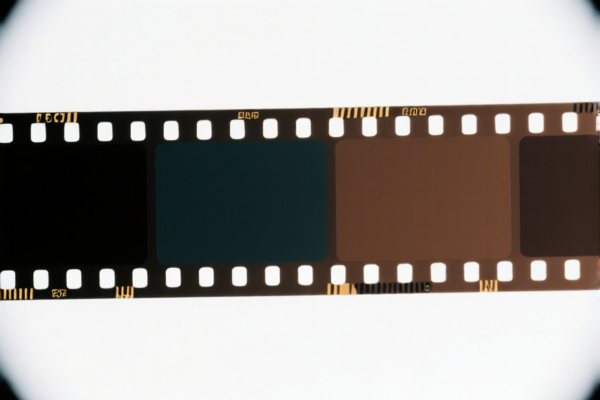
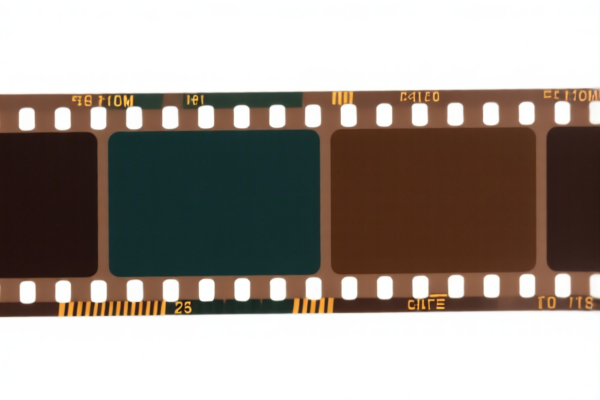
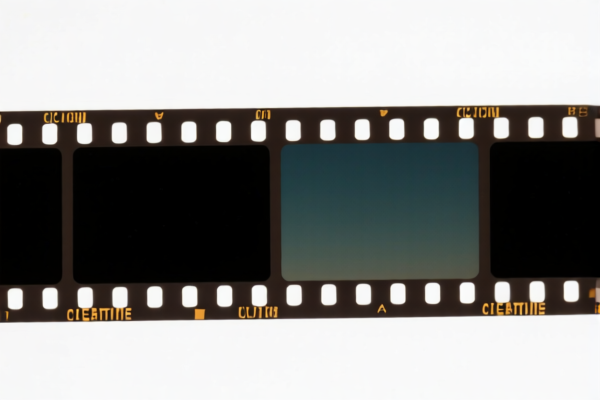

AI Analysis
🎞️ Color Film (Low Haze) – Optical & Plastic Materials Classification Guide
🌐 HS Code Reference & Customs Clearance Guide | 2026 Latest Tariff Analysis | Professional Clearance Strategy
📌 I. Product Definition & Classification: What Exactly Is "Color Film (Low Haze)"?
"Color Film (Low Haze)" is a broad term in international trade that typically refers to two distinct categories of goods: 1. Optical Filters/Elements: Transparent sheets or lenses used in optical instruments (cameras, sensors, displays) to filter light wavelengths. These are classified under Chapter 90. 2. Plastic Sheets/Films: Decorative or functional laminates made of plastics, often used in signage, displays, or protective layers. These are classified under Chapter 39.
⚠️ Critical Distinction:
- If the product is mounted, optically worked, or part of an instrument → It is an Optical Element (Chapter 90).
- If the product is raw plastic sheets/films for decoration, packaging, or general use → It is a Plastic Article (Chapter 39).
- "Low Haze" is a physical property (transparency quality), not a standalone HS code trigger. It must be interpreted within the functional context.
📦 II. HS Code Classification Details (Based on Provided DATA)
Below are the exact HS codes and tax rates from the provided <DATA> source. No external codes are added.
| HS Code | Product Description | Applicable Scenario | Tax Rate (Total) |
|---|---|---|---|
| 9002.20.40.00 | Photographic Filters and parts/accessories thereof: Lenses, prisms, mirrors, and other optical elements... mounted for instruments/apparatus. | Optical filters used in photography, cameras, or scientific instruments. | 25.0% |
| 9002.20.80.00 | Other Filters and parts/accessories thereof: Lenses, prisms, mirrors, and other optical elements... mounted for instruments/apparatus. | Non-photographic optical filters (e.g., for displays, sensors, industrial machines). | 25.0% |
| 3921.19.00.10 | Other plates, sheets, film, foil, and strip of plastics: Cellular: Of other plastics: Microporous sheets of polyethylene or polypropylene film. | Microporous plastic sheets/films (cellular structure). | 0.0% |
| 3921.90.50.10 | Other plates, sheets, film, foil, and strip of plastics: Other: Other: Other: High pressure paper reinforced decorative laminates. | Decorative laminates with paper reinforcement (often used in signage/furniture). | 29.8% |
🔍 Key Insight:
- The term "Color Film" is ambiguous. If it’s an optical filter (even if "color"), it falls under 9002.xx (25% tax).
- If it’s a plastic film for decoration or packaging, it falls under 3921.xx.
- 3921.19.00.10 is for microporous/cellular plastic films (0% tax).
- 3921.90.50.10 is for decorative laminates (29.8% tax).
💰 III. 2026 Latest Tariff Rate Breakdown
✅ Applicable Country: United States (US)
✅ Origin: China (CN)
✅ Effective Date: 2025/2026 (Current Policy)
🎯 1. 9002.20.40.00 – Photographic Filters
| Item | Details |
|---|---|
| Base Tariff | 0.0% |
| Additional Tariff | 25.0% |
| Total Tax Rate | 25.0% |
| Tax Calculation | CIF Value × 25% |
| De Minimis Exemption | ❌ Not Applicable |
| Legal Basis | USITC Footnote for Chapter 90 + Section 301 Tariffs |
📌 Explanation:
- Optical filters are considered high-tech components.
- The 25% tariff is applied under Section 301 (US-China trade policy).
- No base tariff, but the 25% surcharge makes it expensive.
🎯 2. 9002.20.80.00 – Other Optical Filters
| Item | Details |
|---|---|
| Base Tariff | 0.0% |
| Additional Tariff | 25.0% |
| Total Tax Rate | 25.0% |
| Tax Calculation | CIF Value × 25% |
| De Minimis Exemption | ❌ Not Applicable |
| Legal Basis | USITC Footnote for Chapter 90 + Section 301 Tariffs |
📌 Explanation:
- Same tax treatment as photographic filters.
- Any optical element (lens, prism, filter) mounted for instruments falls here.
🎯 3. 3921.19.00.10 – Microporous Plastic Sheets/Films
| Item | Details |
|---|---|
| Base Tariff | 0.0% |
| Additional Tariff | 0.0% |
| Total Tax Rate | 0.0% |
| Tax Calculation | No tax |
| De Minimis Exemption | ✅ Applicable (if under $800) |
| Legal Basis | Chapter 39 General Rate |
📌 Explanation:
- Zero tariff makes this category highly favorable.
- Must be microporous/cellular polyethylene or polypropylene film.
- "Low haze" is acceptable if it’s a plastic film for non-optical use.
🎯 4. 3921.90.50.10 – High Pressure Paper Reinforced Decorative Laminates
| Item | Details |
|---|---|
| Base Tariff | 4.8% |
| Additional Tariff | 25.0% |
| Total Tax Rate | 29.8% |
| Tax Calculation | CIF Value × 29.8% |
| De Minimis Exemption | ❌ Not Applicable |
| Legal Basis | Chapter 39 + Section 301 Tariffs |
📌 Explanation:
- High tax due to decorative nature and Section 301 surcharge.
- Only applies if it’s a paper-reinforced laminate (not pure plastic film).
🛠️ IV. Customs Clearance Practical Advice
✅ 1. Documentation Checklist
| Document | Required | Notes |
|---|---|---|
| Product Specification Sheet | ✔️ | Must clearly state: Material, Thickness, Haze Value, Optical vs. Plastic Use |
| Photographs | ✔️ | Show packaging, label, and product structure |
| Commercial Invoice | ✔️ | Describe item as "Color Filter Lens" or "Plastic Decorative Film" (match HS code) |
| Packing List | ✔️ | Detail quantities and weights |
| Certificate of Origin | ✔️ | Required for tariff calculation |
| Test Report (if optical) | ✔️ | Show haze, transmission, and spectral properties |
✅ 2. Declaration Tips (Key Mnemonics)
🔥 "Optical = 9002 (25%); Plastic Film = 3921 (0% or 29.8%); Be Precise!"
| Scenario | Correct HS Code | Wrong Code | Consequence |
|---|---|---|---|
| Optical Filter (for camera/sensor) | 9002.20.40.00 or 9002.20.80.00 |
3921.xx |
Penalty + 25% back tax |
| Decorative Plastic Film (non-optical) | 3921.19.00.10 |
9002.xx |
Penalty + 25% back tax |
| Decorative Laminate (paper-reinforced) | 3921.90.50.10 |
3921.19.00.10 |
Penalty + 25% back tax |
✅ 3. Special Cases
| Case | Handling Advice |
|---|---|
| "Low Haze" Optical Filter | Declare as Optical Element → 9002.xx → 25% tax |
| Clear Plastic Film for Packaging | Declare as Plastic Film → 3921.19.00.10 → 0% tax |
| Color-Coded Decorative Laminates | Declare as Decorative Laminate → 3921.90.50.10 → 29.8% tax |
🌍 V. Global Market Comparison (2026)
| Country | Recommended HS Code | Tariff | Notes |
|---|---|---|---|
| 🇺🇸 USA | 9002.20.40.00 / 3921.19.00.10 |
25% / 0% | High tax on optical; low on plastic films |
| 🇨🇳 China | 9002.20.40.00 / 3921.19.00.10 |
0-10% | Varies by type; no Section 301 |
| 🇪🇺 EU | 9002.20.40.00 / 3921.19.00.10 |
0-4% | Low tax for optics; CE certification needed |
| 🇬🇧 UK | 9002.20.40.00 / 3921.19.00.10 |
0-5% | Post-Brexit tariffs apply |
📌 Conclusion:
- USA is the most expensive market for optical filters (25%).
- Plastic films for non-optical use enjoy 0% tariff in the USA if classified correctly.
📌 VI. Common Errors & Pitfalls
❌ Error 1: Declaring an optical filter as plastic film
👉 Consequence: Customs reclassifies → 25% tax + penalty
❌ Error 2: Declaring a decorative laminate as microporous film
👉 Consequence: 29.8% tax instead of 0% → Cost increase
❌ Error 3: Ignoring "Low Haze" specification
👉 Consequence: If it’s an optical element, "low haze" confirms it’s optical → 25% tax
✅ Correct Declaration Example:
"Optical Color Filter Lens, Low Haze, for Camera Sensor, Model XYZ" →
9002.20.40.00
"Clear Microporous Plastic Film, Low Haze, for Packaging, Polyethylene" →3921.19.00.10
🎯 VII. Conclusion: Accurate Classification Saves Money!
🎯 Remember:
🔹 "Optical = 9002 (25%); Plastic = 3921 (0-29.8%); Be Precise!"
🔹 "HS Code determines tax; wrong code = double payment!"
📌 Pro Tip:
If your product is not optical (no lens/prism function), declare it as Plastic Film (3921.19.00.10) for 0% tax.
If it’s optical, prepare for 25% tax under 9002.20.40.00.
📣 Act Now:
📞 Consult a customs broker + Provide product specs + Apply for Pre-classification Ruling
🚀 Ensure smooth clearance, optimize costs, and boost profits!
✨ Professional clearance starts with accurate classification!
💼 Every cent counts in international trade!
Customer Reviews
About HS Code Classification
The Harmonized System (HS) is an internationally standardized nomenclature developed by the World Customs Organization (WCO) to classify traded products. Over 200 countries use the HS system as the basis for customs tariffs, trade statistics, and import/export regulations.
Each HS code follows a hierarchical structure:
- Chapter (2 digits) — Broad category of goods (e.g., Chapter 84: Machinery and Mechanical Appliances)
- Heading (4 digits) — More specific grouping within the chapter
- Subheading (6 digits) — Internationally standardized breakdown, used by all WCO member countries
- National subdivisions (8-10 digits) — Country-specific extensions for further classification, such as US HTSUS 10-digit codes
Correct HS code classification is essential for smooth customs clearance, accurate duty payment, and compliance with trade regulations. Misclassification can lead to customs delays, overpayment of duties, or penalties.
When importing from CN to US, the applicable tariff rates may include:
- Most-Favored-Nation (MFN) rate — The standard duty rate applied to WTO members
- General rate — Applied to countries without trade agreements
- Trade remedy duties — Additional tariffs such as Section 301 (anti-dumping), Section 232 (national security), or countervailing duties
The information provided on this page is for reference purposes only. For official classification, please consult with your local customs authority or a licensed customs broker.