Color Film (Medical Use)
CN → US| HS Code | Tariff Rate | Origin | Destination | Doc |
|---|---|---|---|---|
| 3701910060 | 38.7% | CN | US | Official Doc |
| 3702310100 | 38.7% | CN | US | Official Doc |
| 3702530060 | 38.7% | CN | US | Official Doc |
| 9027508060 | 35.0% | CN | US | Official Doc |
| 9027898060 | 35.0% | CN | US | Official Doc |
Product Images
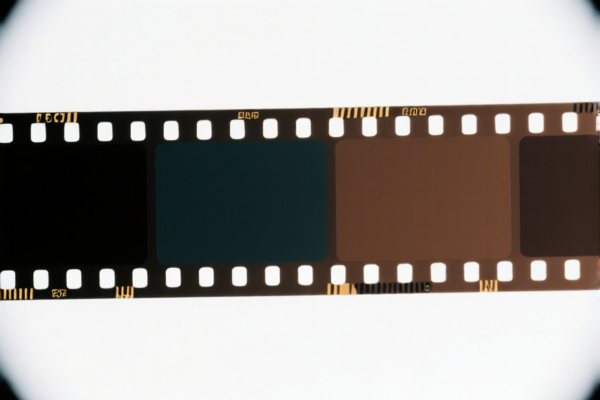
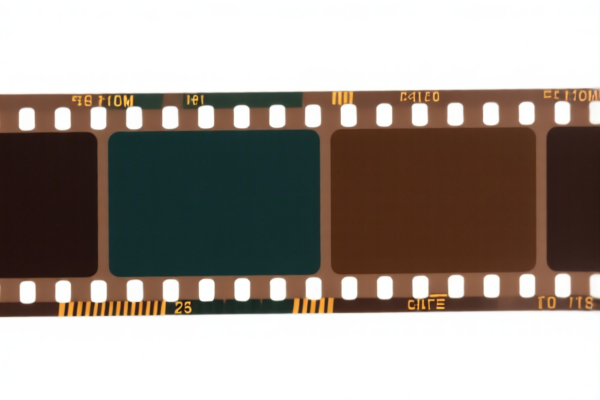
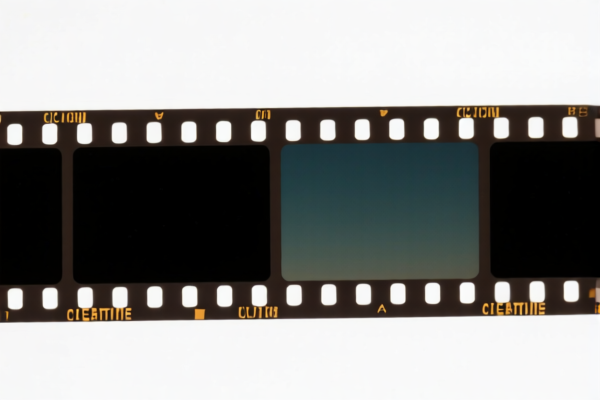

AI Analysis
🎞️ Color Film for Medical Use (Diagnostic X-Ray & Imaging Media)
🌐 HS Code Reference & Customs Clearance Guide | 2026 Latest Tariff Analysis | Professional-Level Clearance Strategy
📌 I. Product Definition & Classification: Do You Really Understand "Medical Color Film"?
Color Film for Medical Use refers to photosensitive materials specifically designed for medical diagnostics, such as X-ray films, mammography films, or other radiographic imaging media that produce color images. Unlike general photographic film, its primary function is scientific/medical analysis rather than consumer photography.
In international trade, it is typically classified under two main categories depending on its specific technical attributes (width, perforation, and integration with equipment):
- Photosensitive Film (Chapter 37): If the product is considered a standalone photosensitive material for general or specific photographic purposes (including medical), regardless of the medium.
- Optical/Scientific Instruments (Chapter 90): If the film is viewed as a component, accessory, or medium for optical analysis devices (e.g., film readers, scanners, or specialized medical imaging systems).
⚠️ Key Distinction Point:
- If classified as Photographic/Photosensitive Material → Chapter 37 (e.g., 3701 or 3702).
- If classified as part of Optical Analysis Equipment → Chapter 90 (e.g., 9027).
- Crucial Note: Under current US trade policies, both categories face significant additional tariffs. Misclassification does not avoid taxes but may delay clearance.
📦 II. HS Code Classification Details (2026 Latest Tariff Authority Comparison)
| HS Code | Product Description | Application Scenario | Tax Rate Profile |
|---|---|---|---|
3701.91.00.60 |
Color photographic plates and film, exposed, for color photographic papers, or for other purposes other than cinematographic film. | Medical color film plates; specific medical imaging formats. | 38.7% |
3702.31.01.00 |
Other photographic film, in rolls, of a width > 105mm, of a kind used for color photography, unexposed, perforated. | Standard roll film for medical cameras (if perforated/wide). | 38.7% |
3702.53.00.60 |
Other photographic film, in rolls, other than cinematographic film, of a kind used for color photography, unexposed, other. | General medical color roll film; non-perforated or specific medical specs. | 38.7% |
9027.50.80.60 |
Spectrometers, spectrophotometers, spectrographs using optical radiations (UV, visible, IR). | Film as a detection medium for optical radiation analysis in medical labs. | 35.0% |
9027.89.80.60 |
Other instruments and appliances; physico-chemical analysis instruments. | Medical analysis devices using film as a reading medium; diagnostic tools. | 35.0% |
🔍 Important Reminder:
- Chapter 37 (38.7%): Applies if the product is primarily sold as photosensitive material. The "Medical Use" tag confirms its specific application but does not change the material class.
- Chapter 90 (35.0%): Applies if the product is integrated into or primarily considered part of an optical analysis device or instrument. The "Film" is seen as the detection sensor/medium.
- Common Mistake: Assuming "Medical" automatically exempts it from tariffs. It does not. All are subject to USITC and IEEPA surcharges.
💰 III. 2026 Latest Tariff Rate Breakdown (Including Additional Taxes & Policy Surcharges)
✅ Applicable Country: United States (US)
✅ Country of Origin: China (CN)
✅ Effective Date: From November 10, 2025 (including subsequent imports)
🎯 1. 3701.91.00.60 / 3702.31.01.00 / 3702.53.00.60 —— Photosensitive Color Film (Chapter 37)
| Item | Content |
|---|---|
| Base Duty Rate | 3.7% (Ad Valorem) |
| USITC Surcharge (Section 301) | +25.0% (Under USITC Footnote 9903.88.01 / Section 301 Tariff) |
| IEEPA Surcharge | +10.0% (针对中国/香港产品, under International Emergency Economic Powers Act) |
| Total Effective Rate | 38.7% |
| Tax Calculation | CIF Value × 38.7% |
| De Minimis Exemption? | ❌ No (deny_de_minimis) |
| Legal Path | Base 3.7% + Section 301 25% + IEEPA 10% |
📌 Explanation:
- Base 3.7%: Standard Most Favored Nation (MFN) rate for photographic films.
- 25% Section 301: A significant punitive tariff on Chinese-origin goods in this category.
- 10% IEEPA: Additional tariff under the International Emergency Economic Powers Act targeting specific Chinese imports.
- Total 38.7%: This is a high-cost item for importers. Budget accordingly.
🎯 2. 9027.50.80.60 / 9027.89.80.60 —— Optical/Scientific Analysis Instruments & Accessories (Chapter 90)
| Item | Content |
|---|---|
| Base Duty Rate | 0.0% (Ad Valorem) |
| USITC Surcharge (Section 301) | +25.0% |
| IEEPA Surcharge | +10.0% |
| Total Effective Rate | 35.0% |
| Tax Calculation | CIF Value × 35.0% |
| De Minimis Exemption? | ❌ No (deny_de_minimis) |
| Legal Path | Base 0% + Section 301 25% + IEEPA 10% |
📌 Explanation:
- Base 0%: Scientific and medical instruments often have zero base duty.
- However, the 25% + 10% surcharges still apply.
- Total 35.0%: This is 3.7% lower than Chapter 37.
- Strategic Insight: If the film can be legally justified as part of an analytical instrument (e.g., sold with a reader, or specifically for spectral analysis), Classifying under 9027 may save 3.7% on the CIF value.
🛠️ IV. Customs Clearance Practical Advice (Battle-Tested Pitfall Avoidance Guide)
✅ 1. Required Documentation Checklist (All Items Mandatory)
| Document | Must Provide? | Notes |
|---|---|---|
| ✅ Product Specifications | ✔️ | Must explicitly state "Color Film," "Medical Use," width, perforation status. |
| ✅ Material Composition | ✔️ | Gelatin, silver halide, polyester base details. |
| ✅ Photos of Product & Label | ✔️ | Clear view of "Medical Use" and technical specs. |
| ✅ Intended Use Statement | ✔️ | Explain if it's for diagnosis (supports 9027) or general imaging (supports 3701/3702). |
| ✅ Commercial Invoice | ✔️ | Must match HS Code description exactly. |
| ✅ Certificate of Origin | ✔️ | Critical for confirming China origin (triggers surcharges). |
✅ 2. Declaration Strategy (Key Mnemonics)
🔥 “Medical Film, Two Paths: Chapter 37 for Material, Chapter 90 for Analysis. Don’t Split, Don’t Lie!”
| Scenario | Recommended HS Code | Why? |
|---|---|---|
| Standalone Medical Film Rolls | 3702.53.00.60 or 3701.91.00.60 |
It is a photosensitive material. "Medical Use" is just the end-user application. |
| Film Sold with a Reader/Scanner | 9027.50.80.60 |
The film is part of the optical analysis system. May justify lower base duty. |
| Exposed Medical Plates | 3701.91.00.60 |
Exposed plates are no longer "photosensitive material" in the raw sense, but specific photographic plates. |
| Non-Medical Color Film | 3702.31.01.00 |
If "Medical" tag is misleading, classify by physical specs. |
✅ 3. Special Circumstances Handling
| Situation | Handling Advice |
|---|---|
| "Medical Device" Claim | If the film is integrated into a larger medical imaging device, declare the whole device under Chapter 90. Do not ship film alone and claim it's a device. |
| Dual-Use (Photo & Medical) | If ambiguous, declare as Chapter 37 (Safer, but higher tax). Proving Chapter 90 requires strong technical linkage to analytical instruments. |
| Sample vs. Commercial | Both are subject to tariffs. No exemption for samples unless < $800 (but China-origin goods often denied de minimis). |
| Origin Transshipment | Do not fake origin. US Customs has rigorous rules for China-origin goods. Risk of seizure is high. |
🌍 V. Global Market Comparison (2026 Latest)
| Country/Region | Recommended HS Code | Effective Tariff (China Origin) | Notes |
|---|---|---|---|
| 🇺🇸 United States | 3702.53.00.60 or 9027.50.80.60 |
35.0% - 38.7% | Includes 301 + IEEPA surcharges. |
| 🇨🇳 China | 3702.53.00.60 |
~6-8% (Est.) | Import duty for foreign film. |
| 🇪🇺 European Union | 3702.53.00.00 |
0-2% | No Section 301/IEEPA equivalent. |
| 🇬🇧 United Kingdom | 3702.53.00.00 |
0-5% | Post-Brexit tariffs. |
📌 Conclusion:
- The US market is uniquely expensive for Chinese-manufactured medical film due to trade war policies.
- Chapter 90 offers a 3.7% savings over Chapter 37, but requires robust technical justification.
- No Tariff Exemptions for medical use under current US law for these codes.
📌 VI. Common Errors & Pitfalls (Lessons Learned)
❌ Error 1: Declaring "Medical Film" under 9001 (Optical Fibers) or other unrelated codes.
👉 Consequence: Customs rejection, penalties, and audit.
❌ Error 2: Assuming "Medical" means "Tax-Exempt."
👉 Consequence: Surprise bill of $38.7k on a $100k shipment.
❌ Error 3: Splitting shipment into small parcels to use de minimis ($800 rule).
👉 Consequence: Blocked. China-origin goods are explicitly denied de minimis entry under recent US enforcement.
❌ Error 4: Misstating perforation or width to force a wrong HS Code.
👉 Consequence: Misdeclaration fines and cargo delays.
✅ Correct Declaration Example:
"Unexposed Color Photographic Film, Polyester Base, Width 105mm, For Medical Diagnostic Imaging, Model MED-CF1, Origin China"
🎯 VII. Conclusion: Professional Declaration, Cost Control, and Efficiency
🎯 Remember the Mantra:
🔹 "Chapter 37 = Material (38.7%), Chapter 90 = Instrument (35.0%)."
🔹 "Medical Use Does Not Mean Tax-Free. 301 + IEEPA Apply."
🔹 "Accurate Description Saves Dollars. Misclassification Delays Shipments."
📌 Pro Tip:
If your film is manufactured in Vietnam, Mexico, or Japan, you may avoid the 25% Section 301 and 10% IEEPA surcharges.
👉 Recommendation: Consider Supply Chain Diversification to non-China origins to reduce tax burden by up to 35%.
📣 Immediate Action:
📞 Consult a Customs Broker + Provide Technical Data + Apply for Advance Ruling
🚀 Clear Your Medical Film Efficiently, Secure Your Margins, and Stay Compliant!
✨ Professional Clearance Starts with Precise Classification!
💼 Every Percent of Tax Saved is Pure Profit!
Customer Reviews
About HS Code Classification
The Harmonized System (HS) is an internationally standardized nomenclature developed by the World Customs Organization (WCO) to classify traded products. Over 200 countries use the HS system as the basis for customs tariffs, trade statistics, and import/export regulations.
Each HS code follows a hierarchical structure:
- Chapter (2 digits) — Broad category of goods (e.g., Chapter 84: Machinery and Mechanical Appliances)
- Heading (4 digits) — More specific grouping within the chapter
- Subheading (6 digits) — Internationally standardized breakdown, used by all WCO member countries
- National subdivisions (8-10 digits) — Country-specific extensions for further classification, such as US HTSUS 10-digit codes
Correct HS code classification is essential for smooth customs clearance, accurate duty payment, and compliance with trade regulations. Misclassification can lead to customs delays, overpayment of duties, or penalties.
When importing from CN to US, the applicable tariff rates may include:
- Most-Favored-Nation (MFN) rate — The standard duty rate applied to WTO members
- General rate — Applied to countries without trade agreements
- Trade remedy duties — Additional tariffs such as Section 301 (anti-dumping), Section 232 (national security), or countervailing duties
The information provided on this page is for reference purposes only. For official classification, please consult with your local customs authority or a licensed customs broker.