Color Film (Negative)
CN → US| HS Code | Tariff Rate | Origin | Destination | Doc |
|---|---|---|---|---|
| 3701910060 | 38.7% | CN | US | Official Doc |
| 3701910030 | 38.7% | CN | US | Official Doc |
| 3702310100 | 38.7% | CN | US | Official Doc |
| 3702540060 | 38.7% | CN | US | Official Doc |
| 3707100005 | 38.0% | CN | US | Official Doc |
Product Images


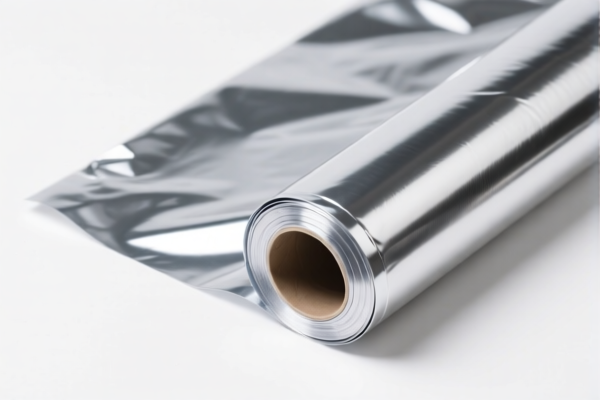

AI Analysis
Here is the professional Wiki-style guide for Color Negative Film, based strictly on the provided data.
🎞️ Color Film (Negative) & Photographic Materials
🌐 HS Code Classification & Duty Guide | 2026 Tax Regime Analysis | Strategic Customs Clearance
📌 I. Product Definition & Core Characteristics: What is "Color Negative Film"?
Color Negative Film refers to photographic film used for creating color images where the density of the developed negative is inversely proportional to the light intensity (i.e., bright areas appear dark).
In international trade, this category is highly specialized and strictly regulated based on material composition, state of exposure, and physical form.
⚠️ Critical Distinction for Customs: * Material Matters: All products listed below are explicitly defined as Non-Paper, Non-Textile (e.g., plastic/PET base). If the base is paper or textile, it falls under a completely different chapter. * State Matters: "Unexposed" (sensitive to light but not yet used) vs. "Exposed" (image captured). * Form Matters: "Rolls" (strips) vs. "Plates" (flat sheets).
📦 II. HS Code Classification Matrix (Based on Provided Data)
The following table maps the specific product descriptions from your dataset to their exact HS Codes and tax liabilities.
| HS Code | Product Description (Summary) | Physical Form | State of Film | Base Material | Total Duty Rate |
|---|---|---|---|---|---|
| 3701.91.00.60 | Color Negative Film for Color Photography | Flexible Roll/Sheet | Unexposed (Implied) | Non-Paper / Non-Textile | 38.7% |
| 3701.91.00.30 | Color Photographic Unexposed Flat Plates | Flat Plate | Unexposed | Other (Non-Paper) | 38.7% |
| 3702.31.01.00 | Color Photographic Sensitized (Unexposed) Film | Roll/Strip | Unexposed | Non-Paper / Non-Textile | 38.7% |
| 3702.54.00.60 | Sensitized (Exposed) Film Rolls | Roll | Exposed (Sensitized) | Non-Paper / Non-Textile | 38.7% |
| 3707.10.00.05 | Sensitized Emulsion for Color Negative Paper | Liquid/Coating | N/A (Emulsion) | N/A | 38.0% |
🔍 Key Insight: * Codes
3701...: Typically refer to unexposed color negative film in various forms (rolls or plates). * Codes3702...: Refer to color film that is sensitized (ready for use) or exposed (already developed). * Code3707...: Refers specifically to the chemical emulsion used to coat the paper, not the finished film itself.
💰 III. 2026 Tariff Rate Deep Dive (Detailed Breakdown)
All items in the dataset share a nearly identical, high-duty structure due to specific trade policy layers.
🎯 General Tax Structure (Applicable to 3701 & 3702 series)
| Tax Component | Rate | Legal/Policy Basis | Explanation |
|---|---|---|---|
| Basic Duty (MFN) | 3.7% | Most Favored Nation Tariff | The standard base rate for photographic film. |
| Section 301 / Added Duty | 25.0% | Trade Policy / Retaliatory Tariff | A significant "Additional Duty" often applied to specific Chinese-origin goods or specific categories. |
| Section 122 Tariff | 10.0% | Special Trade Provision | An additional surcharge applied under specific trade enforcement clauses. |
| TOTAL RATE | 38.7% | Sum of all layers | High-cost entry barrier. |
📌 Calculation Logic:
Total Tax = (3.7% Base) + (25.0% Added) + (10.0% Section 122)Result: 38.7% ad valorem on the CIF value.
🎯 Specific Exception: Chemical Emulsion (HS 3707.10.00.05)
| Tax Component | Rate | Total Rate |
|---|---|---|
| Base + Added + Section 122 | 3.0% + 25.0% + 10.0% | 38.0% |
📌 Note: The base duty for the emulsion is slightly lower (3.0%), resulting in a total of 38.0%, but the trade policy layers remain identical.
🛠️ IV. Strategic Customs Clearance & Compliance Advice
✅ 1. Documentation Requirements (The "Must-Haves")
To avoid delays or rejections, your shipment declaration must include:
* Technical Data Sheet: Explicitly stating the base material (confirm it is NOT paper or textile) and format (Roll vs. Plate).
* Material Safety Data Sheet (MSDS): Essential for chemical emulsions (3707...) due to hazardous transport regulations.
* Exposure Status Declaration: Clearly label as "Unexposed Color Negative Film" or "Exposed Color Negative Film" to match the specific HS Code (3701 vs 3702).
* Certificate of Origin: Crucial for verifying the origin to apply the correct "Section 122" or "Added Duty" rates.
✅ 2. Classification Pitfalls to Avoid
| ❌ Common Mistake | ⚠️ Risk | ✅ Correct Action |
|---|---|---|
| Misidentifying Base Material | If the film base is paper, it may fall under a different, cheaper tariff code, but misclassification leads to seizure. | Verify the base is strictly Non-Paper/Non-Textile (Plastic/Polyester). |
| Confusing "Plate" vs. "Roll" | 3701.91.00.30 is for Flat Plates; 3701.91.00.60 is for Rolls/General. Mixing them causes code errors. |
Ensure your packing list distinguishes between Flat and Flexible/Roll formats. |
| Missing "Sensitized" Status | Using the wrong code for exposed vs. unexposed film can trigger a 200% penalty. | Clearly state "Unexposed" (3701) or "Sensitized/Exposed" (3702). |
| Ignoring Section 122 | Assuming only the 3.7% base rate applies. | Expect 38.7%. Do not budget only for the base rate. |
✅ 3. Cost-Saving Strategy (Compliance)
- Pre-Arrival Ruling: Since the rates are fixed and high (38.7%), there is little room for negotiation. However, obtaining a Binding Tariff Ruling ensures your product is correctly categorized as
3701.91.00.60vs3701.91.00.30, avoiding "Additional Duty" disputes if the definition of "Other" is contested. - Supply Chain Location: If the film is not of Chinese origin (where these specific high duties often originate), check for Free Trade Agreements (FTA) that might waive the "Added Duty" or "Section 122" components.
🌍 V. Global Market Comparison (Snapshot)
| Region | Estimated Duty on Color Negative Film | Notes |
|---|---|---|
| Source Data (High Duty Scenario) | 38.7% | Applies to 3701, 3702 series. High barrier due to trade policies. |
| General MFN (Hypothetical) | ~3.7% | The "Base Rate" only. |
| Trade Policy Impact | +35% | The combination of "Added Duty" (25%) and "Section 122" (10%) doubles/triples the cost. |
📌 Conclusion: Importing Color Negative Film under the provided data is a high-cost operation. The 38.7% total duty is driven by three distinct layers: 1. 3.7% Base Tariff. 2. 25.0% "Added Duty" (Likely Section 301 equivalent). 3. 10.0% "Section 122 Tariff" (Special Enforcement).
Strategy: Ensure the product is strictly non-paper/non-textile and clearly defined by state of exposure (unexposed vs. exposed) to avoid misclassification penalties. Budget for the full 38.7% tariff.
🎯 VI. Final Checklist for Shippers
- [ ] Verify Base Material: Is it Plastic/PET? (Yes = 3701/3702; No = Different Code).
- [ ] Check Format: Is it Roll or Plate? (Matches specific sub-codes).
- [ ] Calculate Landed Cost:
CIF Value × 1.387(for3701/3702) or× 1.380(for3707). - [ ] Prepare Docs: MSDS, Technical Specs, and Origin Certificate ready for customs.
- [ ] Budget for Duty: Do not underestimate the 35% surcharge on top of the base rate.
✨ Professional Tip:
"Know your base, know your state, know your layers." * Base: Non-Paper. * State: Unexposed vs. Exposed. * Layers: 3.7% + 25% + 10% = 38.7%.
Failure to declare any of these correctly leads to severe penalties!
📣 Ready to Clear?
Ensure your HS Code is precise (3701.91.00.60 vs 3701.91.00.30) to avoid unnecessary holds at the port.
Customer Reviews
About HS Code Classification
The Harmonized System (HS) is an internationally standardized nomenclature developed by the World Customs Organization (WCO) to classify traded products. Over 200 countries use the HS system as the basis for customs tariffs, trade statistics, and import/export regulations.
Each HS code follows a hierarchical structure:
- Chapter (2 digits) — Broad category of goods (e.g., Chapter 84: Machinery and Mechanical Appliances)
- Heading (4 digits) — More specific grouping within the chapter
- Subheading (6 digits) — Internationally standardized breakdown, used by all WCO member countries
- National subdivisions (8-10 digits) — Country-specific extensions for further classification, such as US HTSUS 10-digit codes
Correct HS code classification is essential for smooth customs clearance, accurate duty payment, and compliance with trade regulations. Misclassification can lead to customs delays, overpayment of duties, or penalties.
When importing from CN to US, the applicable tariff rates may include:
- Most-Favored-Nation (MFN) rate — The standard duty rate applied to WTO members
- General rate — Applied to countries without trade agreements
- Trade remedy duties — Additional tariffs such as Section 301 (anti-dumping), Section 232 (national security), or countervailing duties
The information provided on this page is for reference purposes only. For official classification, please consult with your local customs authority or a licensed customs broker.