Color Film (UV Photography)
CN → USProduct Images
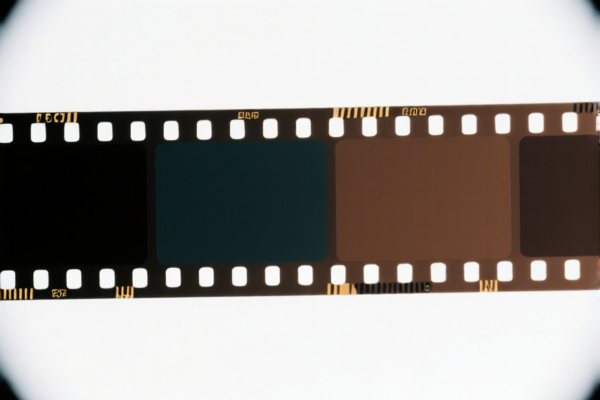
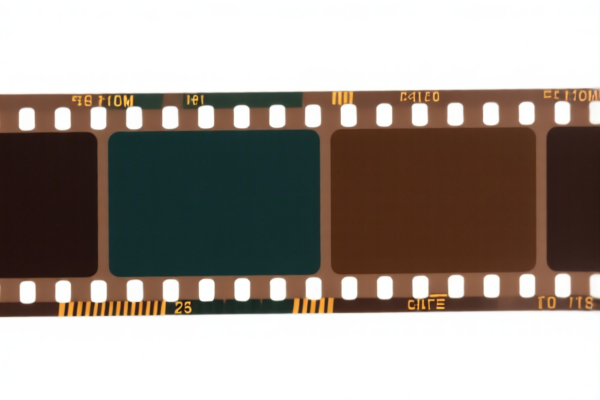
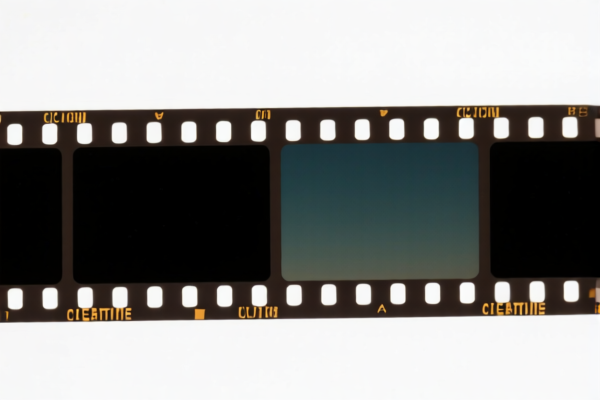

AI Analysis
🎨 Color Film for UV Photography (Specialty Imaging Media)
🌐 HS Code Reference & Customs Clearance Guide | 2026 Latest Tariff Analysis | Professional Clearance Strategy
📌 1. Product Definition and Classification: Do You Truly Understand "UV Color Film"?
Color film for UV photography is a specialized photographic or industrial imaging medium designed to capture images under ultraviolet light. Unlike standard visible-light film, it often requires specific emulsion sensitivities to UV wavelengths. In international trade, this product is ambiguous and often misclassified due to its dual nature (chemical/photochemical product vs. plastic support substrate).
Based on the 2026 Tariff Data provided, this product falls into four potential categories depending on its physical form (is it just a roll of film? is it coated?), adhesive properties, and chemical composition (pigments vs. base plastic).
⚠️ Key Distinction Point:
- If it is a finished, sensitive photographic film ready for use: It might fall under Chapter 37, but Chapter 37 is NOT listed in your data.
- However, based strictly on the provided<DATA>, this product is being classified under Chapter 39 (Plastics) or Chapter 32 (Colorants) because the system treats the film substrate or pigmented film as the primary commodity.
- Crucial Note: If the film is not chemically sensitized for photography (e.g., it's just colored plastic film for decorative UV use), it falls squarely into the Chapter 39 categories below. If it is photographic film, please verify if Chapter 37 applies, as the provided data suggests a "fallback" classification for plastic films.
📦 2. HS Code Classification Details (Based on Provided Data 2026)
The following HS Codes are derived directly from your provided dataset. They represent the "fallback" or specific classifications for plastic films and pigmented plastic materials.
| HS Code | Product Description | Applicability | Adhesive? | Chemical/Physical Form |
|---|---|---|---|---|
3919.90.50.60 |
Self-adhesive or non-self-adhesive plastic films/sheets/films (Fallback for plastic film morphology) | General plastic film, including colored UV film without specific photographic sensitization | Optional | Plastic sheet/film |
3919.90.50.40 |
Flat-shaped plastic plates, sheets, films, foils, strips and bands (Based on dye attributes) | Dyed/plastic film strips or flat sheets | No | Flat plastic sheet/film |
3921.90.40.90 |
Other plates, sheets, film, foil, and strips of plastics (Fallback for plastic film category) | Non-adhesive, non-specified plastic films | No | Plastic sheet/film |
3206.49.10.00 |
Pigments and other coloring matter: Concentrated dispersions of pigments in a plastic medium | Treated as a "colorant dispersion" rather than a film substrate | No | Chemical dispersion/Pigment |
🔍 Important Clarification:
- 3919 and 3921 treat the UV film as a plastic product. This is common if the film is not "photo-sensitive" in the legal sense (i.e., it doesn't react to light via silver halides, but is just a colored plastic).
- 3206 treats it as a chemical product (pigment dispersion), which may apply if the "film" is actually a coating or a specific chemical preparation used in UV applications.
💰 3. 2026 Latest Tariff Rate Breakdown (Including Surtaxes & Policy Add-ons)
✅ Applicable Country: United States (US)
✅ Origin: China (CN)
✅ Effective Date: 2025/2026 (Current tariff regime)
🎯 1. 3919.90.50.60 —— Plastic Films, Self-Adhesive or Not (Fallback)
| Item | Content |
|---|---|
| Base Tariff | 5.8% (Ad valorem) |
| USITC Surtax | +25.0% (Section 301 Tariff) |
| 122 Clause Tariff | +10.0% (Specific trade remedy/tariff clause) |
| Total Tariff | 40.8% |
| Tax Calculation | CIF Value × 40.8% |
| De Minimis Exemption | ❌ Not Applicable (High tariff rates usually exclude de minimis benefits for large shipments, or specifically noted as high-risk) |
| Legal Basis Path | HTSUS:3919.90.50.60 → Section 301: 25% → Clause 122: 10% |
📌 Explanation:
- This is the most common "fallback" for plastic films that don't fit other specific plastic categories.
- The 40.8% total tax rate is very high.
- Warning: If the product is truly photographic film, this classification is likely incorrect and may lead to audits. However, if it is colored plastic film for UV art/decoration, this is the correct classification under the provided data.
🎯 2. 3919.90.50.40 —— Flat Plastic Sheets/Films with Dye Attributes
| Item | Content |
|---|---|
| Base Tariff | 5.8% |
| USITC Surtax | +25.0% |
| 122 Clause Tariff | +10.0% |
| Total Tariff | 40.8% |
| Tax Calculation | CIF Value × 40.8% |
| De Minimis Exemption | ❌ Not Applicable |
| Legal Basis Path | HTSUS:3919.90.50.40 → Section 301: 25% → Clause 122: 10% |
📌 Note:
- Similar to above, but specifically identifies the dye/colored nature.
- If your UV film is transparent with UV-reactive dyes, this fits.
🎯 3. 3921.90.40.90 —— Other Plastic Sheets/Films (Non-Adhesive Fallback)
| Item | Content |
|---|---|
| Base Tariff | 4.2% |
| USITC Surtax | +25.0% |
| 122 Clause Tariff | +10.0% |
| Total Tariff | 39.2% |
| Tax Calculation | CIF Value × 39.2% |
| De Minimis Exemption | ❌ Not Applicable |
| Legal Basis Path | HTSUS:3921.90.40.90 → Section 301: 25% → Clause 122: 10% |
📌 Savings Alert:
- This code has a lower base rate (4.2%) compared to 3919 (5.8%).
- Total Tax: 39.2% (vs. 40.8%).
- Use this if the film is NOT self-adhesive and does not have specific "dye attribute" restrictions that force it into 3919.
🎯 4. 3206.49.10.00 —— Concentrated Pigment Dispersions
| Item | Content |
|---|---|
| Base Tariff | 5.9% |
| USITC Surtax | +25.0% |
| 122 Clause Tariff | +10.0% |
| Total Tariff | 40.9% |
| Tax Calculation | CIF Value × 40.9% |
| De Minimis Exemption | ❌ Not Applicable |
| Legal Basis Path | HTSUS:3206.49.10.00 → Section 301: 25% → Clause 122: 10% |
📌 Special Case:
- This classification treats the product as a chemical pigment rather than a physical film.
- Only use if the product is sold as a liquid/gel dispersion or a coating material for UV applications, not as a pre-formed plastic sheet/film.
🛠️ 4. Customs Clearance Practical Advice (实战避坑指南)
✅ 1. Required Documentation Checklist (Must-Haves)
| Document | Required | Description |
|---|---|---|
| ✅ Product Spec Sheet | ✔️ | Must clearly state: "UV Photography Film" or "Colored Plastic Film", thickness, width, material composition (e.g., PET, PVC). |
| ✅ Material Composition Statement | ✔️ | Declare if it contains silver halides (photographic) or just plastic/dyes. If photographic, argue for Chapter 37 if possible, but if data forces Chapter 39, emphasize "Plastic Support". |
| ✅ HS Code Justification Letter | ✔️ | Explain why it is NOT Chapter 37 (if applicable). E.g., "Not chemically sensitized for latent image formation; serves as a color filter/plastic medium." |
| ✅ Commercial Invoice | ✔️ | Clearly list "Color Film for UV Photography" and HS Code. |
| ✅ Packing List | ✔️ | Include dimensions and weight. |
✅ 2. Classification Strategy (Critical Tips)
🔥 “Plastic Base, Pigment Overlay, Classify as 39, Not 32!”
| Scenario | Recommended HS Code | Reason |
|---|---|---|
| Standard Colored Plastic Roll (No photo-sensitivity) | 3921.90.40.90 |
Lowest base rate (4.2%). Best for clear/colored plastic films. |
| Self-Adhesive UV Film (For decals/windows) | 3919.90.50.60 |
Specifically covers self-adhesive films. |
| Flat Dyed Sheets (Not rolls) | 3919.90.50.40 |
Based on "flat shape" and "dye attributes". |
| Liquid Pigment for UV Coating | 3206.49.10.00 |
Only if it is a dispersion/liquid, not a film. |
✅ 3. Special Situations & Risk Mitigation
| Situation | Advice |
|---|---|
| Is it Photographic Film? | If it contains silver halides, it should be in Chapter 37 (e.g., 3702/3707). However, since the provided data only lists Chapter 39/32, you must prove it is NOT photographic film. Describe it as "UV-reactive plastic film for artistic/filter use." |
| De Minimis (Section 321) | High Risk. With taxes >10%, many carriers or customs systems may flag these shipments for full examination. Do not rely on de minimis exemptions for high-value batches. |
| 122 Clause Tariff | This 10% add-on is specific. Ensure your customs broker is aware of this clause to avoid underpayment penalties. |
| Valuation | Ensure the declared value includes all costs (CIF). With a 40%+ tax, even a $100 valuation error results in a $40 tax discrepancy. |
🌍 5. Global Market Comparison (2026)
| Country/Region | Recommended HS Code | Tariff Rate | Notes |
|---|---|---|---|
| 🇺🇸 USA | 3921.90.40.90 |
39.2% | Best rate among provided options. High surtaxes apply. |
| 🇨🇳 China | 3921.90.40.90 |
~4-13% | Lower import duties. No Section 301 surtaxes. |
| 🇪🇺 EU | 3920.62.00 (Example) |
~6.5% | EU tariff structure differs. No 25%+ surtaxes. |
| 🇨🇦 Canada | 3921.90.90 |
~5-15% | Check for CUSMA benefits if originating from US/Mexico. |
📌 Conclusion:
- The US market is the most expensive due to the combination of Base Tariff + 301 Surtax (25%) + Clause 122 (10%).
- Strategy: Consider sourcing from non-China origins if available to avoid the 25%+10% surtaxes.
📌 6. Common Errors & Pitfalls (Blood and Tears Lessons)
❌ Error 1: Classifying Photographic Film under Chapter 39
👉 Consequence: Customs may reject the classification and reassign to Chapter 37, potentially altering duty rates or triggering anti-dumping duties.
✅ Fix: If it is photographic, use Chapter 37. If the data restricts you to Chapter 39, prove it is non-photographic (e.g., "color filter film").
❌ Error 2: Ignoring the 122 Clause Tariff
👉 Consequence: Underpayment of 10% on top of the 25% surtax. Leads to penalties and interest.
✅ Fix: Always include the 122 clause in your tariff calculation.
❌ Error 3: Using 3919 for Non-Adhesive Films
👉 Consequence: Higher base rate (5.8% vs 4.2% for 3921). Unnecessary cost.
✅ Fix: If not adhesive, use 3921.90.40.90 for the lowest total tax (39.2%).
❌ Error 4: Mislabeling as "Chemical Dispersion" (3206)
👉 Consequence: If shipped as solid film, this is a misdeclaration.
✅ Fix: Only use 3206 if the product is a liquid/gel.
🎯 7. Conclusion: Precise Classification Saves Money!
🎯 Remember the Mantra:
🔹 "Non-Adhesive? Use 3921 (39.2%). Adhesive? Use 3919 (40.8%). Liquid? Use 3206 (40.9%)."
🔹 "Not Photographic? Stay in Chapter 39. Photographic? Go to Chapter 37!"
📌 Pro Tip:
If your "UV Color Film" is truly photographic (silver halide-based), do not force it into the Chapter 39 codes above. Seek a Chapter 37 code (e.g., 3702.39 or 3707.10) to avoid potential misclassification penalties. The provided data suggests a plastic film fallback, so ensure your product description aligns with plastic/dye rather than photochemical properties when using these codes.
📣 Immediate Action:
📞 Contact your customs broker with a physical sample and spec sheet.
🚀 Request an Advance Ruling if importing large volumes to secure the 39.2% rate over 40.8%.
✨ Professional clearance starts with precise classification!
💼 Every percentage point of tariff is profit lost!
Customer Reviews
About HS Code Classification
The Harmonized System (HS) is an internationally standardized nomenclature developed by the World Customs Organization (WCO) to classify traded products. Over 200 countries use the HS system as the basis for customs tariffs, trade statistics, and import/export regulations.
Each HS code follows a hierarchical structure:
- Chapter (2 digits) — Broad category of goods (e.g., Chapter 84: Machinery and Mechanical Appliances)
- Heading (4 digits) — More specific grouping within the chapter
- Subheading (6 digits) — Internationally standardized breakdown, used by all WCO member countries
- National subdivisions (8-10 digits) — Country-specific extensions for further classification, such as US HTSUS 10-digit codes
Correct HS code classification is essential for smooth customs clearance, accurate duty payment, and compliance with trade regulations. Misclassification can lead to customs delays, overpayment of duties, or penalties.
When importing from CN to US, the applicable tariff rates may include:
- Most-Favored-Nation (MFN) rate — The standard duty rate applied to WTO members
- General rate — Applied to countries without trade agreements
- Trade remedy duties — Additional tariffs such as Section 301 (anti-dumping), Section 232 (national security), or countervailing duties
The information provided on this page is for reference purposes only. For official classification, please consult with your local customs authority or a licensed customs broker.