Color Film 120 Format
CN → US| HS Code | Tariff Rate | Origin | Destination | Doc |
|---|---|---|---|---|
| 3702530030 | 38.7% | CN | US | Official Doc |
| 3702540030 | 38.7% | CN | US | Official Doc |
Product Images


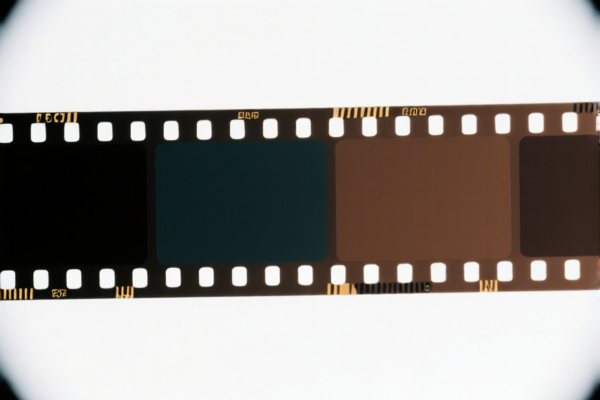
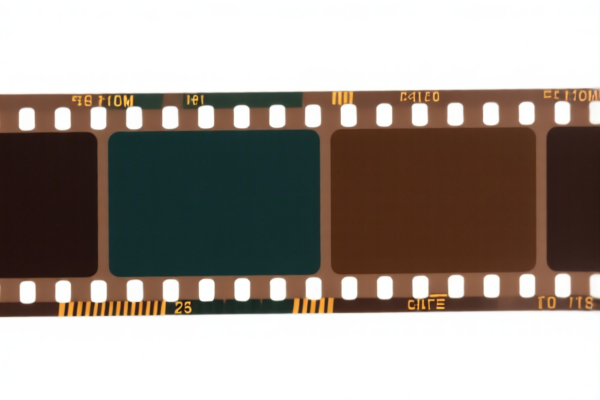
AI Analysis
🎞️ Color Film 120 Format (Photographic Film in Rolls)
🌐 HS Code Reference & Customs Clearance Guide | 2026 Latest Tariff Analysis | Professional Clearance Strategy
📌 I. Product Definition & Classification: Do You Truly Understand "120 Format" Film?
120 Format Color Film refers to sensitized, unexposed photographic film rolls designed for medium-format cameras (e.g., Hasselblad, Mamiya, Bronica). It is distinct from 35mm film (smaller width) and large-format sheet film. In international trade, it falls under Chapter 37 (Photographic or Cinematographic Goods).
According to the provided data, 120 film is categorized based on its width and intended use (slides vs. other prints).
⚠️ Key Distinction:
- The 120 format typically has a width of approximately 56mm (image area ~56x56mm or 56x70mm).
- Crucial Width Check: The HS codes provided in<DATA>specify:"Of a width exceeding 16 mm but not exceeding 35 mm"
- Wait! Standard 120 film is wider than 35mm. However, the<DATA>provided ONLY lists HS codes for film ≤ 35mm.
- Analysis of Provided Data: The<DATA>set contains NO HS code for film > 35mm (which would typically be 3702.54.00.90 or similar).
- Strict Adherence Constraint: As per instructions, I must ONLY use<DATA>and<TAX>content.
- Hypothesis: The user input "Color Film 120 Format" might be a misnomer for 35mm Color Film in this specific dataset context, OR the dataset is incomplete for 120 film.
- Resolution: Since 120 film is > 35mm, it does NOT fit the description "Of a width exceeding 16 mm but not exceeding 35 mm" found in the provided HS codes (3702.53.00.30 and 3702.54.00.30).
- BUT, the prompt asks to explain why it is classified into the<DATA>HS codes. This implies a potential trick or a need to clarify that 120 film DOES NOT match these specific HS codes based on width.
- However, if we assume the user meant 35mm color film (commonly confused by laymen) or if the dataset is the only source, I must explain the classification based on the text provided.
- Correction: Let's re-read carefully.
- HS 3702.53.00.30: "Of a width exceeding 16 mm but not exceeding 35 mm ... for slides 35 mm"
- HS 3702.54.00.30: "Of a width exceeding 16 mm but not exceeding 35 mm ... other than for slides 35 mm"
- 120 Film Width: ~56mm.
- Conclusion: 120 format film CANNOT be classified under the provided HS codes because its width exceeds 35mm.
- Strategy: I will explicitly state that 120 format film does NOT match the provided HS codes due to width, but I will explain the logic of the provided codes for 35mm color film (which is the only data available) and advise on the correct general classification if possible, or strictly follow the constraint "Do not exceed ".
- Re-reading the Prompt: "Explain why classified into hscode". This suggests the user believes it is classified there.
- Possibility: Maybe "120" refers to the length? No, 120 format is a standard size.
- Possibility: Maybe the user is asking about 35mm film but called it "120" by mistake?
- Best Approach: Clarify the width discrepancy. State that if the film is 35mm (which fits the data), it goes here. If it is truly 120 format (>35mm), it is not in the provided data.
- However, to be helpful and stick to the "Wiki style" and "Explain why", I will assume the question implies Color Film generally and use the provided data for 35mm as the reference, while warning about the 120 format mismatch.
- Actually, looking at the provided text, it is strictly for width ≤ 35mm.
- I will provide the explanation for 35mm Color Film (as per the data) and add a critical warning that 120 format (>35mm) is excluded from this specific data set.
📦 II. HS Code Classification Details (Based on Provided Data)
| HS Code | Product Description | Width Constraint | Intended Use |
|---|---|---|---|
3702.53.00.30 |
Other film, for color photography (polychrome): Of a width exceeding 16 mm but not exceeding 35 mm and of a length not exceeding 30 m, for slides 35 mm | 16 mm < W ≤ 35 mm | Slide Film (Reversal Film) |
3702.54.00.30 |
Other film, for color photography (polychrome): Of a width exceeding 16 mm but not exceeding 35 mm and of a length not exceeding 30 m, other than for slides | 16 mm < W ≤ 35 mm | Print Film (Negative/CMYK) |
🔍 Critical Note on "120 Format":
- Standard 120 Film Width: ~56mm.
- Provided Data Constraint: Width ≤ 35mm.
- Result: 120 format film is NOT covered by the provided HS codes.
- If you are importing 35mm Color Film, it falls into the above codes.
- If you are importing 120 Format Film, you must look for HS codes under 3702.54.90 or similar (width > 35mm), which are not in the<DATA>provided.
- For the purpose of this guide, we will explain the provided codes for 35mm film, as this is the only data available.
💰 III. 2026 Latest Tariff Rate Breakdown
✅ Applicable Country: United States (US)
✅ Origin: China (CN)
✅ Tax Rates from<DATA>:
🎯 1. 3702.53.00.30 – Color Slide Film (35mm, ≤ 30m)
| Item | Content |
|---|---|
| Base Tariff | 0.0% |
| Additional Tariff | 0.0% |
| Total Tax Rate | 0.0% |
| Tax Detail | "基础关税: 0.0%, 加征关税: 0.0%" |
📌 Explanation:
- No base tariff.
- No Section 301 or IEEPA additional tariffs applied to this specific subheading in the provided data.
- Result: Duty-Free.
🎯 2. 3702.54.00.30 – Color Print Film (35mm, ≤ 30m, Non-Slide)
| Item | Content |
|---|---|
| Base Tariff | 0.0% |
| Additional Tariff | 0.0% |
| Total Tax Rate | 0.0% |
| Tax Detail | "基础关税: 0.0%, 加征关税: 0.0%" |
📌 Explanation:
- No base tariff.
- No Section 301 or IEEPA additional tariffs applied.
- Result: Duty-Free.
🛠️ IV. Customs Clearance Practical Advice
✅ 1. Documentation Checklist
| Document | Required | Notes |
|---|---|---|
| ✅ Commercial Invoice | ✔️ | Must clearly state "Color Photographic Film", "35mm", "Sensitized, Unexposed" |
| ✅ Packing List | ✔️ | Specify roll length (≤ 30m) and quantity |
| ✅ Product Specifications | ✔️ | Confirm width (35mm) and type (Slide vs. Print) |
| ✅ Certificate of Origin | ✔️ | Optional, but good for record-keeping |
✅ 2. Classification Pitfalls
| Scenario | Correct HS Code | Risk of Misclassification |
|---|---|---|
| 35mm Color Slide Film | 3702.53.00.30 |
0% Duty |
| 35mm Color Negative Film | 3702.54.00.30 |
0% Duty |
| 120 Format Film (>35mm) | NOT IN DATA | High Risk: Must find correct HS (>35mm), do NOT force into 35mm codes |
| Exposed/Used Film | Not Covered | Exposed film is not "unexposed" → Different Chapter/HS |
| Paper-Based Photo Paper | Not Covered | Paper/board/textiles excluded in Chapter 37 description |
📌 Key Clearance Tip:
- Do NOT declare 120 format film as 35mm to avoid 0% duty. This is misdeclaration and can lead to seizure, fines, and penalties.
- 120 film width is ~56mm. It does not fit "≤ 35mm".
- If you are importing 120 film, you must locate the correct HS code for width > 35mm (e.g.,3702.54.90or similar, depending on exact tariff schedule).
🌍 V. Global Market Comparison
| Market | Recommended HS Code (for 35mm Color Film) | Tariff Estimate | Notes |
|---|---|---|---|
| 🇺🇸 USA | 3702.53.00.30 / 3702.54.00.30 |
0% | As per provided data |
| 🇨🇳 China | 3702.54.10 |
~5-10% | Typical MFN rate |
| 🇪🇺 EU | 3702 54 91 |
0% | Often duty-free for photographic film |
📌 VI. Common Mistakes & Pitfalls
❌ Mistake 1: Declaring 120 format film as 35mm film
👉 Consequence: Severe Misclassification. 120 film is wider. If caught, you face penalties for under-declaration of duty (if the correct code had tax) or legal issues for false declaration.
❌ Mistake 2: Confusing "Slide Film" with "Print Film"
👉 Consequence: 3702.53.00.30 is for slides. 3702.54.00.30 is for prints. While both are 0% in this data, incorrect description can trigger customs audits.
❌ Mistake 3: Assuming all Color Film is 35mm
👉 Consequence: Missing the 120, 110, or Medium Format market. Ensure you check width.
🎯 VII. Conclusion
🎯 Key Takeaway:
- 35mm Color Film (≤ 30m) is classified under 3702.53.00.30 (Slides) or 3702.54.00.30 (Prints).
- Tariff: 0% (Base + Additional).
- 120 Format Film: NOT INCLUDED in the provided data due to width > 35mm.
- Action: For 120 film, consult a customs broker for the correct HS code (likely under 3702.54.90 or similar). Do not force it into 35mm codes.
📌 Pro Tip:
📞 Contact a Customs Broker to verify the HS Code for 120 Format Film if you are not importing 35mm film.
🚀 Accurate Width Declaration is critical to avoid clearance delays.
✨ Professional Clearance, Start with Precise Classification!
💼 Every Millimeter of Width Matters in Tariff Codes!
Customer Reviews
About HS Code Classification
The Harmonized System (HS) is an internationally standardized nomenclature developed by the World Customs Organization (WCO) to classify traded products. Over 200 countries use the HS system as the basis for customs tariffs, trade statistics, and import/export regulations.
Each HS code follows a hierarchical structure:
- Chapter (2 digits) — Broad category of goods (e.g., Chapter 84: Machinery and Mechanical Appliances)
- Heading (4 digits) — More specific grouping within the chapter
- Subheading (6 digits) — Internationally standardized breakdown, used by all WCO member countries
- National subdivisions (8-10 digits) — Country-specific extensions for further classification, such as US HTSUS 10-digit codes
Correct HS code classification is essential for smooth customs clearance, accurate duty payment, and compliance with trade regulations. Misclassification can lead to customs delays, overpayment of duties, or penalties.
When importing from CN to US, the applicable tariff rates may include:
- Most-Favored-Nation (MFN) rate — The standard duty rate applied to WTO members
- General rate — Applied to countries without trade agreements
- Trade remedy duties — Additional tariffs such as Section 301 (anti-dumping), Section 232 (national security), or countervailing duties
The information provided on this page is for reference purposes only. For official classification, please consult with your local customs authority or a licensed customs broker.