Color Film 36 Exposures
CN → US| HS Code | Tariff Rate | Origin | Destination | Doc |
|---|---|---|---|---|
| 3706106090 | 35.0% | CN | US | Official Doc |
| 3701910030 | 38.7% | CN | US | Official Doc |
| 3701910060 | 38.7% | CN | US | Official Doc |
| 3702530030 | 38.7% | CN | US | Official Doc |
| 3706106060 | 35.0% | CN | US | Official Doc |
Product Images
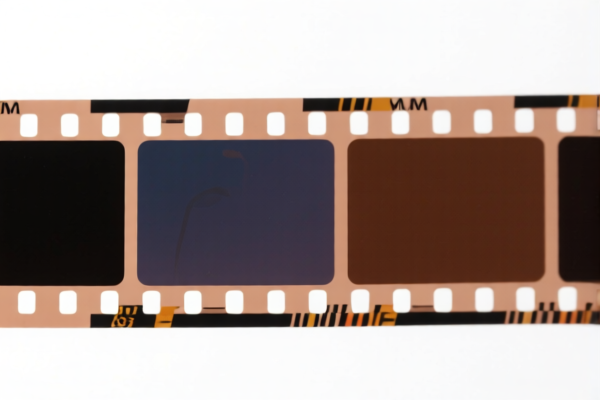
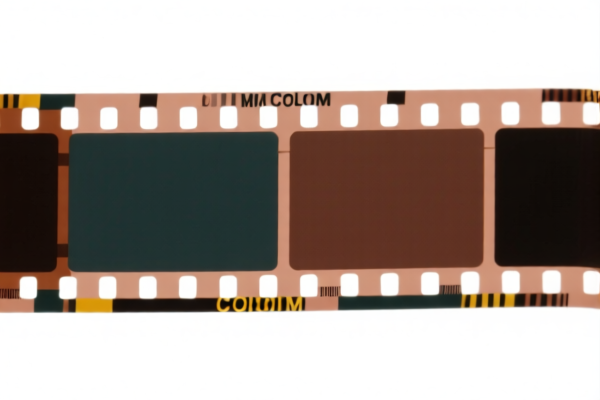


AI Analysis
🎞️ Color Film 36 Exposures (35mm Color Negative & Positive Film)
🌐 HS Code Reference & Customs Clearance Guide | 2026 Latest Tariff Analysis | Professional Entry Strategy
📌 I. Product Definition & Classification: Do You Really Know "Color Film"?
Color Film (36 Exposures) refers to photographic film containing color-sensitive emulsions, typically in 35mm format, ready for immediate use in still cameras. In international trade, these are broadly categorized into two distinct types based on their chemical structure and post-development appearance:
- Color Negative Film (C-41 Process): The most common type for consumer photography. The negative is developed to produce color negatives, which are then printed or scanned to create positive images.
- Color Positive Film (Slide/Ektachrome Process): Also known as "slide film." This film produces a direct positive image suitable for projection.
⚠️ Key Distinction Point:
- If the film is Color Negative (standard consumer film like Kodak Gold, Fujifilm Superia) → It usually falls under Heading 3702 (Rolls of Unexposed Photographic Film).
- If the film is Color Positive (Slide film like Kodak Ektachrome, Fujifilm Velvia) → It falls under Heading 3706 (Photographic Film).
📦 II. HS Code Classification Details (2026 Latest Tariff Authority Comparison)
Based on the provided data, here are the precise HS Codes and their tax implications for "Color Film 36 Exposures":
| HS Code | Product Description | Application Scenario | Tax Category |
|---|---|---|---|
3702.53.00.30 |
35mm Color Sensitized Unexposed Film, meeting width and color type requirements | Standard consumer color negative film (C-41) | 38.7% |
3701.91.00.30 |
Color-sensitive unexposed film for photographic use, based on other residual categories | Generic color film not specifically defined elsewhere | 38.7% |
3701.91.00.60 |
Non-paper, non-textile sensitized film for color photography, classified as other color photographic products | Specialty color films, bulk film, or non-standard formats | 38.7% |
3706.10.60.60 |
Explicitly includes 35mm width, color film morphology, and positive film attributes | Standard color positive/slide film (e.g., Ektachrome) | 35.0% |
3706.10.60.90 |
35mm Color Positive Film, meeting the width of 35mm or more and the positive film category | Premium or professional color positive/slide film | 35.0% |
🔍 Critical Note:
- 35mm Width: All codes above assume standard 35mm roll film (common for "36 exposures").
- Positive vs. Negative: If you are importing Color Negative film, use the 3702 or 3701 codes (38.7% tax). If you are importing Color Positive/Slide film, use the 3706 codes (35.0% tax).
- Tax Difference: Slide/Positive film has a 3.7% lower total tax rate than negative film.
💰 III. 2026 Latest Tariff Rate Details (Including Surtaxes & Policy Add-ons)
✅ Applicable Country: United States (US)
✅ Country of Origin: China (CN)
✅ Effective Date: From November 10, 2025 (including subsequent imports)
🎯 1. 3702.53.00.30 / 3701.91.00.30 / 3701.91.00.60 —— Color Negative Film (35mm/Other)
| Item | Content |
|---|---|
| Base Tariff | 3.7% (ad valorem) for most; 0% for specific residual categories |
| Section 301 Surtax | +25% (From USITC Footnote regarding China-origin goods) |
| Section 122/IEEPA Surtax | +10% (Targeted surtax on China/HK products, effective Nov 10, 2025) |
| Total Tax Rate | 38.7% |
| Tax Calculation | CIF Value × 38.7% |
| De Minimis Eligibility | ❌ NO (Deny de minimis) |
| Legal Basis Path | USITC:3702.53.00.30 → Section 301: 25% → IEEPA/122: 10% |
📌 Explanation:
- Base Rate: Varies between 0% and 3.7% depending on the specific sub-heading (e.g., 3701.91 has a 3.7% base, while 3706.10.60.90 has a 0% base).
- Section 301 (+25%): Standard trade war tariff for Chinese-origin goods.
- Section 122/IEEPA (+10%): Additional penalty surtax for China-origin goods.
- Total: 38.7% is the standard high tariff for color negative film.
🎯 2. 3706.10.60.60 / 3706.10.60.90 —— Color Positive/Slide Film (35mm)
| Item | Content |
|---|---|
| Base Tariff | 0.0% (ad valorem) |
| Section 301 Surtax | +25% |
| Section 122/IEEPA Surtax | +10% |
| Total Tax Rate | 35.0% |
| Tax Calculation | CIF Value × 35.0% |
| De Minimis Eligibility | ❌ NO (Deny de minimis) |
| Legal Basis Path | USITC:3706.10.60.60 → Section 301: 25% → IEEPA/122: 10% |
📌 Explanation:
- Base Rate: 0% for positive film under HS 3706.10.60.
- Surtaxes: Still subject to the full +25% (Section 301) and +10% (Section 122/IEEPA) penalties.
- Total: 35.0%.
- Advantage: 3.7% cheaper than color negative film due to the 0% base rate.
🛠️ IV. Customs Clearance Practical Advice (实战避坑指南)
✅ 1. Required Documentation Checklist (All Mandatory)
| Document | Must Provide | Notes |
|---|---|---|
| ✅ Product Specification Sheet | ✔️ | Must specify: 35mm, 36 exposures, Color Negative (C-41) or Color Positive (E-6), ISO speed. |
| ✅ Chemical Composition Data | ✔️ | To prove it is "sensitized photographic film" (Heading 3701/3702/3706) and not textile or paper. |
| ✅ Product Photos (Packaging) | ✔️ | Clear view of label: "35mm Color Film", "36 Exposures", "For Photographic Use". |
| ✅ Commercial Invoice | ✔️ | Must clearly state "Unexposed Photographic Film" and "Country of Origin: China". |
| ✅ Packing List | ✔️ | Number of rolls, gross/net weight. Avoid mixing with cameras or lenses in the same line item if possible. |
| ✅ Third-Party Test Report | ✔️ | Safety data sheet (SDS) if required for chemical transport; FCC/CE not applicable but good for compliance proof. |
✅ 2. Declaration Tips (Key Mantras)
🔥 "Specify the Process, Declare the Format, Avoid Ambiguity!"
| Scenario | Correct Declaration | Wrong Action |
|---|---|---|
| Color Negative Film (e.g., Kodak Gold) | 3702.53.00.30 (35mm Color Negative) |
Misdeclare as "Slide Film" → Audit risk |
| Color Positive/Slide Film (e.g., Velvia) | 3706.10.60.90 (35mm Color Positive) |
Misdeclare as "Negative" → Higher tax (38.7% vs 35.0%) |
| Bulk Film/Other Formats | 3701.91.00.30 / 3701.91.00.60 |
Force fit into 35mm codes → Rejection |
| Mixed Shipments (Film + Camera) | Split the Declaration | Combine into one line → Complex classification, higher risk |
✅ 3. Special Case Handling
| Situation | Handling Advice |
|---|---|
| OEM Branded Film | Provide OEM contract and brand authorization to prove origin and value. |
| Sample Shipments | De Minimis does NOT apply. All values, no matter how small, are subject to 35-38.7% tax. |
| Expired Film | Still classified as HS 3702/3706. Tax applies. Ensure it is clearly labeled "Expired" if for research. |
| Professional Slide Film | Often has lower base tax (0%). Ensure correct HS Code (3706.10.60.90) to save 3.7%. |
🌍 V. Global Market Customs Comparison (2026 Latest)
| Country/Region | Recommended HS Code | Tariff (China Origin) | Certification Requirements | Notes |
|---|---|---|---|---|
| 🇺🇸 United States | 3702.53.00.30 (Neg) / 3706.10.60.90 (Pos) |
38.7% / 35.0% | None specific, but must comply with chemical transport rules | High Surtax (25%+10%) |
| 🇨🇳 China | 3702.53.00.30 / 3706.10.60.90 |
~3% - 6% | CCC (not usually for film) | Lower base tax, no US-style surtaxes |
| 🇪🇺 European Union | 3702.53.00 / 3706.10.90 |
0% - 3% | REACH (Chemical Registration) | Low base tax, but REACH compliance is strict |
| 🇬🇧 United Kingdom | 3702.53.00 / 3706.10.90 |
0% - 3% | UK REACH | Post-Brexit rules apply |
| 🇦🇺 Australia | 3702.53.00 / 3706.10.90 |
0% - 5% | NICNAS / AICIS | Low tariff, but chemical import rules apply |
📌 Conclusion:
- The United States is the only market applying these heavy additional tariffs (25% + 10%).
- Color Positive (Slide) Film is 3.7% cheaper to import into the US than Color Negative Film due to a 0% base tariff.
- China-origin film faces significant barriers in the US market. Consider transshipment from Vietnam/Mexico (with substantial transformation) to mitigate tariffs, but ensure compliance with USMCA and Rules of Origin.
📌 VI. Common Errors & Pitfalls Guide (Blood-Teaching Lessons)
❌ Mistake 1: Declaring "35mm Film" generically without specifying Negative or Positive.
👉 Consequence: Customs may choose the highest duty code (38.7%) or request manual examination → Delays.
❌ Mistake 2: Assuming "De Minimis" ($800) applies to small shipments.
👉 Consequence: ALL shipments from China are subject to tariffs, even 1 roll worth $15. Tax will be charged.
❌ Mistake 3: Confusing "Film" with "Digital Memory Cards" or "Printed Photos".
👉 Consequence: Wrong HS Code (e.g., 8523 or 4911) → Penalty + Back Taxes.
❌ Mistake 4: Ignoring the Section 122/IEEPA 10% Surcharge.
👉 Consequence: Under-declaring tax by 10% → Seizure + Fine.
✅ Correct Practice:
"35mm Color Negative Photographic Film, 36 Exposures, ISO 400, C-41 Process, For Consumer Use, Origin: China"
🎯 VII. Conclusion: Professional Declaration Saves Money!
🎯 Remember the Mantra:
🔹 "Negative is 38.7%, Positive is 35.0%!"
🔹 "No De Minimis for China! Pay the Tax from Day One!"
🔹 "Specify C-41 vs. E-6 to Avoid Customs Audit!"
📌 Pro Tip:
If you are importing high-volume professional slide film (e.g., for labs or professional photographers), ensure you use HS Code 3706.10.60.90 to benefit from the 0% base rate. The 3.7% savings can be significant on large orders.
📣 Immediate Action:
📞 Contact a professional customs broker + Provide Product Data Sheet + Verify HS Code Pre-Ruling if importing >100 rolls.
🚀 Ensure smooth clearance, avoid audits, and optimize your cost structure!
✨ Professional Clearance Starts with Accurate Classification!
💼 Every Percent Counts in Your Margin!
Customer Reviews
About HS Code Classification
The Harmonized System (HS) is an internationally standardized nomenclature developed by the World Customs Organization (WCO) to classify traded products. Over 200 countries use the HS system as the basis for customs tariffs, trade statistics, and import/export regulations.
Each HS code follows a hierarchical structure:
- Chapter (2 digits) — Broad category of goods (e.g., Chapter 84: Machinery and Mechanical Appliances)
- Heading (4 digits) — More specific grouping within the chapter
- Subheading (6 digits) — Internationally standardized breakdown, used by all WCO member countries
- National subdivisions (8-10 digits) — Country-specific extensions for further classification, such as US HTSUS 10-digit codes
Correct HS code classification is essential for smooth customs clearance, accurate duty payment, and compliance with trade regulations. Misclassification can lead to customs delays, overpayment of duties, or penalties.
When importing from CN to US, the applicable tariff rates may include:
- Most-Favored-Nation (MFN) rate — The standard duty rate applied to WTO members
- General rate — Applied to countries without trade agreements
- Trade remedy duties — Additional tariffs such as Section 301 (anti-dumping), Section 232 (national security), or countervailing duties
The information provided on this page is for reference purposes only. For official classification, please consult with your local customs authority or a licensed customs broker.