Color Film Entry Level
CN → US| HS Code | Tariff Rate | Origin | Destination | Doc |
|---|---|---|---|---|
| 3704000000 | 35.0% | CN | US | Official Doc |
| 3702550060 | 35.0% | CN | US | Official Doc |
| 3702540060 | 38.7% | CN | US | Official Doc |
| 3705000000 | 35.0% | CN | US | Official Doc |
| 3707100090 | 38.0% | CN | US | Official Doc |
Product Images
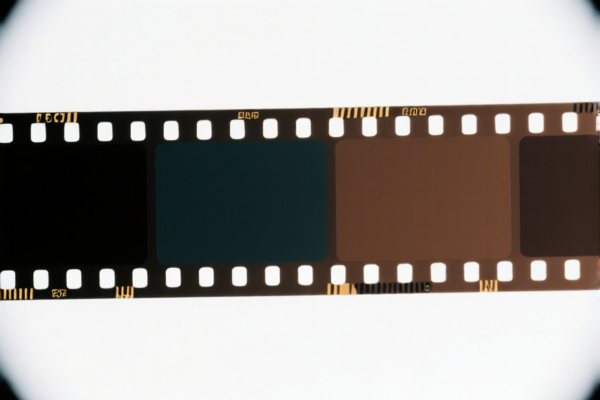
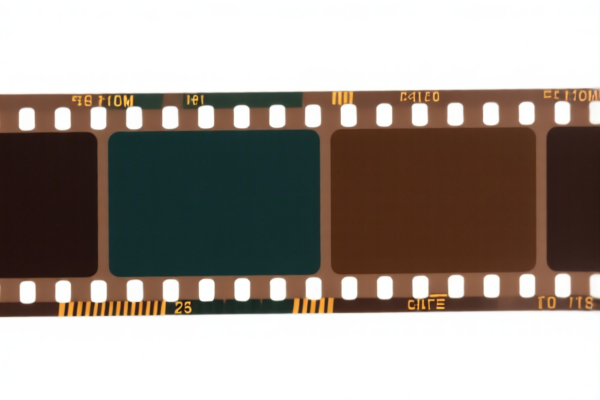
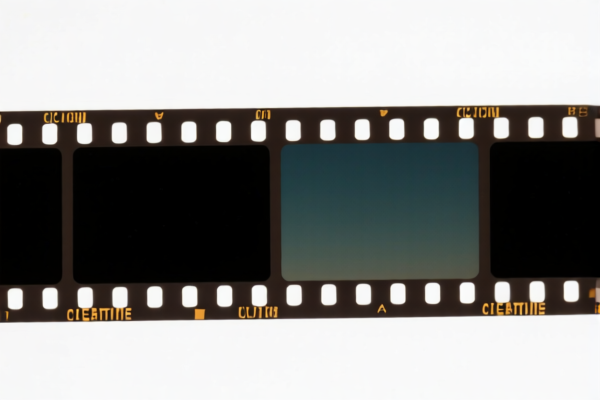

AI Analysis
🎞️ Color Film / Negative Film: Entry-Level Classification Guide
🌐 HS Code Reference & Customs Clearance Guide | 2026 Latest Tariff Analysis | Professional Compliance Strategy
📌 Part 1: Product Definition & Classification — Do You Really Know What "Color Film" Is?
Color Film (commonly referred to as "color negatives" or "slide film") is a light-sensitive photographic medium used to capture color images. In international trade, it is critical to distinguish between the state of the material (exposed vs. unexposed) and its format, as this determines the correct HS Code and applicable tariff rates.
Unexposed Color Film (Negatives): Raw photographic rolls/film that have not yet been exposed to light. Classified under Chapter 37 (Photographic Goods).
Exposed/Developed Color Film: Film that has been processed into a visible image (negative or positive). Also classified under Chapter 37, but under different subheadings.
⚠️ Key Distinction Point:
- If the film is unexposed and raw (standard retail purchase from a camera shop) → Typically falls under 3702.55 or 3704.00 depending on specific characteristics.
- If the film is exposed but not developed (sent to a lab) → May still be considered under 3702 or 3704 depending on interpretation, but often treated as processed if images are visible.
- If the film is fully processed and printed (actual negatives/slides) → Falls under 3705.00 (Photographic plates and films, exposed and developed).
📦 Part 2: HS Code Classification Details (2026 Latest Tariff Authority Cross-Reference)
Based on the provided data, here are the four potential HS Codes for "Color Film/Entry Level" products, along with their logic and tax implications for US Imports from China.
| HS Code | Product Description | Logic & Justification | Total Tax Rate | Tax Breakdown |
|---|---|---|---|---|
3704.00.00.00 |
Unexposed Photographic Plates & Film, Color | Logic: Classified as "Color plates/films." The summary states it fits the "film" key element. The "color" attribute does not conflict with being unexposed. | 35.0% | Base: 0.0% Section 301: 25.0% Section 122: 10.0% |
3702.55.00.60 |
Other Color Photographic Film, Unexposed, Other | Logic: "Color" matches color photographic rolls. Inferred as "light-sensitive material" (unexposed). Falls under "Other" category for color films. | 35.0% | Base: 0.0% Section 301: 25.0% Section 122: 10.0% |
3702.54.00.60 |
Color Photographic Film, Unexposed, Other | Logic: Color and film form match color photographic rolls. Inferred as non-paper, non-textile light-sensitive material. Matches other color film materials. | 38.7% | Base: 3.7% Section 301: 25.0% Section 122: 10.0% |
3705.00.00.00 |
Photographic Plates & Films, Exposed & Developed, Other | Logic: Film is in photographic plate/film form. Color attribute is consistent with "exposed and developed" usage logic. | 35.0% | Base: 0.0% Section 301: 25.0% Section 122: 10.0% |
3707.10.00.90 |
Chemical Preparations for Photographic Use | Logic: Inferred as 35mm film for photographic use, classified under "Chemical Preparations" (specifically sensitizer emulsions). Material inferred as light-sensitive. | 38.0% | Base: 3.0% Section 301: 25.0% Section 122: 10.0% |
🔍 Critical Note:
- Most common entry-level color film (unexposed rolls sold in stores) typically falls under 3702.55.00.60 or 3704.00.00.00 with a 35% total tariff.
- If the product is exposed/processed (actual negatives), 3705.00.00.00 applies, also at 35%.
- Avoid 3702.54.00.60 if possible, as it carries a higher base rate (3.7%) leading to 38.7% total.
- 3707.10.00.90 is generally for chemical preparations, not the film itself, unless the product is a specific chemical emulsion, not the physical film stock.
💰 Part 3: 2026 Latest Tariff Rate Details (Including Surcharges & Policy Add-ons)
✅ Applicable Country: United States (US)
✅ Origin: China (CN)
✅ Effective Date: From November 10, 2025 (including subsequent imports)
🎯 1. 3704.00.00.00 & 3702.55.00.60 & 3705.00.00.00 —— Color Film / Negative (Most Common)
| Item | Content |
|---|---|
| Base Tariff | 0% (ad valorem) for 3704 & 3702.55; 0% for 3705 |
| USITC Surcharge (Section 301) | +25% |
| IEEPA Surcharge (Section 122) | +10% (Specific to China/HK products, effective from Nov 10, 2025) |
| Total Effective Rate | 35.0% |
| Tax Calculation | CIF Value × 35% |
| De Minimis Eligibility | ❌ Not Eligible (No de minimis exemption for China-origin goods under these sections) |
| Legal Pathway | IEEPA:9903.01.25 → USITC:3704.00.00.00 → FOOTNOTE:122 |
📌 Explanation:
- The 25% Section 301 tariff is the standard USITC surcharge on Chinese goods.
- The 10% IEEPA surcharge is a new additional tariff targeting specific Chinese imports.
- Total 35% is a significant cost factor. Ensure your landed cost model includes this.
🎯 2. 3702.54.00.60 —— Color Photographic Film (Higher Base Rate)
| Item | Content |
|---|---|
| Base Tariff | 3.7% |
| USITC Surcharge | +25% |
| IEEPA Surcharge | +10% |
| Total Effective Rate | 38.7% |
| Tax Calculation | CIF Value × 38.7% |
| De Minimis Eligibility | ❌ Not Eligible |
📌 Warning:
- This code has a non-zero base rate, making it 3.7% more expensive than the others.
- Only use if your product specifically matches the description for3702.54(which may exclude certain types of roll films).
🎯 3. 3707.10.00.90 —— Chemical Preparations (Misclassification Risk)
| Item | Content |
|---|---|
| Base Tariff | 3.0% |
| USITC Surcharge | +25% |
| IEEPA Surcharge | +10% |
| Total Effective Rate | 38.0% |
| Tax Calculation | CIF Value × 38.0% |
📌 Caution:
- This code is for chemicals, not the physical film.
- Misclassifying physical film as "chemical preparation" can lead to customs penalties.
- However, if the tariff is lower or higher, the risk of misclassification is high. Prefer 3702 or 3704 for physical film.
🛠️ Part 4: Customs Clearance Practical Advice (Real-World Pitfall Avoidance)
✅ 1. Documentation Checklist (All Required)
| Document | Required? | Notes |
|---|---|---|
| ✅ Commercial Invoice | ✔️ | Must clearly state: "Color Photographic Film, Unexposed/Exposed," Model, Quantity, Value. |
| ✅ Packing List | ✔️ | Detail number of rolls, format (35mm, 120), and weight. |
| ✅ Product Specification | ✔️ | Confirm if film is unexposed (raw) or exposed/developed. This is crucial for HS Code selection. |
| ✅ Proof of Origin | ✔️ | Required for Section 301/122 tariff calculation. |
| ✅ HS Code Pre-Ruling | ⭐ Highly Recommended | Due to multiple possible codes, a pre-ruling from US CBP can prevent delays and audits. |
✅ 2. Declaration Tips (Key Mnemonics)
🔥 "State Determines Code: Unexposed = 3702/3704, Exposed = 3705. Never Guess!"
| Scenario | Correct HS Code | Incorrect Action |
|---|---|---|
| New, unexposed color film rolls | 3702.55.00.60 or 3704.00.00.00 |
Declaring as "chemicals" (3707) → Risk of penalty |
| Developed negatives/slides | 3705.00.00.00 |
Declaring as "unexposed" → Incorrect classification |
| Bulk film for industrial use | Check specific subheadings in 3702 | Using consumer codes → Potential audit |
✅ 3. Special Cases
| Case | Handling Advice |
|---|---|
| OEM Custom Film | Provide client order + design specs. Must still declare as photographic film, not "chemicals." |
| Mixed Orders (Film + Cameras) | Do not split if sold as a kit. Declare the primary item. If separate, declare individually. |
| Digital "Film Look" Filters | Not Subject to Tariff if purely software. Clearly distinguish physical film from digital products. |
🌍 Part 5: Global Market Clearance Comparison (2026 Latest)
| Country/Region | Recommended HS Code | Tariff (China Origin) | Certification | Notes |
|---|---|---|---|---|
| 🇺🇸 USA | 3702.55.00.60 / 3704.00.00.00 |
35.0% | None specific | High tariffs due to Section 301 & 122. |
| 🇨🇳 China | 3702.55.00.00 |
5.0% | None | No surcharges. |
| 🇪🇺 EU | 3702.55.00 |
0% | CE (if applicable) | No additional tariffs for photographic film. |
| 🇬🇧 UK | 3702.55.00 |
0% | UKCA | Post-Brexit, no US-style surcharges. |
| 🇯🇵 Japan | 3702.55.00 |
3.0% | None | Low tariff, straightforward. |
📌 Conclusion:
- The US market is the most expensive for importing color film from China due to the 35% combined tariff.
- EU, UK, and Japan have significantly lower or zero tariffs. Consider supply chain diversification if targeting US markets.
📌 Part 6: Common Errors & Pitfall Avoidance (Blood & Tears Lessons)
❌ Error 1: Declaring unexposed film as "Chemical Preparations" (3707)
👉 Consequence: Misclassification, potential fines, and higher base rate (3.7% + surcharges = 38%).
❌ Error 2: Ignoring Section 122 (10%) in cost calculation
👉 Consequence: Underestimating landed cost by 10%, leading to profit loss.
❌ Error 3: Not distinguishing between unexposed and exposed film
👉 Consequence: Using 3705.00.00.00 for unexposed film is incorrect. Use 3702 or 3704.
❌ Error 4: Missing Pre-Ruling for ambiguous cases
👉 Consequence: Customs holds shipment for review, causing delays and storage fees.
✅ Correct Practice:
"Color Photographic Film, 35mm, Unexposed, Roll Format, Brand XYZ, For Professional Photography"
🎯 Part 7: Conclusion: Professional Declaration Saves Money!
🎯 Remember These Rules:
🔹 "Unexposed = 3702/3704 (35%), Exposed = 3705 (35%). Base rate 0% for most."
🔹 "Total Tax 35% is standard for China-origin film. Don't forget the 10% IEEPA surcharge!"
🔹 "Get a Pre-Ruling if unsure. It's cheaper than a customs penalty."
📌 Pro Tip:
If your film is originating from Vietnam, Thailand, or Malaysia, you may be eligible for lower or no tariffs due to Free Trade Agreements (FTAs).
Recommendation: Apply for Advance Ruling from US CBP for large volumes to ensure compliance.
📣 Take Action Now:
📞 Contact a Professional Customs Broker + Provide Product Photos + Apply for HS Code Pre-Ruling
🚀 Ensure your Color Film Clears Customs Smoothly, Avoids Delays, and Maximizes Profit!
✨ Professional Clearance Starts with Accurate Classification!
💼 Every Cent of Cost Should Be Precisely Calculated!
Customer Reviews
About HS Code Classification
The Harmonized System (HS) is an internationally standardized nomenclature developed by the World Customs Organization (WCO) to classify traded products. Over 200 countries use the HS system as the basis for customs tariffs, trade statistics, and import/export regulations.
Each HS code follows a hierarchical structure:
- Chapter (2 digits) — Broad category of goods (e.g., Chapter 84: Machinery and Mechanical Appliances)
- Heading (4 digits) — More specific grouping within the chapter
- Subheading (6 digits) — Internationally standardized breakdown, used by all WCO member countries
- National subdivisions (8-10 digits) — Country-specific extensions for further classification, such as US HTSUS 10-digit codes
Correct HS code classification is essential for smooth customs clearance, accurate duty payment, and compliance with trade regulations. Misclassification can lead to customs delays, overpayment of duties, or penalties.
When importing from CN to US, the applicable tariff rates may include:
- Most-Favored-Nation (MFN) rate — The standard duty rate applied to WTO members
- General rate — Applied to countries without trade agreements
- Trade remedy duties — Additional tariffs such as Section 301 (anti-dumping), Section 232 (national security), or countervailing duties
The information provided on this page is for reference purposes only. For official classification, please consult with your local customs authority or a licensed customs broker.