Color Film Roll (For Professional Testing)
CN → US| HS Code | Tariff Rate | Origin | Destination | Doc |
|---|---|---|---|---|
| 3702550030 | 35.0% | CN | US | Official Doc |
| 3702550060 | 35.0% | CN | US | Official Doc |
Product Images
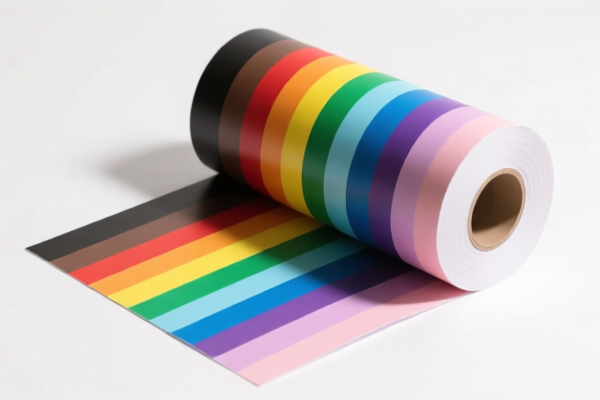

AI Analysis
🎞️ Color Film Roll (For Professional Testing)
🌐 HS Code Reference & Customs Clearance Guide | 2026 Latest Tariff Analysis | Professional Clearance Strategy
📌 1. Product Definition & Classification: Do You Really Understand "Color Film"?
Color film rolls are photosensitive media used for capturing images on chemical emulsion layers. In international trade, they are strictly classified based on their material, exposure status (sensitized/unexposed), and intended use (color vs. black & white). For "Professional Testing" purposes, if the film is sensitized, unexposed, and in roll format, it falls under Chapter 37 (Photographic Goods).
Key Distinction Criteria: * Material: Must not be paper, paperboard, or textiles (e.g., cellulose acetate, polyester, or plastic bases). * Format: Rolls (not sheets or packets). * Status: Sensitized (coated with light-sensitive chemicals) but Unexposed (not yet used). * Color: Polychrome (Color/Reversal or Negative).
⚠️ Critical Classification Point:
- If the film is >16mm but ≤35mm and >30m in length, it is considered "Motion Picture or Professional Cinematographic Film."
- If the width is different (e.g., <16mm or >35mm), it may fall under different subheadings.
- Note: The provided data strictly covers the 35mm format (>30m length), which is standard for professional cinema and high-end testing.
📦 2. HS Code Classification Details (2026 Latest Tariff Authority Cross-Reference)
Based on the provided <DATA>, here are the specific HS codes for Color Film Rolls:
| HS Code | Product Description | Applicable Scenario | Width & Length |
|---|---|---|---|
3702.55.00.30 |
Reversal Color Film (Positive) | Professional testing for slide films, direct viewing projects | >16mm ≤35mm; >30m |
3702.55.00.60 |
Other Color Film (Negative) | Standard professional color negative film for printing/tests | >16mm ≤35mm; >30m |
🔍 Important Reminder:
- Both codes apply to sensitized, unexposed rolls.
- Reversal Film (...30): Used when the goal is to produce a positive image directly (slides).
- Other/Negative Film (...60): Used when the goal is to create a negative for further processing (prints).
- Ensure your invoice clearly states "Reversal" or "Negative" to avoid classification disputes.
💰 3. 2026 Latest Tariff Rate Breakdown (Including Additional Duties)
✅ Applicable Country: United States (US)
✅ Origin: China (CN)
✅ Effective Time: 2025+ (Current Trade Policies)
🎯 1. 3702.55.00.30 – Reversal Color Film (Professional/Testing)
| Item | Detail |
|---|---|
| Base Tariff | 0.0% |
| Additional Tariff (Section 301) | +25.0% |
| Total Tax Rate | 25.0% |
| Tax Calculation | CIF Value × 25% |
| De Minimis Exemption | ❌ Not Applicable (High-value professional goods usually excluded or subject to strict scrutiny) |
📌 Explanation:
- The 0% base tariff reflects the low duty on photographic raw materials under normal trade conditions.
- The 25% additional tariff is imposed under Section 301 of the Trade Act against Chinese-origin goods. This is a flat ad valorem rate.
- No other hidden taxes are listed in the provided data. Do not assume additional IEIPA or state-level taxes unless specified by local customs.
🎯 2. 3702.55.00.60 – Other Color Film (Professional/Testing)
| Item | Detail |
|---|---|
| Base Tariff | 0.0% |
| Additional Tariff (Section 301) | +25.0% |
| Total Tax Rate | 25.0% |
| Tax Calculation | CIF Value × 25% |
| De Minimis Exemption | ❌ Not Applicable |
📌 Note:
- Identical tariff structure to Reversal Film.
- The distinction is purely product-type based (Reversal vs. Negative).
- Cost Impact: For a $10,000 shipment, you will pay $2,500 in duties. Budget accordingly.
🛠️ 4. Customs Clearance Practical Advice (Real-World Pitfall Guide)
✅ 1. Preparation Checklist (Mandatory)
| Document | Must Provide | Notes |
|---|---|---|
| ✅ Commercial Invoice | ✔️ | Clearly state: "Color Film Roll, Sensitized, Unexposed, Reversal/Negative, Professional Testing Use" |
| ✅ Product Spec Sheet | ✔️ | Include: Base material (e.g., Polyester), Emulsion type, Width (e.g., 35mm), Length (e.g., 100m), Light sensitivity (ISO) |
| ✅ Material Safety Data Sheet (MSDS) | ✔️ | Photographic chemicals are sensitive; MSDS is often required for safe transport and customs verification |
| ✅ Packaging List | ✔️ | Show net/gross weight, number of rolls, and packaging material (avoid wood if possible to prevent ISPM 15 issues) |
| ✅ Certificate of Origin | ✔️ | Required to verify Chinese origin for Section 301 duty application |
✅ 2. Declaration Tips (Key Mantras)
🔥 "Specify Type, State Condition, Avoid Ambiguity!"
| Situation | Correct Declaration | Incorrect Declaration |
|---|---|---|
| Reversal Film | 3702.55.00.30 "Reversal Color Film" |
Generic "Photographic Film" → Risk of misclassification |
| Negative Film | 3702.55.00.60 "Other Color Film" |
"Black and White Film" → Wrong HS Code, fines |
| Unexposed | Explicitly state "Unexposed" | Omitting this → May be confused with exposed film (prohibited/restricted) |
| Rolls >30m | State exact length (e.g., "50m roll") | Omitting length → May fall under <30m subheadings (different tax rate) |
✅ 3. Special Handling for "Professional Testing"
| Scenario | Recommendation |
|---|---|
| Sample/Testing Use | Mark as "Sample – Not for Sale" if applicable, but duty still applies unless eligible for specific exemptions (rare for Chinese origin) |
| Chemical Composition | If the emulsion contains hazardous chemicals, ensure compliance with DOT/IMO regulations for transport |
| Brand/Model | Include manufacturer details to prove commercial grade vs. consumer grade (though tax is same, clarity prevents delays) |
🌍 5. Global Market Comparison (2026 Snapshot)
| Country/Region | Recommended HS Code | Tariff Rate | Notes |
|---|---|---|---|
| 🇺🇸 USA | 3702.55.00.30 / ...60 |
25.0% (Total) | Section 301 additional duty applies |
| 🇨🇳 China | 3702.55.00 |
~6-9% | Import duties may vary; check current Chinese tariff schedule |
| 🇪🇺 EU | 3702.55 |
0% | Most cinematographic films are duty-free in EU |
| 🇬🇧 UK | 3702.55 |
0% | Post-Brexit tariff may still be 0% for photographic goods |
| 🇯🇵 Japan | 3702.55 |
0% | Free trade agreement benefits may apply |
📌 Conclusion:
- USA is the most expensive market due to the 25% Section 301 tariff.
- EU, UK, and Japan are more favorable with 0% tariffs.
- Consider supply chain diversification if shipping to the US is cost-prohibitive.
📌 6. Common Errors & Pitfalls (Lessons Learned)
❌ Error 1: Misdeclaring "Reversal" as "Other" or vice versa
👉 Consequence: Minor error if tax is same, but can lead to audit flags for repeated mistakes.
❌ Error 2: Failing to specify "Unexposed"
👉 Consequence: Customs may suspect illegal importation of exposed film (privacy/security concerns) → Inspection & Delay.
❌ Error 3: Ignoring the 30m length threshold
👉 Consequence: If length is ≤30m, it falls under 3702.54 or 3702.53, which may have different tax rates. Verify length on invoice!
❌ Error 4: Using "Photo Paper" instead of "Film"
👉 Consequence: Wrong Chapter (48 vs. 37) → High fines for false declaration.
✅ Correct Declaration Example:
"35mm Color Reversal Film Roll, Sensitized, Unexposed, Polyester Base, Length 100m, for Professional Camera Testing, Made in China"
🎯 7. Conclusion: Precision in Declaration Saves Money!
🎯 Remember the Mantra:
🔹 "Specify Type (Reversal/Negative), Confirm Length (>30m), Highlight 'Unexposed'"
🔹 "USA: 25% Total; EU/Japan: 0% – Plan Your Route!"
📌 Pro Tip:
If you are shipping small quantities for R&D, ensure your broker declares the exact HS Code 8 digits (3702.55.00.30 or .60) to avoid generic code assessments that might trigger higher scrutiny.
📣 Immediate Action:
📞 Contact your customs broker with the exact product specs (Width, Length, Type: Reversal/Negative).
🚀 Verify the 30m threshold – if your rolls are shorter, the HS Code and Tax Rate may change!
💼 Budget 25% extra for US imports from China.
✨ Professional clearance starts with accurate classification!
💼 Your bottom line depends on getting the HS Code right!
Customer Reviews
About HS Code Classification
The Harmonized System (HS) is an internationally standardized nomenclature developed by the World Customs Organization (WCO) to classify traded products. Over 200 countries use the HS system as the basis for customs tariffs, trade statistics, and import/export regulations.
Each HS code follows a hierarchical structure:
- Chapter (2 digits) — Broad category of goods (e.g., Chapter 84: Machinery and Mechanical Appliances)
- Heading (4 digits) — More specific grouping within the chapter
- Subheading (6 digits) — Internationally standardized breakdown, used by all WCO member countries
- National subdivisions (8-10 digits) — Country-specific extensions for further classification, such as US HTSUS 10-digit codes
Correct HS code classification is essential for smooth customs clearance, accurate duty payment, and compliance with trade regulations. Misclassification can lead to customs delays, overpayment of duties, or penalties.
When importing from CN to US, the applicable tariff rates may include:
- Most-Favored-Nation (MFN) rate — The standard duty rate applied to WTO members
- General rate — Applied to countries without trade agreements
- Trade remedy duties — Additional tariffs such as Section 301 (anti-dumping), Section 232 (national security), or countervailing duties
The information provided on this page is for reference purposes only. For official classification, please consult with your local customs authority or a licensed customs broker.