Color Film Roll (Low Contrast)
CN → US| HS Code | Tariff Rate | Origin | Destination | Doc |
|---|---|---|---|---|
| 3702390100 | 38.7% | CN | US | Official Doc |
| 3702980000 | 38.7% | CN | US | Official Doc |
| 3919102055 | 40.8% | CN | US | Official Doc |
| 3920100000 | 39.2% | CN | US | Official Doc |
| 3920200055 | 39.2% | CN | US | Official Doc |
| 3919905060 | 40.8% | CN | US | Official Doc |
Product Images
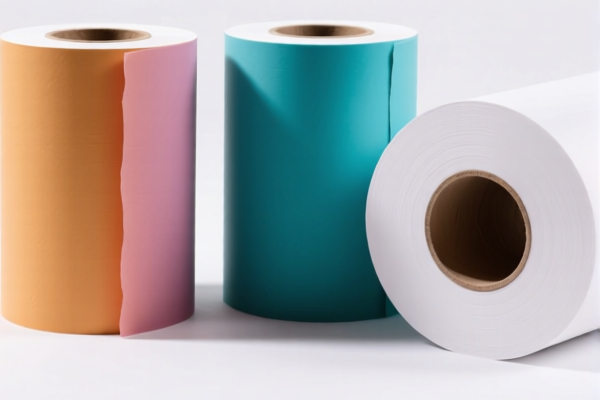
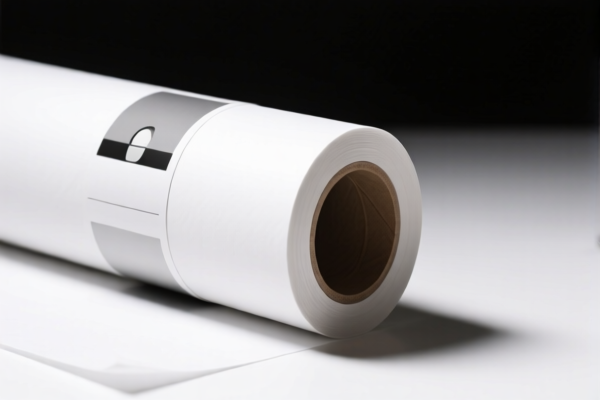
AI Analysis
🎞️ Color Film Roll (Low Contrast)
🌐 HS Code Reference & Customs Clearance Guide | 2026 Updated Tariff Analysis | Professional-Level Strategy
📌 I. Product Definition & Classification: What Exactly is "Color Film (Low Contrast)"?
"Color Film Roll (Low Contrast)" refers to photographic light-sensitive material in roll form, characterized by reduced contrast levels, often used for specific artistic effects, medical imaging, or industrial testing where high dynamic range or soft tonal transitions are required. In international trade, classification depends on form (roll/film), function (sensory/photographic), and substrate material (plastic/paper/fabric).
⚠️ Key Distinction:
- If the film is light-sensitive and used for photography/imaging → Classified under Chapter 37 (Photographic Goods);
- If the film is non-sensory, used merely as a protective layer or packaging → Classified under Chapter 39 (Plastics);
- Crucial Point: "Low Contrast" is a physical/chemical property, not a separate HS category. It still falls under photographic films unless it loses its light-sensitive nature.
📦 II. HS Code Classification Details (Based on Provided Data)
| HS Code | Product Description | Application Scenario | Key Matching Logic |
|---|---|---|---|
3702.39.01.00 |
Sensory film rolls, not on paper/cardboard/fabric | High-precision photography, industrial sensing | Matches form (roll) + use (sensory) + material (non-paper/fabric) |
3702.98.00.00 |
Other photographic/chemographic film rolls | Artistic film, low-contrast specialty rolls | Matches form (roll) + use (sensory) + material (non-paper/fabric) |
3919.10.20.55 |
Self-adhesive plastic film (rolls) | Non-sensory protective films, tapes | Matches form (film/roll) + material (plastic) |
3920.10.00.00 |
Plates, sheets, film (not self-adhesive), of polymers of ethylene | Low-noise plastic films, non-sensory | Matches form (film/roll) + material (ethylene polymer) |
3920.20.00.55 |
Plates, sheets, film, of polymers of propylene | General plastic films, packaging | Matches form (film/roll) + material (polypropylene) |
3919.90.50.60 |
Other self-adhesive plastic products (rolls) | Adhesive-backed plastic films | Matches form (film/roll) + material (plastic) |
🔍 Critical Reminder:
- If your product is light-sensitive (reacts to light for imaging), it MUST be classified under HS 37 (3702.39.01.00or3702.98.00.00). Misclassifying it as plastic (39xx) will result in customs penalties, delays, or rejection.
- If your product is NOT light-sensitive (e.g., a plastic wrap with "low contrast" color printing but no photosensitive coating), it falls under HS 39.
- "Low Contrast" alone does not justify HS 39 if photosensitivity exists.
💰 III. 2026 Latest Tariff Rate Breakdown (Including Supplementary Duties & Policy Surcharges)
✅ Applicable Country: United States (US)
✅ Origin: China (CN)
✅ Effective Date: November 10, 2025 onwards (including subsequent imports)
🎯 1. 3702.39.01.00 & 3702.98.00.00 —— Photographic/Sensory Film Rolls (Light-Sensitive)
| Item | Content |
|---|---|
| Base Tariff Rate | 3.7% (ad valorem) |
| USITC Supplementary Duty | +25% (Section 301 Tariff) |
| IEEPA Supplementary Duty | +10% (China/HK-specific, effective Nov 10, 2025) |
| Total Tariff Rate | 38.7% |
| Tax Calculation | CIF Value × 38.7% |
| De Minimis Eligibility | ❌ Not Applicable (deny_de_minimis) |
| Legal Basis Path | IEEPA:9903.01.25 → USITC:3702.39.01.00 → FOOTNOTE:301 |
📌 Explanation:
- 3.7% Base: Standard MFN rate for photographic film.
- 25% USITC: Section 301 tariff on Chinese goods.
- 10% IEEPA: Additional surcharge under International Emergency Economic Powers Act for Chinese origin.
- Total 38.7%: High duty cost. Must be factored into pricing strategy.
🎯 2. 3919.10.20.55, 3919.90.50.60 —— Self-Adhesive Plastic Films (Non-Sensory)
| Item | Content |
|---|---|
| Base Tariff Rate | 5.8% (ad valorem) |
| USITC Supplementary Duty | +25% (Section 301 Tariff) |
| IEEPA Supplementary Duty | +10% (China/HK-specific) |
| Total Tariff Rate | 40.8% |
| Tax Calculation | CIF Value × 40.8% |
| De Minimis Eligibility | ❌ Not Applicable |
| Legal Basis Path | IEEPA:9903.01.25 → USITC:3919.10.20.55 → FOOTNOTE:301 |
📌 Note: Even if misclassified as plastic, the duty is 40.8%, which is higher than the correct HS 37 rate (38.7%). However, misclassification carries legal risk.
🎯 3. 3920.10.00.00, 3920.20.00.55 —— Non-Adhesive Plastic Films (Non-Sensory)
| Item | Content |
|---|---|
| Base Tariff Rate | 4.2% (ad valorem) |
| USITC Supplementary Duty | +25% (Section 301 Tariff) |
| IEEPA Supplementary Duty | +10% (China/HK-specific) |
| Total Tariff Rate | 39.2% |
| Tax Calculation | CIF Value × 39.2% |
| De Minimis Eligibility | ❌ Not Applicable |
| Legal Basis Path | IEEPA:9903.01.25 → USITC:3920.10.00.00 → FOOTNOTE:301 |
📌 Note: Slightly lower than self-adhesive plastic films but still subject to full Supplementary Duties.
🛠️ IV. Customs Clearance Practical Advice (Battle-Tested Pitfall Avoidance Guide)
✅ 1. Required Documentation Checklist (All Items Mandatory)
| Document | Required | Explanation |
|---|---|---|
| ✅ Product Specification Sheet | ✔️ | Must specify: Light-sensitive? Yes/No. Contrast level. Substrate material (plastic, cellulose acetate, polyester). |
| ✅ Material Composition Report | ✔️ | Third-party lab test confirming if photosensitive emulsion is present. Critical for HS 37 vs 39 distinction. |
| ✅ Product Photos (Including Label) | ✔️ | Show packaging, roll form, and any "photographic" or "light-sensitive" warnings. |
| ✅ Commercial Invoice | ✔️ | Clearly state: "Color Light-Sensitive Film Roll, Low Contrast, for Photographic Use" (if HS 37) OR "Non-Sensory Plastic Film Roll" (if HS 39). |
| ✅ Packing List | ✔️ | Detail gross/net weight, dimensions, number of rolls. |
| ✅ Origin Certificate (CO) | ✔️ | If not China-origin, may qualify for lower duties. |
| ✅ Safety Data Sheet (SDS) | ✔️ | Especially if chemical emulsions are involved (HS 37). |
✅ 2. Declaration Strategy (Key Mnemonics)
🔥 “Sensory = HS 37, Plastic = HS 39. Name it right, avoid fines.”
| Scenario | Correct Declaration | Incorrect Action |
|---|---|---|
| Light-sensitive film (even if artistic/low-contrast) | 3702.39.01.00 or 3702.98.00.00 |
Declare as "Plastic Film" → 38.7% vs 40.8% + Legal Risk |
| Non-sensory plastic film with printed low-contrast colors | 3920.10.00.00 or 3920.20.00.55 |
Declare as "Photographic Film" → 39.2% + Misdeclaration |
| Self-adhesive film (tape-like) | 3919.10.20.55 or 3919.90.50.60 |
Declare as rigid plastic → 40.8% + Classification Error |
✅ 3. Special Cases Handling
| Scenario | Handling Advice |
|---|---|
| OEM Custom Low-Contrast Film | Provide client design specs + material test report. Emphasize photosensitivity to justify HS 37. |
| Film with Unclear Sensitivity | Submit for Advance Ruling from US CBP before shipment. Do not guess. |
| Mixed Shipment (Sensory + Non-Sensory) | Separate lines on invoice. Do not combine. Different HS codes = different duties. |
| Films for Medical/X-Ray (Non-Visible Light) | Still HS 37 if sensory. Declare as "X-ray Film Roll, Sensory Material". |
🌍 V. Global Market Comparison (2026 Latest)
| Country/Region | Recommended HS Code | Tariff (China Origin) | Certification Required | Notes |
|---|---|---|---|---|
| 🇺🇸 USA | 3702.39.01.00 / 3702.98.00.00 |
38.7% (if sensory) | FDA (if medical), RoHS | High duty burden |
| 🇨🇳 China | 3702.39.01.00 |
Low/Moderate | CCC (if applicable) | No Section 301/IEEPA |
| 🇪🇺 EU | 3702.39.01.00 |
0-6.5% | CE (if industrial), REACH | No anti-dumping surcharges |
| 🇦🇺 Australia | 3702.39.01.00 |
5% | ACCC | Moderate duty |
| 🇯🇵 Japan | 3702.39.01.00 |
0-6% | PSE (if electrical components in scanner) | Low duty |
📌 Conclusion:
- USA is the most expensive market due to Section 301 + IEEPA surcharges.
- EU/Asia/Japan are far more favorable. Consider supply chain diversification if targeting the US with high-volume photographic films.
- Misclassification as plastic (HS 39) in the US results in HIGHER duty (39.2-40.8%) AND legal risk.
📌 VI. Common Mistakes & Pitfall Guide (Blood-Learning Lessons)
❌ Mistake 1: Declaring "Light-Sensitive Film" as "Plastic Sheet" to avoid HS 37 scrutiny
👉 Consequence: Higher duty (40.8% vs 38.7%) + Seizure for Misdeclaration + Fines!
❌ Mistake 2: Claiming "Low Contrast" means it’s not photographic
👉 Consequence: CBP will test the material. If photosensitive, back-duties + penalties apply.
❌ Mistake 3: Omitting "Light-Sensitive" from description
👉 Consequence: CBP may request lab tests, causing shipment delays (30-60 days).
❌ Mistake 4: Using vague terms like "Roll Film" without material/specs
👉 Consequence: CBP assigns highest applicable duty (40.8%) by default.
✅ Correct Practice:
"Color Light-Sensitive Photographic Film Roll, Low Contrast, Polyester Base, for Artistic Photography, Model XYZ, Sensitivity: ISO 100"
OR
"Non-Sensory Polyethylene Plastic Film Roll, Low-Contrast Print, for Packaging, Model ABC"
🎯 VII. Conclusion: Professional Declaration Saves Money & Time!
🎯 Remember the Mantra:
🔹 "Sensory = HS 37 (38.7%), Plastic = HS 39 (39-41%). Declare Truthfully!"
🔹 "HS Code Determines Destiny. A 0.1% misstep can cost thousands."
📌 Pro Tip:
If your film is originally produced in Vietnam, Mexico, or Thailand, you may qualify for IEEPA/Section 301 Exemptions.
Apply for Advance Ruling (Pre-Clearance) with US CBP 60-90 days before shipment to secure correct classification and duty rate.
📣 Immediate Action:
📞 Contact a Licensed Customs Broker + Provide Material Test Report + File for HS Code Advance Ruling.
🚀 Ensure your Color Film Rolls Clear Customs Smoothly, Maximize Profit, and Avoid Legal Risks!
✨ Professional Clearance Starts with Accurate Classification!
💼 Every Dollar of Duty Should Be Precisely Calculated!
Customer Reviews
About HS Code Classification
The Harmonized System (HS) is an internationally standardized nomenclature developed by the World Customs Organization (WCO) to classify traded products. Over 200 countries use the HS system as the basis for customs tariffs, trade statistics, and import/export regulations.
Each HS code follows a hierarchical structure:
- Chapter (2 digits) — Broad category of goods (e.g., Chapter 84: Machinery and Mechanical Appliances)
- Heading (4 digits) — More specific grouping within the chapter
- Subheading (6 digits) — Internationally standardized breakdown, used by all WCO member countries
- National subdivisions (8-10 digits) — Country-specific extensions for further classification, such as US HTSUS 10-digit codes
Correct HS code classification is essential for smooth customs clearance, accurate duty payment, and compliance with trade regulations. Misclassification can lead to customs delays, overpayment of duties, or penalties.
When importing from CN to US, the applicable tariff rates may include:
- Most-Favored-Nation (MFN) rate — The standard duty rate applied to WTO members
- General rate — Applied to countries without trade agreements
- Trade remedy duties — Additional tariffs such as Section 301 (anti-dumping), Section 232 (national security), or countervailing duties
The information provided on this page is for reference purposes only. For official classification, please consult with your local customs authority or a licensed customs broker.