Color Film Roll (Retro Effect)
CN → US| HS Code | Tariff Rate | Origin | Destination | Doc |
|---|---|---|---|---|
| 9002907000 | 35.0% | CN | US | Official Doc |
| 9002909500 | 35.0% | CN | US | Official Doc |
| 3706106060 | 35.0% | CN | US | Official Doc |
| 3706106090 | 35.0% | CN | US | Official Doc |
Product Images
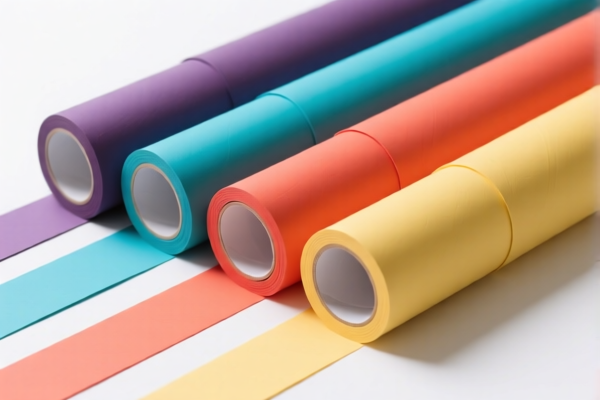
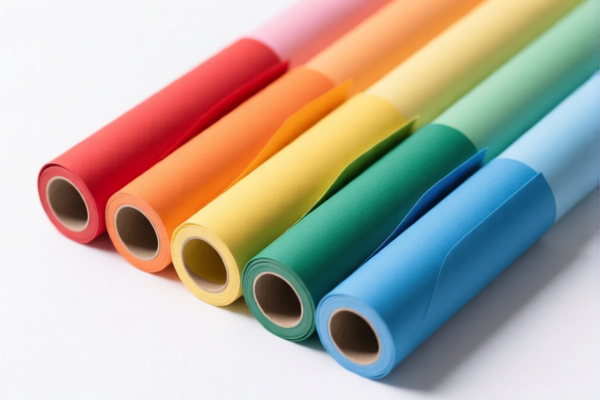

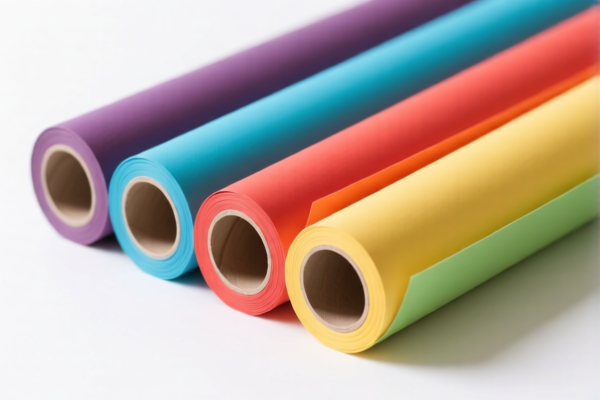
AI Analysis
🎞️ Color Film Roll (Retro Effect)
🌐 HS Code Reference & Customs Clearance Guide | 2026 Latest Tariff Analysis | Professional-Level Clearance Strategy
📌 I. Product Definition and Classification: What Exactly is "Color Film Roll (Retro Effect)"?
Color film rolls with a "retro effect" are photographic materials designed to simulate the aesthetic qualities of vintage photography. In international trade, they are categorized based on their physical form (roll/film) and intended use (photography, special effects, or motion pictures). The key distinction lies in whether the film is for still photography (camera film) or motion pictures (cinema film).
⚠️ Critical Distinction:
- If the film is for still photography (e.g., 35mm, 120 format for cameras) → Classified under 9002.90 (Optical lenses, filters, etc.) or potentially 3706 if strictly defined as photographic film for photographic purposes.
- If the film is for motion pictures/cinema (e.g., 16mm, 35mm cinema reels) → Classified under 3706.10 (Motion picture film).
- "Retro Effect" is a marketing term; customs classifies based on technical specifications and end-use, not aesthetic style.
📦 II. HS Code Classification Details (2026 Latest Tariff Authoritative Comparison)
Based on the provided data <DATA>, the following HS Codes are applicable for "Color Film Roll (Retro Effect)":
| HS Code | Product Description | Applicable Scenario | Material/Form |
|---|---|---|---|
9002.90.70.00 |
Semi-finished products in film/film form, used for photography or special effects | Photographic accessories, DIY effects, semi-finished optical components | Film/Photographic Semi-finished |
9002.90.95.00 |
Film rolls meeting optical element characteristics, inferred as optical or photosensitive material | High-end optical films, specialized photographic rolls | Film/Optical Material |
3706.10.60.60 |
Movie film form, used for feature films or special effects | Cinema production, VFX, professional video | Movie Film/Photographic |
3706.10.60.90 |
Film form for special effects, classified as other types of movie film | Post-production, VFX, non-standard cinema film | Movie Film/Other Types |
🔍 Key Insight:
- Codes9002.90.70.00and9002.90.95.00are for still photography/optical applications.
- Codes3706.10.60.60and3706.10.60.90are for motion picture/cinema applications.
- "Retro Effect" does not change the classification; it depends on the format (still vs. motion) and specific use.
💰 III. 2026 Latest Tariff Rate Details (Including Additional Taxes & Policy Add-ons)
✅ Applicable Country: United States (US)
✅ Origin: China (CN)
✅ Effective Date: 2025 November 10 onwards (including subsequent imports)
🎯 1. 9002.90.70.00 & 9002.90.95.00 — Optical/Photographic Film Rolls
| Item | Content |
|---|---|
| Base Tariff Rate | 0.0% (ad valorem) |
| Section 301 Additional Tariff | +25.0% |
| Section 122 Tariff | +10.0% |
| Total Tariff Rate | 35.0% |
| Tax Calculation | CIF Value × 35% |
| De Minimis Exemption | ❌ Not Eligible (deny_de_minimis) |
| Legal Basis Path | Section 301: 9903.88.01 → Section 122: 9903.01.24 → USITC: 9002.90.xx.xx |
📌 Explanation:
- 0% Base: Standard MFN rate for most optical/photographic accessories.
- 25% Section 301: Added tariff on Chinese-origin goods under US Trade Law Section 301.
- 10% Section 122: Additional tariff imposed under specific executive orders (e.g., related to national security or trade imbalances).
- Total 35%: This is a high tariff rate. Importers must plan for significant cost increases.
🎯 2. 3706.10.60.60 & 3706.10.60.90 — Movie Film (Special Effects/Feature)
| Item | Content |
|---|---|
| Base Tariff Rate | 0.0% (ad valorem) |
| Section 301 Additional Tariff | +25.0% |
| Section 122 Tariff | +10.0% |
| Total Tariff Rate | 35.0% |
| Tax Calculation | CIF Value × 35% |
| De Minimis Exemption | ❌ Not Eligible (deny_de_minimis) |
| Legal Basis Path | Section 301: 9903.88.01 → Section 122: 9903.01.24 → USITC: 3706.10.xx.xx |
📌 Explanation:
- 0% Base: Standard rate for motion picture film.
- 25% + 10%: Same additional tariffs apply due to origin (China).
- Total 35%: Consistent with other optical/photographic products. No special exemption for "special effects" film.
🛠️ IV. Customs Clearance Practical Advice (Field Pitfall Avoidance Guide)
✅ 1. Required Documentation Checklist (All Are Mandatory)
| Document | Must Provide | Description |
|---|---|---|
| ✅ Product Specification Sheet | ✔️ | Must specify: Format (35mm/16mm), Sensitivity (ISO), Length, Chemical Composition, End-Use (Still vs. Motion) |
| ✅ Product Photos | ✔️ | Clear images of the roll, label, packaging, and any "Retro Effect" samples |
| ✅ Commercial Invoice | ✔️ | Must clearly state: "Color Film Roll, Retro Effect, For [Still Photography/Motion Pictures]" |
| ✅ Packing List | ✔️ | Detailed breakdown of quantity, weight, and packaging type |
| ✅ Certificate of Origin (CO) | ✔️ | Proof of Chinese origin (critical for tariff calculation) |
| ✅ Third-Party Test Report | ✔️ | If applicable, safety/chemical tests (e.g., RoHS, REACH) |
✅ 2. Declaration Tips (Key Mantra)
🔥 "Be Specific: Still vs. Motion, Format Matters!"
| Scenario | Correct Declaration | Error to Avoid |
|---|---|---|
| Still Camera Film (35mm/120) | 9002.90.70.00 or 9002.90.95.00 |
Declaring as "Movie Film" → Risk of misclassification |
| Cinema Film (16mm/35mm Reels) | 3706.10.60.60 or 3706.10.60.90 |
Declaring as "Still Film" → Risk of misclassification |
| "Retro Effect" | Describe as "Simulated Vintage Look, For Photographic Use" | Using vague terms like "Art Film" → Delays |
| Mixed Packages | Declare separately | Mixing still and cinema film in one HS Code → Audit Risk |
✅ 3. Special Case Handling
| Scenario | Handling Advice |
|---|---|
| DIY/Art Film | If used for art installations, clarify if it's "semi-finished" → 9002.90.70.00 |
| VFX/Post-Production | If used for digital scanning or special effects processing → 3706.10.60.60/90 |
| New Formula/Chemistry | If non-standard chemicals are used, provide MSDS (Material Safety Data Sheet) |
| Sample Imports | Even samples are subject to 35% tariff; no de minimis exemption |
🌍 V. Global Market Clearance Comparison (2026 Latest)
| Country/Region | Recommended HS Code | Tariff Rate | Certification Requirements | Notes |
|---|---|---|---|---|
| 🇺🇸 USA | 9002.90.70.00 / 3706.10.60.60 |
35% (CN Origin) | None specific, but origin proof required | High tariff due to Section 301 & 122 |
| 🇨🇳 China | 3701.99.10.00 / 3706.10.00.00 |
5-10% | CCC (if applicable) | Lower tariffs, but check local regulations |
| 🇪🇺 EU | 3701.99 / 3706.10 |
0-4% | REACH, CLP | No Section 301/122 equivalent |
| 🇬🇧 UK | 3701.99 / 3706.10 |
0-4% | UKCA, REACH | Post-Brexit tariffs may vary |
| 🇯🇵 Japan | 3701.99 / 3706.10 |
0-3% | JIS Standards | Low tariffs, strict quality checks |
📌 Conclusion:
- USA has the highest barrier due to 35% combined tariffs.
- Other markets are more favorable. Consider supply chain diversification if targeting the US market.
📌 VI. Common Mistakes & Pitfall Guide (Blood-Teach Lessons)
❌ Mistake 1: Declaring "Retro Film" without specifying Still vs. Motion
👉 Consequence: Customs may classify under the wrong code, leading to audit, fines, or delays.
❌ Mistake 2: Assuming "Art Film" qualifies for de minimis
👉 Consequence: 35% tariff applies regardless of value or use. No exemption.
❌ Mistake 3: Omitting Section 122 Tariff in Cost Calculations
👉 Consequence: Underestimating landed cost by 10% → Profit Margin Erosion.
❌ Mistake 4: Mislabeling "Semi-finished" as "Finished"
👉 Consequence: 9002.90.70.00 (Semi-finished) vs. 9002.90.95.00 (Finished) may have different scrutiny levels.
✅ Correct Approach:
"Color Film Roll, 35mm, ISO 400, Retro Effect, For Still Photography, Made in China, HS Code: 9002.90.70.00"
🎯 VII. Conclusion: Professional Declaration, Cost Efficiency, Risk Mitigation
🎯 Remember the Mantra:
🔹 "Still or Motion? Know your HS!
🔹 35% is the Rate, Don't Get Late!
🔹 No De Minimis, Pay the Tax, No Chance!**"
📌 Pro Tip:
If your film is originally from Vietnam, Thailand, or Malaysia, you may avoid Section 301/122 tariffs. Consider transshipment or supply chain relocation if targeting the US market.
Request an Advance Ruling from CBP to confirm classification and tariff liability before shipment.
📣 Immediate Action:
📞 Contact a Licensed Customs Broker + Provide Product Specs + Apply for HS Code Pre-Ruling
🚀 Clear Customs Smoothly, Reduce Costs, Maximize Profits!
✨ Professional Clearance Starts with Precise Classification!
💼 Every Penny Saved Counts in Global Trade!
Customer Reviews
About HS Code Classification
The Harmonized System (HS) is an internationally standardized nomenclature developed by the World Customs Organization (WCO) to classify traded products. Over 200 countries use the HS system as the basis for customs tariffs, trade statistics, and import/export regulations.
Each HS code follows a hierarchical structure:
- Chapter (2 digits) — Broad category of goods (e.g., Chapter 84: Machinery and Mechanical Appliances)
- Heading (4 digits) — More specific grouping within the chapter
- Subheading (6 digits) — Internationally standardized breakdown, used by all WCO member countries
- National subdivisions (8-10 digits) — Country-specific extensions for further classification, such as US HTSUS 10-digit codes
Correct HS code classification is essential for smooth customs clearance, accurate duty payment, and compliance with trade regulations. Misclassification can lead to customs delays, overpayment of duties, or penalties.
When importing from CN to US, the applicable tariff rates may include:
- Most-Favored-Nation (MFN) rate — The standard duty rate applied to WTO members
- General rate — Applied to countries without trade agreements
- Trade remedy duties — Additional tariffs such as Section 301 (anti-dumping), Section 232 (national security), or countervailing duties
The information provided on this page is for reference purposes only. For official classification, please consult with your local customs authority or a licensed customs broker.