Color Film Roll Scientific
CN → US| HS Code | Tariff Rate | Origin | Destination | Doc |
|---|---|---|---|---|
| 3704000000 | 35.0% | CN | US | Official Doc |
| 3702520130 | 38.7% | CN | US | Official Doc |
| 3702310100 | 38.7% | CN | US | Official Doc |
Product Images


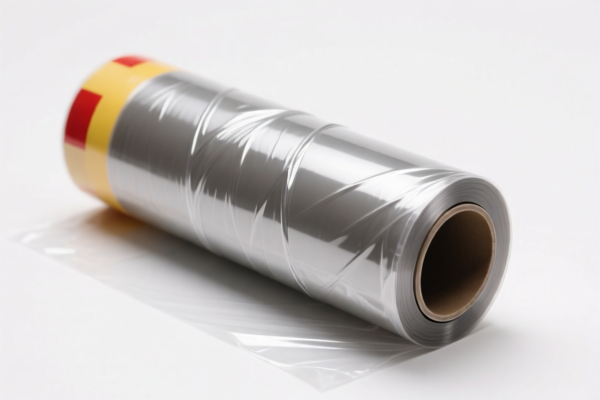

AI Analysis
🎞️ Color Film Roll (Scientific Application)
🌐 HS Code Reference & Customs Clearance Guide | 2026 Latest Tariff Analysis | Professional Strategy
📌 I. Product Definition: What is "Scientific Color Film Roll"?
Scientific Color Film Rolls are specialized photo-sensitive materials used for precise recording, analysis, and data capture in laboratory, industrial, or research environments. Unlike standard consumer photographic film, these are engineered for specific spectral sensitivities or chemical development processes. In international trade, they are classified based on their material form (roll/film) and chemical composition (photo-sensitive).
⚠️ Key Distinction:
- Roll Format: If the film is supplied in continuous rolls (not sheets or cartridges), it generally falls under Chapter 37 Heading 3704 ("Developed photographic film of any material, other than paper, paperboard, textiles"). - Scientific/Industrial Use: While the use is scientific, the physical form dictates the HS Code in Chapter 37. "Scientific" alone does not change the chapter; the morphology (roll vs. plate vs. sheet) is critical.
📦 II. HS Code Classification Details (2026 Latest Tariff Authority Match)
Based on the provided data, here are the three possible HS Codes with detailed explanations for why each applies. The variation depends on the specific physical characteristics (e.g., whether it is a reversal film, negative film, or general developed film).
| HS Code | Product Description | Why It Fits | Application Scenario |
|---|---|---|---|
3704.00.00.00 |
Developed Photographic Film (General) | Summary: The product belongs to film morphology, meeting the material and form requirements in the classification. Analysis: This code covers developed film of any material (excluding paper/textile). If the "scientific roll" is already developed and does not fit into specific reversal/negative sub-categories, it falls here as a generic developed film. |
General scientific record-keeping, developed analytical films. |
3702.52.01.30 |
Color Reversal Film (Scientific/Industrial) | Summary: The "Color" in the product name matches the "Color Reversal Film" usage, belonging to photo-sensitive film material. Analysis: If the film is undveloped (raw) and specifically designed as Reversal Film (positive-working, used for slides/microscopy), it falls under Heading 3702. The term "Color" aligns with "Color Reversal Film." |
High-precision microscopy, scientific photography requiring positive images. |
3702.31.01.00 |
Color Negative Film (Scientific/Industrial) | Summary: The product name explicitly contains "Color" and "Film Roll" elements, matching the material and usage requirements for photo-sensitive materials. Analysis: If the film is undveloped (raw) and is Negative-working (standard for most scientific documentation before printing/analysis), it falls under Heading 3702. The explicit "Color" and "Film Roll" keywords strongly support this classification. |
Standard scientific documentation, industrial inspection where negatives are processed. |
🔍 Critical Note:
- Developed vs. Undveloped:
- If the film is already developed → Use3704.00.00.00.
- If the film is raw/undveloped → Determine if it is Reversal (3702.52...) or Negative (3702.31...).
- "Scientific" Label: Does not create a separate HS Code. It confirms the material is genuine photo-sensitive film, not digital sensor data.
💰 III. 2026 Latest Tariff Rate Breakdown (Including Surcharges & Policy Add-ons)
✅ Applicable Country: United States (US)
✅ Origin: China (CN)
✅ Effective Date: November 10, 2025 (for subsequent imports)
🎯 1. 3704.00.00.00 —— Developed Photographic Film (General)
| Item | Content |
|---|---|
| Base Tariff | 0.0% |
| USITC Surcharge | +25.0% (Section 301) |
| IEEPA Surcharge | +10.0% (122 Clause, targeting China) |
| Total Rate | 35.0% |
| Tax Calculation | CIF Value × 35% |
| De Minimis Exemption | ❌ Not Eligible (deny_de_minimis) |
| Legal Basis Path | IEEPA:9903.01.25 → IEEPA:9903.01.24 → USITC:3704.00.00.00 |
📌 Explanation:
- Base 0%: Developed film has a low base duty.
- 25% Section 301: Standard additional tariff on Chinese goods.
- 10% IEEPA 122 Clause: Specific surcharge for certain Chinese imports under the International Emergency Economic Powers Act.
- Total 35%: High cost for developed scientific film.
🎯 2. 3702.52.01.30 —— Color Reversal Film (Undveloped)
| Item | Content |
|---|---|
| Base Tariff | 3.7% |
| USITC Surcharge | +25.0% (Section 301) |
| IEEPA Surcharge | +10.0% (122 Clause) |
| Total Rate | 38.7% |
| Tax Calculation | CIF Value × 38.7% |
| De Minimis Exemption | ❌ Not Eligible (deny_de_minimis) |
| Legal Basis Path | IEEPA:9903.01.25 → IEEPA:9903.01.24 → USITC:3702.52.01.30 |
📌 Explanation:
- Base 3.7%: Higher base duty for raw photo-sensitive reversal film.
- Surcharges: Same 35% additional burden (25% + 10%).
- Total 38.7%: The highest tariff among the options due to the base rate.
🎯 3. 3702.31.01.00 —— Color Negative Film (Undveloped)
| Item | Content |
|---|---|
| Base Tariff | 3.7% |
| USITC Surcharge | +25.0% (Section 301) |
| IEEPA Surcharge | +10.0% (122 Clause) |
| Total Rate | 38.7% |
| Tax Calculation | CIF Value × 38.7% |
| De Minimis Exemption | ❌ Not Eligible (deny_de_minimis) |
| Legal Basis Path | IEEPA:9903.01.25 → IEEPA:9903.01.24 → USITC:3702.31.01.00 |
📌 Explanation:
- Base 3.7%: Same base as reversal film.
- Surcharges: Identical surcharges.
- Total 38.7%: Matches reversal film.
- Strategic Note: If you can prove the film is developed, you can save 3.7% by using3704.00.00.00(35% vs 38.7%). However, most "scientific rolls" imported for processing are undveloped.
🛠️ IV. Customs Clearance Practical Advice (Pitfall Avoidance Guide)
✅ 1. Required Documentation Checklist
| Document | Required? | Description |
|---|---|---|
| ✅ Product Specification Sheet | ✔️ | Must state: "Photographic Film," "Color," "Roll Format," "Scientific Use." |
| ✅ MSDS / Safety Data Sheet | ✔️ | Film contains chemicals (silver halides). Ensure it complies with transport regulations. |
| ✅ Commercial Invoice | ✔️ | Clearly describe as "Developed/Undveloped Color Film Roll." Do NOT use vague terms like "Photo Material." |
| ✅ Origin Certificate | ✔️ | Confirm China origin to calculate correct 25% + 10% surcharges. |
| ✅ Packaging List | ✔️ | Specify quantity (rolls), dimensions, and net/gross weight. |
| ✅ Usage Declaration | ✔️ | State "Scientific Research" or "Industrial Inspection" to avoid misclassification as "Consumer Photography." |
✅ 2. Declaration Strategy (Key Tips)
🔥 “Form Determines Code, Developed Saves Cost!”
| Scenario | Correct HS Code | Tariff | Risk if Misclassified |
|---|---|---|---|
| Undveloped Color Negative Roll | 3702.31.01.00 |
38.7% | If declared as "Paper" → 38.7% penalty + fine. |
| Undveloped Color Reversal Roll | 3702.52.01.30 |
38.7% | If declared as "Developed" → 35% (underpayment) → Seizure + Fine. |
| Already Developed Film | 3704.00.00.00 |
35.0% | Best option for cost-saving if film is pre-developed. |
| Film Sheets (Not Roll) | 3702.xxxx.xxxx |
38.7% | Must specify "Sheets" vs "Rolls" accurately. |
📌 Crucial Warning:
- Do NOT classify scientific film as "Laboratory Equipment" (Chapter 90). It is a consumable material (Chapter 37).
- Do NOT claim "De Minimis" exemption. All HS codes listed havedeny_de_minimisstatus due to Section 301 and IEEPA clauses.
✅ 3. Special Circumstances
| Situation | Handling Advice |
|---|---|
| Customs Inspection | Be prepared to show a sample. Customs may test for silver content or photo-sensitive layers. |
| OEM Custom Film | Provide the manufacturing contract. If the film is custom-sensitized for a specific scientific application, it still falls under 3702/3704. |
| Mixed Containers | If mixed with non-scientific film, separate declarations are required. Mixed origins can complicate surcharge calculations. |
🌍 V. Global Market Comparison (2026 Latest)
| Country/Region | Recommended HS Code | Tariff (China Origin) | Certification | Remarks |
|---|---|---|---|---|
| 🇺🇸 USA | 3704.00.00.00 / 3702.31.01.00 |
35% - 38.7% | None specific | High tariffs due to 122 Clause. |
| 🇨🇳 China | 3702.31.01.00 / 3702.52.01.30 |
0% - 3.7% | CCC (if applicable) | Low entry barrier. |
| 🇪🇺 EU | 3702.31.00 / 3702.52.00 |
0% - 6.5% | REACH Compliance | No Section 301 equivalent. |
| 🇬🇧 UK | 3702.31.00 / 3702.52.00 |
0% - 6.5% | UKCA | Post-Brexit rules apply. |
📌 Conclusion:
- USA is the most expensive market due to the additional 35% surcharge.
- EU/UK are more favorable, with no political surcharges.
- Strategy: If possible, consider sourcing from non-China origins (e.g., Japan, Germany) to avoid the 25% + 10% US surcharges.
📌 VI. Common Mistakes & Pitfalls (Lessons Learned)
❌ Mistake 1: Classifying under 9002 (Optical Parts)
👉 Consequence: Incorrect classification. Film is a material, not a part.
❌ Mistake 2: Ignoring the "Developed" status
👉 Consequence: If you declare undveloped film as developed, you underpay duty (35% vs 38.7%). Customs will assess back taxes + penalties.
❌ Mistake 3: Claiming De Minimis Exemption
👉 Consequence: All these HS codes are denied de minimis. Package will be held or returned.
❌ Mistake 4: Vague Description "Photo Film"
👉 Consequence: Customs may upgrade to the highest duty rate or reject the entry for lack of detail.
✅ Correct Practice:
"Developed/Undveloped Color Photographic Film Roll, Scientific Application, No Packaging for Retail, Model: [Model Number], Origin: China"
🎯 VII. Conclusion: Professional Declaration for Cost Efficiency
🎯 Remember the Mantra:
🔹 "Check Development Status: Developed = 35%, Undveloped = 38.7%."
🔹 "No De Minimis, No Exemptions, No Exceptions for Scientific Use."
🔹 "Accurate Description Saves Time, Precise Code Saves Money."
📌 Pro Tip:
If you are importing large volumes, consider applying for a Trade Remedy Exclusion (if available) or using a Bonded Warehouse to defer duty payment until the film is released for sale/use.
📣 Immediate Action:
📞 Consult a Licensed Customs Broker + Provide Technical Specs + Verify Development Status
🚀 Ensure Smooth Customs Clearance, Minimize Downtime, Maximize Profit Margins!
✨ Professional Clearance Starts with Accurate Classification!
💼 Your Every Dollar is Worth Precise Calculation!
Customer Reviews
About HS Code Classification
The Harmonized System (HS) is an internationally standardized nomenclature developed by the World Customs Organization (WCO) to classify traded products. Over 200 countries use the HS system as the basis for customs tariffs, trade statistics, and import/export regulations.
Each HS code follows a hierarchical structure:
- Chapter (2 digits) — Broad category of goods (e.g., Chapter 84: Machinery and Mechanical Appliances)
- Heading (4 digits) — More specific grouping within the chapter
- Subheading (6 digits) — Internationally standardized breakdown, used by all WCO member countries
- National subdivisions (8-10 digits) — Country-specific extensions for further classification, such as US HTSUS 10-digit codes
Correct HS code classification is essential for smooth customs clearance, accurate duty payment, and compliance with trade regulations. Misclassification can lead to customs delays, overpayment of duties, or penalties.
When importing from CN to US, the applicable tariff rates may include:
- Most-Favored-Nation (MFN) rate — The standard duty rate applied to WTO members
- General rate — Applied to countries without trade agreements
- Trade remedy duties — Additional tariffs such as Section 301 (anti-dumping), Section 232 (national security), or countervailing duties
The information provided on this page is for reference purposes only. For official classification, please consult with your local customs authority or a licensed customs broker.