Color Film Short Exposure
CN → US| HS Code | Tariff Rate | Origin | Destination | Doc |
|---|---|---|---|---|
| 3701910060 | 38.7% | CN | US | Official Doc |
| 3701910030 | 38.7% | CN | US | Official Doc |
| 3705000000 | 35.0% | CN | US | Official Doc |
| 3702530030 | 38.7% | CN | US | Official Doc |
| 3702530060 | 38.7% | CN | US | Official Doc |
Product Images
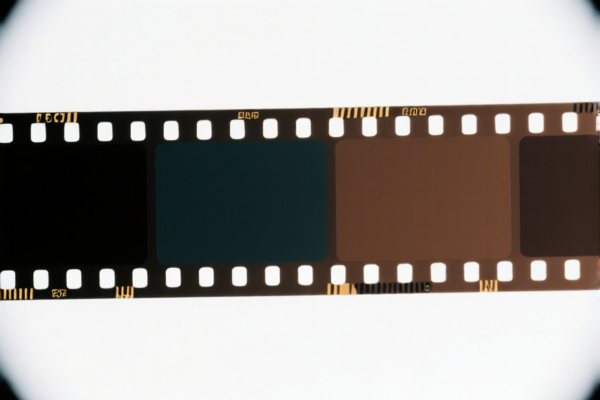
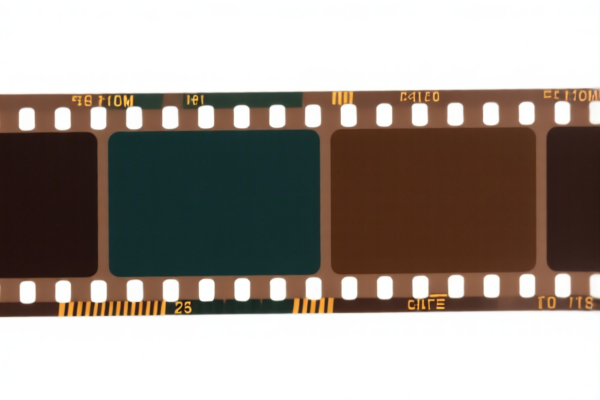
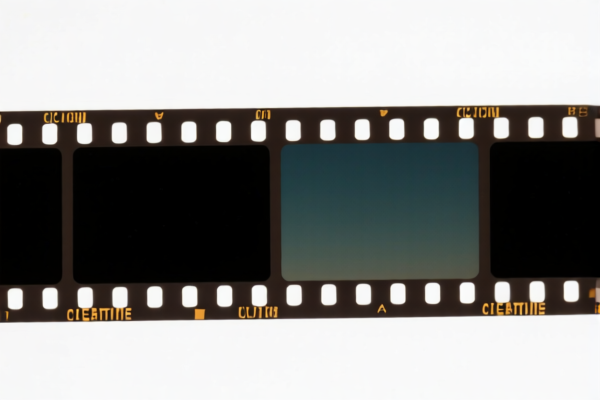

AI Analysis
🎞️ Color Film Short Exposure (Unexposed & Sensitive Material)
🌐 HS Code Reference & Customs Clearance Guide | 2026 Latest Tariff Analysis | Professional Clearance Strategy
📌 I. Product Definition & Classification: What is "Color Film Short Exposure"?
In the context of international trade, "Color Film Short Exposure" is a technical term that primarily refers to unexposed, light-sensitive color photographic materials. It does not refer to overexposed or damaged goods in a negative sense, but rather to the raw material state of color photography film (strips, rolls, or sheets) that is pre-sensitized (coated with light-sensitive emulsion) but not yet exposed to an image-capturing light source.
Key characteristics include: * Color Sensitivity: Multi-layer emulsion capable of capturing red, green, and blue light. * Physical Form: Can be in strips (sheets), rolls (brolls), or cut sizes. * State: Unexposed (raw material) or Partially exposed (rarely classified as such unless for specific testing, but usually falls under unexposed if not fully processed). * Material Substrate: Usually plastic base (cellulose acetate, polyester) or sometimes paper/fabric for special industrial uses, but primarily plastic for photographic film.
⚠️ Key Distinction:
- If the film is unexposed and raw: It is classified as photographic film/rolls (Heading 3701 or 3702).
- If the film is already exposed and developed (showing an image): It is classified as photographic paper/paperless plates or other photographic goods (Heading 3705).
- "Short Exposure" in a commercial invoice usually implies the product is new, unexposed, and ready for use.
📦 II. HS Code Classification Details (2026 Latest Tariff Authority Mapping)
Based on the provided <DATA>, there are four primary HS Codes for "Color Film" products. The selection depends on the physical form (sheet vs. roll) and specific material characteristics.
| HS Code | Product Description | Applicable Scenario | Physical Form | Material Substrate |
|---|---|---|---|---|
3701.91.00.60 |
Color photographic film, unexposed, meeting color film characteristics | Large format sheets, dry plates, or special unexposed color film strips | Sheet/Strip (not roll) | Plastic/Polyester base |
3701.91.00.30 |
Color photographic film, multi-color sensitive material, unexposed | Similar to above, but specifically defined as "multi-color sensitive" for customs classification | Sheet/Strip | Plastic/Polyester base |
3702.53.00.30 |
Color photographic rolls, light-sensitive material, roll form | Standard camera rolls, bulk rolls (brolls) for industrial use | Roll | Plastic/Polyester base |
3702.53.00.60 |
Color photographic rolls, light-sensitive, unexposed, non-paper, non-textile | Specific roll type for general photography, excluding paper-based or fabric-based media | Roll | Plastic/Polyester base (non-paper/textile) |
🔍 Critical Note:
- HS 3701 generally covers plates, sheets, and strips.
- HS 3702 generally covers rolls (including "brolls" for industrial copying).
- "Unexposed" is the key keyword. Once exposed and developed, it moves to 3705.00.00.00.
💰 III. 2026 Latest Tariff Rate Breakdown (Including Surtaxes & Policy Surcharges)
✅ Applicable Country: United States (US)
✅ Country of Origin: China (CN)
✅ Effective Date: November 10, 2025 (and subsequent imports)
All the provided HS Codes share the same tariff structure due to the nature of the goods (photographic materials from China).
🎯 1. Unexposed Color Film (HS Codes: 3701.91.00.60 / 3701.91.00.30 / 3702.53.00.30 / 3702.53.00.60)
| Item | Content |
|---|---|
| Basic Tariff | 3.7% (ad valorem) |
| Section 301 Surtax | +25.0% (USITC Footnote for Chinese imports) |
| Section 122 Tariff | +10.0% (Additional surcharge for Chinese goods under specific trade acts) |
| Total Tariff Rate | 38.7% |
| Tax Calculation | CIF Value × 38.7% |
| De Minimis Exemption | ❌ Not Applicable (deny_de_minimis) |
| Legal Basis Path | Section 301: 9903.88.01 → Section 122: 9903.01.25 → USITC: 3701/3702 |
📌 Explanation:
- The 3.7% is the standard Most Favored Nation (MFN) rate for photographic films.
- The +25% is the standard Section 301 tariff for Chinese-origin goods in this category.
- The +10% is an additional surcharge (often referred to as "122 Tariff" in some trade systems) applied to Chinese imports.
- Total: 38.7%. This is a high tariff that must be factored into your pricing strategy.
🎯 2. Exposed & Developed Color Film (HS Code: 3705.00.00.00)
| Item | Content |
|---|---|
| Basic Tariff | 0.0% |
| Section 301 Surtax | +25.0% |
| Section 122 Tariff | +10.0% |
| Total Tariff Rate | 35.0% |
| Tax Calculation | CIF Value × 35.0% |
| De Minimis Exemption | ❌ Not Applicable |
| Legal Basis Path | Section 301: 9903.88.01 → Section 122: 9903.01.25 → USITC: 3705.00.00.00 |
📌 Note:
- Even though the basic rate is 0%, the surcharges bring the total to 35.0%.
- This applies to already exposed and developed film (e.g., customer-processed rolls, medical imaging film that is already developed).
- Do not misclassify unexposed film as exposed to save 3.7%. This is a common audit trigger.
🛠️ IV. Customs Clearance Practical Advice (Real-World Pitfall Guide)
✅ 1. Required Documentation Checklist (All Mandatory)
| Document | Must Provide | Explanation |
|---|---|---|
| ✅ Product Specification Sheet | ✔️ | Must clearly state: "Unexposed Color Photographic Film," "Light-Sensitive," "Store in Dark/Cool." |
| ✅ Material Composition | ✔️ | Specify base material (e.g., Polyester, Acetate). Crucial for distinguishing HS 3702.53.00.60 (non-paper/non-textile). |
| ✅ Product Photos | ✔️ | Clear images of packaging showing "Unexposed," "Color," and expiration date. |
| ✅ Commercial Invoice | ✔️ | Must explicitly state "Unexposed" to avoid confusion with "Developed/Exposed" (3705). |
| ✅ Packing List | ✔️ | Detail net/gross weight. Note: Film is heavy and sensitive to temperature. |
| ✅ Certificate of Origin (CO) | ✔️ | Required to confirm China origin for surcharge calculation. |
| ✅ Safety Data Sheet (SDS) | ✔️ | Some chemical emulsions may require hazardous material declaration. |
✅ 2. Declaration Tips (Key Mnemonics)
🔥 "Unexposed is Key, Roll vs. Sheet is Law, Paper is Wrong, Tax is High!"
| Scenario | Correct Declaration | Incorrect Practice |
|---|---|---|
| Color Film Rolls | 3702.53.00.30 or 3702.53.00.60 |
Misdeclaring as "Paper" → Wrong HS, Higher Tax |
| Color Film Sheets | 3701.91.00.60 or 3701.91.00.30 |
Misdeclaring as "Roll" → Classification Error |
| Unexposed | Explicitly state "Unexposed, Light-Sensitive" | Omitting "Unexposed" → Risk of being classified as general photo goods |
| Exposed/Developed | 3705.00.00.00 |
Misdeclaring as "Unexposed" → Fraud, Heavy Penalties |
📌 Warning:
- Do not describe as "Photo Paper" unless it is actually paper-based. Paper-based photo paper often falls under different HS codes with different tariffs.
- Do not use "Short Exposure" as the primary product name. Use "Unexposed Color Photographic Film" or "Color Film Rolls/Sheets".
✅ 3. Special Case Handling
| Situation | Handling Advice |
|---|---|
| Film for Industrial X-Ray | If it’s medical/industrial X-ray film, it may still fall under 3701/3702 but requires specific medical device documentation. |
| Bulk Rolls (Brolls) | Clearly state "Bulk Roll" or "Copy Film" to justify HS 3702.53.00.30. |
| Temperature-Controlled Shipping | Film is heat-sensitive. Provide insurance and proper packaging notes to avoid damage claims. |
| Sample Shipments | No De Minimis Exemption. Even 1 meter of film is subject to 38.7% tariff. |
🌍 V. Global Market Customs Comparison (2026 Latest)
| Country/Region | Recommended HS Code | Tariff (China Origin) | Certification Requirements | Notes |
|---|---|---|---|---|
| 🇺🇸 USA | 3702.53.00.30 / 3701.91.00.60 |
38.7% (Unexposed) 35.0% (Exposed) |
None (General) | High Tariff. Section 301 & 122 apply. |
| 🇨🇳 China | 3702.53.00.30 |
5.0% (Import Duty) | None | Low duty, but subject to import VAT (13%). |
| 🇪🇺 EU | 3702.53.00 |
0% (Most Favored Nation) | CE (if applicable), RoHS | No Section 301. Best market for EU importers. |
| 🇬🇧 UK | 3702.53.00 |
0% | UKCA | Post-Brexit, many photographic goods have 0% duty. |
| 🇯🇵 Japan | 3702.53.00 |
0% - 3% | PSE (if electrical components) | Low tariffs. |
📌 Conclusion:
- USA is the most expensive market for Chinese color film due to 38.7% total tariff.
- EU, UK, and Japan offer 0-3% tariffs, making them more competitive for Chinese film manufacturers.
- Strategy: If exporting to the US, consider supply chain relocation (e.g., Vietnam, India) or price absorption.
📌 VI. Common Errors & Pitfall Guide (Lessons from Blood & Tears)
❌ Error 1: Declaring Unexposed Film as Developed Film to save 3.7%
👉 Consequence: If audited, the discrepancy between "Unexposed" and "Developed" will trigger penalties, back taxes, and potential fraud charges.
❌ Error 2: Declaring Rolls as Sheets (or vice versa)
👉 Consequence: Customs may reject the declaration, delay clearance, or reclassify to a different HS code with different duty implications.
❌ Error 3: Using "Photo Paper" for Plastic-Based Film
👉 Consequence: Wrong HS code classification. Paper-based film has different duties and regulations.
❌ Error 4: Ignoring "Short Exposure" Terminology
👉 Consequence: "Short Exposure" is ambiguous. Customs officers may not understand it. Always use "Unexposed" in English declarations.
✅ Correct Practice:
"Color Photographic Film, Unexposed, Polyester Base, Roll Form, for 35mm Cameras, HS 3702.53.00.30"
🎯 VII. Conclusion: Precision in Declaration Saves Costs!
🎯 Remember the Mnemonic:
🔹 "Unexposed is 38.7%, Exposed is 35.0%, Roll vs Sheet is Key, Paper is Wrong!"
🔹 "HS Code Determines Life, Tax Differs by 3%, Declaration Step One, Save Thousands!"
📌 Pro Tip:
If your film is produced in Vietnam, India, or Malaysia, you may qualify for lower or zero tariffs under US trade preferences (e.g., GSP, though GSP has expired for many items, bilateral FTAs may apply).
Recommendation: Apply for a Pre-Ruling (Advance Ruling) with US Customs and Border Protection (CBP) if importing large volumes to ensure correct classification and avoid unexpected duties.
📣 Immediate Action:
📞 Contact a Professional Customs Broker + Provide Product Specs + Request HS Code Pre-Ruling
🚀 Let your film Clear Customs Smoothly, Efficiently, and Profitably!
✨ Professional Customs Clearance Starts with Accurate Classification!
💼 Every Penny of Cost Deserves Precise Calculation!
Customer Reviews
About HS Code Classification
The Harmonized System (HS) is an internationally standardized nomenclature developed by the World Customs Organization (WCO) to classify traded products. Over 200 countries use the HS system as the basis for customs tariffs, trade statistics, and import/export regulations.
Each HS code follows a hierarchical structure:
- Chapter (2 digits) — Broad category of goods (e.g., Chapter 84: Machinery and Mechanical Appliances)
- Heading (4 digits) — More specific grouping within the chapter
- Subheading (6 digits) — Internationally standardized breakdown, used by all WCO member countries
- National subdivisions (8-10 digits) — Country-specific extensions for further classification, such as US HTSUS 10-digit codes
Correct HS code classification is essential for smooth customs clearance, accurate duty payment, and compliance with trade regulations. Misclassification can lead to customs delays, overpayment of duties, or penalties.
When importing from CN to US, the applicable tariff rates may include:
- Most-Favored-Nation (MFN) rate — The standard duty rate applied to WTO members
- General rate — Applied to countries without trade agreements
- Trade remedy duties — Additional tariffs such as Section 301 (anti-dumping), Section 232 (national security), or countervailing duties
The information provided on this page is for reference purposes only. For official classification, please consult with your local customs authority or a licensed customs broker.