Color Film for Experimental Use
CN → US| HS Code | Tariff Rate | Origin | Destination | Doc |
|---|---|---|---|---|
| 3702310100 | 38.7% | CN | US | Official Doc |
| 3702520130 | 38.7% | CN | US | Official Doc |
| 3704000000 | 35.0% | CN | US | Official Doc |
| 3702310100 | 38.7% | CN | US | Official Doc |
| 3702520130 | 38.7% | CN | US | Official Doc |
Product Images
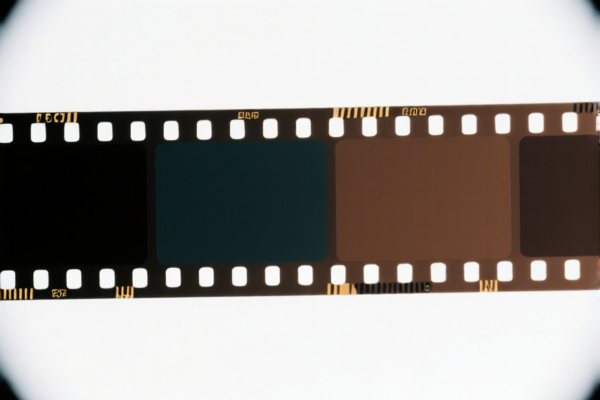
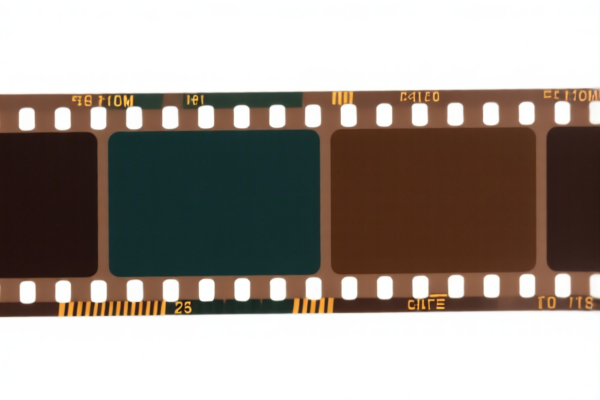
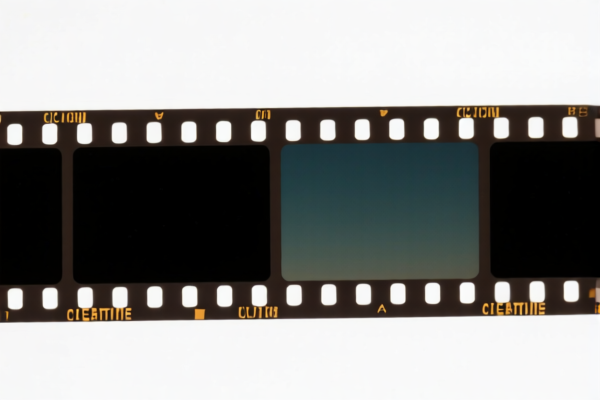

AI Analysis
🎞️ Color Film for Experimental Use
🌐 HS Code Reference & Customs Clearance Guide | 2026 Latest Tariff Analysis | Professional Clearance Strategy
📌 I. Product Definition & Classification: What Exactly Is "Experimental Color Film"?
Color film for experimental use refers to photosensitive media intended for research, development, or non-commercial testing. It is distinct from standard commercial photographic film due to its specific application in laboratories or R&D facilities. In international trade, it is primarily categorized under Chapter 37 (Photographic or Cinematographic Goods) based on its material nature (film substrate) and function (photosensitive exposure medium).
⚠️ Key Distinction:
- If the film is exposed but unprocessed (meaning it has recorded data but not yet developed into a visible image), it may fall under 3704.00.00.00.
- If the film is unexposed (new, ready for use), it is classified based on its color type (e.g., reversal or negative) under 3702.
- Crucial Factor: The description "experimental" does not automatically grant a specific HS Code; classification depends on whether it is exposed/unexposed and reversal/negative.
📦 II. HS Code Classification Details (Based on Provided Data)
The following HS Codes are derived directly from the provided dataset, each matching specific characteristics of "color film."
| HS Code | Product Description | Key Matching Features | Total Tax Rate |
|---|---|---|---|
| 3702.31.01.00 | Color Film (General/Negative) | Matches Color and Film Form; fits non-paper photosensitive medium characteristics. Suitable for general color photographic film (e.g., negative film). | 38.7% |
| 3702.52.01.30 | Color Reversal Film | Matches Color and Film Form; inferred as Color Reversal Film (Slide Film). Specifically for experimental color reversal media. | 38.7% |
| 3704.00.00.00 | Exposed Photographic Film | Matches Film Material and Photo Carrier Form; fits characteristics of Exposed but Unprocessed film. | 35.0% |
| 3702.31.01.00 | Color Photographic Roll Film | Matches Color and Film Roll elements; fits general photographic film roll materials. | 38.7% |
| 3702.52.01.30 | Color Photosensitive Roll Film | Matches Color and Film Roll Usage; inferred as Photosensitive Roll Film material. | 38.7% |
🔍 Analysis:
- Codes 3702.31.01.00 & 3702.52.01.30 apply to unexposed film. The choice between them depends on whether the experimental film is negative (3702.31) or reversal/slide (3702.52).
- Code 3704.00.00.00 applies only if the experimental film has already been exposed (used in the experiment) but not yet processed. This is a critical distinction for customs valuation and classification.
💰 III. 2026 Latest Tariff Rate Breakdown (Detailed Tax Clauses)
✅ Applicable Country: United States (US)
✅ Country of Origin: China (CN) (Implied by "122 Clause" and USITC footnotes in data)
✅ Effective Date: Current tariff schedule applies.
🎯 1. 3702.31.01.00 & 3702.52.01.30 (Unexposed Color Film)
| Item | Detail |
|---|---|
| Base Tariff | 3.7% (Ad Valorem) |
| Additional Tariff (Section 301 / "Plus Tariff") | 25.0% |
| Section 122 Tariff | 10% |
| Total Tax Rate | 38.7% |
| Tax Calculation | CIF Value × 38.7% |
| De Minimis Exemption? | ❌ No (High tariff items are typically excluded from $800 de minimis exemption if classified under specific restricted categories, though this depends on current enforcement. Generally, high-duty goods require full duty payment.) |
| Legal Basis Path | Base: 3702.31/3702.52 → Section 301: 25% → Section 122: 10% |
📌 Explanation:
- 3.7%: Standard Most Favored Nation (MFN) rate for photographic film.
- 25.0%: Section 301 tariffs imposed on specific Chinese goods, including certain chemical/photographic products.
- 10%: Section 122 tariffs (often related to national security or emergency actions).
- Total 38.7%: This is a high duty rate. For experimental film, which often has low declared value, this still represents a significant percentage cost.
🎯 2. 3704.00.00.00 (Exposed Film)
| Item | Detail |
|---|---|
| Base Tariff | 0.0% |
| Additional Tariff (Section 301 / "Plus Tariff") | 25.0% |
| Section 122 Tariff | 10% |
| Total Tax Rate | 35.0% |
| Tax Calculation | CIF Value × 35.0% |
| De Minimis Exemption? | ❌ No |
| Legal Basis Path | Base: 3704.00.00.00 → Section 301: 25% → Section 122: 10% |
📌 Explanation:
- 0.0% Base: Exposed film often has a lower or zero base duty in some interpretations, but the add-on tariffs remain mandatory.
- Total 35.0%: Slightly lower than unexposed film (3.7% base vs 0% base), but still high due to add-ons.
- Critical Note: If the film is exposed, it is considered "processed data" or "waste" in some contexts, which can affect duty. However, under HS 3704, it is still subject to the full add-on tariffs.
🛠️ IV. Customs Clearance Practical Advice (Pitfall Avoidance Guide)
✅ 1. Essential Documentation Checklist
| Document | Required? | Purpose |
|---|---|---|
| ✅ Product Specification Sheet | ✔️ | Must clearly state: "Color Film for Experimental Use," chemical composition, and whether it is exposed or unexposed. |
| ✅ Commercial Invoice | ✔️ | Must explicitly mention "Experimental Use" and HS Code (e.g., 3702.31.01.00). |
| ✅ Certificate of Origin (CO) | ✔️ | To verify country of origin (China) for accurate Section 301/122 application. |
| ✅ Lab/Research Agreement | ✔️ | Optional but recommended to justify "experimental" nature if challenged. |
| ✅ Photos of Product | ✔️ | Show packaging, labels, and any "Exposed" or "Unexposed" markings. |
✅ 2. Classification Strategy (Key Tips)
🔥 "Exposed vs. Unexposed is the Key!"
| Scenario | Correct HS Code | Risk |
|---|---|---|
| New, Unexposed Film (Negative) | 3702.31.01.00 |
Standard clearance. Duty: 38.7%. |
| New, Unexposed Film (Reversal/Slide) | 3702.52.01.30 |
Standard clearance. Duty: 38.7%. |
| Used/Exposed Film (Data Recorded) | 3704.00.00.00 |
High Risk: Must prove it is exposed. If declared as unexposed, it will be rejected. Duty: 35.0%. |
| Film + Chemicals + Equipment | Separate Classification | Do not bundle film with cameras or chemicals. Film must be classified separately. |
✅ 3. Special Considerations for "Experimental" Use
- Valuation: Since it is for experimental use, the declared value may be low. Ensure the CIF value includes freight and insurance to avoid customs under-valuation penalties.
- Section 122 & 301: These tariffs are not exempted for personal or experimental use. All imports from China are subject to these additional duties.
- Labeling: Clearly label packages as "PHOTOGRAPHIC FILM" or "EXPOSED FILM" (if applicable) to avoid confusion with "photo paper" (Chapter 48) or "digital sensors" (Chapter 85).
🌍 V. Global Market Comparison (2026 Update)
| Country/Region | Recommended HS Code | Est. Tariff | Notes |
|---|---|---|---|
| 🇺🇸 United States | 3702.31.01.00 / 3704.00.00.00 |
35.0% - 38.7% | High due to Section 301 & 122. |
| 🇨🇳 China (Import) | 3702 or 3704 |
~3.7% | Low base duty, no Section 301/122. |
| 🇪🇺 European Union | 3702 or 3704 |
0% - 3.7% | Generally low duties, no major anti-dumping on film. |
| 🇯🇵 Japan | 3702 or 3704 |
~3% - 5% | Standard MFN rates apply. |
📌 Conclusion:
- USA is the most expensive market for Chinese-origin film due to 38.7% total duty.
- EU, Japan, China offer significantly lower duty rates.
- For US imports, consider supply chain diversification (e.g., sourcing from Japan or EU) if duty costs are prohibitive.
📌 VI. Common Mistakes & Pitfalls (Lessons Learned)
❌ Mistake 1: Declaring "Color Film" without specifying Exposed vs. Unexposed
👉 Consequence: Customs may misclassify as 3702 (if exposed) or 3704 (if unexposed), leading to duty underpayment/overpayment and penalties.
❌ Mistake 2: Ignoring Section 122 and 301 Tariffs
👉 Consequence: Under-declaring total duty. The base rate (3.7% or 0%) is misleading. The true cost is 35-38.7%.
❌ Mistake 3: Bundeles Film with Chemical Kits or Cameras
👉 Consequence: Misclassification. Film must be declared separately. Chemicals may have different HS codes (e.g., 3808). Cameras are 9006. This leads to confusion and delays.
✅ Correct Approach:
"Declare HS Code precisely: 3702.31.01.00 for unexposed negative film, 3704.00.00.00 for exposed film. Account for 38.7% total duty (US origin: China)."
🎯 VII. Conclusion: Professional Clearance for Experimental Film
🎯 Key Takeaway:
🔹 "Exposed or Unexposed? Choose Wisely!"
🔹 "38.7% Duty for Unexposed, 35.0% for Exposed (US from China)."
🔹 "Always separate film from cameras and chemicals."
📌 Pro Tip:
If the experimental film is not from China (e.g., from Japan or Germany), the Section 301 and 122 tariffs do not apply, reducing the duty to 3.7% (unexposed) or 0% (exposed). Always verify the Country of Origin!
📣 Immediate Action:
📞 Consult a Customs Broker for pre-classification.
📝 Provide Detailed Specs: Clearly state "Color Film for Experimental Use" and Exposure Status.
🚀 Plan for Duty Costs: Factor in ~35-38% for US imports from China.
✨ Professional Clearance, Start with Precise Classification!
💼 Your Every Cent in Duty Counts!
Customer Reviews
About HS Code Classification
The Harmonized System (HS) is an internationally standardized nomenclature developed by the World Customs Organization (WCO) to classify traded products. Over 200 countries use the HS system as the basis for customs tariffs, trade statistics, and import/export regulations.
Each HS code follows a hierarchical structure:
- Chapter (2 digits) — Broad category of goods (e.g., Chapter 84: Machinery and Mechanical Appliances)
- Heading (4 digits) — More specific grouping within the chapter
- Subheading (6 digits) — Internationally standardized breakdown, used by all WCO member countries
- National subdivisions (8-10 digits) — Country-specific extensions for further classification, such as US HTSUS 10-digit codes
Correct HS code classification is essential for smooth customs clearance, accurate duty payment, and compliance with trade regulations. Misclassification can lead to customs delays, overpayment of duties, or penalties.
When importing from CN to US, the applicable tariff rates may include:
- Most-Favored-Nation (MFN) rate — The standard duty rate applied to WTO members
- General rate — Applied to countries without trade agreements
- Trade remedy duties — Additional tariffs such as Section 301 (anti-dumping), Section 232 (national security), or countervailing duties
The information provided on this page is for reference purposes only. For official classification, please consult with your local customs authority or a licensed customs broker.