Color Film for Landscape Photography
CN → US| HS Code | Tariff Rate | Origin | Destination | Doc |
|---|---|---|---|---|
| 3702520130 | 38.7% | CN | US | Official Doc |
| 3704000000 | 35.0% | CN | US | Official Doc |
| 3702310100 | 38.7% | CN | US | Official Doc |
| 3706106060 | 35.0% | CN | US | Official Doc |
| 3706900060 | 35.0% | CN | US | Official Doc |
Product Images
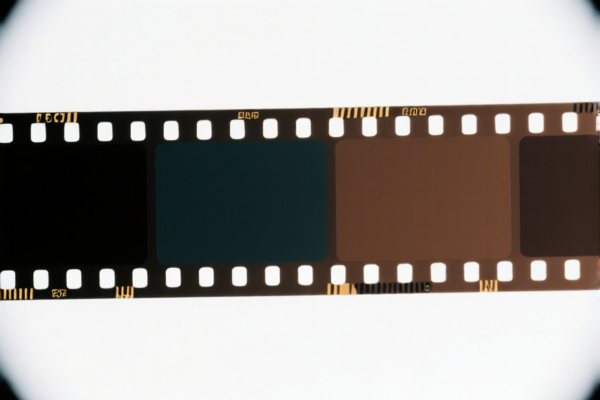
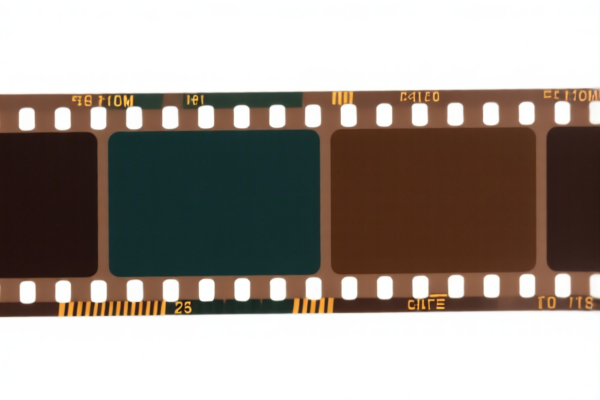
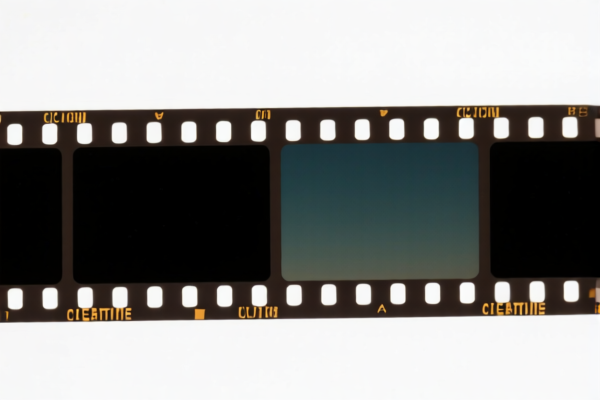

AI Analysis
🎞️ Color Film for Landscape Photography (Colored Photographic Film)
🌐 HS Code Reference & Customs Clearance Guide | 2026 Latest Tariff Analysis | Professional Clearance Strategy
📌 Part 1: Product Definition & Classification: Do You Truly Understand "Color Film"?
Color film, specifically designed for landscape photography, falls under the broad category of photographic films sensitized but not developed. In international trade, the classification hinges on two critical factors: 1. Format/Usage: Is it standard still photography film, or specialized motion picture film (cinema)? 2. Type: Is it negative film (for printing) or reversal film (for slides/positives)?
For landscape photography, the most common forms are standard negative film (e.g., Kodak Portra, Fuji Pro 400H) or reversal film (e.g., Fujifilm Velvia, Kodak Ektachrome). However, if the film is in formats intended for motion picture cameras (even if used artistically for landscapes), it may fall under "motion picture film."
⚠️ Key Distinction Point:
- If it is standard still photography film (35mm, 120, large format) → Generally falls under 3702.52.01.30 (Reversal) or 3702.31.01.00 (Negative).
- If it is motion picture film (16mm, 35mm cinema reels) → Falls under 3706.10.60.60 or 3706.90.00.60.
- If it is raw/unexposed sheet film not fitting specific categories → Might be classified as 3704.00.00.00 (Developed/Undeveloped plates/films not elsewhere specified).
📦 Part 2: HS Code Classification Details (2026 Latest Tariff Authority Match)
| HS Code | Product Description | Applicable Scenario | Tax Rate (Total) | Tax Breakdown |
|---|---|---|---|---|
3702.52.01.30 |
Color Reversal Film, for specific photographic uses (e.g., slides, professional landscape) | High-end landscape photography using reversal film (Velvia/Ektachrome) | 38.7% | Base: 3.7%, Section 301: 25%, Section 122: 10% |
3704.00.00.00 |
Photographic plates/films, developed or undeveloped, other than headings 3702, 3706 | General undeveloped color film not fitting specific subheadings; raw sheet film | 35.0% | Base: 0.0%, Section 301: 25%, Section 122: 10% |
3702.31.01.00 |
Color Negative Film, for still photography | Standard color negative film (Kodak Gold, Fuji C200) for landscape prints | 38.7% | Base: 3.7%, Section 301: 25%, Section 122: 10% |
3706.10.60.60 |
Motion Picture Film, Color, for Cinema/Sports Photography | If "landscape" shots are taken using cinema cameras (16mm/35mm reels) | 35.0% | Base: 0.0%, Section 301: 25%, Section 122: 10% |
3706.90.00.60 |
Other Motion Picture Film, Color | Catch-all for specialized cinema film formats not listed above | 35.0% | Base: 0.0%, Section 301: 25%, Section 122: 10% |
🔍 Critical Insight:
- Reversal vs. Negative: Reversal film (3702.52.01.30) and Negative film (3702.31.01.00) have higher base tariffs (3.7%) but face the same trade war surcharges.
- Motion Picture vs. Still: Motion picture film (3706.xxxxxxxx) has a 0% base tariff but still incurs the 35% total due to surcharges.
- General Category: If the film is unusual (e.g., large sheet film not for cameras),3704.00.00.00applies with a 0% base tariff.
💰 Part 3: 2026 Latest Tariff Rate Breakdown (Including Surcharges & Policy Add-ons)
✅ Applicable Country: USA (US)
✅ Origin: China (CN)
✅ Effective Date: November 10, 2025 (and subsequent imports)
🎯 1. 3702.52.01.30 & 3702.31.01.00 — Color Film for Still Photography
| Item | Content |
|---|---|
| Base Tariff | 3.7% (ad valorem) |
| USITC Surcharge | +25.0% (Under USITC Footnote 9903.88.01, Section 301) |
| IEEPA Surcharge | +10.0% (Targeting China/HK products, effective Nov 10, 2025) |
| Total Tax Rate | 38.7% |
| Tax Calculation | CIF Value × 38.7% |
| De Minimis Exemption | ❌ Not Eligible (deny_de_minimis) |
| Legal Pathway | IEEPA:9903.01.25 → IEEPA:9903.01.24 → USITC:3702.52.01.30 → FOOTNOTE:9903.88.01 |
📌 Explanation:
- The 3.7% base rate is standard for photographic films.
- The 25% Section 301 tariff applies to most Chinese-manufactured photographic materials.
- The 10% Section 122 tariff is an additional levy on Chinese goods targeting specific trade deficits.
- Total 38.7% is significant for low-cost items like film rolls.
🎯 2. 3704.00.00.00 — General Photographic Film
| Item | Content |
|---|---|
| Base Tariff | 0.0% |
| USITC Surcharge | +25.0% |
| IEEPA Surcharge | +10.0% |
| Total Tax Rate | 35.0% |
| Tax Calculation | CIF Value × 35.0% |
| De Minimis Exemption | ❌ Not Eligible |
| Legal Pathway | IEEPA:9901.25 → IEEPA:9903.01.24 → USITC:3704.00.00.00 → FOOTNOTE:9903.88.01 |
📌 Note:
- While the base tariff is lower (0%), the total effective rate is still high due to surcharges.
- This category is often used for sheet film or non-standard formats.
🎯 3. 3706.10.60.60 & 3706.90.00.60 — Motion Picture Film
| Item | Content |
|---|---|
| Base Tariff | 0.0% |
| USITC Surcharge | +25.0% |
| IEEPA Surcharge | +10.0% |
| Total Tax Rate | 35.0% |
| Tax Calculation | CIF Value × 35.0% |
| De Minimis Exemption | ❌ Not Eligible |
| Legal Pathway | IEEPA:9901.25 → IEEPA:9903.01.24 → USITC:3706.10.60.60 → FOOTNOTE:9903.88.01 |
📌 Note:
- Even if used for "landscape" video art, if it fits the definition of motion picture film, it falls here.
- The 0% base rate makes it slightly cheaper than still photography film (3.7% base).
🛠️ Part 4: Customs Clearance Practical Advice (Live Pit-Avoidance Guide)
✅ 1. Required Documentation Checklist (Non-Negotiable)
| Document | Required? | Description |
|---|---|---|
| ✅ Product Specification Sheet | ✔️ | Must specify: Color Type (Negative/Reversal), Format (35mm/120/Cinema), Sensitivity (ISO) |
| ✅ Photo/Label Image | ✔️ | Clear image of the film canister/box showing brand, model, and "Color Film" designation |
| ✅ Commercial Invoice | ✔️ | Must clearly state "Photographic Film, Color, Undeveloped" |
| ✅ Certificate of Origin (CO) | ✔️ | Crucial for proving Chinese origin; if non-Chinese, may qualify for lower rates |
| ✅ Packing List | ✔️ | Detailed list of quantities, box dimensions, and weights |
✅ 2. Declaration Tips (Key Mantra)
🔥 "Be Specific, Avoid Generalizations, Prove the Use!"
| Scenario | Correct Declaration | Wrong Approach |
|---|---|---|
| Standard 35mm Color Negative | 3702.31.01.00 (Color Negative Film) |
Declaring as "Photographic Supplies" → Risk of audit |
| Professional Reversal Film (Velvia) | 3702.52.01.30 (Color Reversal Film) |
Declaring as "General Film" → Higher scrutiny |
| Cinema Reel (16mm) | 3706.10.60.60 (Motion Picture Film) |
Declaring as "Still Photography Film" → Misclassification penalty |
| Raw Sheet Film | 3704.00.00.00 |
Declaring as "Camera Accessories" → Incorrect |
✅ 3. Special Handling
| Situation | Handling Advice |
|---|---|
| Bulk Import for Retail | Provide retail packaging images and price lists to prove commercial intent. |
| Sample Imports | Clearly mark "Sample – Not for Sale." However, duties still apply if value exceeds de minimis limits (currently $800, but denied for Chinese goods under Section 301/122). |
| OEM/White Label | Provide contract with manufacturer. If manufactured in China, same tariffs apply. |
| Used Film? | Do Not Import. Used/expired film is often restricted or prohibited as waste. Only undeveloped film is classified under these HS codes. |
🌍 Part 5: Global Market Comparison (2026 Latest)
| Country/Region | Recommended HS Code | Tariff Rate | Certification Req. | Notes |
|---|---|---|---|---|
| 🇺🇸 USA | 3702.52.01.30 / 3702.31.01.00 |
38.7% | None | High due to Section 301 + 122. No de minimis. |
| 🇨🇳 China | 3702.52.01.30 |
3.7% | None | If importing into China, base rates apply. |
| 🇪🇺 EU | 3702.52.01.30 |
0%* | REACH/CLP | *If originating from EU. Chinese film may face anti-dumping? |
| 🇬🇧 UK | 3702.52.01.30 |
0%* | UKCA | Post-Brexit rules apply. |
| 🇯🇵 Japan | 3702.52.01.30 |
3.0%* | PSE | Lower base rates in Asia/EU. |
📌 Conclusion:
- USA is the most expensive market for Chinese-made color film due to 38.7% effective rate.
- No de minimis exemption means even small shipments (under $800) are subject to duties if they are Chinese-origin.
- Consider sourcing from Vietnam, Thailand, or Japan to mitigate US tariffs if possible.
📌 Part 6: Common Errors & Pitfalls (Lessons Learned)
❌ Error 1: Declaring "Photographic Film" without specifying Color/Negative/Reversal
👉 Consequence: Customs may classify under highest duty rate or delay for inspection.
❌ Error 2: Confusing "Motion Picture Film" with "Still Photography Film"
👉 Consequence: If you import cinema reels but declare as 35mm still film, you risk penalties for misclassification.
❌ Error 3: Assuming De Minimis ($800) applies to Chinese goods
👉 Consequence: Seizure or forced return. Section 301 and 122 tariffs explicitly deny de minimis exemptions for Chinese goods.
❌ Error 4: Not providing HS Code details
👉 Consequence: Brokers may guess, leading to incorrect duty calculation and surprise bills.
✅ Correct Practice:
"Kodak Color Reversal Film, 120 Format, ISO 100, Undeveloped, For Professional Photography, Model XYZ, Made in China"
🎯 Part 7: Conclusion: Precision in Classification, Savings in Duties
🎯 Remember the Mantra:
🔹 "Color Film is not just Film. Negative, Reversal, or Cinema? Know the Code!"
🔹 "38.7% for Still, 35% for Motion. No De Minimis for China. Stay Sharp!"
📌 Pro Tip:
If your film is not of Chinese origin (e.g., manufactured in Japan, Italy, or India), you can apply for preferential tariff rates and avoid Section 301/122 surcharges.
👉 Always verify the Country of Manufacture, not just the Brand!
📣 Immediate Action:
📞 Consult a licensed customs broker + Provide product labels + Apply for Advance Ruling if importing large volumes.
🚀 Ensure your Color Film clears customs smoothly, efficiently, and cost-effectively!
✨ Professional Clearance Starts with Accurate Classification!
💼 Every percentage point of duty affects your profit margin!
Customer Reviews
About HS Code Classification
The Harmonized System (HS) is an internationally standardized nomenclature developed by the World Customs Organization (WCO) to classify traded products. Over 200 countries use the HS system as the basis for customs tariffs, trade statistics, and import/export regulations.
Each HS code follows a hierarchical structure:
- Chapter (2 digits) — Broad category of goods (e.g., Chapter 84: Machinery and Mechanical Appliances)
- Heading (4 digits) — More specific grouping within the chapter
- Subheading (6 digits) — Internationally standardized breakdown, used by all WCO member countries
- National subdivisions (8-10 digits) — Country-specific extensions for further classification, such as US HTSUS 10-digit codes
Correct HS code classification is essential for smooth customs clearance, accurate duty payment, and compliance with trade regulations. Misclassification can lead to customs delays, overpayment of duties, or penalties.
When importing from CN to US, the applicable tariff rates may include:
- Most-Favored-Nation (MFN) rate — The standard duty rate applied to WTO members
- General rate — Applied to countries without trade agreements
- Trade remedy duties — Additional tariffs such as Section 301 (anti-dumping), Section 232 (national security), or countervailing duties
The information provided on this page is for reference purposes only. For official classification, please consult with your local customs authority or a licensed customs broker.