Color Glossy Photo Paper Roll
CN → US| HS Code | Tariff Rate | Origin | Destination | Doc |
|---|---|---|---|---|
| 4811906010 | 35.0% | CN | US | Official Doc |
| 3703203030 | 38.7% | CN | US | Official Doc |
| 3703103030 | 38.7% | CN | US | Official Doc |
| 4823906000 | 35.0% | CN | US | Official Doc |
| 4823400000 | 35.0% | CN | US | Official Doc |
Product Images


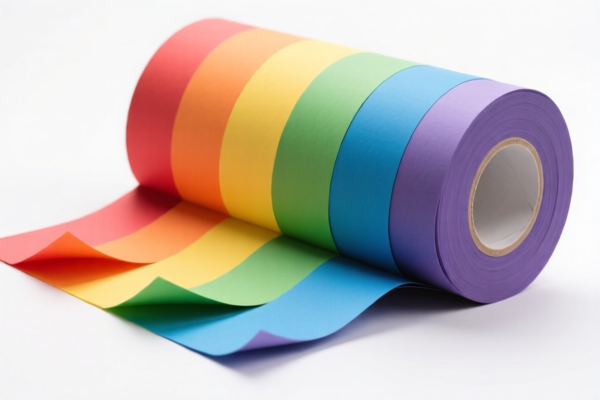
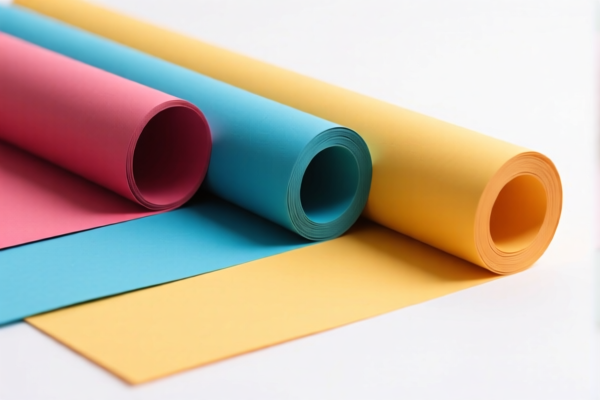
AI Analysis
📸 Color Glossy Photo Paper Roll: HS Code Classification & US Customs Clearance Strategy
🌐 HS Code Reference & Clearance Guide | 2026 Latest Tariff Analysis | Professional-Level Strategy
📌 Product Definition & Classification: What Exactly is "Color Glossy Photo Paper Roll"?
In international trade, "Color Glossy Photo Paper Roll" is not a single commodity. It is a generic term that spans from digital printing media to analog photography film. The correct HS Code classification depends entirely on the material composition, chemical coating, and intended use.
Misclassification here is critical because: 1. Tax Rates Vary Significantly: Some codes incur 35% total tax, while others hit 38.7%. 2. Regulatory Scrutiny: "Photographic Paper" (3703) falls under chemical/optical goods, while "Coated Paper" (48xx) falls under general paper products. 3. US Trade War Impact: All these codes are subject to Section 301 (25%) and Section 122 (10%) tariffs on Chinese imports.
⚠️ Key Distinction:
- If it is plain paper with color coating for inkjet/laser printing → Chapter 48 (Paper).
- If it is light-sensitive silver halide paper for chemical development → Chapter 37 (Photographic Goods).
📦 HS Code Classification Matrix (2026 Latest Harmonized System)
Below are the 5 specific HS Codes from the official dataset for "Color Glossy Photo Paper Roll." Note that while the summary names are similar, the tax rates and legal bases differ.
| HS Code | Product Summary | Material Base | Form | Primary Use | Total Tax (China Origin) |
|---|---|---|---|---|---|
| 4811.90.60.10 | Color double-sided photo paper roll | Paper (Coated Paper) | Roll | Surface coloring / Decoration | 35.0% |
| 3703.20.30.30 | Light-resistant color photo paper roll | Silver Halide Paper | Roll | Color Photography (Unexposed/Photosensitive) | 38.7% |
| 3703.10.30.30 | Light-resistant color photo paper roll | Silver Halide Paper | Roll | Color Photography (Photosensitive) | 38.7% |
| 4823.90.60.00 | Color continuous tone photo paper roll | Paper / Cellulose | Roll | Continuous Printing (Digital) | 35.0% |
| 4823.40.00.00 | Color continuous tone photo paper roll | Photo Paper (Cellulose) | Roll | Automatic Recorder Printing | 35.0% |
🔍 Critical Analysis:
- Codes 3703.xx are Photosensitive. They contain silver halides and require darkroom handling. They fall under Chemical/Optical regulations.
- Codes 4811/4823 are Non-Photosensitive. They are standard coated papers used for digital inkjet, laser, or thermal printers. They fall under Paper Products.
- Tax Difference: Photosensitive paper (38.7%) is taxed 3.7% higher than coated paper (35.0%) due to a higher base tariff (3.7% vs 0.0%).
💰 2026 Detailed Tariff Breakdown (US Market)
✅ Applicable Country: United States (US)
✅ Origin: China (CN)
✅ Effective Time: Current US Trade Policy (Section 301 & IEEPA)
All five HS codes listed above share the same add-on tariff structure. Here is the detailed breakdown:
🎯 1. The 35.0% Group (4811.90.60.10, 4823.90.60.00, 4823.40.00.00)
| Item | Detail |
|---|---|
| Base Tariff | 0.0% (Ad Valorem) |
| Section 301 Tariff | +25.0% (Additional Duties on Chinese Goods) |
| Section 122 / IEEPA Tariff | +10.0% (Specific US Trade Measures) |
| Total Effective Rate | 35.0% |
| Calculation Basis | CIF Value (Cost + Insurance + Freight) × 35% |
| De Minimis Exemption? | ❌ NO (Section 301 goods are denied de minimis exemption under $800) |
| Legal Basis Path | HTSUS:4811/4823 → USITC Footnote 9903.88.01 (25%) → IEEPA:9903.01.25 (10%) |
📌 Explanation:
- The 0% base rate applies because these are considered "Paper Articles."
- However, the 35% total makes them highly competitive only for low-margin or high-volume business.
🎯 2. The 38.7% Group (3703.20.30.30, 3703.10.30.30)
| Item | Detail |
|---|---|
| Base Tariff | 3.7% (Ad Valorem) |
| Section 301 Tariff | +25.0% (Additional Duties on Chinese Goods) |
| Section 122 / IEEPA Tariff | +10.0% (Specific US Trade Measures) |
| Total Effective Rate | 38.7% |
| Calculation Basis | CIF Value × 38.7% |
| De Minimis Exemption? | ❌ NO |
| Legal Basis Path | HTSUS:3703 → USITC Footnote 9903.88.01 (25%) → IEEPA:9903.01.25 (10%) |
📌 Explanation:
- The 3.7% base rate exists because photographic paper is classified as a "chemical/optical product," not simple paper.
- This is the highest cost category in the dataset. Importers must be precise: if you classify a non-photosensitive paper as "3703," you will be audited. If you classify photosensitive paper as "4811," you will be penalized for undervaluation.
🛠️ Customs Clearance Practical Advice (Battle-Tested Guide)
✅ 1. Documentation Checklist (Must-Have)
| Document | Required? | Why It Matters |
|---|---|---|
| ✅ Product Specification Sheet | Yes | Must clearly state: "Coated Paper" OR "Silver Halide Photographic Paper." Ambiguity causes delays. |
| ✅ Material Composition | Yes | Is it cellulose-based? Does it contain silver halides? This determines Chapter 48 vs. 37. |
| ✅ Product Photos | Yes | Show the packaging. If it says "Inkjet Compatible," it’s likely 48xx. If it says "Darkroom Use," it’s 3703. |
| ✅ Commercial Invoice | Yes | Must match the HS Code. Description: "Color Glossy Photo Paper Roll, Coated, Non-Photosensitive." |
| ✅ Certificate of Origin | Yes | Mandatory for proving China origin to apply/verify tariffs. |
✅ 2. Classification Strategy (The "Golden Rules")
🔥 "Check the Light Sensitivity! Check the Ink Compatibility!"
| Scenario | Correct HS Code | Reason |
|---|---|---|
| Digital Inkjet/Laser Photo Paper | 4811.90.60.10 or 4823.90.60.00 |
It is coated paper, not photosensitive. It reacts to ink/laser, not light. |
| Thermal Transfer Photo Paper | 4823.40.00.00 |
Used for automatic recorders/thermal printers. |
| Traditional Darkroom Film (Silver Halide) | 3703.20.30.30 or 3703.10.30.30 |
It is photosensitive. Requires darkroom processing. |
| Kodak/Fujifilm Professional Photo Paper | 3703.xx.xx.xx |
These brands typically produce silver halide paper. |
✅ 3. Common Pitfalls & How to Avoid Them
| ❌ Mistake | ✅ Consequence | ✅ Solution |
|---|---|---|
| Calling it "Photo Paper" only | Customs may classify as the highest (38.7%) to be safe, or delay for exam. | Specify: "Non-Photosensitive Coated Paper" OR "Silver Halide Photographic Paper." |
| Using De Minimis ($800) for B2B | Seizure or Penalty. Section 301 goods are excluded. | For B2B, pay the 35-38.7% tax. For B2C small parcels, ensure the carrier handles Section 301 duties correctly. |
| Confusing "Glossy" with "Photographic" | "Glossy" is a finish, not a chemical classification. | Do not use "Glossy" to justify 3703. Use it for 4811. |
| Ignoring Section 122 | Underpayment by 10%. | Ensure the broker includes the 10% IEEPA tariff in their calculation. |
✅ 4. Pro-Tip for Importers
🎯 "Pre-Ruling is Your Best Friend"
If you are importing high volumes, apply for an Advance Ruling from US Customs (CBP).
- Submit samples and specs.
- Get a binding decision on whether your paper is4811or3703.
- This prevents post-entry audits and potential retroactive tax penalties.
🌍 Global Market Comparison (2026)
| Market | HS Code (Typical) | Base Tariff | US Add-Ons | Total Impact |
|---|---|---|---|---|
| 🇺🇸 USA | 4811.90.60.10 |
0% | +35% | 35% (High Barrier) |
| 🇺🇸 USA | 3703.20.30.30 |
3.7% | +35% | 38.7% (Highest Barrier) |
| 🇪🇺 EU | 4823.40 |
~6.5% | None | ~6.5% (No US Add-Ons) |
| 🇨🇳 China | 4811.90 |
6.0% | None | 6.0% (Domestic/Export) |
📌 Conclusion:
The US market is uniquely expensive for Chinese photo paper due to the 35-38.7% combined tariff.
- Strategy: Consider sourcing from Vietnam, Mexico, or Thailand if possible to avoid Section 301/IEEPA tariffs (check rules of origin carefully).
- Alternative: If you are a US domestic buyer, ensure your supplier provides accurate material declarations to avoid being taxed at 38.7% when it should be 35%.
📌 Final Checklist for Smooth Clearance
- Identify Material: Is it Silver Halide (Chemical) or Coated Paper (Mechanical)?
- Select HS Code:
- Silver Halide →
3703.xx(Tax: 38.7%) - Coated Paper →
4811/4823(Tax: 35.0%)
- Silver Halide →
- Prepare Docs: Spec sheet, Invoice, Origin Cert.
- Declare Accurately: Use full description: "Color Glossy Photo Paper Roll, [Material Type], Non-Photosensitive/Photosensitive."
- Budget Tax: Calculate 35% or 38.7% on CIF value. Do not assume de minimis applies.
📣 Immediate Action:
📞 Consult a Licensed Customs Broker before shipment.
📄 Request a Sample to verify chemical composition.
🚀 Optimize Your Supply Chain to mitigate the 35%+ US tariff burden.
✨ Precision in Classification = Profit in Your Pocket!
💼 Don't let a 3.7% base rate difference or a misclassified material cost you thousands!
Customer Reviews
About HS Code Classification
The Harmonized System (HS) is an internationally standardized nomenclature developed by the World Customs Organization (WCO) to classify traded products. Over 200 countries use the HS system as the basis for customs tariffs, trade statistics, and import/export regulations.
Each HS code follows a hierarchical structure:
- Chapter (2 digits) — Broad category of goods (e.g., Chapter 84: Machinery and Mechanical Appliances)
- Heading (4 digits) — More specific grouping within the chapter
- Subheading (6 digits) — Internationally standardized breakdown, used by all WCO member countries
- National subdivisions (8-10 digits) — Country-specific extensions for further classification, such as US HTSUS 10-digit codes
Correct HS code classification is essential for smooth customs clearance, accurate duty payment, and compliance with trade regulations. Misclassification can lead to customs delays, overpayment of duties, or penalties.
When importing from CN to US, the applicable tariff rates may include:
- Most-Favored-Nation (MFN) rate — The standard duty rate applied to WTO members
- General rate — Applied to countries without trade agreements
- Trade remedy duties — Additional tariffs such as Section 301 (anti-dumping), Section 232 (national security), or countervailing duties
The information provided on this page is for reference purposes only. For official classification, please consult with your local customs authority or a licensed customs broker.