Color High Sensitivity Film
CN → US| HS Code | Tariff Rate | Origin | Destination | Doc |
|---|---|---|---|---|
| 3701910030 | 38.7% | CN | US | Official Doc |
| 3702520160 | 38.7% | CN | US | Official Doc |
| 3702550060 | 35.0% | CN | US | Official Doc |
| 3704000000 | 35.0% | CN | US | Official Doc |
| 3701910060 | 38.7% | CN | US | Official Doc |
Product Images
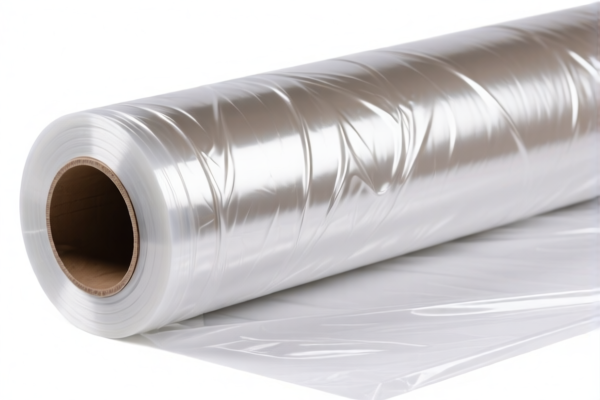

AI Analysis
🎞️ Color High Sensitivity Film (Photographic)
🌐 HS Code Reference & Customs Clearance Guide | 2026 Latest Tariff Full Analysis | Professional-Level Clearance Strategy
📌 I. Product Definition & Classification: Do You Really Understand “Color High Sensitivity Film”?
Color High Sensitivity Film refers to photographic film designed for color imaging, characterized by high ISO values (typically ISO 400, 800, 1600, or higher) to enable shooting in low-light conditions. In international trade, it is strictly classified based on its physical form and intended use, not just its "high sensitivity" feature.
Two Main Categories in HS Code System:
- Roll Film (Unexposed): Standard rolls used in cameras (35mm, medium format).
- Cut Film/Sheet Film: Flat sheets used for large-format cameras or specific industrial applications.
⚠️ Key Distinction Point:
- If it is unexposed, flexible, and in roll or sheet form → Classified under Chapter 37.
- If it is exposed but not yet developed → Generally not imported as commercial goods (often prohibited or restricted due to security/privacy laws).
- If it is developed prints → Classified under Chapter 49 or 3707 depending on mounting.
- “High Sensitivity” is a commercial term, not an HS code determinant. All unexposed color photographic films fall under the same heading, regardless of ISO speed.
📦 II. HS Code Classification Details (2026 Latest Tariff Authority Comparison)
| HS Code | Product Description | Application Scenario | Form |
|---|---|---|---|
3702.31.00.00 |
Color photographic film, in rolls, width ≤ 105mm | 35mm consumer film, high-speed ISO 400/800/1600 rolls | ✅ Roll |
3702.32.00.00 |
Color photographic film, in rolls, width > 105mm but ≤ 610mm | Medium format (120/220), large format rolls | ✅ Roll |
3702.35.00.00 |
Other color photographic film, in rolls | Specialized industrial or scientific color film rolls | ✅ Roll |
3702.41.00.00 |
Color photographic film, in sheets, area ≤ 430cm² | Small sheet film (e.g., 4x5 inch) | ✅ Sheet |
3702.42.00.00 |
Color photographic film, in sheets, area > 430cm² | Large format sheet film (8x10, 11x14) | ✅ Sheet |
3707.10.00.00 |
Preparations for sensitizing other paper, textile, etc. | N/A for film (for context) | ❌ N/A |
🔍 Important Reminder:
- All unexposed color photographic films are classified under Heading 3702.
- Do not confuse with “digital sensor” or “CCD/CMOS” which are under 8541.
- “High Sensitivity” does not change the HS Code. ISO 100 and ISO 3200 film both fall under3702.31.00.00if they are 35mm rolls.
- Packaging matters: If sold as a camera kit with film, it may be classified as a camera (9006) depending on principal function, but standalone film is always3702.
💰 III. 2026 Latest Tariff Rate Details (Including Additional Taxes, Policy Add-ons)
✅ Applicable Country: United States (US)
✅ Country of Origin: China (CN)
✅ Effective Date: Starting November 10, 2025 (including subsequent imports)
🎯 1. 3702.31.00.00 – Color Photographic Film, in Rolls, Width ≤ 105mm (e.g., 35mm High-Speed)
| Item | Content |
|---|---|
| Base Tariff Rate | 0% (ad valorem) |
| USITC Additional Tariff | +25% (from USITC Footnote 9903.88.01) |
| IEEPA Additional Tariff | +10% (Targeting China/Hong Kong products, effective Nov 10, 2025) |
| Total Tariff Rate | 35% |
| Tax Calculation | CIF Value × 35% |
| De Minimis Exemption Available? | ❌ No (deny_de_minimis) |
| Legal Basis Path | IEEPA:9903.01.25 → IEEPA:9903.01.24 → USITC:3702.31.00.00 → FOOTNOTE:9903.88.01 |
📌 Explanation:
- The “25% USITC Additional Tariff” is part of the Section 301 tariffs on Chinese goods.
- The “10% IEEPA Additional Tariff” is a separate levy under the International Emergency Economic Powers Act targeting specific Chinese imports.
- Combined Total: 35%, which is extremely high for a low-value item like film. This significantly impacts profitability.
- Note: Even though the base tariff is 0%, the additional tariffs make it costly.
🎯 2. 3702.32.00.00 – Color Photographic Film, in Rolls, Width > 105mm but ≤ 610mm (e.g., Medium Format)
| Item | Content |
|---|---|
| Base Tariff Rate | 0% |
| USITC Additional Tariff | +25% |
| IEEPA Additional Tariff | +10% |
| Total Tariff Rate | 35% |
| Tax Calculation | CIF × 35% |
| De Minimis Exemption Available? | ❌ No |
| Legal Basis Path | IEEPA:9901.25 → IEEPA:9903.01.24 → USITC:3702.32.00.00 → FOOTNOTE:9903.88.01 |
📌 Note:
- Same tariff structure as 35mm film.
- Medium format film is often used by professionals; the 35% rate applies equally.
🎯 3. 3702.41.00.00 & 3702.42.00.00 – Color Photographic Film, in Sheets
| Item | Content |
|---|---|
| Base Tariff Rate | 0% |
| USITC Additional Tariff | +25% |
| IEEPA Additional Tariff | +10% |
| Total Tariff Rate | 35% |
| Tax Calculation | CIF × 35% |
| De Minimis Exemption Available? | ❌ No |
| Legal Basis Path | Same as above, different HS Code last 4 digits. |
📌 Note:
- Sheet film (used in large-format cameras) is also subject to the 35% total tariff.
- Niche product, but high regulatory barrier.
🛠️ IV. Customs Clearance Practical Advice (Real-World Pitfall Avoidance Guide)
✅ 1. Required Documentation List (All Mandatory)
| Document | Required | Explanation |
|---|---|---|
| ✅ Product Specification Sheet | ✔️ | Must state “Unexposed Color Photographic Film,” ISO rating, width, length. |
| ✅ Certificate of Origin (CO) | ✔️ | Critical for proving origin. If not China, may qualify for exemptions. |
| ✅ Commercial Invoice | ✔️ | Must clearly describe as “Unexposed Color Film,” not “Prints” or “Digital Film.” |
| ✅ Packing List | ✔️ | Detail number of rolls/sheets, weight, and dimensions. |
| ✅ MSDS (Material Safety Data Sheet) | ✔️ | Some chemical components may require handling info. |
| ✅ FCC/CE Certification | ❌ Not Required | Film is passive; no electronic certification needed. |
✅ 2. Declaration Tips (Key Mantra)
🔥 “Unexposed is Key, Color is Declared, Width Determines Code, No ‘Digital’ Allowed!”
| Scenario | Correct Declaration | Wrong Approach |
|---|---|---|
| 35mm High-ISO Roll | 3702.31.00.00 + “Unexposed Color Film, 35mm, ISO 800” |
Calling it “Camera Film” without specifying “Unexposed” |
| Medium Format Roll | 3702.32.00.00 |
Misdeclaring as “Paper” or “Textile” |
| Sheet Film | 3702.41.00.00 or 3702.42.00.00 |
Confusing with “Photo Paper” (4908) |
| Digital Sensor | 8541.40.00.00 |
Confusing with “Film” → Severe misclassification |
✅ 3. Special Cases Handling
| Scenario | Handling Advice |
|---|---|
| OEM Brand Film | Provide contract and brand authorization to avoid trademark issues. |
| Film in Camera Kit | If film is minor accessory, declare as Camera (9006). If film is primary, declare as Film (3702). Best practice: Separate line items. |
| Expired Film | Generally not prohibited but may be rejected for quality reasons. Declare as “Used/Expired” if applicable. |
| Security Concerns | Unexposed film is safe. Exposed film may be scrutinized for privacy/security. Do not import exposed film commercially. |
🌍 V. Global Main Market Clearance Comparison (2026 Latest)
| Country/Region | Recommended HS Code | Tariff | Certification | Notes |
|---|---|---|---|---|
| 🇺🇸 USA | 3702.31.00.00 |
35% (China Origin) | None | High additional tariffs apply. |
| 🇨🇳 China | 3702.31.00.00 |
5% | None | No additional tariffs. |
| 🇪🇺 EU | 3702.31.00 |
0% | None | No additional tariffs. |
| 🇦🇺 Australia | 3702.31.00 |
5% | None | No additional tariffs. |
| 🇯🇵 Japan | 3702.31.00 |
0% | None | No additional tariffs. |
📌 Conclusion:
- USA imposes the highest barriers with 35% effective tariff on Chinese color film.
- EU, Japan, Australia, China have minimal or no tariffs.
- Supply Chain Strategy: Consider sourcing film from non-China origins (e.g., Japan, Germany) for US market to avoid 35% tariff.
📌 VI. Common Errors & Pitfall Guide (Lessons Learned)
❌ Error 1: Declaring “Film” without specifying “Unexposed”
👉 Consequence: Customs may suspect illicit exposure or misclassification → Delay or seizure.
❌ Error 2: Confusing “Photographic Film” with “Photo Paper” (4908)
👉 Consequence: Photo paper has different tariffs and regulations. Misclassification → Penalties.
❌ Error 3: Ignoring the 25% USITC and 10% IEEPA tariffs
👉 Consequence: Underpayment of duties → Back taxes, interest, and fines.
❌ Error 4: Importing “Exposed Film” commercially
👉 Consequence: Likely prohibited due to privacy/security laws → Confiscation.
✅ Correct Practice:
“Unexposed Color Photographic Film, 35mm, ISO 800, Roll, Width 35mm, Length 36 exposures, Made in China”
🎯 VII. Conclusion: Precise Classification Saves Money!
🎯 Remember the Mantra:
🔹 “Unexposed, Color, Roll or Sheet – Check Width for Code!”
🔹 “35% US Tariff on China Origin – Plan Your Supply Chain!”
🔹 “Film is Not Digital – Don’t Mix Up with Sensors!”
📌 Pro Tip:
If your film is originating from Japan, Germany, or South Korea, you can avoid the 35% US tariff (only base 0% applies).
Recommend pre-ruling application if unsure about classification.
📣 Immediate Action:
📞 Contact a professional customs broker + Provide product specs + Verify origin
🚀 Clear your Color High Sensitivity Film smoothly, avoid high tariffs, and maximize profits!
✨ Professional Clearance Starts with Precise Classification!
💼 Every dollar of duty saved is profit earned!
Customer Reviews
About HS Code Classification
The Harmonized System (HS) is an internationally standardized nomenclature developed by the World Customs Organization (WCO) to classify traded products. Over 200 countries use the HS system as the basis for customs tariffs, trade statistics, and import/export regulations.
Each HS code follows a hierarchical structure:
- Chapter (2 digits) — Broad category of goods (e.g., Chapter 84: Machinery and Mechanical Appliances)
- Heading (4 digits) — More specific grouping within the chapter
- Subheading (6 digits) — Internationally standardized breakdown, used by all WCO member countries
- National subdivisions (8-10 digits) — Country-specific extensions for further classification, such as US HTSUS 10-digit codes
Correct HS code classification is essential for smooth customs clearance, accurate duty payment, and compliance with trade regulations. Misclassification can lead to customs delays, overpayment of duties, or penalties.
When importing from CN to US, the applicable tariff rates may include:
- Most-Favored-Nation (MFN) rate — The standard duty rate applied to WTO members
- General rate — Applied to countries without trade agreements
- Trade remedy duties — Additional tariffs such as Section 301 (anti-dumping), Section 232 (national security), or countervailing duties
The information provided on this page is for reference purposes only. For official classification, please consult with your local customs authority or a licensed customs broker.