Color Instant Imaging Film (UV Resistant)
CN → US| HS Code | Tariff Rate | Origin | Destination | Doc |
|---|---|---|---|---|
| 3701200030 | 38.7% | CN | US | Official Doc |
| 3701200060 | 38.7% | CN | US | Official Doc |
| 3702390100 | 38.7% | CN | US | Official Doc |
| 3702960000 | 38.7% | CN | US | Official Doc |
| 3707100090 | 38.0% | CN | US | Official Doc |
Product Images
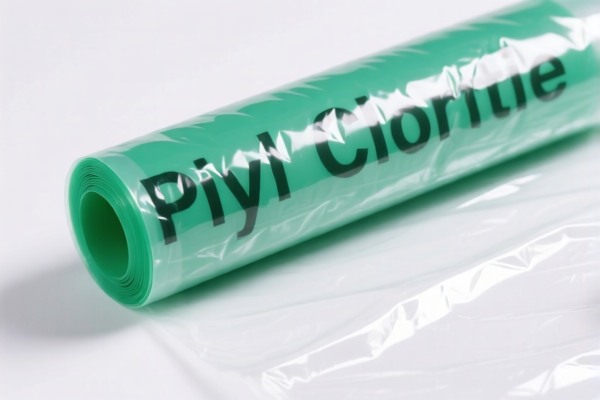
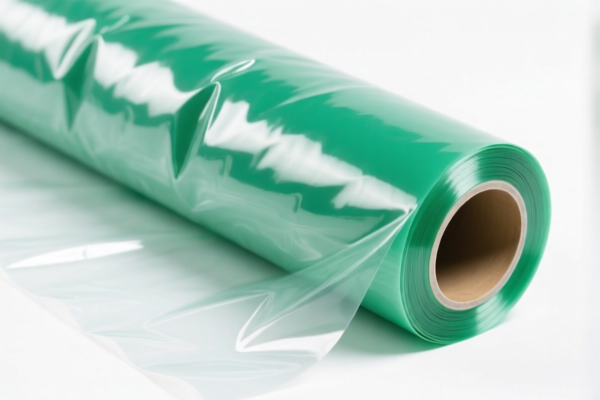
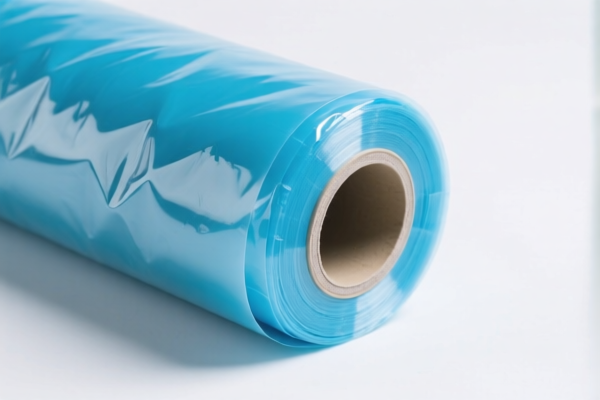
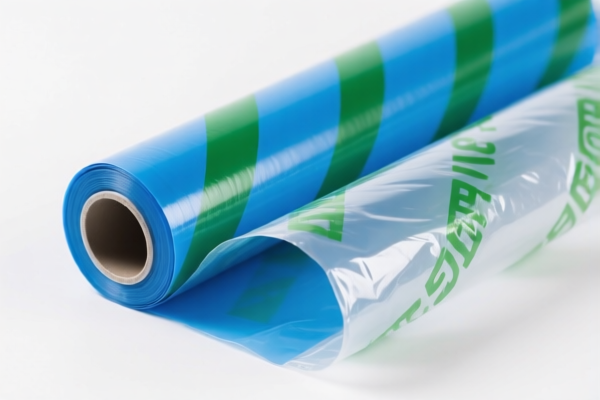
AI Analysis
🎞️ Color Instant Imaging Film (UV Resistant)
🌐 HS Code Reference & Customs Clearance Guide | 2026 Latest Tariff Analysis | Professional Entry Strategy
📌 I. Product Definition & Classification: Do You Really Understand "Instant Imaging Film"?
Color Instant Imaging Film (UV Resistant) is a specialized photographic material designed for immediate visual output. Unlike traditional rolls that require chemical development in darkrooms, this film produces visible images moments after exposure.
In international trade, it is categorized under Chapter 37 (Photographic or Cinematographic Goods). The key differentiator lies in its specific sub-category based on its imaging capability and material state:
- Instant Imaging (Color): Specifically fits codes under heading 3701 or 3702 depending on the exact physical form and processing method.
- UV Resistance: This is a functional attribute (chemical additive/coating) and does not change the fundamental HS Code classification but is crucial for declaring "Special Purpose" goods if applicable in other jurisdictions.
- Unexposed: It is an unexposed photographic film, making it a "chemical/photographic good" rather than a consumer electronic device.
⚠️ Key Distinction:
- If it is a sheet or pack designed for immediate color printing/development upon ejection → It leans towards 3701.20 (Photographic plates/films for color photography).
- If it is considered a general instant printing film without specific "color plate" designation in some customs interpretations → It may fall under 3702.39 or 3702.96 (Instant printing films).
- Note: Some classifiers argue it is a "photographic chemical product" (emulsion) rather than just film, leading to 3707.10. However, 3701/3702 are the most common for the film substrate itself.
📦 II. HS Code Classification Details (2026 Latest Tariff Authority Comparison)
The following HS Codes are extracted directly from the provided data source, reflecting the ambiguity and specific arguments for classifying Color Instant Imaging Film.
| HS Code | Product Description & Matching Logic | Key Attributes | Total Tax Rate* |
|---|---|---|---|
3701.20.00.30 |
Match Successful. The term 'Color' in the product name corresponds to 'For Color Photography' in the classification. 'Instant Imaging Film' corresponds to 'Instant Printing Film'. Material and use are consistent. |
Specific Match: Color-specific instant film. | 38.7% |
3701.20.00.60 |
Matching Basis: 'Instant Imaging Film' corresponds to 'Instant Imaging Film Rolls'. 'Color' and 'High Contrast' are not explicitly excluded from material, but its function as a photosensitive roll fits the 'Other' category (non-specialized color-only) logically. |
Broad Match: Photosensitive roll, general category. | 38.7% |
3702.39.01.00 |
Match Successful. 'Instant Imaging Film' corresponds to 'Instant Printing Film Rolls'; 'Film' corresponds to form 'Rolls'; inferred material is photosensitive and unexposed, fitting the classification requirements for material and use. |
Form-Based: Instant printing rolls. | 38.7% |
3702.96.00.00 |
Matching Basis: 'Instant Imaging Film' matches the function 'Instant Printing Film'; inferred material is film form, fitting the classification description. |
General Form: Instant printing film. | 38.7% |
3707.10.00.90 |
Matching Basis: The product belongs to photographic photosensitive materials (imaging film). Its material attribute fits the classification of photographic chemical products; although 'sensitizing emulsion' is not explicitly written, it can be reasonably inferred from 'Color Instant Imaging Film' that it contains photosensitive emulsion components. It does not fall under specific exclusions like "Color Negative Photographic Paper," fitting the 'Other' category logic. |
Chemical/Emulsion Focus: Photographic chemical product. | 38.0% |
🔍 Priority Analysis:
- Codes3701.20.xxxxand3702.39/96are the most direct matches for Film products with a total tax of 38.7%.
- Code3707.10.00.90is a secondary possibility if customs classifies it more as a "chemical preparation" rather than a "film roll," resulting in a slightly lower total tax of 38.0%.
- All codes indicate significant trade barriers due to US tariffs.
💰 III. 2026 Latest Tariff Rate Details (Including Surcharges & Policy Additions)
✅ Applicable Country: United States (US)
✅ Origin: China (CN)
✅ Effective Time: From November 10, 2025 (including subsequent imports)
🎯 1. HS Codes: 3701.20.00.30 / 3701.20.00.60 / 3702.39.01.00 / 3702.96.00.00
(Total Tax: 38.7%)
| Item | Content |
|---|---|
| Base Rate | 3.7% (Ad Valorem) |
| USITC Surcharge (Section 301) | +25.0% |
| IEEPA Surcharge (Section 122/China-specific) | +10.0% |
| Total Effective Tax Rate | 38.7% |
| Tax Calculation | CIF Value × 38.7% |
| De Minimis Exemption Eligibility | ❌ No (Denied under current trade rules for Chinese goods in this category) |
| Legal Authority Path | Base Tariff: 3701/3702 → USITC Footnote 9903.88.01 (25%) → IEEPA China Surcharge (10%) |
📌 Explanation:
- The 3.7% is the standard Most Favored Nation (MFN) duty for photographic films.
- The 25% is the Section 301 tariff imposed on a wide range of Chinese imports, including many chemical and photographic goods.
- The 10% is an additional surcharge applied to Chinese goods (often associated with IEEPA or specific trade enforcement actions).
- Total: 38.7%. This is a high-cost barrier.
🎯 2. HS Code: 3707.10.00.90
(Total Tax: 38.0%)
| Item | Content |
|---|---|
| Base Rate | 3.0% (Ad Valorem) |
| USITC Surcharge (Section 301) | +25.0% |
| IEEPA Surcharge (Section 122/China-specific) | +10.0% |
| Total Effective Tax Rate | 38.0% |
| Tax Calculation | CIF Value × 38.0% |
| De Minimis Exemption Eligibility | ❌ No |
| Legal Authority Path | Base Tariff: 3707 → USITC Footnote 9903.88.01 (25%) → IEEPA China Surcharge (10%) |
📌 Note:
- The base rate for 3707.10 is slightly lower (3.0%) than for film rolls (3.7%), leading to a 0.7% savings.
- However, this classification is riskier and requires strong justification that the product is a "chemical product/emulsion" rather than a "film."
🛠️ IV. Customs Clearance Practical Advice (Battle-Tested Pitfall Avoidance)
✅ 1. Required Documentation Checklist (Non-Negotiable)
| Document | Required | Explanation |
|---|---|---|
| ✅ Product Specifications | ✔️ | Must detail "Instant Imaging," "Color," "UV Resistant," and chemical composition. |
| ✅ Photos | ✔️ | Clear images of the packaging, showing "Instant Imaging Film" and any barcodes. |
| ✅ Commercial Invoice | ✔️ | Must explicitly state "Color Instant Imaging Film, UV Resistant." Do not use generic terms like "Paper." |
| ✅ Origin Certificate | ✔️ | To prove Chinese origin and apply correct tariff schedules. |
| ✅ Material Safety Data Sheet (MSDS) | ✔️ | Crucial for chemical/photographic goods to confirm they are not hazardous or restricted. |
| ✅ Declaration of Use | ✔️ | State if it is for consumer, industrial, or professional use. |
✅ 2. Declaration Strategy (Key Mnemonics)
🔥 “Film is Film, Chemical is Chemical. Be Precise to Avoid Audits!”
| Scenario | Recommended HS Code | Risk if Mislabeled |
|---|---|---|
| Standard Instant Color Film Pack/Sheet | 3701.20.00.30 |
Using 3702 might be accepted, but 3701 is more specific for color photography. |
| Roll Form Instant Film | 3702.39.01.00 |
Using 3701 is risky if it's not a sheet/plate. |
| Product is actually a Chemical Emulsion (Liquid/Paste) | 3707.10.00.90 |
Declaring as film if it's a chemical mix → Seizure/Retrospective Tax. |
| Generic "Photographic Paper" | DO NOT USE | 3701/3702 are for film. Paper has different codes (e.g., 4809/4810). Misclassification = High Penalty. |
✅ 3. Special Handling
| Situation | Advice |
|---|---|
| UV Resistant Labeling | Emphasize "UV Resistant" in the product description to justify potential premium pricing, but do not let it confuse the HS Code. UV resistance is a coating, not a material change. |
| Small Sample Shipments | ❌ No De Minimis. Even small packages from China are subject to the 38.7% (or 38.0%) tax. Do not rely on $800 de minimis exemption. |
| OEM/Private Label | Ensure the brand name on the film matches the invoice to avoid "Missing Brand" delays. |
🌍 V. Global Market Comparison (2026 Latest)
| Country/Region | Recommended HS Code | Tax Rate (China Origin) | Certification | Notes |
|---|---|---|---|---|
| 🇺🇸 USA | 3701.20.00.30 |
38.7% | None Specific | High Tariff. IEEPA + 301 apply. |
| 🇨🇳 China | 3702.39.01.00 |
~9-13% | CCC (if applicable) | Lower duty, but check import licenses. |
| 🇪🇺 EU | 3701.20.00.90 |
6.5% | REACH Registration | REACH compliance is critical for chemical/photographic goods. |
| 🇯🇵 Japan | 3702.96.00.00 |
3.2% | None | Generally low tariffs, but strict safety checks. |
📌 Conclusion:
- The US is the most challenging market due to the 38.7% effective tariff.
- EU and Japan have significantly lower duties but stricter regulatory compliance (REACH in EU).
- Strategy: If shipping to the US, calculate if the margin can absorb ~39% tax. Consider sourcing from non-China origins (e.g., Japan, Europe) if possible to avoid Section 301 and IEEPA surcharges.
📌 VI. Common Errors & Pitfall Guide (Lessons Learned)
❌ Error 1: Classifying as "Photographic Paper" (4809/4810)
👉 Consequence: Wrong HS Code. Paper has different duties and regulations. Audit Trigger!
❌ Error 2: Ignoring "Instant Imaging" and using generic "Film" codes
👉 Consequence: Customs may reclassify to a higher duty rate or demand additional documentation for "Special Purpose" goods.
❌ Error 3: Assuming De Minimis Exemption for Low-Value Shipments
👉 Consequence: $0 saved. Chinese shipments are not eligible for the $800 de minimis exemption for these tariff lines. Expect full 38.7% tax.
❌ Error 4: Omitting "UV Resistant" in Description
👉 Consequence: Not a major tax issue, but may lead to queries about product specifications if the invoice is too vague.
✅ Correct Practice:
"Color Instant Imaging Film, UV Resistant, Unexposed, For Consumer Photography, Model XYZ, Made in China"
🎯 VII. Conclusion: Professional Classification Saves Money
🎯 Remember:
🔹 "Instant Color Film = 38.7% Tax in US."
🔹 "No De Minimis for China Origin."
🔹 "UV Resistance is a Feature, Not a Classification Driver."
📌 Tip:
If your film is originating from Japan, South Korea, or Europe, the Section 301 and IEEPA surcharges do not apply. You may benefit from lower or zero tariffs.
Recommendation: Apply for an Advance Ruling with US Customs (CBP) if you are importing large volumes to confirm the exact HS Code (3701 vs 3702) and avoid surprise audits.
📣 Immediate Action:
📞 Contact a Licensed Customs Broker + Provide Product Photos + Verify Origin Certificate
🚀 Ensure Your Invoice is Precise to avoid delays at US Border Control.
✨ Professional Clearance Starts with Accurate Classification!
💼 Your Cost Calculation Must Include the Full 38.7%!
Customer Reviews
About HS Code Classification
The Harmonized System (HS) is an internationally standardized nomenclature developed by the World Customs Organization (WCO) to classify traded products. Over 200 countries use the HS system as the basis for customs tariffs, trade statistics, and import/export regulations.
Each HS code follows a hierarchical structure:
- Chapter (2 digits) — Broad category of goods (e.g., Chapter 84: Machinery and Mechanical Appliances)
- Heading (4 digits) — More specific grouping within the chapter
- Subheading (6 digits) — Internationally standardized breakdown, used by all WCO member countries
- National subdivisions (8-10 digits) — Country-specific extensions for further classification, such as US HTSUS 10-digit codes
Correct HS code classification is essential for smooth customs clearance, accurate duty payment, and compliance with trade regulations. Misclassification can lead to customs delays, overpayment of duties, or penalties.
When importing from CN to US, the applicable tariff rates may include:
- Most-Favored-Nation (MFN) rate — The standard duty rate applied to WTO members
- General rate — Applied to countries without trade agreements
- Trade remedy duties — Additional tariffs such as Section 301 (anti-dumping), Section 232 (national security), or countervailing duties
The information provided on this page is for reference purposes only. For official classification, please consult with your local customs authority or a licensed customs broker.