Color Instant Imaging Film Negative
CN → US| HS Code | Tariff Rate | Origin | Destination | Doc |
|---|---|---|---|---|
| 3704000000 | 35.0% | CN | US | Official Doc |
| 3702520160 | 38.7% | CN | US | Official Doc |
| 3702540060 | 38.7% | CN | US | Official Doc |
Product Images
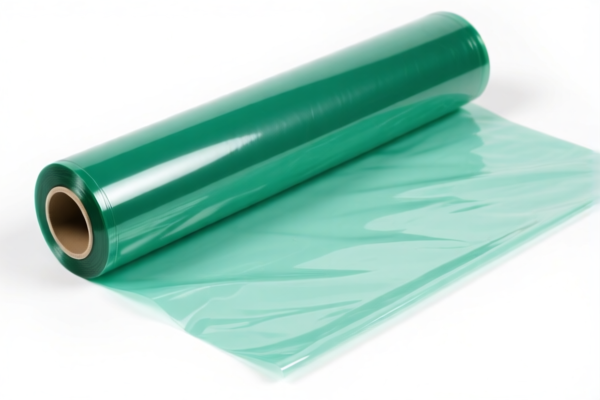
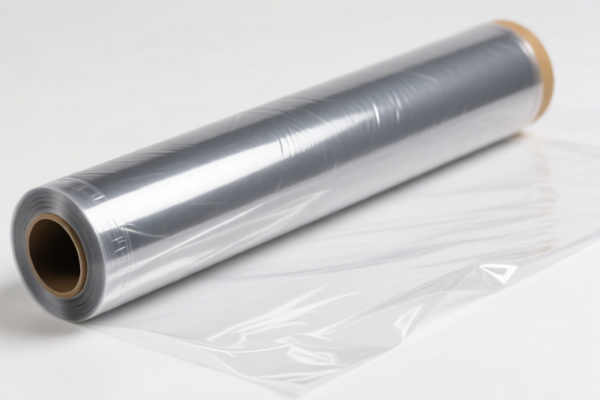
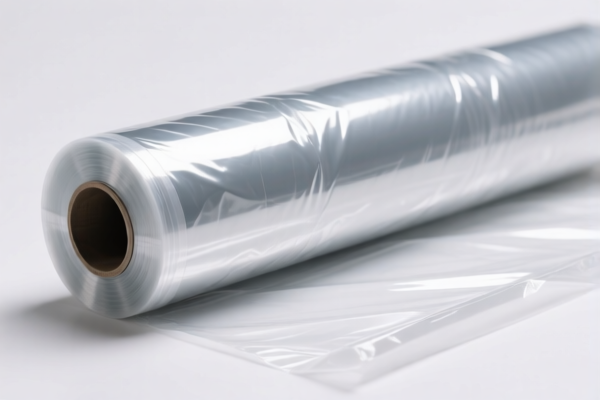
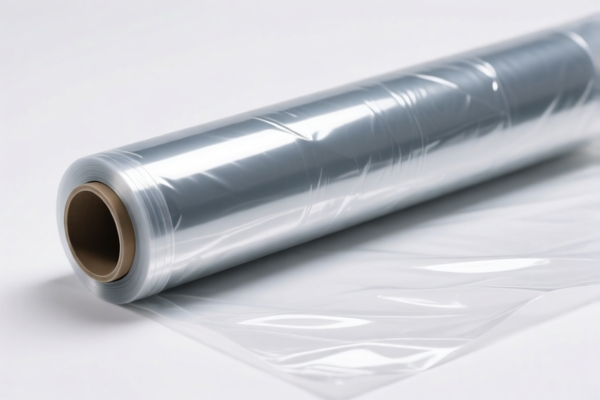
AI Analysis
🎞️ Color Instant Imaging Film Negative
🌐 HS Code Reference & Customs Clearance Guide | 2026 Latest Tariff Analysis | Professional Entry Strategy
📌 I. Product Definition & Classification: Understanding the Product
Color Instant Imaging Film Negative is a specialized photographic medium used in instant photography systems (e.g., Polaroid/Impossible Project style). Unlike standard roll film, it is designed for immediate chemical processing within the camera frame. In international trade, it is categorized based on its physical state (rolled vs. sheet) and chemical nature (color negative).
Key Distinction:
Imaging Film: Includes the emulsion layers necessary for image formation.
* Instant Film: A specific subset of imaging film that contains reagent pouches for self-developing.
* Negative vs. Reversal*: The product specified is "Negative," meaning it produces a negative image that must be printed to view positively, distinct from "Reversal" (slide) film which produces a positive transparency directly.
⚠️ Critical Classification Point:
- If the film is in roll form (strips) intended for instant cameras → It generally falls under Heading 3704 (Imaging film, instantly developable).
- If classified under general photographic film categories, it may fall under Heading 3702 (Photographic film in rolls, unexposed), depending on specific customs interpretations of "instant imaging" vs. "general photographic."
📦 II. HS Code Classification Details (2026 Latest Tariff Alignment)
| HS Code | Product Description | Application Scenario | Tax Rate Profile |
|---|---|---|---|
3704.00.00.00 |
Imaging film, instantly developable, whether or not in rolls (Color Negative) | Instant photography systems (Polaroid-style), self-developing materials | 35.0% (Low Base, High Surcharge) |
3702.52.01.60 |
Photographic film in rolls, of a width ≤ 105 mm, color negative, other than instant developing | Standard roll film (if not deemed "instant" by customs), color negative | 38.7% (Base + Surcharge) |
3702.54.00.60 |
Other photographic film in rolls, color negative, other than instant developing | Generic color negative rolls >105mm or non-instant formats | 38.7% (Base + Surcharge) |
🔍 Key Insight:
-3704.00.00.00is the most accurate classification for "Instant Imaging Film" because Heading 3704 specifically covers "instantly developable" film. This is a distinct category from standard photographic film (3702). - If customs authorities do not accept the "instant" nature (e.g., if it’s a general color negative roll mislabeled as instant), it may be forced into 3702 codes, resulting in a 3.7% higher total tax burden due to the base duty component.
💰 III. 2026 Latest Tariff Rate Breakdown (Including Surtaxes & Policy Add-ons)
✅ Applicable Country: United States (US)
✅ Country of Origin: China (CN)
✅ Effective Date: November 10, 2025 (for imports thereafter)
🎯 1. 3704.00.00.00 —— Instant Imaging Film (Color Negative)
| Item | Content |
|---|---|
| Base Duty Rate | 0.0% (Ad Valorem) |
| Section 301 Surtax | +25.0% (USITC Footnote 9903.88.01) |
| IEEPA Add-on Duty | +10.0% (Targeting China/HK products, effective Nov 10, 2025) |
| Total Effective Rate | 35.0% |
| Tax Calculation | CIF Value × 35% |
| De Minimis Eligibility | ❌ No (Deny de minimis for Section 301/IEEPA goods) |
| Legal Basis Path | IEEPA:9903.01.25 → IEEPA:9903.01.24 → USITC:3704.00.00.00 → FOOTNOTE:9903.88.01 |
📌 Explanation:
- The 0% base duty is favorable compared to standard film.
- However, the 25% Section 301 tariff and 10% IEEPA tariff are stacked, leading to a 35% total cost.
- Note: This is significantly lower than the 38.7% rate for misclassified standard film, making correct classification under 3704 critical for cost savings.
🎯 2. 3702.52.01.60 & 3702.54.00.60 —— Standard Color Negative Film (Misclassification Risk)
| Item | Content |
|---|---|
| Base Duty Rate | 3.7% (Ad Valorem) |
| Section 301 Surtax | +25.0% (USITC Footnote 9903.88.01) |
| IEEPA Add-on Duty | +10.0% (Targeting China/HK products, effective Nov 10, 2025) |
| Total Effective Rate | 38.7% |
| Tax Calculation | CIF Value × 38.7% |
| De Minimis Eligibility | ❌ No (Deny de minimis) |
| Legal Basis Path | IEEPA:9901.25 → IEEPA:9903.01.24 → USITC:3702.52.01.60 / 3702.54.00.60 |
📌 Warning:
- If your "Instant" film is incorrectly declared as "Standard Photographic Film" (3702), you will pay an additional 3.7% on the CIF value.
- For a $10,000 shipment, this results in $370 extra duty.
- Customs may scrutinize "Instant" claims if the product lacks clear branding or technical documentation proving self-developing capabilities.
🛠️ IV. Customs Clearance Practical Advice (Battle-Tested Pitfall Guide)
✅ 1. Required Documentation Checklist (Mandatory)
| Document | Required | Explanation |
|---|---|---|
| ✅ Product Specification Sheet | ✔️ | Must explicitly state "Instant Developing," "Chemical Pod Included," and "Negative Image" |
| ✅ Composition/Structure Diagram | ✔️ | Show layers including reagent pouches to prove "Instant" nature |
| ✅ Product Photos (Packaging & Content) | ✔️ | Clear images of the film pack, showing "Instant" branding or technical labels |
| ✅ Commercial Invoice | ✔️ | Must describe as "Color Instant Imaging Film, Negative" – Do not use generic "Photographic Film" |
| ✅ Country of Origin Certificate (CO) | ✔️ | Essential for applying surtax rates; must confirm China origin for accurate 25%/10% calculation |
| ✅ HS Code Ruling (Optional but Recommended) | ✔️ | Pre-classification ruling from CBP to avoid disputes |
✅ 2. Declaration Strategy (Key Mnemonics)
🔥 "Instant is 3704, Standard is 3702, 3.7% Difference, Choose Wisely!"
| Scenario | Correct Declaration | Incorrect Practice |
|---|---|---|
| True Instant Film (with chemicals) | 3704.00.00.00 |
Declaring as 3702 → Pays 38.7% unnecessarily |
| Standard Roll Film (no chemicals) | 3702.52.01.60 or 3702.54.00.60 |
Declaring as 3704 → Risk of penalty for false "instant" claim |
| Mixed Shipment | Split HS codes clearly | Mixed codes on one line → Customs hold for verification |
| Small Sample (De Minimis) | Do Not Ship via De Minimis | Using $800 exemption → Goods seized or taxed retroactively |
✅ 3. Special Handling Instructions
| Situation | Recommendation |
|---|---|
| OEM Instant Film | Provide OEM agreement + technical specs proving chemical self-development |
| Film with Accessories | Declare film separately from cameras or cases; film is heading 37, cameras are heading 85 |
| High-Value Shipments | Consider Advance Ruling to lock in 3704 classification and avoid 3.7% penalty |
| Origin Change | If film is processed in Vietnam/Mexico, verify if origin rules allow preferential treatment (though US surtaxes may still apply) |
🌍 V. Global Market Clearance Comparison (2026 Latest)
| Country/Region | Recommended HS Code | Total Duty Rate (China Origin) | Certification Requirements | Notes |
|---|---|---|---|---|
| 🇺🇸 USA | 3704.00.00.00 |
35.0% | None specific | 38.7% if misclassified as 3702 |
| 🇨🇳 China | 3704.00.00.00 |
5-8% | None | No surtaxes |
| 🇪🇺 EU | 3704.00.00 |
0% | REACH (if chemicals involved) | Low base duty, no surtaxes |
| 🇬🇧 UK | 3704.00.00 |
0% | UKCA (if applicable) | Post-Brexit rules apply |
| 🇦🇺 Australia | 3704.00.00 |
5% | None | Competitive market |
📌 Conclusion:
- The US market is the most costly due to stacked surtaxes (35%).
- Correct classification under 3704 saves 3.7% compared to standard film codes.
- Documentation proving "instant developing" capability is paramount to avoid misclassification penalties.
📌 VI. Common Errors & Pitfall Guide (Lessons Learned)
❌ Error 1: Declaring "Instant Film" as "General Photographic Film" (3702)
👉 Consequence: Paying an extra 3.7% duty unnecessarily.
👉 Fix: Always use 3704 for products with built-in chemical developers.
❌ Error 2: Using Generic Terms like "Color Film" in Invoice
👉 Consequence: Customs ambiguity may lead to audit or delayed release.
👉 Fix: Use precise description: "Color Instant Imaging Film, Negative, Self-Developing, Packaged for Instant Camera."
❌ Error 3: Attempting De Minimis Shipment for Instant Film
👉 Consequence: Seizure or retroactive taxation because Section 301/IEEPA goods are ineligible for $800 exemption.
👉 Fix: Declare all shipments formally with full duty payment.
❌ Error 4: Confusing "Negative" with "Reversal"
👉 Consequence: Wrong HS sub-category if customs scrutinizes image type.
👉 Fix: Clearly state "Negative" in technical specs to align with 3704/3702 negative film provisions.
✅ Correct Declaration Example:
"Color Instant Imaging Film, Negative Type, Self-Developing, Roll Format, 20 Shots per Pack, Model XYZ, Origin China"
🎯 VII. Conclusion: Precision Classification for Cost Efficiency
🎯 Key Takeaway:
🔹 "Instant = 3704, Standard = 3702, 3.7% Savings for Accuracy!"
🔹 "35% Total Duty in US, 38.7% if Misclassified, Don't Leave Money on the Table!"
🔹 "Document the Chemicals, Prove the Instant Nature, Avoid the Penalty!"
📌 Pro Tip:
If your supply chain involves third-party processing in non-China countries, verify if origin rules change the surtax applicability. However, for China-origin instant film, the 35% rate is standard.
Recommendation: Apply for a CBP Advance Ruling if shipping large volumes to ensure consistent classification and avoid surprise audits.
📣 Immediate Action:
📞 Engage a licensed customs broker
📄 Prepare technical specs proving "instant developing" capability
📦 Ensure invoices clearly state "Instant Imaging Film, Negative"
🚀 Secure your supply chain, optimize your duty costs, and clear customs smoothly!
✨ Professional Clearance, Start with Accurate Classification!
💼 Every percentage point matters in international trade!
Customer Reviews
About HS Code Classification
The Harmonized System (HS) is an internationally standardized nomenclature developed by the World Customs Organization (WCO) to classify traded products. Over 200 countries use the HS system as the basis for customs tariffs, trade statistics, and import/export regulations.
Each HS code follows a hierarchical structure:
- Chapter (2 digits) — Broad category of goods (e.g., Chapter 84: Machinery and Mechanical Appliances)
- Heading (4 digits) — More specific grouping within the chapter
- Subheading (6 digits) — Internationally standardized breakdown, used by all WCO member countries
- National subdivisions (8-10 digits) — Country-specific extensions for further classification, such as US HTSUS 10-digit codes
Correct HS code classification is essential for smooth customs clearance, accurate duty payment, and compliance with trade regulations. Misclassification can lead to customs delays, overpayment of duties, or penalties.
When importing from CN to US, the applicable tariff rates may include:
- Most-Favored-Nation (MFN) rate — The standard duty rate applied to WTO members
- General rate — Applied to countries without trade agreements
- Trade remedy duties — Additional tariffs such as Section 301 (anti-dumping), Section 232 (national security), or countervailing duties
The information provided on this page is for reference purposes only. For official classification, please consult with your local customs authority or a licensed customs broker.