Color Matched Garden Table and Chair Cover
CN → US| HS Code | Tariff Rate | Origin | Destination | Doc |
|---|---|---|---|---|
| 6307909891 | 24.5% | CN | US | Official Doc |
| 6307909887 | 24.5% | CN | US | Official Doc |
| 3926909989 | 22.8% | CN | US | Official Doc |
| 3926909940 | 22.8% | CN | US | Official Doc |
| 6307909884 | 24.5% | CN | US | Official Doc |
Product Images
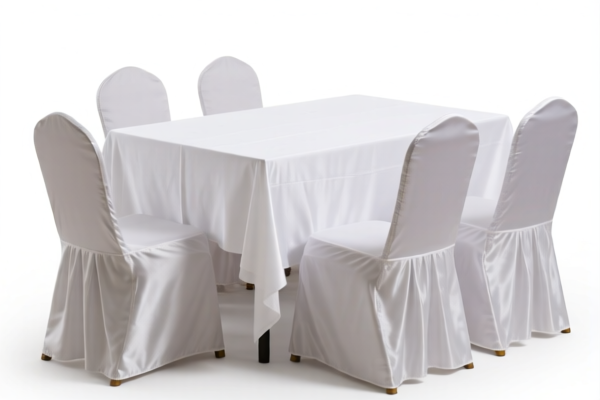
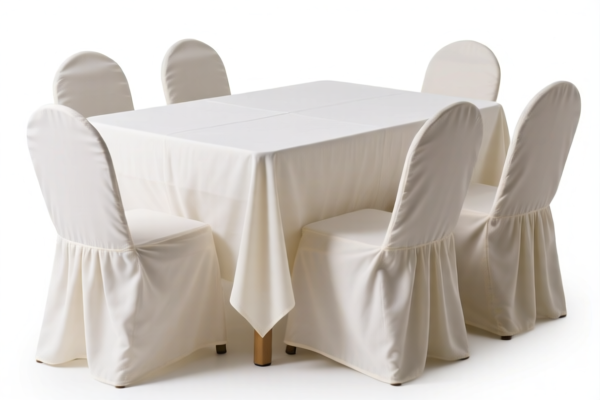
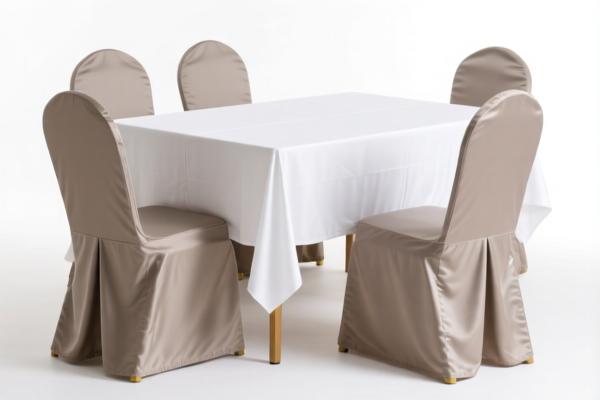
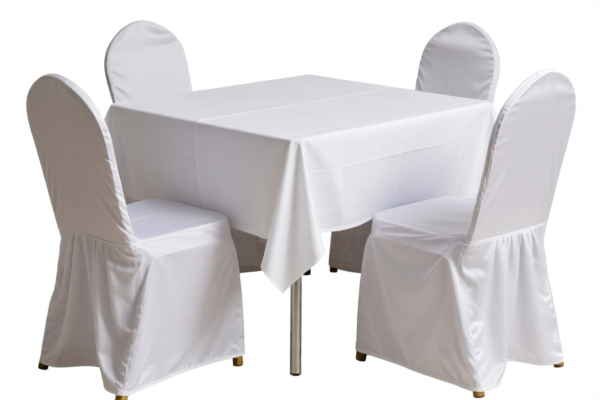
AI Analysis
🌿 Color-Matched Garden Table & Chair Covers: The Ultimate Import Guide
🌐 HS Code Reference & Customs Clearance Strategy | 2026 Latest Tariff Analysis | Professional Compliance Guide
📌 I. Product Definition & Classification: Do You Really Understand "Garden Covers"?
Color-matched garden table and chair covers are protective textile or plastic products designed to shield outdoor furniture from weather elements (rain, UV, dust). In international trade, classification depends heavily on the material composition and specific function:
Textile/Cloth Covers: Made from woven fabrics, waterproof canvas, or synthetic fibers (polyester, nylon). These fall under general textile finished goods.
Plastic/Synthetic Covers: Made from PVC, vinyl, or other polymer sheets. These fall under miscellaneous plastic articles.
⚠️ Key Distinction Point:
- If made of fabric/textile → Classified under Chapter 63 (Textile Articles)
- If made of plastic/synthetic sheeting → Classified under Chapter 39 (Plastics and Articles Thereof)
📦 II. HS Code Classification Details (2026 Latest Tariff Authority Mapping)
Based on the provided data, here are the valid HS Codes for "Color-Matched Garden Table and Chair Covers" depending on material inference:
| HS Code | Product Description | Material Inference | Functional Fit |
|---|---|---|---|
6307.90.98.91 |
Finished articles of textile materials, not elsewhere specified | Textile / Waterproof Fabric | General protective covering |
6307.90.98.87 |
Finished articles for furniture protection | Artificial Fiber / Synthetic Fabric | Consistent with furniture moving pads/covers |
6307.90.98.84 |
Finished articles for garden furniture | Artificial/Synthetic Fiber | Fits "other" finished textile category |
3926.90.99.89 |
Other plastic articles, not elsewhere specified | Plastic / Synthetic Fiber | Unlisted plastic protective cover |
3926.90.99.40 |
Protective plastic covers/guards | Plastic / Synthetic Sheet | Fits "other plastic articles" residual category |
🔍 Critical Reminder:
- Fabric/Cloth Covers MUST go to 6307 codes. Total Tax Rate: 24.5%.
- Plastic/Vinyl Covers MUST go to 3926 codes. Total Tax Rate: 22.8%.
- Misclassifying a plastic cover as textile (or vice versa) leads to customs delays and penalties.
💰 III. 2026 Latest Tariff Rate Breakdown (Including Surcharges & Policy Add-ons)
✅ Applicable Country: United States (US)
✅ Country of Origin: China (CN)
✅ Effective Date: Current rates apply to imports from China
🎯 1. Textile Category (HS Codes: 6307.90.98.91 / .87 / .84)
Total Tax Rate: 24.5%
| Component | Rate | Source/Reason |
|---|---|---|
| Base Duty | 7.0% | Standard MFN rate for textile finished goods |
| Section 301 Surcharge | 7.5% | Additional duty on Chinese imports (Section 301) |
| Section 122 Tariff | 10.0% | Specific additional tariff clause (Section 122) |
| TOTAL | 24.5% | Sum of Base + Section 301 + Section 122 |
📌 Explanation:
- The 7.0% is the standard import duty for non-dutiable or low-dutied textile articles.
- The 7.5% is part of the ongoing trade war tariffs applied to specific textile/furniture categories from China.
- The 10% is explicitly listed as a "122 Clause" tariff, adding significant cost.
- No De Minimis Exemption: These goods are subject to full taxation; small parcel exemptions do not apply.
🎯 2. Plastic Category (HS Codes: 3926.90.99.89 / .40)
Total Tax Rate: 22.8%
| Component | Rate | Source/Reason |
|---|---|---|
| Base Duty | 5.3% | Standard MFN rate for miscellaneous plastic articles |
| Section 301 Surcharge | 7.5% | Additional duty on Chinese imports (Section 301) |
| Section 122 Tariff | 10.0% | Specific additional tariff clause (Section 122) |
| TOTAL | 22.8% | Sum of Base + Section 301 + Section 122 |
📌 Explanation:
- The 5.3% base rate is lower than the textile category.
- However, the 7.5% Section 301 and 10% Section 122 remain identical, resulting in a slightly lower total than textiles but still substantial.
🛠️ IV. Customs Clearance Practical Advice (Real-World Pitfall Avoidance)
✅ 1. Preparation Checklist (Mandatory)
| Document | Required? | Notes |
|---|---|---|
| ✅ Product Specification Sheet | ✔️ | Must clearly state material (e.g., "100% Polyester Oxford Cloth" vs. "PVC Coated Fabric") |
| ✅ Material Certificate | ✔️ | Third-party test report proving fabric vs. plastic composition |
| ✅ Product Photos | ✔️ | Clear images of texture, seams, and labels |
| ✅ Commercial Invoice | ✔️ | Describe as "Garden Furniture Covers, [Material], Color Matched Set" |
| ✅ Packing List | ✔️ | List items per set to avoid part-by-part classification |
✅ 2. Declaration Tips (Golden Rules)
🔥 “Material is King, Description is Queen! Misclassification is Pain!”
| Scenario | Correct HS Code | Incorrect Code | Consequence |
|---|---|---|---|
| Fabric Cover | 6307.90.98.xx |
3926.90.99.xx |
Underpayment risk → Penalty + Back Taxes |
| Plastic Cover | 3926.90.99.xx |
6307.90.98.xx |
Overpayment risk → Wasted Cost |
| Mixed Material | Check dominant component | Ambiguous description | Customs holds shipment for inspection |
✅ 3. Special Handling for Section 122 & 301
- Section 122 (10%): This is a specific, non-negotiable surcharge for many Chinese-origin consumer goods. Ensure your supplier’s declaration matches the origin strictly.
- Section 301 (7.5%): Verify if your specific product type is on the excluded list. Most standard garden covers are not excluded.
- No De Minimis: Do not attempt to ship via e-commerce parcels (under $800) to avoid duties. These HS codes are flagged for higher scrutiny.
🌍 V. Market Comparison & Strategic Advice
| Market | Recommended HS | Base Rate | US Surcharges | Total Approx. |
|---|---|---|---|---|
| 🇺🇸 USA | 6307 or 3926 |
5.3–7.0% | +17.5% (301 + 122) | 22.8% - 24.5% |
| 🇨🇦 Canada | 6307 |
0–5% | None | ~5% |
| 🇪🇺 EU | 6307 |
4% | None | ~4% |
| 🇬🇧 UK | 6307 |
4% | None | ~4% |
📌 Conclusion:
- The US market is the most expensive due to the combination of Base + Section 301 + Section 122 tariffs.
- If targeting the US, price your goods accordingly or explore transshipment strategies (though risky and illegal if not genuine origin change).
- For non-US markets, enjoy significantly lower duty burdens.
📌 VI. Common Errors & Pitfalls (Lessons Learned)
❌ Error 1: Calling the product "Tarpaulin" when it’s made of woven fabric
👉 Result: Misclassification → Potential fine for incorrect declaration.
❌ Error 2: Ignoring the "Color-Matched" aspect in description
👉 Result: Customs may view it as a generic item, leading to random inspections and delays.
❌ Error 3: Assuming plastic covers are duty-free
👉 Result: Even with lower base rates, the 17.5% surcharge makes them costly. Don’t skip tax planning.
✅ Correct Declaration Example:
"Garden Furniture Covers, Color-Matched Set, Material: 100% Polyester Oxford Fabric with PU Coating, For Outdoor Table & Chairs, HS Code: 6307.90.98.91"
🎯 VII. Conclusion: Smart Classification Saves Money!
🎯 Remember:
🔹 Fabric = 24.5% Total Tax
🔹 Plastic = 22.8% Total Tax
🔹 Always verify material!
🔹 Section 122 + 301 are unavoidable for Chinese origin to US.
📌 Pro Tip:
If you are importing large volumes, consider applying for a HTS Exclusion if your specific product type is eligible (check USTR website annually).
Also, ensure your supplier provides a Certificate of Origin that explicitly states "China" to avoid origin fraud flags.
📣 Call to Action:
📞 Consult a licensed customs broker before shipping.
🚀 Get an Advance Ruling from CBP to lock in your classification and avoid surprise audits.
✨ Precision in Classification, Profit in Trade!
💼 Don’t let 17.5% in surcharges eat your margins. Know your HS Code!
Customer Reviews
About HS Code Classification
The Harmonized System (HS) is an internationally standardized nomenclature developed by the World Customs Organization (WCO) to classify traded products. Over 200 countries use the HS system as the basis for customs tariffs, trade statistics, and import/export regulations.
Each HS code follows a hierarchical structure:
- Chapter (2 digits) — Broad category of goods (e.g., Chapter 84: Machinery and Mechanical Appliances)
- Heading (4 digits) — More specific grouping within the chapter
- Subheading (6 digits) — Internationally standardized breakdown, used by all WCO member countries
- National subdivisions (8-10 digits) — Country-specific extensions for further classification, such as US HTSUS 10-digit codes
Correct HS code classification is essential for smooth customs clearance, accurate duty payment, and compliance with trade regulations. Misclassification can lead to customs delays, overpayment of duties, or penalties.
When importing from CN to US, the applicable tariff rates may include:
- Most-Favored-Nation (MFN) rate — The standard duty rate applied to WTO members
- General rate — Applied to countries without trade agreements
- Trade remedy duties — Additional tariffs such as Section 301 (anti-dumping), Section 232 (national security), or countervailing duties
The information provided on this page is for reference purposes only. For official classification, please consult with your local customs authority or a licensed customs broker.