Color Matching Garden Table and Chair Cover
CN → US| HS Code | Tariff Rate | Origin | Destination | Doc |
|---|---|---|---|---|
| 6307909891 | 24.5% | CN | US | Official Doc |
| 6307909887 | 24.5% | CN | US | Official Doc |
| 3926909989 | 22.8% | CN | US | Official Doc |
| 3926909940 | 22.8% | CN | US | Official Doc |
| 6307909891 | 24.5% | CN | US | Official Doc |
Product Images
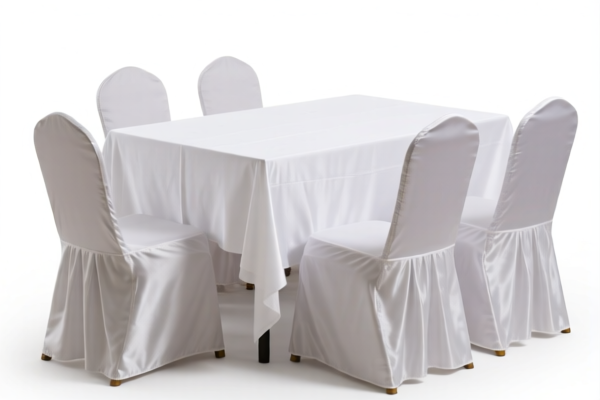
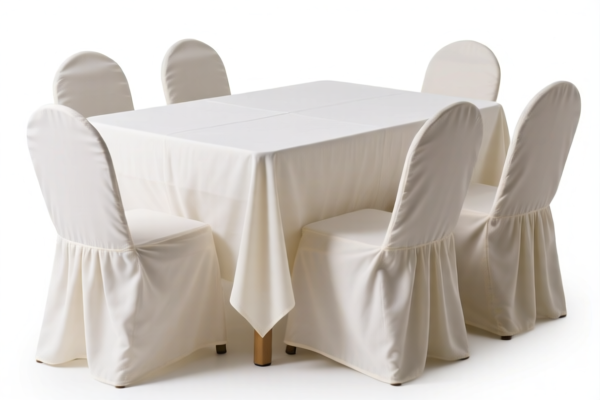
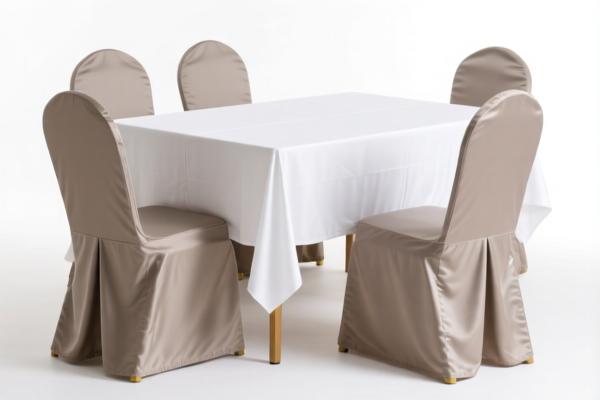
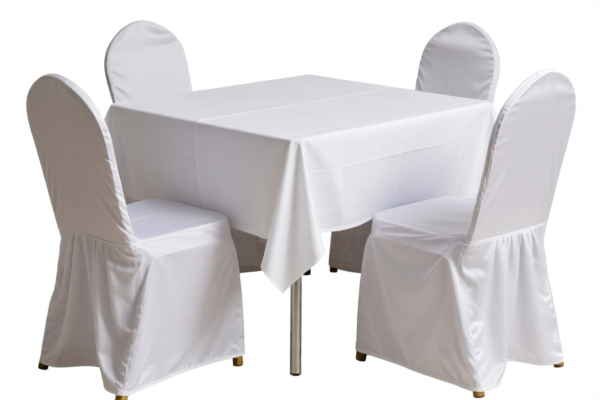
AI Analysis
🌿 Garden Table & Chair Covers (Color Matching)
🌐 HS Code Reference & Customs Clearance Guide | 2026 Latest Tariff Analysis | Professional Clearance Strategy
📌 I. Product Definition & Classification: What Exactly Are You Importing?
"Color Matching Garden Table and Chair Covers" refer to textile or plastic sheets designed to protect outdoor furniture from rain, UV rays, dust, and dirt. In international trade, their classification depends strictly on material composition and specific design form. They are generally divided into two main categories:
Textile Covers (Fabric/Waterproof Cloth): Made from woven fabrics, synthetic fibers (polyester, nylon), or waterproof canvas. These are flexible, breathable, and often customized for specific furniture shapes.
Plastic/Synthetic Covers: Made from PVC, PE, or other polymers. These are often smoother, more waterproof, but less breathable than fabric counterparts.
⚠️ Key Distinction Point:
- If the material is fabric/woven/textile → Classified under Chapter 63 (Other Made-up Articles)
- If the material is plastic/synthetic polymer → Classified under Chapter 39 (Plastics and Articles Thereof)
- Note: "Color matching" is a marketing feature, not a classification criterion. Customs focuses on material and function.
📦 II. HS Code Classification Details (2026 Latest Tariff Authority Reference)
Based on the provided data, here are the four most likely HS Codes for this product, depending on your specific material:
| HS Code | Product Description | Material Inference | Total Tax Rate | Tax Breakdown |
|---|---|---|---|---|
6307.90.98.91 |
Other made-up articles (Textile-based) | Fabric, Waterproof Cloth, or Woven Textile | 24.5% | Base: 7.0% + Section 301: 7.5% + 122 Clauses: 10% |
6307.90.98.87 |
Table & Chair Covers (Textile-based) | Synthetic Fibers or Man-Made Fabric | 24.5% | Base: 7.0% + Section 301: 7.5% + 122 Clauses: 10% |
3926.90.99.89 |
Other Plastic Articles (No Specific Provision) | Plastic or Synthetic Fiber Sheets | 22.8% | Base: 5.3% + Section 301: 7.5% + 122 Clauses: 10% |
3926.90.99.40 |
Plastic Covers (Protective Type) | Plastic/PE/PVC Protective Covers | 22.8% | Base: 5.3% + Section 301: 7.5% + 122 Clauses: 10% |
🔍 Critical Note:
- Textile vs. Plastic: This is the most common error. If your cover is made of polyester mesh, nylon, or canvas, it MUST go to Chapter 63 (24.5% tax). If it’s PVC tarpaulin or plastic sheeting, it goes to Chapter 39 (22.8% tax).
- "Color Matching" Does Not Change Tax: Whether it’s black, beige, or patterned, the tax rate remains the same for the same material.
- Specificity:6307.90.98.87is more specific for "covers" than6307.90.98.91. If your product is explicitly a "cover," prefer.87to avoid ambiguity. For plastic,.40("protective cover") is more accurate than the generic.89.
💰 III. 2026 Latest Tariff Rate Breakdown (Including Surcharges)
✅ Applicable Country: United States (US)
✅ Origin: China (CN)
✅ Effective Date: All rates include current additional tariffs as per 2026 regulations.
🎯 1. Textile-Based Covers (6307.90.98.91 & 6307.90.98.87)
| Item | Details |
|---|---|
| Base MFN Rate | 7.0% |
| Section 301 Tariff | 7.5% |
| Section 122 Tariff | 10.0% |
| Total Effective Rate | 24.5% |
| Calculation | CIF Value × 24.5% |
| De Minimis Eligibility | ❌ No (Below $800 threshold does NOT apply due to Section 301/122 exclusions for China) |
| Legal Pathway | USITC:6307.90.98.91 → Footnote: 301 → Footnote: 122 |
📌 Explanation:
- The 7.0% base is the standard Most Favored Nation (MFN) rate for "other made-up articles."
- The 7.5% Section 301 tariff is applied due to the China-US trade war.
- The 10% Section 122 tariff is an additional national security tariff on certain imports from China.
- Total 24.5% is significant. Do not assume de minimis ($800) applies; these additional tariffs override the exemption for Chinese-origin goods.
🎯 2. Plastic-Based Covers (3926.90.99.89 & 3926.90.99.40)
| Item | Details |
|---|---|
| Base MFN Rate | 5.3% |
| Section 301 Tariff | 7.5% |
| Section 122 Tariff | 10.0% |
| Total Effective Rate | 22.8% |
| Calculation | CIF Value × 22.8% |
| De Minimis Eligibility | ❌ No (Same as above) |
| Legal Pathway | USITC:3926.90.99.40 → Footnote: 301 → Footnote: 122 |
📌 Explanation:
- Plastic covers have a lower base rate (5.3% vs. 7.0%) but face the same additional tariffs.
- Savings Potential: Choosing plastic over textile can save 1.7% on total taxes. For a $10,000 shipment, this is $170 saved. However, ensure the material is genuinely plastic, not just plastic-coated fabric (which may still be classified as textile).
🛠️ IV. Customs Clearance Practical Advice (Avoiding Pitfalls)
✅ 1. Documentation Checklist (Mandatory)
| Document | Required? | Notes |
|---|---|---|
| ✅ Product Specification Sheet | ✔️ | Must clearly state material composition (e.g., "100% Polyester Woven Fabric" or "60% PVC / 40% PE"). |
| ✅ Material Test Report | ✔️ | Recommended to prove material type if customs questions it. |
| ✅ Product Photos | ✔️ | Show the cover on furniture, including any tags/labels describing material. |
| ✅ Commercial Invoice | ✔️ | Description must be precise: "Garden Table Cover, 100% Polyester, Water-Resistant" or "Plastic Table Cover, PVC Material." |
| ✅ Packing List | ✔️ | Include dimensions and weight. |
✅ 2. Declaration Tips (Key Rules)
🔥 "Material Defines Tax, Name Defines Intent"
| Scenario | Correct Declaration | Incorrect Declaration | Risk |
|---|---|---|---|
| Fabric Cover | "Table Cover, 100% Polyester Woven Fabric" | "Garden Accessory" | High risk of reclassification + penalties |
| Plastic Cover | "Protective Table Cover, PVC Material" | "Fabric Cover" | May be classified as textile (24.5%) by mistake |
| Mixed Material | "PVC-coated Polyester Fabric" | Ambiguous | Likely classified as textile (Chapter 63) |
📌 Note: If the cover has a plastic coating on fabric, customs often classifies it as textile (
6307.90) because the fabric is the essential character. Only if it’s purely plastic film/tarpaulin should you use Chapter 39.
✅ 3. Special Cases
| Case | Advice |
|---|---|
| Custom-Shape Covers | Still fall under 6307.90.98.87 if textile. "Custom shape" is not a separate HS code. |
| With Cushions? | If sold together, declare as a set. The primary function (protection) determines classification. |
| Importing from Non-China Origin | If from Vietnam/Thailand, Section 301/122 may not apply. Check origin certificate carefully. |
🌍 V. Global Market Comparison (2026)
| Country/Region | Recommended HS Code | Base Tax | Additional Tariffs | Total Rate (China Origin) | Notes |
|---|---|---|---|---|---|
| 🇺🇸 USA | 6307.90.98.87 (Textile) |
7.0% | 17.5% (301+122) | 24.5% | High barrier. Consider plastic if material allows. |
| 🇺🇸 USA | 3926.90.99.40 (Plastic) |
5.3% | 17.5% (301+122) | 22.8% | Slightly lower tax. |
| 🇨🇳 China | 6307.90.98 |
7.0% | None | 7.0% | Low barrier for export. |
| 🇪🇺 EU | 6307.90.90 |
4.0% | None | 4.0% | No Section 301/122. Very competitive. |
| 🇬🇧 UK | 6307.90.90 |
4.0% | None | 4.0% | Post-Brexit alignment with EU. |
📌 Conclusion:
- The US market is the most expensive due to Section 301 and 122 tariffs.
- Plastic covers offer a small but real advantage over textile in the US (22.8% vs. 24.5%).
- Non-China origins (e.g., Vietnam, India) can avoid these additional tariffs entirely, reducing total tax to base rates only.
📌 VI. Common Mistakes & Pitfalls (Lessons Learned)
❌ Mistake 1: Declaring "Garden Cover" without specifying material.
👉 Consequence: Customs will assign the highest applicable rate or require physical examination → Delays + Storage Fees.
❌ Mistake 2: Assuming "De Minimis" ($800) applies to Chinese goods.
👉 Consequence: Section 301/122 tariffs override de minimis. Even small shipments are taxed.
❌ Mistake 3: Confusing "Waterproof Fabric" with "Plastic."
👉 Consequence: If it’s woven polyester with a waterproof coating, it’s textile (24.5%), not plastic (22.8%).
❌ Mistake 4: Using vague terms like "Outdoor Accessory."
👉 Consequence: High scrutiny. Use precise terms: "Table Cover, 100% Polyester."
✅ Correct Approach:
"Waterproof Garden Table Cover, 100% Oxford Fabric (Polyester), Custom Fit, Blue"
OR
"Plastic Table Cover, PVC Material, UV Resistant, Beige"
🎯 VII. Conclusion: Smart Classification, Smart Savings!
🎯 Remember the Rules:
🔹 "Fabric = Chapter 63 (24.5%), Plastic = Chapter 39 (22.8%)"
🔹 "No De Minimis for China – Prepare for Full Tax"
🔹 "Material Proof is Your Best Friend"
📌 Pro Tip:
If you are exporting large volumes to the US, consider:
1. Switching to Plastic Materials if product performance allows (saves 1.7% tax).
2. Sourcing from Non-China Countries to avoid Section 301/122 entirely.
3. Applying for an Advance Ruling from US Customs to confirm your HS Code before shipment.
📣 Immediate Action:
📞 Confirm Material Composition with your supplier.
📄 Prepare Material Test Reports.
🚀 Declare Accurately to avoid delays and unexpected costs.
✨ Professional Clearance Starts with Accurate Classification!
💼 Every Percent Matters in International Trade!
Customer Reviews
About HS Code Classification
The Harmonized System (HS) is an internationally standardized nomenclature developed by the World Customs Organization (WCO) to classify traded products. Over 200 countries use the HS system as the basis for customs tariffs, trade statistics, and import/export regulations.
Each HS code follows a hierarchical structure:
- Chapter (2 digits) — Broad category of goods (e.g., Chapter 84: Machinery and Mechanical Appliances)
- Heading (4 digits) — More specific grouping within the chapter
- Subheading (6 digits) — Internationally standardized breakdown, used by all WCO member countries
- National subdivisions (8-10 digits) — Country-specific extensions for further classification, such as US HTSUS 10-digit codes
Correct HS code classification is essential for smooth customs clearance, accurate duty payment, and compliance with trade regulations. Misclassification can lead to customs delays, overpayment of duties, or penalties.
When importing from CN to US, the applicable tariff rates may include:
- Most-Favored-Nation (MFN) rate — The standard duty rate applied to WTO members
- General rate — Applied to countries without trade agreements
- Trade remedy duties — Additional tariffs such as Section 301 (anti-dumping), Section 232 (national security), or countervailing duties
The information provided on this page is for reference purposes only. For official classification, please consult with your local customs authority or a licensed customs broker.