Color Motion Film
CN → US| HS Code | Tariff Rate | Origin | Destination | Doc |
|---|---|---|---|---|
| 3704000000 | 35.0% | CN | US | Official Doc |
| 3702310100 | 38.7% | CN | US | Official Doc |
| 3702520130 | 38.7% | CN | US | Official Doc |
| 3706106090 | 35.0% | CN | US | Official Doc |
| 3702560030 | 35.0% | CN | US | Official Doc |
Product Images
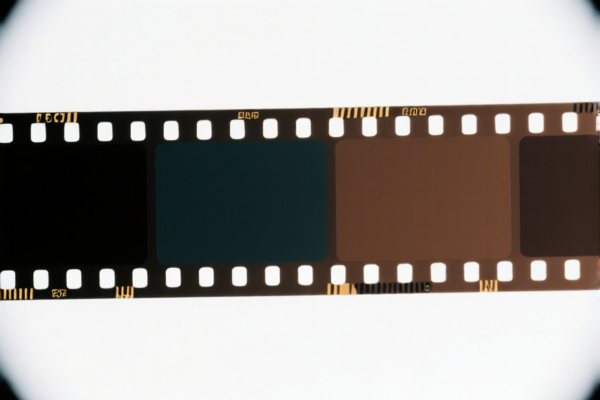
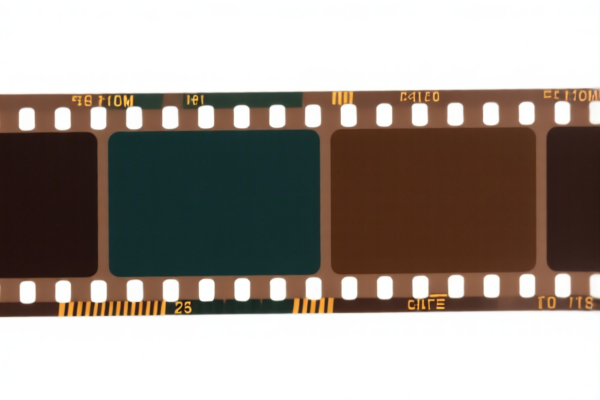
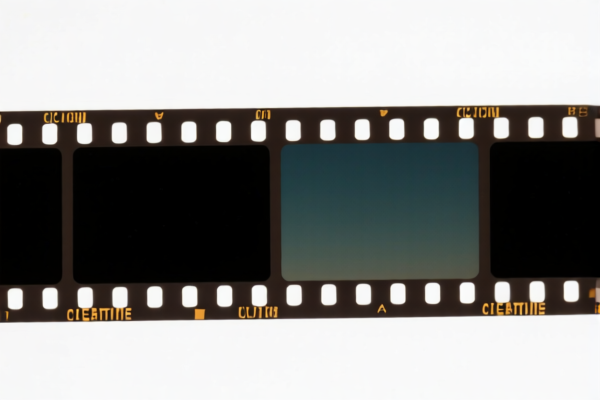

AI Analysis
🎞️ Color Motion Film (彩色电影胶片)
🌐 HS Code Reference & Customs Clearance Guide | 2026 Latest Tariff Analysis | Professional Level Clearance Strategy
📌 I. Product Definition & Classification: Do You Truly Understand "Color Motion Film"?
Color Motion Film refers to unexposed photographic films specifically designed for motion picture cameras (cinematography) or color photography. In international trade, classification depends heavily on the state of exposure (exposed vs. unexposed), format (roll vs. sheet), and usage (still photography vs. motion picture).
⚠️ Key Distinction Point:
- If it is Unexposed and classified generally as a photographic medium → 3704.00.00.00
- If it is Unexposed Color Roll Film for still cameras → 3702.31.01.00 or 3702.52.01.30
- If it is Unexposed Movie Film (width ≥ 35mm) for cinematography → 3706.10.60.90 or 3702.56.00.30
📦 II. HS Code Classification Details (2026 Latest Tariff Authority Comparison)
Based on the provided data, here are the five potential HS Codes with their specific matching logic and tax implications:
| HS Code | Product Description & Matching Logic | Applicable Scenario | Total Tax Rate |
|---|---|---|---|
3704.00.00.00 |
General Unexposed Photographic Plate/Film: Matches material (film) and form (photographic support). Fits the general classification for unexposed film without specific still/movie distinction. | General unexposed photographic media, unknown specific use. | 35.0% |
3702.31.01.00 |
Color Still Film (Roll): Matches "Color" (usage feature) and "Film" (morphology as photosensitive roll). Specifically for still photography color rolls. | Color negative films for 35mm/120 still cameras. | 38.7% |
3702.52.01.30 |
Color Reversal Film (Slide): Matches material (Color) and form (Film); inferred from common sense as Color Reversal (Slide) film for stills. | Ektachrome, Fujichrome, and other slide films for still photography. | 38.7% |
3706.10.60.90 |
Motion Picture Film (Other): Falls under "Other" types in motion picture film ≥ 35mm width, excluding positive发行 copies. | Unexposed color motion picture film rolls/cassettes for cinema. | 35.0% |
3702.56.00.30 |
Color Photography/Film: Fully matches classification explanation for "Color Photographic Film" and "Motion Picture Film". | Specific color films for stills or specialized motion uses depending on subheading nuances. | 35.0% |
🔍 Important Note:
- "Motion Picture" vs. "Still": If the film is explicitly for cinematography (motion), codes starting with 3706 are primary. If it is for still photography but called "film," codes starting with 3702 apply. - "Unexposed" Status: All codes above assume the film is UNEXPOSED. Exposed film (developed negatives/slides) typically falls under different chapters or exemptions. - Tax Variance: There is a 3.7% difference between the 35.0% and 38.7% rates, driven by the base tariff.
💰 III. 2026 Latest Tariff Rate Breakdown (Including Surcharges & Policy Add-ons)
✅ Applicable Country: USA (US)
✅ Origin: China (CN)
✅ Effective Date: From November 10, 2025 (including subsequent imports)
🎯 1. Group A: 3704.00.00.00, 3706.10.60.90, 3702.56.00.30
Total Tax Rate: 35.0%
| Item | Content |
|---|---|
| Base Tariff | 0.0% (Ad Valorem) |
| USITC Surcharge (Section 301) | +25.0% |
| IEEPA Surcharge (China-Specific) | +10.0% |
| Total Tax Rate | 35.0% |
| Calculation Basis | CIF Value × 35% |
| De Minimis Exemption | ❌ Not Eligible (deny_de_minimis) |
| Legal Authority Path | IEEPA:9903.01.25 → IEEPA:9903.01.24 → USITC:370x.xxxx.xxxx → FOOTNOTE:9903.88.01 |
📌 Explanation:
- The 25% is the standard Section 301 tariff on Chinese-origin goods. - The 10% is the additional IEEPA tariff targeting Chinese products. - Base Rate is 0%, which is favorable compared to Group B, making these codes cost-effective.
🎯 2. Group B: 3702.31.01.00, 3702.52.01.30
Total Tax Rate: 38.7%
| Item | Content |
|---|---|
| Base Tariff | 3.7% (Ad Valorem) |
| USITC Surcharge (Section 301) | +25.0% |
| IEEPA Surcharge (China-Specific) | +10.0% |
| Total Tax Rate | 38.7% |
| Calculation Basis | CIF Value × 38.7% |
| De Minimis Exemption | ❌ Not Eligible (deny_de_minimis) |
| Legal Authority Path | IEEPA:9903.01.25 → IEEPA:9903.01.24 → USITC:3702.xxxx.xxxx → FOOTNOTE:9903.88.01 |
📌 Explanation:
- These codes (Still Color Film) have a 3.7% base tariff before surcharges. - Even though the base is slightly positive, the total 38.7% is significantly higher than Group A due to the cumulative effect. - Commonly used for Ektachrome, Portra, or Tri-X style rolls intended for still cameras, not motion picture projectors.
🛠️ IV. Customs Clearance Practical Advice (Practical Pitfall Avoidance Guide)
✅ 1. Preparation Checklist (All Documents Required)
| Document | Mandatory? | Description |
|---|---|---|
| ✅ Product Specification Sheet | ✔️ | Must specify: Width (e.g., 35mm), Sensitivity (ISO), Emulsion Type, Roll Length. |
| ✅ Clear Product Photos | ✔️ | Show packaging, labels, and film canisters. Label must state "UNEXPOSED FILM". |
| ✅ Commercial Invoice | ✔️ | Clearly state "Color Motion Film (Unexposed)" or "Color Still Film (Unexposed)". Avoid vague terms like "Photographic Material". |
| ✅ Certificate of Origin (CO) | ✔️ | Required to prove Origin (CN) for surcharge calculation. |
| ✅ Packing List | ✔️ | Detail quantity (rolls/cassettes) and weight. |
| ✅ Safety Data Sheet (MSDS) | ❌* | Usually not required for unexposed film, but check if it contains hazardous chemical stabilizers. |
✅ 2. Declaration Strategy (Key Mantra)
🔥 "Specify Usage, Define State, Avoid General 'Film'!"
| Scenario | Correct Declaration | Incorrect Declaration | Consequence |
|---|---|---|---|
| Cinematography Film (≥35mm) | Use 3706.10.60.90 (35.0%) | Declare as general "Photographic Film" → Risk of misclassification penalties. | Underpayment risk if audited, or overpayment if default is higher. |
| Still Camera Color Film | Use 3702.31.01.00 (38.7%) | Declare as "Motion Picture Film" → Incorrect tax rate. | Over/Under payment. |
| General Unexposed Film | Use 3704.00.00.00 (35.0%) | Vague "Film" → Customs may apply highest reasonable rate. | Delayed clearance. |
| Exposed Film | Not covered here | Declare as Unexposed → Fraud/Seizure. | Severe penalties. |
✅ 3. Special Case Handling
| Situation | Handling Advice |
|---|---|
| OEM Custom Film | Provide manufacturer specs. Ensure "Color" and "Unexposed" are explicit. |
| Small Rolls (Sample Size) | Still subject to 35%+ tax. No De Minimis exemption applies to film. |
| Mixed Shipment (Stills + Motion) | Separate HS Codes! Do not lump under one code. Motion goes to 3706, Stills to 3702. |
| Origin Non-China | If from Japan/USA, IEEPA 10% may not apply, potentially lowering total tax. Verify CO. |
🌍 V. Global Market Clearance Comparison (2026 Latest)
| Country/Region | Recommended HS Code | Est. Tariff (China Origin) | Certification Requirements | Notes |
|---|---|---|---|---|
| 🇺🇸 USA | 3706.10.60.90 / 3702.31.01.00 |
35.0% - 38.7% | None specific (Film) | High surcharges (25%+10%). No de minimis. |
| 🇨🇳 China | 3706.10.00.00 / 3702.55.00.00 |
~5% - 10% | None | Domestic consumption tax may apply. |
| 🇪🇺 EU | 3702.55.00 / 3706.10.00 |
0% - 6.5% | CE (if packaging claims) | Lower base tariffs, no major political surcharges. |
| 🇬🇧 UK | 3706.10.00 |
6.5% | UKCA (if applicable) | Post-Brexit tariffs apply. |
| 🇯🇵 Japan | 3706.10.00 |
0% - 3.2% | PSE (if electrical components in camera, not film) | Very low film tariffs. |
📌 Conclusion:
- USA is the most expensive market for Chinese-origin film due to the 35-39% effective rate. - EU/UK/Japan offer much better cost efficiency for film imports. - Strategic Sourcing: Consider sourcing film from non-China origins (e.g., Fujifilm Japan, Kodak USA) to avoid the 10% IEEPA surcharge in the US.
📌 VI. Common Errors & Pitfall Guide (Lessons from Tears)
❌ Error 1: Declaring "Color Film" without specifying Unexposed.
👉 Consequence: If it's exposed, it might be considered waste or second-hand goods, leading to rejection or higher duties. Always state "UNEXPOSED".
❌ Error 2: Using the general code 3704.00.00.00 for specific still/movie films.
👉 Consequence: While the rate (35%) might look similar to motion film, customs may question the specificity. If it's clearly still film, 3702.xxxx is more accurate. Misalignment can lead to audits.
❌ Error 3: Assuming small quantities qualify for De Minimis ($800).
👉 Consequence: FAIL. Film is explicitly listed as deny_de_minimis. You must pay duties on every single roll, even if it's a sample.
❌ Error 4: Confusing Motion Picture Film with Still Film.
👉 Consequence: Using 3706 (Motion) for a roll of Kodak Portra (Still). The HS Code structure is different (3702 vs 3706). This leads to classification errors and potential back-taxes.
✅ Correct Practice:
"Kodak Ektar H50, 35mm Color Negative Film, Unexposed, 24 Exposures per Roll, ISO 50. HS Code: 3702.31.01.00. Origin: USA."
🎯 VII. Conclusion: Precision in Classification Saves Costs!
🎯 Remember the Mantra:
🔹 "Motion goes to 3706, Still to 3702. Unexposed is Key!"
🔹 "USA Tariff: 35% for Motion, 38.7% for Still. No De Minimis!"
📌 Pro Tip:
If you are importing film into the US from China, the 35-39% tax is a significant cost driver.
- Strategy: Check if the film can be classified under 3704.00.00.00 (35%) if it is generic/unspecified, rather than the specific still film codes (38.7%).
- Supply Chain: Consider importing from Japan or Europe to bypass the 10% IEEPA surcharge, potentially reducing the US import cost to ~25-38% depending on the base rate.
📣 Immediate Action:
📞 Contact a specialized customs broker for Advance Ruling.
📦 Provide clear photos and specs.
🚀 Accurate Classification = Lower Risk & Optimized Costs!
✨ Professional Clearance Starts with Precise Classification!
💼 Every percent of tariff counts in the film industry!
Customer Reviews
About HS Code Classification
The Harmonized System (HS) is an internationally standardized nomenclature developed by the World Customs Organization (WCO) to classify traded products. Over 200 countries use the HS system as the basis for customs tariffs, trade statistics, and import/export regulations.
Each HS code follows a hierarchical structure:
- Chapter (2 digits) — Broad category of goods (e.g., Chapter 84: Machinery and Mechanical Appliances)
- Heading (4 digits) — More specific grouping within the chapter
- Subheading (6 digits) — Internationally standardized breakdown, used by all WCO member countries
- National subdivisions (8-10 digits) — Country-specific extensions for further classification, such as US HTSUS 10-digit codes
Correct HS code classification is essential for smooth customs clearance, accurate duty payment, and compliance with trade regulations. Misclassification can lead to customs delays, overpayment of duties, or penalties.
When importing from CN to US, the applicable tariff rates may include:
- Most-Favored-Nation (MFN) rate — The standard duty rate applied to WTO members
- General rate — Applied to countries without trade agreements
- Trade remedy duties — Additional tariffs such as Section 301 (anti-dumping), Section 232 (national security), or countervailing duties
The information provided on this page is for reference purposes only. For official classification, please consult with your local customs authority or a licensed customs broker.