Color Negative Film Roll
CN → US| HS Code | Tariff Rate | Origin | Destination | Doc |
|---|---|---|---|---|
| 3704000000 | 35.0% | CN | US | Official Doc |
| 3702520160 | 38.7% | CN | US | Official Doc |
| 3702540060 | 38.7% | CN | US | Official Doc |
| 3702960000 | 38.7% | CN | US | Official Doc |
| 3704000000 | 35.0% | CN | US | Official Doc |
Product Images
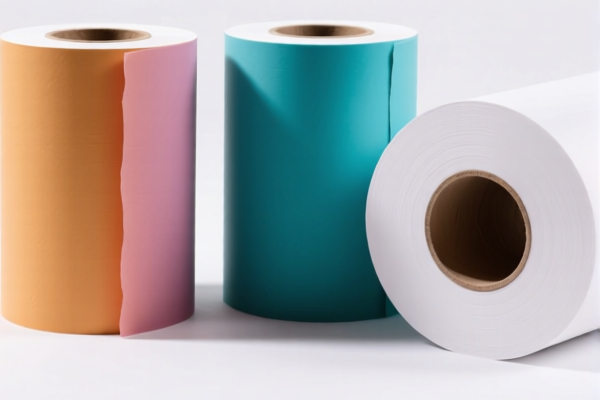
AI Analysis
🎞️ Color Negative Film Roll (彩色负片胶卷)
🌐 HS Code Reference & Customs Clearance Guide | 2026 Latest Tariff Analysis | Professional Level Strategy
📌 I. Product Definition & Classification: Do You Truly Understand "Film"?
Color Negative Film Rolls are light-sensitive photographic materials used for capturing color images. In international trade, they are categorized based on their chemical state (unexposed vs. exposed) and color type (color vs. black & white).
Two Main Categories: 1. Unexposed Film (Raw Material): New, unexposed rolls ready for shooting. Classified under Chapter 37 (Photographic Goods) as "Photographic film in rolls, other than photopaper, photoblank paper and photogravure paper." 2. Exposed Film (Processed): Film that has been shot and developed (or undeveloped but exposed). Classified under Chapter 37 as "Photographic plates and film, exposed, but not developed" or "Photographic plates and film, exposed and developed."
⚠️ Key Distinction Point:
- If the film is NEW/UNEXPOSED (Color) → It falls under 3702.5x.xxxx (Color photographic film in rolls, unexposed).
- If the film is NEW/UNEXPOSED (Black & White) OR EXPOSED/NEGATIVE → It often falls under 3704.00.00.00 (Photographic plates, film, paper, paperboard, other flat sensitized support, exposed but not developed) or specific unexposed BW codes. Note: The data provided in suggests a strong clustering around 3704 for "exposed/negative" or generic "film" matches, and 3702 for specific "unexposed color" matches.
📦 II. HS Code Classification Details (Based on Provided Data)
The input provides five potential HS Code matches. Here is the detailed breakdown of why each code is suggested and the associated tax implications.
| HS Code | Summary / Matching Logic from | Total Tax Rate | Tax Composition |
|---|---|---|---|
3704.00.00.00 |
Match 1 & 5: 1. General match: "Film" form, suitable for photo use. Material attributes match film/paper/cardboard features. 2. Specific match: "Black & White Negative" or "Exposed but undeveloped" film. Fits the category of "Photographic material exposed but not developed." |
35.0% | Base Tariff: 0.0% Section 301 (Add'l): 25.0% Section 122 (Add'l): 10% |
3702.52.01.60 |
Match 2: Color photographic film roll (Use match). It is not reversal film (so it falls into the "Other" category). Material form fits film characteristics. |
38.7% | Base Tariff: 3.7% Section 301 (Add'l): 25.0% Section 122 (Add'l): 10% |
3702.54.00.60 |
Match 3: "Color" corresponds to "Color Photographic Film." "Roll" is unexposed photographic material. Since specifications are unclear, it defaults to the "Other" sub-category logic with no obvious conflict in material or form. |
38.7% | Base Tariff: 3.7% Section 301 (Add'l): 25.0% Section 122 (Add'l): 10% |
3702.96.00.00 |
Match 4: Matches as Black & White Negative Roll. Fits the use case of "Sensitized unexposed photographic film." Based on common sense, material is film (not paper/cardboard/textile). |
38.7% | Base Tariff: 3.7% Section 301 (Add'l): 25.0% Section 122 (Add'l): 10% |
3704.00.00.00 |
Match 5 (Duplicate Code, Different Logic): Material is film (matches "Film"). Form/Use is Black & White Negative (falls under the scope of "Exposed but not developed photographic material"). |
35.0% | Base Tariff: 0.0% Section 301 (Add'l): 25.0% Section 122 (Add'l): 10% |
💰 III. Detailed Tariff Rate Explanation
✅ Applicable Country: United States (US)
✅ Origin: China (CN) (Inferred from the specific "Section 122" and "301" clauses)
✅ Effective Time: Post-2025 Policies (Includes Section 301 and IEEPA measures)
🎯 1. The "35.0%" Scenario (HS Code: 3704.00.00.00)
This code generally applies to exposed but undeveloped film or black & white film treated as general sensitized plates/film under heading 3704.
| Item | Detail |
|---|---|
| Base Duty Rate | 0.0% (Ad Valorem) |
| Section 301 Duty (Add'l) | +25.0% (USITC Footnote related to Chinese imports) |
| Section 122 / IEEPA Duty | +10.0% (Specific additional tariff for Chinese-origin goods under IEEPA/301 expansions) |
| Total Effective Rate | 35.0% |
| Calculation | CIF Value × 35.0% |
| De Minimis Exemption? | ❌ NO (Denied. High tariff codes typically exclude de minimis). |
| Legal Basis Path | HS:3704.00.00.00 → USITC:301_Footnote → IEEPA:Section_122/9903 |
📌 Explanation:
- Why 0% Base? Chapter 37 often has low base tariffs for raw photo materials.
- Why 35% Total? The combination of 25% (Section 301) + 10% (Section 122/IEEPA) creates a heavy burden.
- Risk: High chance of audit if misdeclared as "unexposed color" (which might have a different base rate).
🎯 2. The "38.7%" Scenario (HS Codes: 3702.5x / 3702.96)
These codes apply to unexposed color film (3702.5x) or specific unexposed B&W film (3702.96).
| Item | Detail |
|---|---|
| Base Duty Rate | 3.7% (Ad Valorem) |
| Section 301 Duty (Add'l) | +25.0% |
| Section 122 / IEEPA Duty | +10.0% |
| Total Effective Rate | 38.7% |
| Calculation | CIF Value × 38.7% |
| De Minimis Exemption? | ❌ NO |
| Legal Basis Path | HS:3702.5x/3702.96 → USITC:301_Footnote → IEEPA:Section_122 |
📌 Explanation:
- Why Higher Than 3704? The Base Rate is 3.7% instead of 0%.
- Why Still High? The additive tariffs (35%) are the same.
- Key Difference: This classification is for UNEXPOSED film. If you import new rolls from Kodak/Fujifilm, this is the more accurate category for "Color Negative."
🛠️ IV. Customs Clearance Practical Advice (Pitfall Avoidance)
✅ 1. Preparation Checklist (Missing any = Delay/Seizure)
| Document | Required | Explanation |
|---|---|---|
| ✅ Product Spec Sheet | ✔️ | Must specify: Color vs. B&W, Exposed vs. Unexposed, Length/Speed (ISO). |
| ✅ Commercial Invoice | ✔️ | Clearly state "Unexposed Color Negative Film" or "Exposed Photographic Film." Do not just say "Film." |
| ✅ Material Safety Data Sheet (MSDS) | ✔️ | Film chemicals may be regulated. Required for air freight and customs inspection. |
| ✅ Proof of Origin | ✔️ | Crucial for determining if Section 301/122 duties apply. |
| ✅ HS Code Pre-Ruling | ✔️ | Recommended. The difference between 3702 and 3704 changes the Base Rate (3.7% vs 0%). |
✅ 2. Declaration Strategy (Key Mnemonic)
🔥 "Unexposed Color is 3702, Exposed/Negative is 3704. Don't Mix Them!"
| Situation | Correct HS Code | Why? |
|---|---|---|
| New Roll, Color, Not Shot | 3702.52.01.60 or 3702.54.00.60 |
It is "Photographic film in rolls, unexposed, color." |
| New Roll, B&W, Not Shot | 3702.96.00.00 (or similar) |
It is "Photographic film in rolls, unexposed, B&W." |
| Shot Roll, Not Developed | 3704.00.00.00 |
It is "Exposed but not developed." |
| Shot Roll, Developed | Not in (Usually 3707 or excluded) | Note: The provided focuses on 3702/3704. Developed film may have different duties. |
⚠️ Critical Warning:
- Misdeclaring "Unexposed Color" as "Exposed/Negative" (3704) saves 3.7% base duty but carries a risk of penalty for incorrect classification if customs inspects the sealed roll.
- Misdeclaring "Exposed" as "Unexposed" (3702) is a serious compliance violation (fraud) if the film shows signs of use.
✅ 3. Special Cases
| Scenario | Handling Advice |
|---|---|
| OEM/Private Label Film | Provide brand authorization. If no brand, declare as "Generic." |
| Film for Medical/Industrial X-Ray | NOT "Photographic" for cameras. This falls under 9022 (Medical/Industrial). Do NOT use 3702/3704. |
| Mixed Box (Film + Camera) | Split Declaration! Film goes to 3702/3704; Camera goes to 9009. Do not lump them. |
🌍 V. Global Market Comparison (2026 Snapshot)
| Region | Recommended HS Code | Total Tax (China Origin) | Key Requirement |
|---|---|---|---|
| 🇺🇸 USA | 3702.5x or 3704 |
35.0% – 38.7% | Section 301 + 122 Apply. MSDS Required. |
| 🇨🇳 China | 3702.52 |
~6-10% | No Section 301/122. |
| 🇪🇺 EU | 3702.52 |
~4-6% | No Section 301. REACH Compliance for chemicals. |
| 🇯🇵 Japan | 3702.52 |
~3-8% | No Section 301. |
📌 Conclusion:
The USA is the most expensive market for importing Chinese photo film due to the 35-38.7% all-in duty rate.
- Cost Impact: For a $10,000 shipment, you pay $3,500-$3,870 in duties.
- Strategy: Consider sourcing from Vietnam/Malaysia (if applicable) to avoid Section 301/122, or optimize packaging to reduce CIF value.
📌 VI. Common Errors & Pitfalls (Lessons Learned)
❌ Error 1: Declaring "Color Film" under 3704 (Exposed) when it is Unexposed.
👉 Consequence: Underpaying base duty by 3.7%. Customs audit → Back taxes + Interest.
❌ Error 2: Ignoring Section 122 (10%).
👉 Consequence: Many importers only account for the 25% Section 301. The total is 35% or 38.7%, not 25%. Budget incorrectly = Cash flow crisis.
❌ Error 3: Confusing Photographic Film with Industrial X-Ray Film.
👉 Consequence: X-Ray film is 9022.90. Misclassifying leads to severe penalties and potential seizure of medical equipment.
✅ Correct Declaration Example:
"Unexposed Color Negative Photographic Film, 35mm, 400 ISO, Kodak Portra, HS 3702.52.01.60, Origin China"
🎯 VII. Conclusion: Precision is Profit
🎯 Remember the Formula:
🔹 Unexposed Color →
3702.5x→ 38.7% Total Tax
🔹 Exposed/Negative →3704.00.00.00→ 35.0% Total Tax
🔹 Total = Base (0% or 3.7%) + 301 (25%) + 122 (10%)
📌 Pro Tip:
Always verify if your film is truly unexposed (sealed) before declaring under 3702. If it is exposed (even if undeveloped), it MUST go to 3704. Misclassification risks are higher than the 3.7% savings.
✨ Professional Clearance Starts with Accurate Classification!
💼 Every Percent Saved is Pure Profit.
Customer Reviews
About HS Code Classification
The Harmonized System (HS) is an internationally standardized nomenclature developed by the World Customs Organization (WCO) to classify traded products. Over 200 countries use the HS system as the basis for customs tariffs, trade statistics, and import/export regulations.
Each HS code follows a hierarchical structure:
- Chapter (2 digits) — Broad category of goods (e.g., Chapter 84: Machinery and Mechanical Appliances)
- Heading (4 digits) — More specific grouping within the chapter
- Subheading (6 digits) — Internationally standardized breakdown, used by all WCO member countries
- National subdivisions (8-10 digits) — Country-specific extensions for further classification, such as US HTSUS 10-digit codes
Correct HS code classification is essential for smooth customs clearance, accurate duty payment, and compliance with trade regulations. Misclassification can lead to customs delays, overpayment of duties, or penalties.
When importing from CN to US, the applicable tariff rates may include:
- Most-Favored-Nation (MFN) rate — The standard duty rate applied to WTO members
- General rate — Applied to countries without trade agreements
- Trade remedy duties — Additional tariffs such as Section 301 (anti-dumping), Section 232 (national security), or countervailing duties
The information provided on this page is for reference purposes only. For official classification, please consult with your local customs authority or a licensed customs broker.