Color Ordinary Film
CN → US| HS Code | Tariff Rate | Origin | Destination | Doc |
|---|---|---|---|---|
| 5407200000 | 35.0% | CN | US | Official Doc |
| 5407301000 | 35.0% | CN | US | Official Doc |
| 3920200055 | 39.2% | CN | US | Official Doc |
| 3920100000 | 39.2% | CN | US | Official Doc |
| 3919905060 | 40.8% | CN | US | Official Doc |
Product Images


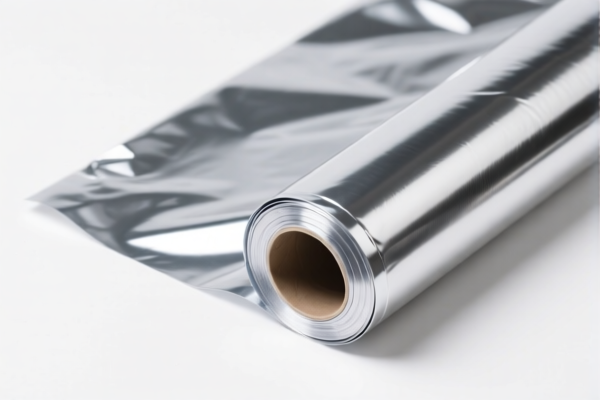
AI Analysis
🎨 Color Ordinary Film (彩色宽膜)
🌐 HS Code Reference & Customs Clearance Guide | 2026 Latest Tariff Analysis | Professional Clearance Strategy
📌 I. Product Definition and Classification: What Exactly is "Color Ordinary Film"?
"Color Ordinary Film" (often referred to as Colored Wide Film or Colored Plastic Film) is a versatile packaging and industrial material. In international trade, it is typically classified based on two critical factors: 1. Material Composition: Is it made of synthetic textile fibers (Chapter 54) or plastic/polymer (Chapter 39)? 2. Form and Function: Is it a woven fabric-like structure, a basic plastic film (Chapter 39), or a self-adhesive/finished roll (Chapter 39)?
⚠️ Key Distinction Point:
- If the film is woven from synthetic filaments (like a mesh or non-woven fabric structure) → It falls under Chapter 54.
- If the film is a continuous plastic sheet (e.g., Polypropylene/PP, Polyethylene/PE) without weaving → It falls under Chapter 39.
📦 II. HS Code Classification Details (2026 Latest Tariff Authority Comparison)
| HS Code | Product Description | Application Scenario | Material/Structure Basis |
|---|---|---|---|
5407.20.00.00 |
Woven fabrics of synthetic filaments, colored | Non-woven bags, industrial weaving, textured films | Synthetic filament fibers; classified as "strip-like or similar" |
5407.30.10.00 |
Other woven fabrics of synthetic filaments, colored | General purpose colored woven films | Plastic-like appearance but classified under textile logic (common sense inference) |
3920.20.00.55 |
Plates, sheets, film, foil, and strip, of polypropylene | Food packaging, label stock, general packaging | Plastic material (PP); colored attribute does not conflict |
3920.10.00.00 |
Plates, sheets, film, foil, and strip, of polymers of ethylene | High-performance plastic films, laminates | Plastic material (PE/EVA); typical thermoplastic film |
3919.90.50.60 |
Self-adhesive plates, sheets, film, foil, tape, strip and other flat shapes | Adhesive tapes, sticky colored films | Plastic film with adhesive backing; "other" category under Ch. 39 |
🔍 Key Reminder:
- Chapter 54 (5407.xx) applies if the film has a woven texture or is made of synthetic filaments processed as textiles. - Chapter 39 (3920.xx / 3919.xx) applies if the film is a solid plastic sheet/film (extruded or cast) without weaving. - Do not mix textile and plastic classifications incorrectly. If it’s a "woven plastic bag" or "non-woven fabric," use Ch. 54. If it’s a "shrink wrap" or "cling film," use Ch. 39.
💰 III. 2026 Latest Tariff Rate Breakdown (Including Surtaxes and Policy Add-ons)
✅ Applicable Country: United States (US)
✅ Origin: China (CN)
✅ Effective Time: November 10, 2025 (and subsequent imports)
🎯 1. 5407.20.00.00 —— Woven Synthetic Filament Fabrics (Colored)
| Item | Content |
|---|---|
| Base Tariff Rate | 0% (ad valorem) |
| USITC Surtax | +25% (from USITC Footnote 9903.88.01) |
| IEEPA Surtax | +10% (against China/HK products, effective from Nov 10, 2025) |
| Total Tariff Rate | 35.0% |
| Tax Calculation | CIF Value × 35% |
| De Minimis Exemption | ❌ Not Eligible (deny_de_minimis) |
| Legal Basis Path | IEEPA:9903.01.25 → IEEPA:9903.01.24 → USITC:5407.20.00.00 → FOOTNOTE:9903.88.01 |
📌 Explanation:
- Although the base tariff is 0%, the 25% USITC surtax (Section 301) and 10% IEEPA surtax make the total 35%. - This applies to colored woven synthetic films. Even if it looks like plastic, if it’s woven, it’s taxed as a textile.
🎯 2. 5407.30.10.00 —— Other Woven Synthetic Filament Fabrics (Colored)
| Item | Content |
|---|---|
| Base Tariff Rate | 0% |
| USITC Surtax | +25% |
| IEEPA Surtax | +10% |
| Total Tariff Rate | 35.0% |
| Tax Calculation | CIF × 35% |
| De Minimis Exemption | ❌ Not Eligible |
| Legal Basis Path | IEEPA:9901.25 → IEEPA:9903.01.24 → USITC:5407.30.10.00 → FOOTNOTE:9903.88.01 |
📌 Note:
- Same tax burden as5407.20.00.00. - Even if the film appears to be "plastic-like," if it is classified under Chapter 54 due to its fiber structure, the 35% rate applies.
🎯 3. 3920.20.00.55 —— Polypropylene (PP) Films
| Item | Content |
|---|---|
| Base Tariff Rate | 4.2% |
| USITC Surtax | +25% |
| IEEPA Surtax | +10% |
| Total Tariff Rate | 39.2% |
| Tax Calculation | CIF × 39.2% |
| De Minimis Exemption | ❌ Not Eligible |
| Legal Basis Path | IEEPA:9903.01.25 → IEEPA:9903.01.24 → USITC:3920.20.00.55 → FOOTNOTE:9903.88.01 |
📌 Explanation:
- Base rate is 4.2% (higher than Chapter 54’s 0%). - Total 39.2% is higher than the 35% for woven films. - Applies to PP films (commonly used for food packaging, labels).
🎯 4. 3920.10.00.00 —— Polymers of Ethylene (PE/EVA) Films
| Item | Content |
|---|---|
| Base Tariff Rate | 4.2% |
| USITC Surtax | +25% |
| IEEPA Surtax | +10% |
| Total Tariff Rate | 39.2% |
| Tax Calculation | CIF × 39.2% |
| De Minimis Exemption | ❌ Not Eligible |
| Legal Basis Path | IEEPA:9903.01.25 → IEEPA:9903.01.24 → USITC:3920.10.00.00 → FOOTNOTE:9903.88.01 |
📌 Note:
- Same as PP films. If your "Color Ordinary Film" is made of Polyethylene (PE), expect 39.2%. - Common in shrink wrap, cling films, and agricultural films.
🎯 5. 3919.90.50.60 —— Self-Adhesive Plastic Films
| Item | Content |
|---|---|
| Base Tariff Rate | 5.8% |
| USITC Surtax | +25% |
| IEEPA Surtax | +10% |
| Total Tariff Rate | 40.8% |
| Tax Calculation | CIF × 40.8% |
| De Minimis Exemption | ❌ Not Eligible |
| Legal Basis Path | IEEPA:9903.01.25 → IEEPA:9903.01.24 → USITC:3919.90.50.60 → FOOTNOTE:9903.88.01 |
📌 Explanation:
- Highest rate at 40.8% due to higher base tariff (5.8%). - Applies only if the film has an adhesive backing (e.g., sticker rolls, tape). - Do not misclassify non-adhesive films here!
🛠️ IV. Customs Clearance Practical Advice (Battle-Tested Pitfall Guide)
✅ 1. Preparation Checklist (Mandatory)
| Document | Required | Description |
|---|---|---|
| ✅ Product Specification Sheet | ✔️ | Must state: Material (PP/PE/Synthetic Fiber), Thickness, Width, Color, Form (Woven/Non-woven/Film) |
| ✅ Material Composition Certificate | ✔️ | Crucial to distinguish between Textile (Ch 54) and Plastic (Ch 39) |
| ✅ Product Photos | ✔️ | Clear images showing texture (woven vs. smooth) and any adhesive backing |
| ✅ Commercial Invoice | ✔️ | Clearly describe as "Colored Plastic Film" or "Colored Woven Fabric Film" |
| ✅ Packing List | ✔️ | Specify net/gross weight, dimensions, and packaging type |
| ✅ Origin Certificate (CO) | ✔️ | If not from China, claim preferential rates (if applicable) |
✅ 2. Declaration Tips (Key Mantra)
🔥 “Material First, Form Second, Name Precise, Tariff Clear!”
| Scenario | Correct Declaration | Wrong Practice |
|---|---|---|
| Woven Synthetic Film (e.g., non-woven bags) | 5407.20.00.00 or 5407.30.10.00 |
Call it "Plastic Film" → Risk of reclassification + fines |
| Smooth Plastic Film (e.g., PP/PE) | 3920.20.00.55 or 3920.10.00.00 |
Call it "Fabric" → Risk of penalty |
| Adhesive Film (e.g., tape rolls) | 3919.90.50.60 |
Call it "Plain Film" → Under-declare value/rate |
| General Colored Film | Use Ch 39 if no adhesive, Ch 54 if woven | Ambiguous description → Customs holds shipment |
✅ 3. Special Cases Handling
| Scenario | Handling Advice |
|---|---|
| OEM Custom Colored Film | Provide customer order + material specs. Avoid generic terms like "plastic sheet." |
| Laminated Film (Multi-layer) | Classify based on essential character or outermost layer. Consult a customs broker. |
| Recycled Material Film | May still fall under Ch 39 or 54. Ensure "Recycled" status is declared if claiming lower base rates (if any). |
| Small Samples | Still subject to 35%-40.8% tariff. No de minimis exemption for China-origin goods. |
🌍 V. Global Market Comparison (2026 Latest)
| Country/Region | Recommended HS Code | Tariff (China Origin) | Certification Requirements | Remarks |
|---|---|---|---|---|
| 🇺🇸 USA | 3920.20.00.55 / 5407.20.00.00 |
35% - 40.8% | None specific (FDA if food contact) | Highest global burden due to 301 + IEEPA |
| 🇨🇳 China | 3920.20.00.55 |
5% - 6% | ROHS (if applicable) | No surtaxes |
| 🇪🇺 EU | 3920.20.00.55 |
6.5% | REACH | No additional surtaxes |
| 🇦🇺 Australia | 3920.20.00.55 |
5% | ACMA | Free Trade Agreement may apply |
| 🇯🇵 Japan | 3920.20.00.55 |
6% - 8% | PSE (if electrical) | No surtaxes |
📌 Conclusion:
- The US is the most expensive market for Color Ordinary Film due to the combination of Section 301 (25%) and IEEPA (10%) surtaxes. - Tariff Range: 35% to 40.8% depending on material and form. - Strategy: Consider third-country transshipment (e.g., Vietnam, Thailand) for IEEPA exemption, but ensure substantial transformation to avoid anti-circumvention penalties.
📌 VI. Common Errors & Pitfall Guide (Lessons Learned)
❌ Error 1: Calling a woven synthetic fabric "Plastic Film"
👉 Consequence: Customs may reclassify to Ch 39, but if you under-declare, you face fraud penalties. Correct rate is 35%.
❌ Error 2: Calling a smooth PP film "Woven Fabric"
👉 Consequence: Incorrect classification. Should be 39.2%. Misdeclaration leads to delays.
❌ Error 3: Ignoring Adhesive Property
👉 Consequence: If the film is sticky, declaring it as 3920.xx (non-adhesive) is incorrect. It should be 3919.xx (40.8%).
❌ Error 4: Assuming De Minimis Exemption for small shipments
👉 Consequence: No exemption for China-origin goods under Section 301 and IEEPA. All shipments are taxed.
✅ Correct Practice:
“Colored Polypropylene (PP) Film, Smooth, Non-Adhesive, Width: 50cm, Thickness: 0.05mm, For Packaging Use”
OR
“Colored Synthetic Woven Fabric Film, Non-Woven, For Bag Making”
🎯 VII. Conclusion: Precision Classification Saves Money!
🎯 Remember the Mantra:
🔹 “Woven? → Ch 54 (35%). Smooth Plastic? → Ch 39 (39.2%-40.8%). Sticky? → Ch 39 (40.8%).”
🔹 “No De Minimis for China! Always Pay Full Tariff.”
📌 Pro Tip:
- If your film is originally from China, the US tariff is mandatory (35%-40.8%).
- Consider pre-ruling (Advance Ruling) from CBP to confirm the exact HS Code before shipment.
- For large volumes, explore supply chain diversification to countries with IEEPA exemptions (e.g., Vietnam, Malaysia).
📣 Immediate Action:
📞 Contact a licensed customs broker + Provide material composition certificate + Apply for HS Code pre-ruling
🚀 Ensure smooth clearance, avoid penalties, and optimize logistics costs!
✨ Professional Clearance Starts with Accurate Classification!
💼 Your every dollar of cost deserves precise calculation!
Customer Reviews
About HS Code Classification
The Harmonized System (HS) is an internationally standardized nomenclature developed by the World Customs Organization (WCO) to classify traded products. Over 200 countries use the HS system as the basis for customs tariffs, trade statistics, and import/export regulations.
Each HS code follows a hierarchical structure:
- Chapter (2 digits) — Broad category of goods (e.g., Chapter 84: Machinery and Mechanical Appliances)
- Heading (4 digits) — More specific grouping within the chapter
- Subheading (6 digits) — Internationally standardized breakdown, used by all WCO member countries
- National subdivisions (8-10 digits) — Country-specific extensions for further classification, such as US HTSUS 10-digit codes
Correct HS code classification is essential for smooth customs clearance, accurate duty payment, and compliance with trade regulations. Misclassification can lead to customs delays, overpayment of duties, or penalties.
When importing from CN to US, the applicable tariff rates may include:
- Most-Favored-Nation (MFN) rate — The standard duty rate applied to WTO members
- General rate — Applied to countries without trade agreements
- Trade remedy duties — Additional tariffs such as Section 301 (anti-dumping), Section 232 (national security), or countervailing duties
The information provided on this page is for reference purposes only. For official classification, please consult with your local customs authority or a licensed customs broker.