Color Page
CN → US| HS Code | Tariff Rate | Origin | Destination | Doc |
|---|---|---|---|---|
| 4823908680 | 35.0% | CN | US | Official Doc |
| 4911914040 | 17.5% | CN | US | Official Doc |
| 4811592000 | 35.0% | CN | US | Official Doc |
| 4811904090 | 35.0% | CN | US | Official Doc |
| 4823901000 | 35.0% | CN | US | Official Doc |
Product Images
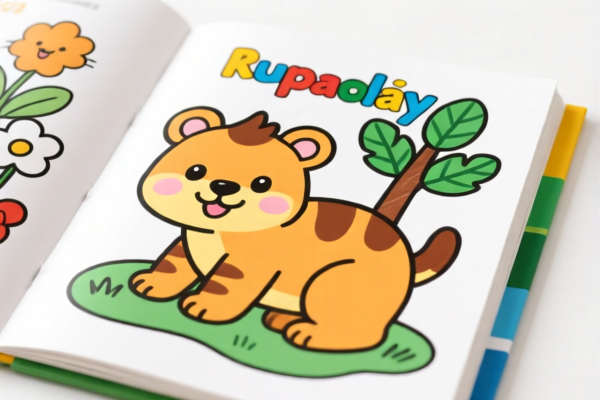
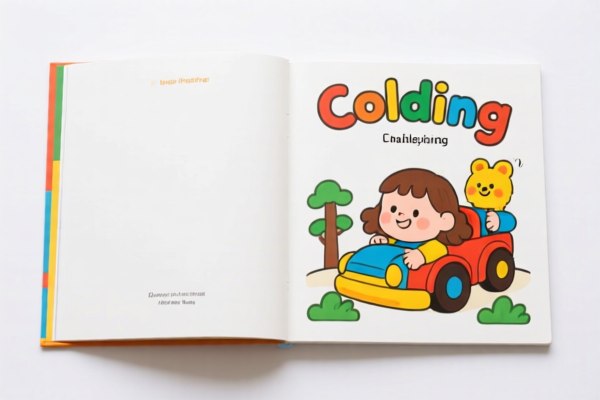


AI Analysis
🎨 Color Page (Colored Printouts / Coloring Sheets)
🌐 HS Code Reference & Customs Clearance Guide | 2026 Latest Tariff Analysis | Professional Clearance Strategy
📌 I. Product Definition & Classification: Do You Really Understand "Color Page"?
"Color Page" is a broad term in international trade, typically referring to paper-based products with color printing. In customs classification, the specific HS Code depends heavily on the material composition (paper type) and processing method (how the color is applied).
Based on the provided data, there are four potential classifications. Each interpretation leads to a different tax burden. Understanding the nuance is critical for cost control.
⚠️ Key Distinction Point:
- Is it a standard printed paper (graphics/photos)? → Lower Tax (17.5%)
- Is it coated/surfaced colored paper (raw material or finished paper product)? → Higher Tax (35%)
- Is it miscellaneous paper products? → Higher Tax (35%)
📦 II. HS Code Classification Details (2026 Latest Tariff Authority Comparison)
| HS Code | Product Description | Application Scenario | Tax Rate | Matching Logic |
|---|---|---|---|---|
4911.91.40.40 |
Other printed matter, including printed pictures and designs (Not elsewhere specified) | Commercially printed coloring sheets, graphic printouts, educational color pages | 17.5% | Best Match for "Printed Graphics": Recognized as "printed pictures/designs." Material assumed to be paper. |
4811.90.40.90 |
Paper, paperboard, cellulose wadding, etc., coated, impregnated, covered... (Other) | Colored paper sheets where the "color" is a surface treatment/coating rather than just ink printing. | 35.0% | Surface Coloring: Matches "surface coloring" description. Assumed paper material. |
4823.90.86.80 |
Other paper, cardboard, cellulose wadding and webs of cellulosic fibers (Cut to size, etc.) | Miscellaneous paper items that don't fit specific printing or coating categories; a "catch-all" for paper products. | 35.0% | Catch-all Category: The term "page" implies paper material. Falls under miscellaneous paper制品. |
4811.59.20.00 |
Paper, paperboard... coated, impregnated, covered... (Other) | Coated paper products used for printing or display. | 35.0% | Coated Paper: Assumed to be "printed paper" with coating/impregnation characteristics. |
4823.90.10.00 |
Other paper, cardboard, cellulose wadding... | Paper products derived from "drawing paper" (if interpreted as art supply). | 35.0% | Material Inference: Infers material as paper/pulp from name "Color Page" or "Drawing Paper." Finished cut-size paper product. |
🔍 Key Reminder:
-4911.91.40.40(17.5%) is the lowest tax rate and is recommended if the product is clearly a printed sheet with images/text. - Codes starting with48...(35.0%) treat the item as paper goods/raw material rather than finished printed media. This often results in double taxation via additional tariffs. - The difference between 17.5% and 35.0% is 17.5 percentage points on the CIF value. For a $10,000 shipment, this is a $1,750 difference.
💰 III. 2026 Latest Tariff Rate Details (Including Surcharges & Policy Add-ons)
✅ Applicable Country: United States (US)
✅ Origin: China (CN)
✅ Effective Time: Starting November 10, 2025 (and subsequent imports)
🎯 1. 4911.91.40.40 —— Other Printed Matter (The "Smart Choice")
| Item | Content |
|---|---|
| Base Tariff | 0% (ad valorem) |
| USITC Surcharge | +7.5% (Section 301 / Special Measure) |
| IEEPA Surcharge | +10% (China/HK products, effective Nov 10, 2025) |
| Total Rate | 17.5% |
| Tax Calculation | CIF Value × 17.5% |
| De Minimis Exemption | ❌ Not Applicable (deny_de_minimis) |
| Legal Basis Path | IEEPA:9903.01.25 → IEEPA:9903.01.24 → USITC:4911.91.40.40 → FOOTNOTE:9903.75.01 |
📌 Explanation:
- "IEEPA 10%": The new surcharge under the International Emergency Economic Powers Act for Chinese origin goods. - "USITC 7.5%": The Section 301 duty applicable to this category. - Total 17.5%: This is the most cost-effective classification for standard printed color pages.
🎯 2. 4811.90.40.90 / 4811.59.20.00 / 4823.90.xxxx —— Paper Products (High Cost)
| Item | Content |
|---|---|
| Base Tariff | 0% (ad valorem) |
| USITC Surcharge | +25% (Section 301 / Higher Bracket) |
| IEEPA Surcharge | +10% (China/HK products, effective Nov 10, 2025) |
| Total Rate | 35.0% |
| Tax Calculation | CIF Value × 35.0% |
| De Minimis Exemption | ❌ Not Applicable (deny_de_minimis) |
| Legal Basis Path | IEEPA:9903.01.25 → IEEPA:9903.01.24 → USITC:4811.xxxx → FOOTNOTE:9903.88.01 |
📌 Note:
- All48xxcodes listed in the data carry a 25% USITC surcharge. - Combined with the 10% IEEPA surcharge, the total is 35%. - Crucial Warning: Misclassifying a printed graphic as a "coated paper" or "miscellaneous paper" doubles your tax liability from 17.5% to 35%.
🛠️ IV. Customs Clearance Practical Advice (Real-World Pitfall Guide)
✅ 1. Documentation Checklist (Must-Haves)
| Document | Mandatory | Explanation |
|---|---|---|
| ✅ Product Specifications | ✔️ | Must clearly state: "Paper Product," "Color Printing," "Size," "Material: Wood Pulp Paper." |
| ✅ Product Photos | ✔️ | Front view showing print quality. Back view if blank. Show edges to prove it's paper, not cardstock or plastic. |
| ✅ Commercial Invoice | ✔️ | Description should be precise: "Color Printed Paper Pages for Educational Use" (Aligns with 4911...) |
| ✅ Packing List | ✔️ | Detail net/gross weight. Ensure no mixed HS codes in one carton without clear separation. |
| ✅ Material Composition Statement | ✔️ | Explicitly state "100% Paper" to avoid being classified as "mixed media" or "cardboard." |
| ✅ OECD Certificate of Origin | ✔️ | Required to prove Chinese origin (triggers IEEPA/USITC). |
✅ 2. Declaration Tips (Key Mantras)
🔥 "Printed Graphic = 4911; Raw Paper = 4811/4823. Don't Mix!"
| Scenario | Correct Declaration | Incorrect Practice |
|---|---|---|
| Standard Coloring Pages | 4911.91.40.40 |
Declaring as "Paper" (48xx) → Pays 35% instead of 17.5% |
| Coated Cardstock Sheets | 4811.59.20.00 |
Declaring as "Printed Matter" → Risk of Rejection if not actually printed with graphics |
| Blank Colored Paper | 4811.90.40.90 |
Declaring as "Color Page" (implies printing) → Mismatch with Photo/Spec |
| Mixed Boxes | Split Lines | Mixing 4911 and 48xx in one line item → Customs Audit Delay |
✅ 3. Special Case Handling
| Situation | Handling Advice |
|---|---|
| OEM Custom Prints | Provide the print file preview. Prove it is "printed matter" to justify 4911.91.40.40. |
| Thick Cardstock vs. Thin Paper | If >150gsm, ensure it's still classified as "paper" and not "board." If "board," HS may change, affecting duties. |
| Educational vs. Commercial | "Educational" is a marketing term. Customs cares about form (printed sheet). Use "Printed Matter" in legal description. |
| Sample Shipments | Even samples are subject to 0% de minimis for China. Pay the 17.5% or 35% immediately. |
🌍 V. Global Market Customs Comparison (2026 Latest)
| Country/Region | Recommended HS Code | Tariff | Certification Requirements | Notes |
|---|---|---|---|---|
| 🇺🇸 USA | 4911.91.40.40 |
17.5% (CN) | None specific for paper | 35% if misclassified as 48xx. No de minimis. |
| 🇨🇳 China | 4911.91.40.40 |
~13% | None | Domestic tax differs. |
| 🇪🇺 EU | 4911.99 |
0% - 6.5% | CE (if toys), REACH | Lower base tariff, no US-style surcharges. |
| 🇬🇧 UK | 4911.99 |
0% - 6.5% | None | Post-Brexit tariffs may vary slightly. |
| 🇯🇵 Japan | 4911.91 |
0% - 8% | FSC (Sustainable Paper) | Green paper standards highly valued. |
📌 Conclusion:
- USA is the most expensive market due to Section 301 and IEEPA surcharges. - Correct Classification (4911) saves 17.5% compared to generic paper codes. - No country offers de minimis duty-free entry for Chinese-origin paper goods in this category anymore.
📌 VI. Common Mistakes & Pitfalls (Blood & Tears Lessons)
❌ Mistake 1: Calling it "Colored Paper" in the invoice
👉 Consequence: Customs may lean towards 4811 (Paper Goods) → 35% Tax.
👉 Fix: Use "Printed Paper Sheets" or "Color Printed Pages."
❌ Mistake 2: Assuming "Small Package" = Duty-Free
👉 Consequence: De Minimis ($800) is DENIED for China-origin goods under IEEPA.
👉 Fix: Budget for 17.5% or 35% tax on every shipment, no matter the size.
❌ Mistake 3: Mixing "Blank Colored Paper" and "Printed Pages" in one HS Code
👉 Consequence: Customs audit for misdeclaration. Potential fines.
👉 Fix: Declare separately. Printed = 4911. Blank/Coated = 4811.
✅ Correct Practice:
"Printed Paper Pages, Color Graphics, A4 Size, 80gsm Wood Pulp Paper, Model XYZ, Origin: China"
🎯 VII. Conclusion: Professional Declaration Saves Money!
🎯 Remember the Mantra:
🔹 "Printed = 17.5%, Paper = 35%. Choose wisely!"
🔹 "No De Minimis for China. Always Pay the Tax."
🔹 "Invoice Description = Your Tax Rate."
📌 Pro Tip:
If your products are originating from Vietnam, Mexico, or Thailand, you may qualify for IEEPA Exemptions or lower Section 301 rates.
Recommendation: Apply for an Advance Ruling or consult a licensed customs broker before shipping to the US to confirm the 17.5% classification for 4911.91.40.40.
📣 Immediate Action:
📞 Contact a Professional Customs Broker + Provide Product Photos + Apply for HS Code Pre-Ruling
🚀 Clear Customs Smoothly, Save 17.5%, and Boost Your Profit Margins!
✨ Professional Customs Clearance Starts with Precise Classification!
💼 Every Percentage Point Counts in Your Bottom Line!
Customer Reviews
About HS Code Classification
The Harmonized System (HS) is an internationally standardized nomenclature developed by the World Customs Organization (WCO) to classify traded products. Over 200 countries use the HS system as the basis for customs tariffs, trade statistics, and import/export regulations.
Each HS code follows a hierarchical structure:
- Chapter (2 digits) — Broad category of goods (e.g., Chapter 84: Machinery and Mechanical Appliances)
- Heading (4 digits) — More specific grouping within the chapter
- Subheading (6 digits) — Internationally standardized breakdown, used by all WCO member countries
- National subdivisions (8-10 digits) — Country-specific extensions for further classification, such as US HTSUS 10-digit codes
Correct HS code classification is essential for smooth customs clearance, accurate duty payment, and compliance with trade regulations. Misclassification can lead to customs delays, overpayment of duties, or penalties.
When importing from CN to US, the applicable tariff rates may include:
- Most-Favored-Nation (MFN) rate — The standard duty rate applied to WTO members
- General rate — Applied to countries without trade agreements
- Trade remedy duties — Additional tariffs such as Section 301 (anti-dumping), Section 232 (national security), or countervailing duties
The information provided on this page is for reference purposes only. For official classification, please consult with your local customs authority or a licensed customs broker.